
With the rapid development of the new energy vehicle industry, the electric drive system, as the core of vehicle power performance and energy efficiency, has seen its energy efficiency improvement and thermal management optimization become hot research topics. Based on the working principles of the electric drive system in new energy vehicles, this article systematically analyzes its efficiency characteristics and thermal load distribution during energy conversion, pointing out the collaborative bottlenecks caused by the separate design of energy efficiency and thermal management. On this basis, a collaborative control strategy based on multi-objective optimization is proposed. This strategy comprehensively considers various factors such as driving efficiency, motor temperature control, and thermal safety of electronic control devices, constructing a collaborative optimization model for energy efficiency and thermal management. Through algorithm solving, it achieves energy efficiency improvement and thermal safety assurance under full operating conditions. The research results can provide theoretical support and engineering guidance for the efficient and safe operation of new energy vehicle electric drive systems.
In the context of global energy structure transformation and carbon neutrality goals, new energy vehicles have gained unprecedented development opportunities. The electric drive system, as the power core, directly affects vehicle energy consumption, performance output, and system reliability. Currently, as electric drive systems evolve towards high power density, they commonly face technical challenges such as high thermal loads. Traditional energy efficiency optimization and thermal management control are often designed separately, making it difficult to achieve global optimal system performance under complex operating conditions. Therefore, researching the co-control of energy efficiency and thermal management in electric drive systems and exploring the application of multi-objective optimization methods in this field hold significant engineering value and practical importance.
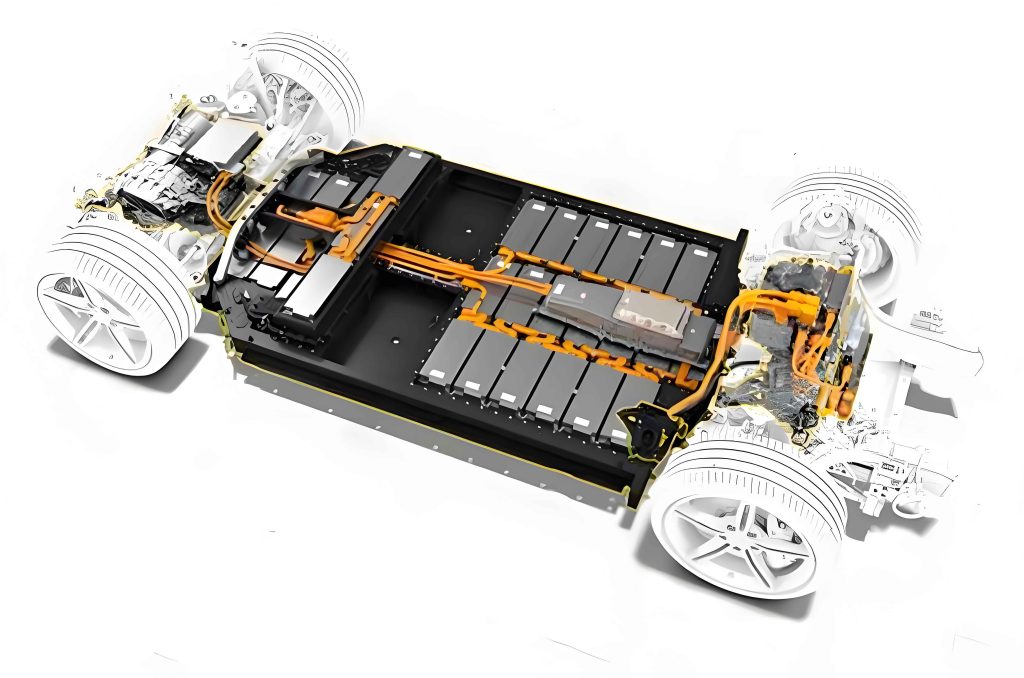
During vehicle operation, the power battery serves as the energy source for the electric drive system, delivering direct current (DC) power to the motor controller (MCU) through the high-voltage distribution system. The MCU, as the control core of the electric drive system, receives control signals from the vehicle controller (VCU), such as accelerator pedal position, speed commands, and motor torque demands. Based on the current system operating state, it uses advanced control algorithms, like Space Vector Pulse Width Modulation (SVPWM), vector control, or Direct Torque Control (DTC), to convert DC power into three-phase alternating current (AC) with controllable frequency, voltage, and phase, thereby driving the motor. In most new energy vehicles, the drive motor typically uses Permanent Magnet Synchronous Motors (PMSM) or Induction Motors (IM), with PMSM widely adopted due to its high efficiency, high power density, and good dynamic response. When excited by three-phase AC, the stator winding of the motor generates a rotating magnetic field, which drives the rotor to rotate and outputs mechanical power. The torque output from the motor is transmitted to the wheels via a reducer for speed reduction and torque increase, meeting the driving demands for acceleration, constant-speed cruising, or braking. Throughout this process, the MCU not only achieves precise energy allocation but also monitors key parameters like motor current, voltage, speed, and temperature in real-time, forming a closed-loop control system to ensure stable, safe, and efficient operation of the electric drive system.
The electric drive system in new energy vehicles also features energy recovery capabilities. Particularly during braking and coasting, the motor switches from “drive mode” to “generation mode,” converting vehicle kinetic energy into electrical energy through electromagnetic induction and feeding it back to the power battery, thereby improving overall vehicle energy utilization and range. During regenerative braking, when the driver releases the accelerator pedal or applies the brake pedal, the MCU adjusts the direction and magnitude of the drive current according to the vehicle control strategy, turning the motor from an energy consumer to an energy supplier. At this time, the rotating motor continues to spin due to inertia, with the rotor cutting magnetic lines to induce an electromotive force in the stator winding, generating current. This current is rectified by the inverter into DC power, regulated by the controller for safe charging current, and stored in the power battery. The entire process is coordinated by the MCU and VCU, enabling bidirectional energy transfer and intelligent control of the motor.
The energy efficiency performance of the electric drive system is primarily determined by the motor, MCU, and power modules such as Insulated Gate Bipolar Transistors (IGBT) or Silicon Carbide (SiC) devices. The energy conversion efficiency exhibits highly nonlinear characteristics under varying speeds, loads, temperatures, and control strategies. Taking PMSM as an example, its efficiency curve shows a “plateau” distribution, maintaining high efficiency within a certain speed and load range but significantly dropping at edge conditions like low-speed high-torque or high-speed light-load operations. During frequent start-stop, rapid acceleration, and regenerative braking, the motor experiences substantial transient losses, including copper losses, iron losses, additional losses, and mechanical losses. These losses not only reduce system energy efficiency but also convert into heat accumulated in the windings and iron core. The MCU, as the energy allocation core, also incurs conduction losses and switching losses in its power devices during switching operations, especially under high-frequency Pulse Width Modulation (PWM) driving, where losses intensify. Notably, with the application of third-generation semiconductor technology, although system efficiency improves, its high-frequency and high-temperature characteristics impose higher demands on thermal management systems. Meanwhile, system energy efficiency is also influenced by vehicle control strategies, such as variable frequency control logic, torque distribution algorithms, and energy recovery levels, which alter the operating conditions of the electric drive system. Due to the coupling of these factors, the energy efficiency space of the electric drive system presents a complex high-dimensional nonlinear distribution. Traditional single-factor static optimization methods struggle to cover the entire operating domain, urgently necessitating the introduction of multi-objective, dynamic, and intelligent control strategies for real-time efficient operation.
Thermal management characteristics are closely related to energy efficiency. The heat generated during operation, if not dissipated promptly, can lead to overheating, reducing efficiency and potentially causing device failure. The thermal load distribution depends on factors like current magnitude, switching frequency, cooling system performance, and ambient temperature. For instance, the junction temperature of IGBT modules, a critical thermal safety indicator, can be modeled using thermal resistance-capacitance networks. The temperature rise $\Delta T$ can be expressed as:
$$ \Delta T = P_{\text{loss}} \cdot R_{\text{th}} $$
where $P_{\text{loss}}$ is the power loss and $R_{\text{th}}$ is the thermal resistance. The total loss in the electric drive system includes motor losses and inverter losses. Motor losses can be divided into copper losses $P_{\text{cu}}$ and iron losses $P_{\text{fe}}$, given by:
$$ P_{\text{cu}} = 3 I^2 R $$
$$ P_{\text{fe}} = k_h f B^2 + k_e f^2 B^2 $$
where $I$ is the phase current, $R$ is the stator resistance, $k_h$ and $k_e$ are hysteresis and eddy current coefficients, $f$ is the frequency, and $B$ is the magnetic flux density. Inverter losses include conduction losses $P_{\text{cond}}$ and switching losses $P_{\text{sw}}$:
$$ P_{\text{cond}} = V_{\text{ce}} I_{\text{avg}} + I_{\text{rms}}^2 R_{\text{on}} $$
$$ P_{\text{sw}} = f_{\text{PWM}} (E_{\text{on}} + E_{\text{off}}) $$
where $V_{\text{ce}}$ is the collector-emitter voltage, $I_{\text{avg}}$ and $I_{\text{rms}}$ are average and RMS currents, $R_{\text{on}}$ is the on-state resistance, $f_{\text{PWM}}$ is the PWM frequency, and $E_{\text{on}}$ and $E_{\text{off}}$ are switching energy losses. Efficient thermal management requires balancing cooling system energy consumption with heat dissipation effectiveness. For example, increasing coolant flow rate enhances cooling but raises parasitic power draw. Thus, a trade-off exists between energy efficiency and thermal safety, necessitating co-control optimization.
To address the conflicting objectives of maximizing energy efficiency and ensuring thermal safety, a multi-objective optimization model is constructed. The primary goals are to maximize system efficiency $\eta_{\text{sys}}$ and minimize thermal risks, such as junction temperature $T_j$. The system efficiency is defined as the ratio of output mechanical power to input electrical power:
$$ \max \eta_{\text{sys}} = \frac{P_{\text{out}}}{P_{\text{in}}} = \frac{T_e \omega}{P_{\text{bat}}} $$
where $T_e$ is the motor output torque, $\omega$ is the motor angular velocity, and $P_{\text{bat}}$ is the battery input power. The thermal safety objective can be formulated as minimizing the maximum junction temperature or its deviation from a safe threshold:
$$ \min T_j = f(I, f_{\text{PWM}}, R_{\text{th}}, T_{\text{env}}) $$
where $T_{\text{env}}$ is the ambient temperature. This function can be derived from thermal models like RC networks or finite element simulations. Constraints include temperature limits, torque requirements, and control variable bounds. The multi-objective optimization problem is formulated as:
$$ \begin{aligned} & \max \eta_{\text{sys}}(x) \\ & \min T_j(x) \\ & \text{s.t. } x \in \Omega, \quad T_j(x) \leq T_{\text{max}}, \quad T_e(x) \geq T_{\text{req}} \end{aligned} $$
where $x$ is the vector of control variables (e.g., current amplitude, PWM frequency, coolant pump speed), $\Omega$ is the feasible domain, $T_{\text{max}}$ is the maximum allowable temperature, and $T_{\text{req}}$ is the required torque for vehicle demand. This model is nonlinear, coupled, and multi-constrained, requiring advanced algorithms for solution.
Several intelligent optimization algorithms are suitable for solving this problem. Non-dominated Sorting Genetic Algorithm II (NSGA-II) is effective for generating Pareto front solutions, allowing trade-offs between objectives. Particle Swarm Optimization (PSO) and Multi-Objective PSO (MOPSO) offer fast convergence for real-time control. Differential Evolution (DE) and Multi-Objective DE (MODE) are useful for moderate-dimensional spaces. Reinforcement learning can adapt to dynamic environments through continuous learning. In practice, these algorithms are used offline to train a mapping library between operating conditions and optimal parameters. During online operation, the system selects parameters from this library based on real-time data, ensuring responsiveness. For example, NSGA-II can produce a set of Pareto-optimal solutions, from which a specific operating point is chosen according to current priorities (e.g., efficiency-focused or safety-focused).
The collaborative control architecture is designed as a three-layer hierarchy: vehicle decision layer, system coordination layer, and execution control layer. This “three-layer integrated” framework enables seamless strategy implementation. At the vehicle decision layer, the VCU sets global energy efficiency and thermal safety strategies based on driving conditions, driver intent, environmental factors, and battery status. It dynamically adjusts weightings between objectives; for instance, prioritizing thermal safety during uphill climbs or high temperatures, and emphasizing efficiency during urban commuting. The system coordination layer, often embedded in a dedicated module within the MCU or central controller, receives commands from the VCU and coordinates subsystems. It accesses the pre-trained multi-objective optimization library to select optimal control parameters, ensuring harmony between drive efficiency and thermal management. This layer also handles fault diagnosis and redundancy scheduling. The execution control layer comprises MCU, thermal management system (TMS) controllers, etc., which adjust parameters like current, voltage, PWM frequency, coolant pump speed, and fan power. Sensors provide real-time feedback on temperature, voltage, and current, closing the control loop. Communication via CAN or Ethernet bus facilitates data exchange, supported by a central data platform for information fusion and strategy updates.
The proposed co-control scheme integrates NSGA-II for multi-objective optimization, with strategy modules in VCU and lightweight algorithms in MCU and TMS. Control variables are dynamically tuned to achieve optimal energy-thermal balance. To validate the scheme, simulations and real vehicle tests were conducted on a pure electric SUV equipped with PMSM. Three typical driving cycles were selected: NEDC urban, high-speed cruising at 120 km/h, and hill climbing (12% gradient for 5 minutes). Results demonstrate significant improvements in both energy efficiency and thermal safety. For instance, under NEDC conditions, the average efficiency of the electric drive system increased from 90.7% to 93.2%, while the motor peak temperature rise reduced by 6.3°C and IGBT junction temperature by 4.8°C. In high-speed cruising, efficiency improved by 1.7%, thermal management system energy consumption decreased by 12.4%, and range extended by 7.8 km. During hill climbing, the strategy maintained maximum torque output while keeping controller peak temperature below 95°C, compared to 108°C with traditional methods, enhancing thermal safety margin. System response latency averaged under 8 ms, meeting real-time requirements. These findings confirm the effectiveness of the multi-objective optimization-based co-control approach.
To summarize key results, the following table presents comparative data from the tests:
| Operating Condition | Metric | Traditional Control | Proposed Co-Control | Improvement |
|---|---|---|---|---|
| NEDC Urban | System Efficiency (%) | 90.7 | 93.2 | +2.5% |
| Motor Temp Rise (°C) | 45.2 | 38.9 | -6.3°C | |
| IGBT Junction Temp (°C) | 85.4 | 80.6 | -4.8°C | |
| High-Speed Cruising | System Efficiency (%) | 92.1 | 93.8 | +1.7% |
| TMS Energy Consumption (kW) | 0.89 | 0.78 | -12.4% | |
| Hill Climbing | Peak Controller Temp (°C) | 108 | 95 | -13°C |
Further analysis of the electric drive system performance under varying loads and speeds can be encapsulated in efficiency maps. For a PMSM, the efficiency $\eta$ as a function of torque $T_e$ and speed $n$ is often represented as:
$$ \eta(T_e, n) = \frac{T_e \cdot 2\pi n / 60}{P_{\text{in}}(T_e, n)} $$
where $P_{\text{in}}$ is the input power computed from electrical parameters. Optimal operating points lie within high-efficiency regions, but thermal constraints may shift these points. The multi-objective optimization helps identify Pareto-optimal sets that balance efficiency and temperature. For example, by adjusting control variables, we can derive optimal trajectories for different scenarios. The synergy between energy efficiency and thermal management is crucial for the longevity and reliability of the electric drive system. Components like bearings, insulation materials, and power semiconductors have temperature-dependent lifespans, often modeled by Arrhenius equation:
$$ L = A e^{E_a / (k T)} $$
where $L$ is lifetime, $A$ is a constant, $E_a$ is activation energy, $k$ is Boltzmann constant, and $T$ is absolute temperature. Thus, effective thermal control not only ensures safety but also reduces maintenance costs.
In implementation, the co-control strategy requires robust software and hardware integration. The MCU must execute control algorithms with high precision, while sensors provide accurate measurements. Adaptive techniques, such as model predictive control (MPC), can enhance responsiveness by predicting future states and optimizing actions accordingly. For instance, an MPC formulation might minimize a cost function $J$ over a horizon $N$:
$$ J = \sum_{k=0}^{N-1} \left( \alpha (1 – \eta_{\text{sys},k})^2 + \beta (T_{j,k} – T_{\text{ref}})^2 \right) $$
subject to system dynamics and constraints, where $\alpha$ and $\beta$ are weighting factors, and $T_{\text{ref}}$ is a reference temperature. This allows real-time adjustment based on predictions. Additionally, machine learning approaches can be employed to refine models from operational data, improving accuracy over time. The electric drive system thus evolves towards greater intelligence and autonomy.
Challenges remain, such as handling extreme conditions or component degradation. Future work may focus on integrating battery thermal management with the electric drive system for holistic energy optimization. Moreover, standardization of co-control protocols across vehicle platforms could facilitate widespread adoption. The continuous advancement of semiconductor technologies, like wide-bandgap devices, will further push the boundaries of efficiency and thermal performance, necessitating ongoing research in multi-objective optimization.
In conclusion, this article addresses the energy efficiency and thermal management challenges in new energy vehicle electric drive systems through a multi-objective optimization-based co-control strategy. By analyzing system principles, constructing optimization models, designing hierarchical architectures, and validating with experiments, we demonstrate significant improvements in efficiency and thermal safety. The proposed approach provides a framework for intelligent, reliable, and efficient operation of electric drive systems, contributing to the sustainable development of new energy vehicles. As the industry progresses, such synergistic controls will become increasingly vital for achieving higher performance and longer lifespans in electric drive systems.