
In recent years, the pursuit of advanced energy storage solutions has intensified, driven by demands for electric vehicles, portable electronics, and renewable energy integration. As a researcher in this field, I have closely followed the evolution of battery technologies, with a particular focus on solid-state batteries. These systems promise higher energy density, improved safety, and longer lifespan compared to conventional lithium-ion batteries. However, their commercialization hinges on overcoming critical reliability challenges, such as dendrite formation and interfacial instability. In this article, I will delve into the intricacies of solid-state battery design, explore recent breakthroughs, and examine the rigorous environmental and reliability testing methodologies essential for ensuring their performance. My aim is to provide a comprehensive overview that underscores the transformative potential of solid-state batteries while highlighting the scientific and engineering hurdles that remain.
The fundamental appeal of solid-state batteries lies in their use of a solid electrolyte instead of liquid or gel electrolytes. This design eliminates flammable components, reducing fire risks, and enables the use of high-capacity electrodes like lithium metal. The energy density of a solid-state battery can be expressed as:
$$E = \frac{C \times V}{m}$$
where \(E\) is the energy density (Wh/kg), \(C\) is the capacity (Ah), \(V\) is the voltage (V), and \(m\) is the mass (kg). For lithium metal anodes, theoretical capacities approach 3,860 mAh/g, far exceeding the 372 mAh/g of graphite anodes. This translates to potential energy densities exceeding 500 Wh/kg, a significant leap from current lithium-ion batteries. However, practical implementations face degradation mechanisms that compromise reliability. Dendrite growth, a primary failure mode, occurs when lithium ions plate unevenly during charging, forming needle-like structures that penetrate the electrolyte. This can lead to short circuits, as modeled by the growth rate equation:
$$v_d = \frac{i}{nF\rho}$$
where \(v_d\) is the dendrite growth velocity, \(i\) is the current density, \(n\) is the number of electrons transferred, \(F\) is Faraday’s constant, and \(\rho\) is the lithium density. To mitigate this, researchers have explored multilayer electrolytes and composite anodes. A notable advancement comes from a study where silicon microparticles were incorporated into the anode to restrict lithium plating. This approach limits lithiation to shallow surfaces, promoting uniform deposition and suppressing dendrites. The reaction kinetics can be described by:
$$\frac{\partial c}{\partial t} = D \nabla^2 c – kc$$
with \(c\) as lithium concentration, \(D\) as diffusion coefficient, and \(k\) as reaction rate constant. In this design, the silicon core acts as a scaffold, facilitating rapid ion transport and enabling charge times under 10 minutes. The solid-state battery demonstrated over 6,000 cycles with 80% capacity retention, showcasing exceptional durability.
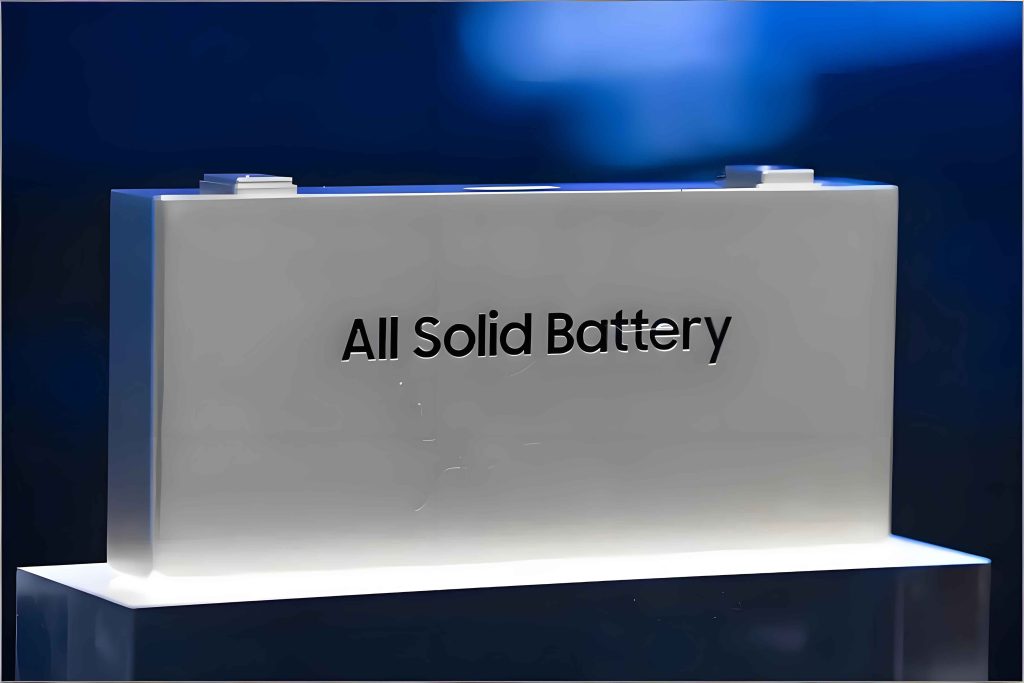
Reliability assessment of solid-state batteries necessitates rigorous environmental testing, akin to standards for electronic components. For instance, thermal cycling tests simulate temperature fluctuations to evaluate mechanical stress, while vibration tests assess structural integrity. The Arrhenius model is often employed to predict failure rates under accelerated conditions:
$$k = A e^{-\frac{E_a}{RT}}$$
Here, \(k\) is the degradation rate, \(A\) is the pre-exponential factor, \(E_a\) is activation energy, \(R\) is the gas constant, and \(T\) is temperature. This formula helps extrapolate battery lifespan from high-temperature exposures. Additionally, electrochemical impedance spectroscopy (EIS) provides insights into interfacial resistance, a key parameter in solid-state batteries. The impedance \(Z\) can be modeled as:
$$Z = R_s + \frac{R_{ct}}{1 + (j\omega R_{ct}C_{dl})^\alpha}$$
where \(R_s\) is series resistance, \(R_{ct}\) is charge-transfer resistance, \(C_{dl}\) is double-layer capacitance, \(\omega\) is angular frequency, and \(\alpha\) is a dispersion factor. Such analyses are crucial for optimizing electrolyte-electrode interfaces.
To contextualize these concepts, I have compiled data on solid-state battery performance metrics and testing protocols. Table 1 compares key characteristics of various battery types, emphasizing the advantages of solid-state batteries. Table 2 outlines common reliability tests based on military standards, which are adapted for evaluating solid-state batteries in harsh environments. Table 3 summarizes the cycling performance of recent solid-state battery prototypes, highlighting improvements in cycle life and charge rates.
| Battery Type | Energy Density (Wh/kg) | Safety | Cycle Life | Charge Time |
|---|---|---|---|---|
| Lithium-ion (Graphite Anode) | 150-250 | Moderate (Flammable electrolyte) | 500-1,000 cycles | 1-2 hours |
| Solid-State Battery (Lithium Metal) | 300-500 | High (Non-flammable solid electrolyte) | 1,000-6,000+ cycles | Minutes to hours |
| Lead-Acid | 30-50 | High | 200-300 cycles | 6-8 hours |
The development of solid-state batteries is further supported by advanced manufacturing techniques. For example, thin-film deposition methods enable precise electrolyte layer control, reducing defects that could initiate dendrites. The relationship between layer thickness \(d\) and critical current density \(i_c\) for dendrite suppression is given by:
$$i_c = \frac{\sigma \Delta \phi}{d}$$
with \(\sigma\) as ionic conductivity and \(\Delta \phi\) as overpotential. Thinner layers generally allow higher safe currents, but trade-offs exist with mechanical strength. In the silicon-anode design, particle size distribution influences plating uniformity. A statistical analysis of silicon microparticles (1-10 µm) shows that smaller sizes enhance surface area, improving lithiation homogeneity. This can be expressed as:
$$S_a = \frac{6}{\rho d_p}$$
where \(S_a\) is specific surface area, \(\rho\) is density, and \(d_p\) is particle diameter. Optimal ranges between 2-5 µm minimize stress and maximize cycle stability.
| Test Type | Purpose | Conditions | Metrics |
|---|---|---|---|
| Thermal Cycling | Assess thermal expansion mismatch | -40°C to 85°C, 100 cycles | Capacity fade, impedance change |
| Vibration Testing | Evaluate mechanical integrity | 10-2,000 Hz, 3 axes | Structural cracks, performance degradation |
| High-Temperature Storage | Accelerate aging processes | 60°C for 1,000 hours | Self-discharge rate, material decomposition |
| Electrical Overstress | Simulate fault conditions | Overcharge/over-discharge cycles | Dendrite formation, short-circuit risk |
Beyond dendrite suppression, interfacial resistance remains a bottleneck for solid-state batteries. The formation of passivation layers between electrodes and electrolytes increases impedance, reducing power output. This phenomenon is described by the Wagner equation for mixed ionic-electronic conductors:
$$t_i = \frac{\sigma_i}{\sigma_i + \sigma_e}$$
where \(t_i\) is the ionic transference number, \(\sigma_i\) is ionic conductivity, and \(\sigma_e\) is electronic conductivity. Ideal solid electrolytes exhibit \(t_i\) close to 1, minimizing side reactions. Recent studies have explored garnet-type electrolytes (e.g., Li7La3Zr2O12) with conductivities exceeding 10-3 S/cm. Their stability against lithium metal is quantified by the critical current density, often measured via galvanostatic cycling. For instance, a solid-state battery with LLZO electrolyte may sustain currents up to 1 mA/cm² before failure.
The integration of solid-state batteries into real-world applications requires comprehensive lifecycle assessments. Environmental factors such as humidity, pressure, and mechanical shock can degrade performance. Reliability testing protocols, inspired by military standards for electronics, provide frameworks for qualification. For example, thermal shock tests involve rapid transitions between extreme temperatures to evaluate interfacial delamination. The failure rate \(\lambda\) under such stresses can be modeled using the Weibull distribution:
$$F(t) = 1 – e^{-(t/\eta)^\beta}$$
where \(F(t)\) is cumulative failure probability, \(\eta\) is scale parameter, and \(\beta\) is shape parameter. Data from accelerated tests help predict field performance, ensuring that solid-state batteries meet safety benchmarks for automotive and aerospace use.
| Study Focus | Anode Material | Electrolyte Type | Cycle Life (80% retention) | Charge Time | Energy Density (Wh/kg) |
|---|---|---|---|---|---|
| Silicon microparticle design | Lithium metal with Si | Solid polymer-ceramic composite | 6,000 cycles | <10 minutes | ~400 (estimated) |
| Garnet electrolyte optimization | Lithium metal | LLZO | 1,200 cycles | 30 minutes | 350 |
| Thin-film sulfide electrolyte | Lithium metal | Li2S-P2S5 | 500 cycles | 1 hour | 450 |
Looking ahead, the scalability of solid-state battery production poses significant challenges. Manufacturing costs must be reduced to compete with incumbent technologies. Roll-to-roll processing and inkjet printing offer promising avenues for mass production. The cost per kilowatt-hour \(C\) can be estimated as:
$$C = \frac{C_m + C_p}{E \times \eta_r}$$
where \(C_m\) is material cost, \(C_p\) is processing cost, \(E\) is energy density, and \(\eta_r\) is round-trip efficiency. Current estimates for solid-state batteries range from $150-300/kWh, but advancements in material synthesis could lower this to $100/kWh within a decade. Moreover, recycling strategies are essential for sustainability; solid electrolytes may facilitate easier disassembly compared to liquid systems.
In conclusion, solid-state batteries represent a paradigm shift in energy storage, with potential to revolutionize transportation and grid storage. The recent breakthrough using silicon microparticles to inhibit dendrites exemplifies the innovative approaches needed to enhance reliability. However, widespread adoption depends on overcoming interfacial resistance, ensuring mechanical robustness, and establishing standardized testing regimens. As research progresses, interdisciplinary collaboration between electrochemists, materials scientists, and reliability engineers will be crucial. I am optimistic that within the next decade, solid-state batteries will transition from lab prototypes to commercial products, offering safer, faster-charging, and longer-lasting power solutions. The journey toward reliable solid-state batteries is fraught with complexities, but the rewards—a sustainable energy future—are well worth the effort.