
The relentless pursuit of higher energy density and enhanced safety in electrochemical energy storage has positioned the solid-state battery as a paramount frontier in next-generation technology. By replacing the flammable liquid electrolyte with a solid ion conductor, these systems promise to mitigate critical failure modes while enabling the use of high-capacity lithium metal anodes. However, the pervasive challenge of lithium dendrite growth persists even within solid-state architectures. These metallic protrusions can lead to internal short circuits, rapid capacity fade, and catastrophic thermal runaway, directly undermining the longevity, efficiency, and safety promises of the solid-state battery. While the superior mechanical strength of solid electrolytes provides a more robust barrier compared to their liquid counterparts, it is often insufficient to completely arrest dendrite nucleation and propagation under practical operating conditions.
Consequently, research has intensified on designing internal battery components that can actively guide lithium deposition and suppress irregular growth. Two particularly promising avenues are the integration of engineered nanoskeletons within the electrode or electrolyte matrix and the deployment of advanced artificial separators. The efficacy of these components is profoundly influenced by their morphological characteristics—their geometry, porosity, surface texture, and architectural hierarchy. Understanding and optimizing these morphological parameters is therefore critical for unlocking the full potential of the solid-state battery. Experimental exploration of these intricate structures is both costly and time-intensive. This work leverages a sophisticated phase-field modeling framework to computationally investigate how tailored morphologies of nanoskeletons and artificial separators can mechanically and electrochemically stifle dendrite evolution, offering predictive insights for material design.
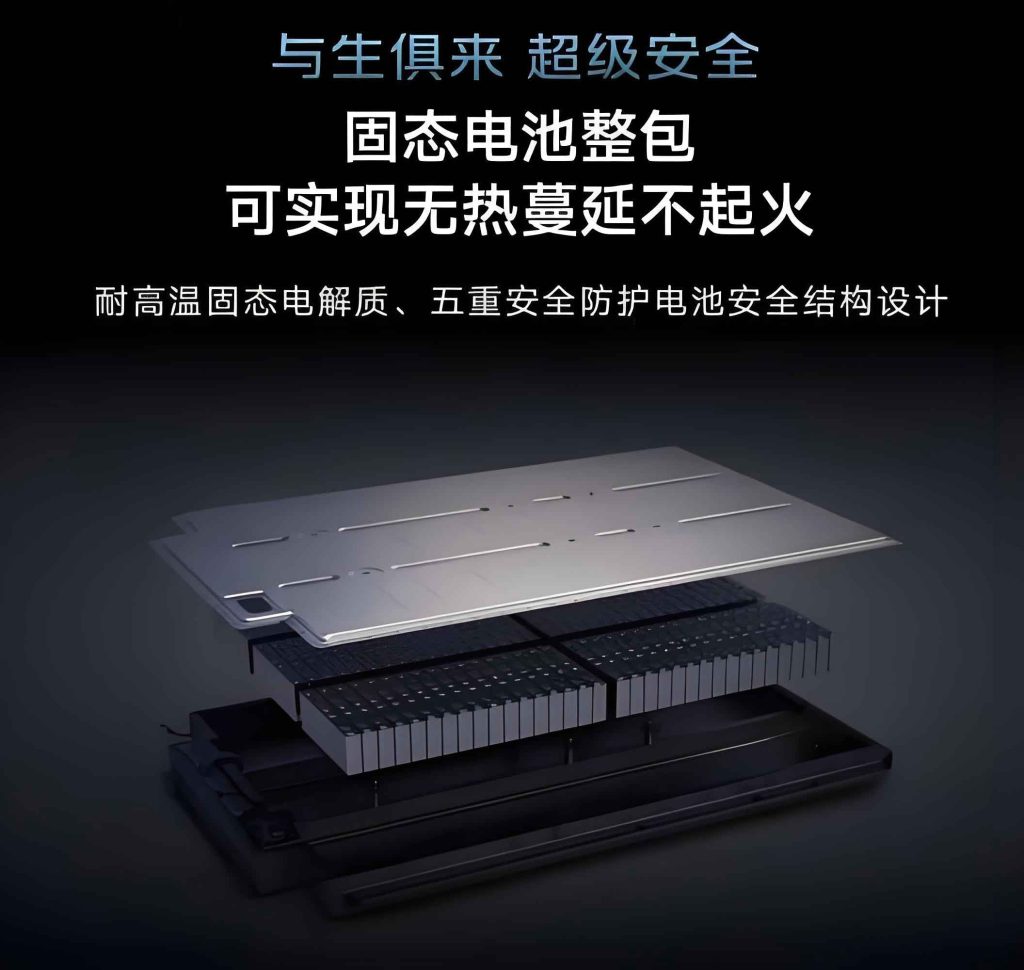
Theoretical Framework: A Multi-Physics Phase-Field Model
To accurately capture the complex interplay between electrochemistry, mechanics, and transport during lithium deposition in a solid-state battery, we employ a coupled phase-field model. The core of this model is an order parameter, $\xi(\mathbf{r}, t)$, which distinguishes phases: $\xi = 1$ denotes the metallic lithium phase (anode/dendrite), $\xi = 0$ represents the solid electrolyte phase, and the diffuse interface ($0 < \xi < 1$) describes the interphase boundary where deposition occurs.
The temporal evolution of the lithium phase is governed by a generalized Allen-Cahn equation, where the driving force stems from the variation of the system’s total free energy:
$$\frac{\partial \xi}{\partial t} = -L_{\sigma} \left[ \frac{\partial f_{ch}}{\partial \xi} – \kappa \nabla^2 \xi + \frac{\partial f_{els}}{\partial \xi} \right] – L_{\eta} h'(\xi) \left[ \exp\left(\frac{(1-\alpha)nF\eta_{\alpha}}{RT_0}\right) – \frac{c_{Li^+}}{c_0} \exp\left(\frac{-\alpha nF\eta_{\alpha}}{RT_0}\right) \right]$$
Here, $L_{\sigma}$ is the interfacial mobility, $f_{ch}$ is the chemical free energy density, $\kappa$ is the gradient energy coefficient incorporating anisotropy ($\kappa = \kappa_0[1 + \delta \cos(\omega \theta)]$), and $f_{els}$ is the elastic energy density. The final term models the electrochemical reaction kinetics, where $L_{\eta}$ is a reaction constant, $h(\xi)=\xi^3(6\xi^2 – 15\xi +10)$ is an interpolation function, $\alpha$ is the symmetry factor, $n$ is the charge number, $F$ is Faraday’s constant, $R$ is the gas constant, $T_0$ is the ambient temperature, $\eta_{\alpha}$ is the overpotential, and $c_{Li^+}/c_0$ is the normalized lithium-ion concentration.
The chemical energy density is typically described by a double-well potential: $f_{ch} = W \xi^2 (1-\xi)^2$, where $W$ is the energy barrier for phase transformation. The elastic strain energy, arising from the lattice mismatch between lithium and the electrolyte, is given by:
$$f_{els} = \frac{1}{2} C_{ijkl} \varepsilon^E_{ij} \varepsilon^E_{kl}$$
where $C_{ijkl}$ is the elastic stiffness tensor and $\varepsilon^E_{ij}$ is the elastic strain tensor. The mechanical properties are interpolated across the interface: $E = E_e h(\xi) + E_s [1-h(\xi)]$ and $\nu = \nu_e h(\xi) + \nu_s [1-h(\xi)]$, where $E$ and $\nu$ are Young’s modulus and Poisson’s ratio for the electrode (e) and solid electrolyte (s), respectively.
Lithium-ion transport in the solid-state battery electrolyte is described by a modified Fick’s law, accounting for diffusion and migration:
$$\frac{\partial c_{Li^+}}{\partial t} = \nabla \cdot \left( D_{eff} \nabla c_{Li^+} + \frac{D_{eff} c_{Li^+}}{RT_0} nF \nabla \phi \right) – X \frac{d\xi}{dt}$$
The effective diffusivity is $D_{eff} = D_e h(\xi) + D_s [1-h(\xi)]$. To couple the thermal effects crucial for a solid-state battery, the temperature-dependent diffusivity is modeled as:
$$D_{eff} = A \exp\left( -r c_{Li^+} + \frac{E_{\alpha}}{R} \left( \frac{1}{T} – \frac{1}{T_0} \right) \right)$$
where $A$ is a pre-exponential factor, $E_{\alpha}$ is the activation energy, and $r$ is a fitting factor.
The electric potential field, $\phi$, is solved using Poisson’s equation:
$$\nabla \cdot (\sigma_{eff} \nabla \phi) = F c_s \frac{\partial \xi}{\partial t}$$
with the effective conductivity defined as $\sigma_{eff} = \sigma_e h(\xi) + \sigma_s [1-h(\xi)]$.
The model parameters used in this study for the solid-state battery simulation are summarized below:
| Parameter | Symbol | Value |
|---|---|---|
| Interfacial Mobility | $L_{\sigma}$ | $1 \times 10^{-6}$ m³/(J·s) |
| Reaction Constant | $L_{\eta}$ | $0.5$ s⁻¹ |
| Energy Barrier Height | $W$ | $3.75 \times 10^5$ J/m³ |
| Gradient Energy Coefficient | $\kappa_0$ | $1 \times 10^{-10}$ J/m |
| Anisotropy Strength | $\delta$ | $0.1$ |
| Electrode Conductivity | $\sigma_e$ | $1 \times 10^7$ S/m |
| Solid Electrolyte Conductivity | $\sigma_s$ | $0.1$ S/m |
| Li-ion Diffusivity in Electrode | $D_e$ | $1.7 \times 10^{-15}$ m²/s |
| Li-ion Diffusivity in Electrolyte | $D_s$ | $2.0 \times 10^{-15}$ m²/s |
| Electrode Young’s Modulus | $E_e$ | $7.8$ GPa |
| Solid Electrolyte Young’s Modulus | $E_s$ | $1.0$ GPa |
Nanoskeleton Engineering: Morphology as a Stabilizing Scaffold
Incorporating a nanoskeleton—a porous, interconnected network of nanoscale materials—into the lithium anode or composite electrolyte is a powerful strategy to enhance the stability of the solid-state battery. These structures act as a mechanical scaffold to suppress volume changes and direct lithium deposition. Their high surface area improves interfacial contact and can homogenize the lithium-ion flux, a key factor in preventing dendrite initiation. To model the presence of a nanoskeleton within the phase-field framework, an additional order parameter $\psi(\mathbf{r}, t)$ is introduced, where $\psi=1$ represents the skeleton phase. The total chemical free energy density is extended to:
$$f_{ch} = \sum_i c_i \mu_i + W \xi^2 (1-\xi)^2 + W_1 \psi^2 (1-\psi)^2 + W_2 \xi^2 \psi^2 + RT\left( c_{Li^+} \ln\frac{c_{Li^+}}{c_0} + c_{Am^-} \ln\frac{c_{Am^-}}{c_0} \right)$$
Here, $W_1$ and $W_2$ represent the energy barriers associated with the skeleton-electrolyte and skeleton-electrode interfaces, respectively. The gradient energy term becomes $\kappa_0[1+\delta \cos(\omega\theta)]\nabla^2\xi + \kappa_1 \nabla^2\psi$. The effective material properties are interpolated between three phases. For example, Young’s modulus becomes:
$$E = E_e h(\xi) + [1-h(\xi)]\left\{ E_n h(\psi) + [1-h(\psi)] E_s \right\}$$
and the effective diffusivity is:
$$D_{eff} = D_e [h(\xi) + h(\psi)] + D_s [1 – h(\xi) – h(\psi)]$$
where $E_n$ and $D_n$ are the properties of the nanoskeleton material.
We investigate two dominant morphological archetypes for nanoskeletons in a solid-state battery:
1. Nanotube Array Structures: This morphology features vertically aligned, hollow channels. Simulations show that lithium deposition is guided into the inter-tube gaps. The primary dendrite backbone is forced to navigate a tortuous path, and secondary branching is significantly subdued due to spatial confinement. The von Mises stress within the lithium growing inside the tubes is notably lower than in the bulk electrolyte, indicating that the skeleton structure helps alleviate stress concentrations that often drive unstable growth.
2. Hierarchical/Multilevel Porous Structures: This design employs a multi-scale porous network with a high volume fraction of solid framework. The dense, tortuous pores present a formidable mechanical barrier. Lithium growth is predominantly lateral, leading to a more isotropic but densely packed morphology with a lower overall penetration depth. The von Mises stress in this configuration is higher than in the nanotube array, reflecting the greater mechanical resistance offered by the denser scaffold.
A critical and often overlooked morphological parameter is the uniformity of surface roughness. Introducing a regular, periodic roughness (e.g., triangular features) on the skeleton walls can be beneficial. Compared to a perfectly smooth skeleton, a uniformly rough one reduces the maximum height of the primary dendrite backbone by 16.62% in nanotube arrays and 21.04% in hierarchical structures. The roughness peaks disperse the ion flux and provide nucleation sites that promote lateral growth over vertical penetration.
However, the benefits hinge on uniformity. Irregular, random roughness creates hotspots for excessive lithium-ion aggregation, accelerating localized dendrite growth. In such cases, the maximum dendrite height can increase by 17.87% and 25.57% for the two skeleton types, respectively, compared to the uniformly rough case. This underscores a key design principle for the solid-state battery: nanoskeleton surfaces must be engineered with controlled, homogeneous texture to reliably harness their dendrite-suppressing capability.
| Nanoskeleton Morphology | Key Feature | Effect on Primary Dendrite Height (vs. Smooth) | Mechanism |
|---|---|---|---|
| Uniformly Rough Nanotube | Periodic surface features | -16.62% | Flux dispersion, guided lateral growth |
| Irregularly Rough Nanotube | Random surface features | +17.87% (vs. Uniform) | Localized ion aggregation, hot spots |
| Uniformly Rough Hierarchical | Controlled multi-scale pores | -21.04% | High mechanical resistance, tortuous path |
| Irregularly Rough Hierarchical | Disordered pore structure | +25.57% (vs. Uniform) | Weak mechanical points, preferential channels |
Artificial Separator Design: Regulating Ion Transport Paths
While solid electrolytes themselves act as separators, composite or bilayer artificial separators with designed porosity can be inserted to further control lithium-ion transport and deposition in a solid-state battery. These components function not merely as inert barriers but as active directors of ion flux. Modeling such a separator requires another phase-field variable, $\phi$, leading to a ternary system. The chemical energy density adapts to:
$$f_{ch} = W\xi^2(1-\xi)^2 + W_{\phi}\phi^2(1-\phi)^2 + M\xi^2\phi^2 + c_{Li^+}(\mu_+ + RT\ln\frac{c_{Li^+}}{c_0}) + c_{Am^-}(\mu_- + RT\ln\frac{c_{Am^-}}{c_0})$$
where $M$ represents the energy barrier between the lithium metal and the separator material.
We analyze a double-layer porous separator architecture. Its effectiveness is governed by three intertwined morphological parameters:
1. Pore Size (Porosity): The diameter of the channels through the separator layers is a primary control knob. Reducing the pore size from 0.5 μm to 0.3 μm forces lithium ions to follow more confined paths. This increases the energy required for a dendrite to find a continuous vertical pathway, thereby suppressing its vertical growth rate and ultimate height. Excessively large pores (>0.5 μm) diminish this regulating effect, rendering the separator almost ineffective.
2. Layer Thickness: The physical thickness of the porous separator layer contributes to its mechanical resilience. Increasing thickness from 0.2 μm to 0.4 μm provides a longer, more resistant medium for a dendrite to penetrate. However, thickening alone yields diminishing returns; the improvement in suppression is marginal if the pore size remains large.
3. Coupled Optimization of Thickness and Pore Size: The most potent strategy involves co-optimizing both parameters. For instance, a separator with 0.4 μm thickness and 0.4 μm pore spacing reduces dendrite height by 17.70%. In contrast, a separator with 0.2 μm thickness and 0.5 μm spacing only achieves a 6.95% reduction. The synergistic optimization provides an additional 10.75% improvement over merely increasing thickness, demonstrating that morphology must be holistically designed.
| Separator Configuration | Thickness | Pore Size | Dendrite Height Reduction | Remark |
|---|---|---|---|---|
| Baseline (Large Pore) | 0.2 μm | 0.5 μm | ~7% | Minimal effect |
| Increased Thickness Only | 0.4 μm | 0.5 μm | <10% | Diminishing returns |
| Reduced Pore Only | 0.2 μm | 0.3 μm | ~15% | Improved ion regulation |
| Co-optimized Design | 0.4 μm | 0.4 μm | ~17.7% | Synergistic suppression |
Innovative Morphology: The “Tile”-Shaped Cross-Section
Moving beyond conventional rectangular cross-section pores, we propose and model a novel “tile”-shaped separator morphology. This design features alternating concave and convex curvatures along the ion transport path. The governing equations remain the same, but the geometry of the $\phi=1$ domain is altered. The curved architecture introduces distinct advantages for the solid-state battery:
- Concave Regions: Act as energy sinks, dissipating the driving force for dendrite tip advancement as the metal must fill the recess.
- Convex Regions: Guide deposited lithium to grow along a downward-sloping trajectory, actively diverting it from a purely vertical, short-circuit-seeking path.
Simulations comparing a rectangular separator to an upward-convex “tile” separator show a 12.75% further reduction in primary dendrite height for the novel design. The lithium-ion concentration field clearly visualizes the ion flux being directed along the curved interfaces, leading to a more tortuous and impeded growth pattern for the lithium metal. A downward-convex design shows a similar, slightly lower benefit (12.04% reduction). This demonstrates that modest but intelligent morphological re-engineering of standard components can yield significant gains in stabilizing the solid-state battery against dendritic failure.
Synthesis and Forward Perspective
This phase-field modeling study elucidates the profound impact of component morphology on the stability of the solid-state battery against lithium dendrite growth. The key findings are synthesized as follows:
- Nanoskeletons require morphological precision. While both nanotube arrays and hierarchical structures are effective, their surface texture must be uniformly rough to disperse ion flux and promote lateral growth. Irregular roughness is detrimental and can accelerate failure.
- Artificial separators benefit from multi-parameter co-design. Simply making a separator thicker has limited utility. The synergistic reduction of pore size and increase in thickness provides a much stronger barrier. The transport path’s tortuosity, not just its minimum width, is critical.
- Geometric innovation offers new pathways. Departing from standard shapes, as demonstrated by the “tile”-shaped separator, can introduce beneficial physical effects (energy dissipation, growth direction guidance) that enhance suppression beyond what traditional porosity tuning achieves.
The phase-field model, with its ability to couple electrochemistry, stress, and heat, serves as an indispensable virtual laboratory for the solid-state battery. It allows for the rapid screening of complex, multi-scale morphologies that are challenging to explore experimentally. Future work should focus on integrating these optimized components—combining a uniformly rough nanoskeleton with a co-optimized, morphologically innovative separator—to study their combined effect. Furthermore, exploring dynamic morphological changes, such as those in adaptive or self-healing polymers within the solid-state battery, presents an exciting frontier for simulation and design. Ultimately, the strategic optimization of internal morphology, guided by high-fidelity multi-physics modeling, is pivotal for transitioning the high-promise solid-state battery from the laboratory to safe, reliable, and long-lasting commercial application.