
This article details a comprehensive design and analysis project focused on developing a compact, efficient gas turbine system suitable for application in hybrid cars. The primary challenge addressed is the inherent bulk and weight of conventional and even existing micro gas turbines, which precludes their use in automotive platforms. The core objective is to leverage advanced design principles, material science, and thermal management to achieve a radical miniaturization, enabling the gas turbine to function as a range extender or auxiliary power unit (APU) within a hybrid car, thereby enhancing overall vehicle performance and fuel economy.
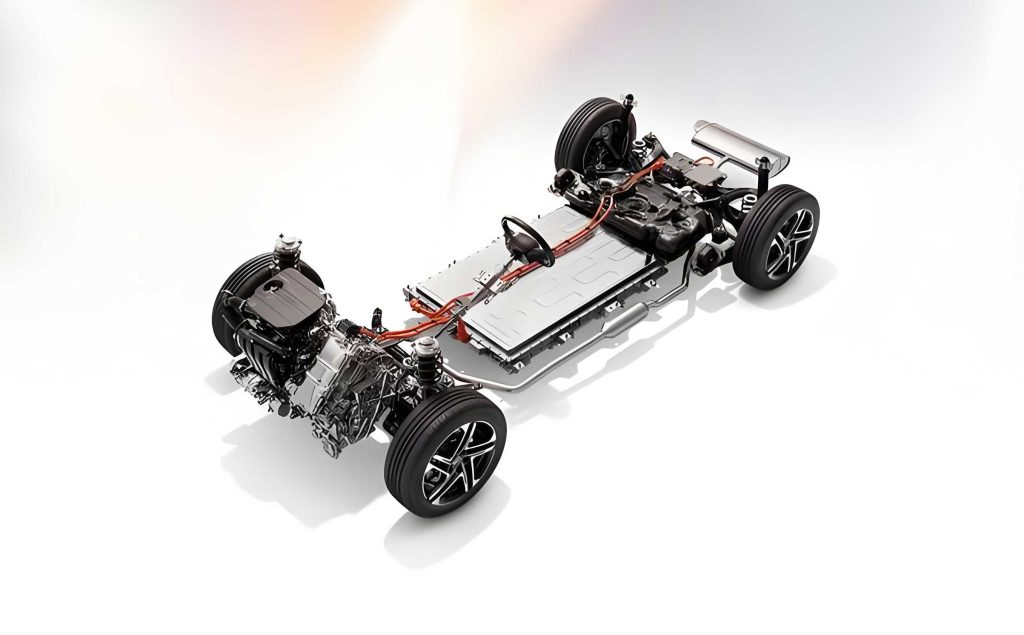
The current landscape for gas turbines in terrestrial transport, particularly for hybrid cars, is limited. Domestic industrial gas turbines are typically large-scale installations, and their design paradigms do not scale down effectively for automotive use. The primary barriers are excessive physical dimensions and mass. For instance, typical microturbine designs often feature massive recuperators and suboptimal flow path geometries, such as unreasonable meridional channel contours and blade designs that deviate from standard mean camber line principles. These factors render them impractical for the stringent packaging constraints of a hybrid car. Effective performance enhancement for small-scale turbines often lies in fundamental thermodynamic improvements, such as lowering the compressor inlet air temperature to increase the temperature ratio, rather than merely scaling down bulky components. Furthermore, inspiration can be drawn from compact military-grade gas turbines, which demonstrate that high performance can be achieved without excessively large heat exchangers.
1. Research and Analysis of the Technological Status
The fundamental impediment to adopting gas turbines in hybrid cars is their size-to-power ratio. While gas turbines offer high power density, reliability, and multi-fuel capability, traditional scaling laws and conservative design practices have resulted in units too large for vehicle integration. The design experience from heavy-duty industrial turbines is not directly transferable to the micro-scale required for a hybrid car. Key issues identified include:
- Bulky Recuperators: Essential for efficiency in simple cycles, conventional shell-and-tube or primary surface recuperators contribute significantly to overall volume.
- Suboptimal Aerodynamic Design: Inappropriate meridional channel shaping and blade profiling lead to lower efficiency, requiring larger components to achieve the same output.
- Material and Cooling Limitations: The use of materials not optimized for high-temperature, high-stress environments in a compact form factor limits achievable turbine inlet temperatures (TIT), affecting specific power.
For a viable hybrid car application, the gas turbine must be optimized for minimal frontal area and length, efficient part-load operation, and rapid transient response, all while maintaining competitive thermal efficiency.
2. Structural Design
2.1 Design Philosophy
The design process follows a structured engineering methodology, akin to the “typical design process” outlined in standard machine design theory. This involves defining clear needs, establishing functional requirements, creating and evaluating concepts, and proceeding with detailed design and analysis. For this hybrid car application, the paramount requirements are compactness, light weight, efficiency over a variable operating range, and cost-effectiveness for potential mass production.
2.2 Determination of Temperature Ratio (τ*), Pressure Ratio (π*), and Compressor Configuration
The cycle parameters are foundational. The temperature ratio (τ*) and pressure ratio (π*) critically influence specific work output, thermal efficiency, and component sizing. The specific work per unit mass flow, a key metric for compactness, is given by the Brayton cycle analysis. For an ideal regenerative cycle, the net specific work \( w_{net} \) is:
$$ w_{net} = c_p \left[ (T_3 – T_4) – (T_2 – T_1) \right] $$
where \( T_1, T_2, T_3, T_4 \) are temperatures at compressor inlet, compressor outlet, turbine inlet, and turbine outlet respectively. Thermal efficiency \( \eta_{th} \) for a regenerative cycle is:
$$ \eta_{th} = 1 – \left( \frac{T_1}{T_3} \right) (\pi)^{\frac{\gamma-1}{\gamma}} $$
where \( \gamma \) is the ratio of specific heats. Analysis shows that for the expected temperature ratios achievable with advanced cooling (τ* in the range of 2.86 to 3.56), the pressure ratio for optimum specific work lies between 3.5 and 5.5. A pressure ratio of approximately 5 represents a good compromise; exceeding this demands significantly more robust and costly components due to higher pressure and temperature stresses.
The choice of compressor type is crucial for packaging. A comparison is essential:
| Compressor Type | Single Stage Pressure Ratio | Advantages | Disadvantages | Suitability for Hybrid Car |
|---|---|---|---|---|
| Centrifugal | 4.0 – 4.5 | High PR/stage, compact, rugged, forgiving to inlet distortion, low cost. | Lower adiabatic efficiency, limited mass flow range, difficult to multi-stage axially. | High – for final compression stage. |
| Axial | 1.15 – 1.35 | High adiabatic efficiency, high mass flow capability, suitable for multi-staging. | Many stages needed for high PR, sensitive to inlet distortion, complex/expensive. | Moderate – for initial stages to save radial space. |
| Mixed Flow | Intermediate | Compromise between axial and centrifugal, can offer good PR with shorter length. | Design complexity, less common. | Potential, but standard designs favored. |
Based on this analysis, a hybrid compressor arrangement is deemed optimal for a hybrid car gas turbine. A combination of 1-3 axial stages followed by a single centrifugal stage provides a good balance: the axial stages efficiently handle the initial compression with minimal radial encroachment, while the centrifugal stage delivers the high final pressure ratio in a compact package, resulting in a short, stiff rotor suitable for high-speed operation.
2.3 Scheme Analysis and Selection
Four preliminary architectural schemes were conceived and evaluated against the central constraints of a hybrid car powertrain.
| Scheme | Compressor Arrangement | Turbine Arrangement | Key Characteristics | Evaluation for Hybrid Car |
|---|---|---|---|---|
| Scheme 1 | 1 Axial + 1 Centrifugal | 1 Axial (Single Stage) | Simple, derived from small turboshaft engines. | Axial turbine may limit stage enthalpy drop, requiring larger diameter or more stages. |
| Scheme 2 | 1 Axial + 1 Centrifugal | 2 Axial Stages | Higher turbine efficiency, splits work. | Excessive axial length. Requires flexible coupling for alignment, adding complexity. |
| Scheme 3 | 1 Axial + 1 Centrifugal | 1 Centripetal (Radial Inflow) | Very high work per stage, compact, robust, low sensitivity to tip clearance. | SELECTED. Optimal compactness, good efficiency potential, simple and cost-effective. |
| Scheme 4 | 2 Centrifugal Stages | 1 Centripetal + 2 Axial | Extremely compact in length, complex flow path. | Excessive radial width, complex internal ducts, high manufacturing cost. |
Scheme 3 was selected as the baseline. The radial inflow turbine is a key enabler for the hybrid car application. It can extract a large enthalpy drop in a single, compact stage, leading to a shorter, stiffer shaft assembly. Its efficiency is less sensitive to manufacturing tolerances and blade surface finish compared to an axial turbine, which translates to lower cost—a critical factor for automotive adoption. The selected architecture promises the minimal envelope required for integration into a hybrid car’s engine bay or rear subframe.
2.4 Material Selection
The demanding thermomechanical environment necessitates the use of advanced materials. Selection is based on operating temperature, stress, required strength-to-weight ratio, and cost for a hybrid car production context.
| Component | Selected Material | Key Properties & Rationale | |
|---|---|---|---|
| Axial & Centrifugal Compressor Wheels, Compressor Shaft | GH4169 (Inconel 718) Nickel Superalloy | High strength up to ~650°C, excellent fatigue and creep resistance, weldable. Suitable for high-speed rotor dynamics. | |
| Axial Compressor Casing & Inlet Guide Vane Hub | High-Strength Nodular Cast Iron | Good castability for complex shapes, adequate strength for compressor static pressures, dampens vibrations, low cost. | |
| Centrifugal Compressor Volute / Casing | GH909 (Low Thermal Expansion Superalloy) | Controlled thermal expansion maintains tight clearance with rotating wheel, improving efficiency. | |
| Combustion Chamber | GH536 (Hastelloy X) Nickel Alloy | Exceptional oxidation resistance up to 1200°C, good high-temperature strength, formable into sheet metal components. | |
| Turbine Wheel & Nozzle Guide Vanes | GH141 (Precipitation-Hardening Ni Superalloy) | Exceptional high-temperature creep rupture strength (~950°C), essential for uncooled or minimally cooled turbine components in this micro-scale design. | |
| Reduction Gear | 16Cr3NiWMoVNbE Carburizing Steel | High core toughness and hard, wear-resistant surface after carburizing. Suitable for high-load, high-speed gearing. | |
| Turbine/Output Shaft | 35Cr2Ni4MoA High-Strength Alloy Steel | Very high tensile and fatigue strength, suitable for transmitting high torque from the turbine. |
2.5 Turbine Wheel and Blade Design
The turbine wheel, especially its blades, operates under the most severe conditions. The design process integrates aerodynamics, mechanical integrity, and cooling:
- Aerodynamic Profiling: The process begins with mean camber line definition and velocity triangle construction at hub, mean, and tip sections. Key blade geometry parameters (chord, stagger angle, inlet/outlet metal angles) are determined. The three-dimensional blade is then constructed using ruled surfaces or advanced lofting between defined airfoil sections at different spanwise heights.
- Mechanical Design: The blade profile is thickened according to a spanwise distribution to withstand centrifugal and gas bending loads. The wheel’s backface and bore are shaped to manage stress concentration.
- Cooling Strategy: Effective cooling is non-negotiable for maintaining material integrity at high turbine inlet temperatures, which is vital for the efficiency of the hybrid car’s range extender. A combined cooling approach is adopted:
- Film Cooling: Applied at the blade leading edge and along the pressure side mid-chord. Cool air is ejected through discrete holes forming a protective insulating film.
- Pin-Fin & Trailing Edge Ejection: The blade trailing edge is thinned and incorporates an array of pin-fins (turbulators) to enhance heat transfer internally before the coolant is ejected.
- Tip Cap and Radial Holes: The blade tip features a squealer rim or cap, and may include radial cooling holes to cool the tip region and manage leakage flows.
- Platform Cooling: The blade root platform is cooled using impingement or convective techniques to protect the disk attachment region.
The cooling air is typically bled from the compressor discharge. The effectiveness \( \eta_{cool} \) of a cooling scheme is defined as:
$$ \eta_{cool} = \frac{T_g – T_m}{T_g – T_c} $$
where \( T_g \) is gas temperature, \( T_m \) is metal temperature, and \( T_c \) is coolant temperature.
2.6 Gear Design
A reduction gearbox is necessary to match the high-speed turbine output (potentially over 100,000 RPM) to the useful input speed for a generator or mechanical drive in a hybrid car. Given incomplete handbook data for the selected gear steel, design relied on simulation-based analysis. Key design outcomes for a helical gear pair:
- Module, \( m_n = 2.5 \, \text{mm} \)
- Helix angle, \( \beta = 13.3^\circ \)
- Pinion diameter, \( d_1 = 77.1 \, \text{mm} \); Gear diameter, \( d_2 = 220.9 \, \text{mm} \)
- Face width, \( b = 67 \, \text{mm} \) (pinion), \( 60 \, \text{mm} \) (gear)
Strength verification via simulation confirmed the design. Contact stress \( \sigma_H \) and bending stress \( \sigma_F \) were calculated and found to be below the allowable stresses \( [\sigma_H] \) and \( [\sigma_F] \) for the material under the designed torque and speed conditions, ensuring reliability for the demanding duty cycle of a hybrid car.
2.7 Shaft Design
The rotor dynamics and strength are critical. Initial shaft diameters were estimated based on torque transmission requirements and empirical scaling from small high-speed machinery. The compressor shaft section was sized at a minimum of 35mm, and the turbine shaft at 45mm. A detailed layout considering assembly sequence and bearing placement defined the stepped shaft geometry. The shafts were then verified using combined bending and torsion stress analysis (ASME shaft design code). The von Mises stress \( \sigma’ \) was checked:
$$ \sigma’ = \sqrt{ \left( \frac{32 M}{\pi d^3} \right)^2 + 3 \left( \frac{16 T}{\pi d^3} \right)^2 } \leq \frac{S_y}{N} $$
where \( M \) is bending moment, \( T \) is torque, \( d \) is shaft diameter, \( S_y \) is yield strength, and \( N \) is safety factor. The design ensures ample margin for the high-speed operation expected in a hybrid car gas turbine.
2.8 Casing and Static Structure Design
The casing serves as the pressure vessel and provides flow path boundaries. Wall thickness was initially selected based on pressure vessel codes and then refined using Finite Element Analysis (FEA) to ensure structural integrity under pressure and thermal gradients while minimizing weight. Particular attention was paid to aerodynamic contours: the inlet hub was given a rounded leading edge, and the outer shroud profile was shaped like an airfoil to minimize inlet flow separation and losses, contributing to the overall efficiency of the hybrid car’s power unit.
3. Drive Layout and Motor Selection for the Hybrid Car
Integrating the gas turbine into the hybrid car’s drivetrain is paramount. The gas turbine is envisioned primarily as a series hybrid range extender. A Permanent Magnet (PM) synchronous motor/generator was selected for its high efficiency, superior power density (kW/kg and kW/L), and controllability compared to Induction Motors (IM). A unit in the 40-75 kW range is appropriate for passenger hybrid cars.
Two fundamental integration schemes were analyzed:
| Scheme | Description | Pros | Cons | Best For |
|---|---|---|---|---|
| Series Hybrid | The gas turbine drives a generator exclusively. Generated electricity charges the battery or powers a traction motor directly. | Simple mechanical coupling. Turbine operates at optimal speed independent of vehicle speed. Flexible packaging. | Double energy conversion (mech->elec->mech) losses. Requires large traction motor. | Urban buses, delivery vehicles, range-extended passenger hybrid cars. |
| Power-Split (Complex Hybrid) | The gas turbine’s mechanical output can be coupled to the driveline via a planetary gear set (like an e-CVT), allowing both mechanical and electrical power paths. | Potential for higher overall efficiency by utilizing direct mechanical drive at highway speeds. | Extremely complex control and packaging. Higher cost. | Premium passenger hybrid cars where maximizing highway fuel economy is critical. |
For broad applicability and simplicity, the Series Hybrid layout is recommended for initial implementation in a hybrid car. The gas turbine-generator set becomes a self-contained “range extender module” that can be packaged in various locations (under hood, in trunk, underfloor).
4. Control System and Simulation
Effective control is vital for safe, efficient, and responsive operation in a hybrid car. The control strategy borrows from aerospace-derived (“aero-derivative”) gas turbine control principles, implementing a hierarchical control architecture. Core control loops include:
– Speed Control: Maintains generator/mainshaft speed at setpoint for optimal efficiency.
– Temperature Control: Protects the turbine by limiting TIT via fuel flow adjustment.
– Acceleration/Deceleration Control: Manages fuel schedules to avoid compressor surge or flameout during transients.
– Start-up & Shutdown Sequencing: Automated sequence for reliability.
– Safety and Monitoring: Handles alarms for low oil pressure, high vibration, overspeed, etc.
The hardware interface utilizes robust industrial modules. For temperature sensing, K-type thermocouple signals are conditioned and read by an analog input module. Discrete (ON/OFF) signals for commands (START, STOP) and alarms are handled via digital input circuits with opto-isolation for noise immunity.
To achieve superior control performance, a Fuzzy-PID controller was designed and simulated. Unlike a fixed-gain PID controller, the Fuzzy-PID can dynamically adjust its proportional (Kp), integral (Ki), and derivative (Kd) gains based on the error (e) and error rate (ec). This is ideal for the nonlinear, time-varying dynamics of a gas turbine. The fuzzy inference system uses rules like:
IF e is Negative Large AND ec is Zero THEN ΔKp is Positive Large, ΔKi is Positive Small, ΔKd is Negative Small.
Simulations compared traditional PID against Fuzzy-PID for temperature and speed control. The results were clear:
– Temperature Control: The Fuzzy-PID controller brought the turbine outlet temperature to its setpoint faster and with less overshoot and settling time than the traditional PID.
– Speed Control: During start-up, load changes, and setpoint changes, the Fuzzy-PID controller demonstrated significantly better transient performance. It reduced speed deviation during a load torque step and achieved setpoint changes more rapidly.
The mathematical representation of the Fuzzy-PID output is:
$$ u(t) = K_p \cdot e(t) + K_i \int_0^t e(\tau) d\tau + K_d \cdot \frac{de(t)}{dt} $$
where \( K_p, K_i, K_d \) are the dynamically adjusted gains from the fuzzy inference engine. This adaptive control is crucial for maintaining optimal performance of the gas turbine across the diverse operating conditions encountered by a hybrid car, from steady-state highway cruising to frequent start-stop cycles in city traffic.
5. Conclusion
This project presents a holistic design exploration for a miniaturized, turbocharged, regenerative gas turbine specifically tailored for hybrid car applications. By critically addressing the historical shortcomings of size and weight through an optimized thermodynamic cycle (π*≈5, τ*≈3-3.5), a compact mixed-flow compressor and radial inflow turbine architecture, strategic use of high-performance materials, and integrated blade cooling, a viable engine core configuration has been defined. The supporting mechanical design of gears, shafts, and casings ensures structural integrity. The proposed series-hybrid drive layout using a high-density PM motor aligns with practical automotive packaging constraints. Finally, the implementation of an advanced Fuzzy-PID control system promises the robust and efficient operation necessary for the dynamic environment of a hybrid car. This comprehensive approach demonstrates that, through targeted optimization across all engineering disciplines, the gas turbine can transition from a stationary power plant to a feasible, efficient, and compact range extender, offering a potential pathway to enhance the performance, flexibility, and economic viability of the next generation of hybrid cars.