
In the context of carbon neutrality, hybrid car technology has become a mature pathway for energy-efficient vehicles. The dedicated hybrid engine, coupling box, motor, and battery form the main components of a hybrid car, and different motor positions lead to various hybrid car architectures and energy management strategies. Currently, series-parallel configurations are widely used due to their简洁 design and significant energy-saving effects. However, the complex architecture and numerous operating modes of hybrid cars result in多变 energy conversion processes and intricate energy flow distribution. Moreover, the energy conversion and transmission efficiency of hybrid cars are more明显 affected by driving cycles, primarily due to the influence of operating modes, control strategies, and constraints under different boundary conditions. Therefore, evaluating and optimizing the energy flow of hybrid cars based on typical operating conditions is crucial for performance development.
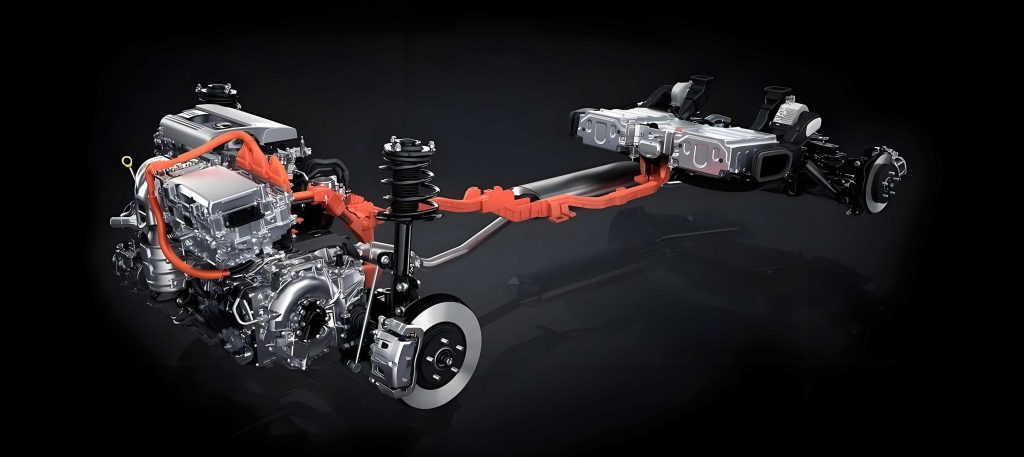
This article presents a comprehensive evaluation and optimization method for the energy flow of hybrid cars, focusing on typical driving cycles. First, the energy flow characteristics of hybrid cars under various cycles are compared. Second, based on segmented operating conditions, the input and output power of the engine, generator, and drive motor, as well as operating mode features, are analyzed for the Worldwide Harmonized Light Vehicles Test Cycle (WLTC). Finally, a method is proposed to select representative typical cycles for actual road operations based on operating condition特征 parameters to achieve energy consumption optimization. The results show that the highest cycle comprehensive thermal efficiency of the engine reaches 36.79%, and the braking energy recovery efficiency in urban cycles reaches 87.04%. The overall efficiency of the hybrid car under high-speed conditions is 29.72%, making it the most energy-efficient operating condition. Through global optimization for the WLTC-LM typical cycle representing actual road operations, the energy consumption per 100 kilometers is reduced by 3.98% based on simulation verification.
The energy flow evaluation and optimization for hybrid cars are essential for improving fuel economy and reducing emissions. Hybrid cars integrate internal combustion engines and electric motors, allowing for flexible energy management. However, the energy flow within a hybrid car is complex due to multiple energy paths, including fuel conversion, electrical energy storage, and mechanical transmission. To systematically analyze this, a partitioned decoupling method is adopted, dividing the energy flow into five regions: A (engine fuel conversion), B (motor/generator electrical-mechanical conversion), C (auxiliary loads like air conditioning), D (transmission efficiency), and E (external resistance power demand). Each region has distinct efficiency characteristics that impact the overall energy consumption of the hybrid car.
Typical driving cycles used for evaluating hybrid cars include the New European Driving Cycle (NEDC), WLTC, and China Light-duty Vehicle Test Cycle (CLTC). These cycles differ in speed profiles, acceleration patterns, and idle times, affecting the energy flow distribution. For instance, the WLTC cycle has more aggressive speed variations, closely resembling real-world driving conditions. Under regulations such as GB/T 19753-2021, hybrid cars are tested in charge-sustaining mode to ensure energy balance in the storage system at the beginning and end of the cycle. This ensures that the evaluation reflects true energy consumption without net battery discharge.
To quantify the energy flow, key efficiency parameters are defined. The engine thermal efficiency ($\eta_{eng}$) represents the ratio of useful work output to fuel energy input:
$$ \eta_{eng} = \frac{P_{eng,out}}{m_f \cdot LHV} $$
where $P_{eng,out}$ is the engine output power, $m_f$ is the fuel mass flow rate, and $LHV$ is the lower heating value of the fuel. For hybrid cars, the engine often operates in optimized regions to avoid low-efficiency points, thus improving $\eta_{eng}$.
The motor efficiency ($\eta_{mot}$) and generator efficiency ($\eta_{gen}$) are critical for electrical energy conversion:
$$ \eta_{mot} = \frac{P_{mot,mech}}{P_{mot,elec}} $$
$$ \eta_{gen} = \frac{P_{gen,elec}}{P_{gen,mech}} $$
where $P_{mot,mech}$ is the mechanical power output of the motor, $P_{mot,elec}$ is the electrical power input, $P_{gen,elec}$ is the electrical power output of the generator, and $P_{gen,mech}$ is the mechanical power input. In hybrid cars, these efficiencies vary with operating points, influencing the overall energy flow.
Braking energy recovery efficiency ($\eta_{regen}$) is another vital parameter for hybrid cars, defined as:
$$ \eta_{regen} = \frac{E_{recovered}}{E_{braking}} $$
where $E_{recovered}$ is the energy recovered during braking and stored in the battery, and $E_{braking}$ is the total braking energy available. High $\eta_{regen}$ values contribute significantly to fuel savings in urban driving.
The overall vehicle efficiency ($\eta_{vehicle}$) integrates all losses:
$$ \eta_{vehicle} = \frac{E_{wheel}}{E_{fuel} + E_{grid}} $$
where $E_{wheel}$ is the energy at the wheels, $E_{fuel}$ is the fuel energy consumed, and $E_{grid}$ is the electrical energy from the grid (for plug-in hybrid cars). For non-plug-in hybrid cars, $E_{grid} = 0$. This efficiency reflects how effectively the hybrid car converts energy sources into motion.
To evaluate hybrid cars under typical cycles, a测试 setup is employed with sensors measuring fuel consumption, engine torque, motor speeds, battery current, and voltage. The data is used to compute energy flow across the five regions. Table 1 summarizes the characteristic parameters of three standard cycles for hybrid car testing.
| Parameter | NEDC Cycle | WLTC Cycle | CLTC Cycle |
|---|---|---|---|
| Average Speed (km/h) | 33.60 | 46.40 | 28.96 |
| Running Average Speed (km/h) | 43.50 | 53.20 | 37.18 |
| Average Acceleration (m/s²) | 0.53 | 0.53 | 0.45 |
| Average Deceleration (m/s²) | -0.75 | -0.58 | -0.49 |
| Acceleration Proportion (%) | 23.20 | 30.90 | 28.78 |
| Deceleration Proportion (%) | 16.60 | 28.60 | 26.44 |
| Constant Speed Proportion (%) | 37.50 | 27.80 | 22.67 |
| Idle Proportion (%) | 22.60 | 12.70 | 22.11 |
The WLTC cycle, with higher average speed and acceleration proportion, imposes greater power demands on the hybrid car, affecting energy flow distribution. For example, in urban segments, the hybrid car predominantly uses electric drive to avoid engine低效率 operation, while in high-speed segments, the engine directly drives the wheels to leverage its high-efficiency region.
The energy flow decoupling results for a P1P3 configuration hybrid car under the WLTC cycle are shown in Table 2. This hybrid car uses a dedicated engine with a peak thermal efficiency over 40%, and the data reflects the energy分配 across components.
| Energy Flow Region | Energy Input (kWh) | Energy Output (kWh) | Energy Loss (kWh) | Efficiency (%) |
|---|---|---|---|---|
| A: Engine Fuel Conversion | 5.421 (Fuel) | 3.892 (Mech.) | 1.529 | 36.79 |
| B: Motor/Generator Conversion | 2.721 (Mech. from Eng.) | 2.031 (Elec.) | 0.690 | 74.64 |
| C: Auxiliary Loads | 0.550 (Elec.) | 0.550 (Work) | 0.000 | 100.00* |
| D: Transmission | 3.892 (Mech.) | 3.501 (Wheel) | 0.391 | 89.95 |
| E: External Resistance | 3.501 (Wheel) | 3.501 (Motion) | 0.000 | 100.00 |
*Note: Auxiliary loads are considered as direct consumption; efficiency is defined as useful work output per input, but losses occur elsewhere. For hybrid cars, the air conditioning and other electronics draw power from the battery, impacting overall energy use.
The engine in this hybrid car operates mostly in series generation or parallel drive modes. The generator converts mechanical energy from the engine to electrical energy with 74.64% efficiency, which is then used by the drive motor or stored. The braking energy recovery efficiency in urban cycles reaches 87.04%, highlighting the effectiveness of regenerative braking in hybrid cars. The overall vehicle efficiency under high-speed conditions is 29.72%, significantly higher than conventional vehicles, demonstrating the benefits of hybrid car technology.
To delve deeper, transient analysis of the WLTC cycle segments reveals operating mode distributions. For urban cycles, the hybrid car primarily uses pure electric drive, with the drive motor providing up to 30 kW of power. The engine occasionally runs in series generation mode to recharge the battery, but the State of Charge (SOC) decreases from 49% to 42%, indicating net discharge. In contrast, for high-speed cycles, the engine directly drives the vehicle, supplemented by the motor during acceleration. The engine also engages in series generation, with发电 power peaking at 60 kW. The SOC increases slightly from 43% to 45%, showing energy balance. This mode management is crucial for optimizing the energy flow of hybrid cars.
The operating points of the engine and motors are analyzed to assess efficiency. In the WLTC cycle, series mode operation accounts for only 4.6% of the time but contributes 55.4% of the electrical energy output. The engine and generator operate at relatively fixed torque levels, with the engine speed around 1200 rpm to maintain high efficiency. The drive motor speed couples with vehicle speed, operating across a wide range. This operational strategy minimizes energy losses and enhances the overall performance of the hybrid car.
For energy management optimization, a dynamic programming (DP) approach is employed. Given a known driving cycle, DP globally optimizes torque分配 between the engine and motor to minimize fuel consumption while maintaining SOC balance. The state equation is:
$$ x_{k+1} = f(x_k, u_k) $$
where $x_k$ is the SOC at discrete time step $k$, and $u_k$ is the torque分配 ratio. The cost function to minimize is the total fuel consumption:
$$ J = \sum_{k=0}^{N} L(x_k, u_k) $$
with $L(x_k, u_k)$ being the instantaneous fuel consumption. Using the Bellman optimality principle, the optimal policy is derived backward:
$$ J_k^*(x_k) = \min_{u_k} \{ L(x_k, u_k) + J_{k+1}^*(x_{k+1}) \} $$
This method ensures that the hybrid car operates at the highest possible efficiency over the cycle.
To apply optimization to real-world driving, typical cycles are selected based on similarity to actual road conditions. The characteristics of a driving cycle can be represented by two parameters: speed intensity ($I_V$) and driving aggressiveness ($I_A$), defined as:
$$ I_V = \frac{\sum (v^3 \Delta t)}{d} $$
$$ I_A = \frac{\sum \Delta (v^2)}{d} $$
where $v$ is the vehicle speed, $\Delta t$ is the time increment, and $d$ is the total distance. These parameters capture the energy demand due to aerodynamic drag and acceleration, respectively. For a hybrid car, the overall energy consumption is proportional to $I_V$ and $I_A$, adjusted by the powertrain efficiency.
Given real-world driving data from a hybrid car, $I_V$ and $I_A$ are computed and standardized to eliminate scale effects:
$$ F_{\text{nom},i} = \frac{d_{\text{ciniji}} – \frac{1}{m} \sum_{j=1}^{m} d_{\text{ciniji}}}{\sigma_i} $$
where $d_{\text{ciniji}}$ is the i-th feature parameter for the j-th sample, $m$ is the number of samples, and $\sigma_i$ is the standard deviation. Principal component analysis (PCA) is then applied to decorrelate the features:
$$ [PC_1 \quad PC_2] = [F_{\text{nom},1} \quad F_{\text{nom},2}] \cdot Co_{2 \times 2} $$
with $Co_{2 \times 2}$ being the covariance matrix. The Euclidean distance between the real-world data and candidate typical cycles (e.g., CLTC-P, FTP75, JC08, LA92, NEDC, UDDS, WLTC, CLTC-P-12, WLTC-LM) is calculated. The cycle with the shortest distance, such as WLTC-LM, is chosen as the representative for optimization.
Table 3 lists the Euclidean distances for various cycles relative to a sample real-world driving data from a hybrid car. The WLTC-LM cycle shows the smallest distance, indicating it best represents the actual driving patterns for this hybrid car.
| Driving Cycle | Euclidean Distance |
|---|---|
| CLTC-P | 2.34 |
| FTP75 | 1.89 |
| JC08 | 2.15 |
| LA92 | 1.76 |
| NEDC | 2.67 |
| UDDS | 1.82 |
| WLTC | 1.58 |
| CLTC-P-12 | 1.95 |
| WLTC-LM | 1.12 |
Using the WLTC-LM cycle, the DP algorithm optimizes the torque分配 strategy. A simulation model of the hybrid car is built in AVL Cruise coupled with Matlab/Simulink, incorporating实测 efficiency maps for the engine, motor, and transmission. The base rule-based strategy yields a fuel consumption of 7.54 L/100 km for the WLTC-LM cycle with hot-start. After DP optimization, the fuel consumption reduces to 7.24 L/100 km, a 3.98% improvement. This demonstrates the potential of cycle-based optimization for enhancing the energy efficiency of hybrid cars.
The optimized strategy alters the engine operating points, avoiding low-torque regions below 50 Nm and high-torque regions above 150 Nm, concentrating most points in the high-efficiency zone. This reduces fuel consumption without compromising performance. The SOC trajectory is also smoothed, maintaining balance over the cycle. Such optimizations are critical for hybrid cars to achieve better real-world fuel economy.
In conclusion, the energy flow evaluation and optimization for hybrid cars based on typical operating conditions provide valuable insights for improving energy efficiency. The partitioned decoupling method allows detailed analysis of energy losses in each region, while dynamic programming offers a global optimization framework. By selecting representative cycles like WLTC-LM that mimic real-world driving, the optimized energy management strategies can be applied to actual road operations, reducing energy consumption. Hybrid cars benefit significantly from such approaches, as they leverage multiple energy sources and conversion paths. Future work could focus on adaptive energy management that learns driving patterns in real-time, further enhancing the performance of hybrid cars in diverse conditions.
The methodology presented here is applicable to various hybrid car architectures, including series, parallel, and series-parallel configurations. The key is to understand the energy flow characteristics under different cycles and optimize accordingly. As hybrid car technology evolves towards higher electrification, energy flow management will remain a cornerstone for achieving carbon neutrality goals. Continuous innovation in control strategies and component efficiencies will drive the next generation of hybrid cars to even greater heights of energy savings and environmental friendliness.
To summarize, the evaluation of hybrid cars under typical cycles reveals that engine efficiency can reach over 36%, braking recovery over 87%, and overall vehicle efficiency up to 29.72% in high-speed conditions. Optimization via dynamic programming can reduce fuel consumption by nearly 4%, showcasing the potential for further improvements. These findings underscore the importance of systematic energy flow analysis and optimization for hybrid cars, contributing to sustainable transportation solutions.