
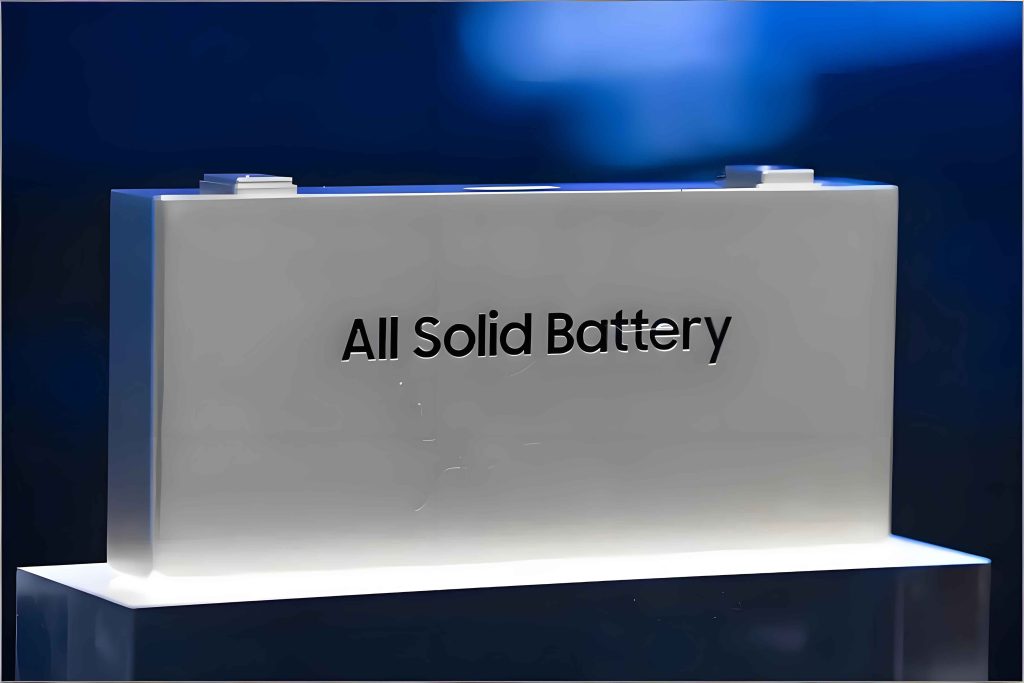
As a researcher deeply involved in the field of energy storage, I have witnessed the rapid evolution of solid-state batteries as a pivotal technology for achieving high safety, high specific energy, and long cycle life. The transition from conventional liquid electrolytes to solid-state systems represents a fundamental shift, addressing critical issues such as flammability, limited energy density, and compatibility with high-capacity electrodes like lithium metal. In this comprehensive review, I will delve into the recent progress in solid-state batteries, focusing on the design and preparation of solid electrolytes, the modification of interfaces, and the future directions for this promising technology. Throughout this article, the term “solid-state battery” will be emphasized to underscore its significance in next-generation energy storage solutions.
The foundation of any solid-state battery lies in its solid electrolyte, which must exhibit high ionic conductivity, excellent mechanical properties, and good processability. Solid electrolytes can be broadly categorized into polymers, inorganic oxides, and sulfides, each with distinct advantages and drawbacks. To provide a clear comparison, I have summarized their key properties in Table 1.
| Type | Ionic Conductivity (S/cm) | Mechanical Flexibility | Chemical Stability | Processing Ease |
|---|---|---|---|---|
| Polymer (e.g., PEO-based) | 10^{-8} – 10^{-5} at 25°C | High | Moderate | Excellent |
| Inorganic Oxide (e.g., LLZO) | 10^{-6} – 10^{-3} at 25°C | Low (brittle) | High | Difficult |
| Sulfide (e.g., LGPS) | 10^{-4} – 10^{-2} at 25°C | Moderate | Low (moisture-sensitive) | Moderate |
| Composite (Polymer + Inorganic) | 10^{-5} – 10^{-3} at 25°C | High | Improved | Good |
Table 1: Comparison of different solid electrolyte types for solid-state batteries. Composite electrolytes aim to combine the best attributes of each category.
Polymer electrolytes, such as those based on poly(ethylene oxide) (PEO), offer excellent flexibility and ease of fabrication, but their low room-temperature ionic conductivity remains a major hurdle. The ionic conductivity in polymers often follows the Arrhenius equation, which describes the temperature dependence:
$$ \sigma = \sigma_0 \exp\left(-\frac{E_a}{k_B T}\right) $$
where $\sigma$ is the ionic conductivity, $\sigma_0$ is the pre-exponential factor, $E_a$ is the activation energy, $k_B$ is Boltzmann’s constant, and $T$ is the temperature. For PEO-based systems, $E_a$ is typically high, leading to poor performance at ambient conditions. To overcome this, researchers have explored blending with inert inorganic nanoparticles like SiO₂ or TiO₂. These nanoparticles act as Lewis acid-base sites, promoting lithium salt dissociation and reducing polymer crystallinity. For instance, the incorporation of 10-15 wt% SiO₂ can enhance conductivity by 1-2 orders of magnitude. The effective medium theory can be applied to model the composite conductivity:
$$ \sigma_{\text{composite}} = \phi_p \sigma_p + \phi_f \sigma_f + \beta \phi_p \phi_f $$
where $\phi_p$ and $\phi_f$ are the volume fractions of polymer and filler, $\sigma_p$ and $\sigma_f$ are their respective conductivities, and $\beta$ is an interaction parameter accounting for interface effects. This approach has led to composite electrolytes with conductivities around $4.4 \times 10^{-5}$ S/cm at 30°C.
Inorganic solid electrolytes, particularly oxide ceramics like garnet-type Li₇La₃Zr₂O₁₂ (LLZO) and NASICON-type Li₁.₃Al₀.₃Ti₁.₇(PO₄)₃ (LATP), exhibit higher ionic conductivities but suffer from brittle nature and poor interfacial contact. Their conductivity often stems from Li⁺ hopping mechanisms, which can be described by the Nernst-Einstein relation:
$$ \sigma = \frac{n q^2 D}{k_B T} $$
where $n$ is the charge carrier concentration, $q$ is the charge, and $D$ is the diffusion coefficient. For LLZO, doping with elements like Ta or Al can stabilize the cubic phase and boost conductivity to over $10^{-3}$ S/cm. However, the rigid ceramic particles create high interfacial resistance in a solid-state battery, necessitating innovative composite designs.
Sulfide electrolytes, such as Li₁₀GeP₂S₁₂ (LGPS), show exceptionally high ionic conductivities (up to $10^{-2}$ S/cm at room temperature), rivaling liquid electrolytes. Their soft lattice allows for facile Li⁺ migration, but they are prone to degradation upon exposure to moisture, releasing toxic H₂S gas. The conductivity in sulfides can be modeled using the Vogel-Fulcher-Tammann equation for glassy systems:
$$ \sigma = A \exp\left(-\frac{B}{T – T_0}\right) $$
where $A$, $B$, and $T_0$ are constants. Despite their promise, the poor chemical stability limits practical application in solid-state batteries.
To harness the benefits of each category, composite solid electrolytes have emerged as a leading solution. These typically combine a polymer matrix with conductive inorganic particles, forming a hybrid system with enhanced properties. For example, a composite of PEO and Li₆.₇₅La₃Zr₁.₇₅Ta₀.₂₅O₁₂ (LLZTO) can achieve a room-temperature conductivity of $5 \times 10^{-4}$ S/cm, along with improved mechanical strength. The percolation threshold for ionic conduction in such composites can be estimated using:
$$ \phi_c = \frac{1}{1 + \left(\frac{d_f}{d_p}\right)^\gamma} $$
where $\phi_c$ is the critical volume fraction of filler, $d_f$ and $d_p$ are the diameters of filler and polymer chains, and $\gamma$ is a dimensionality factor. Below this threshold, conduction is primarily through the polymer phase; above it, percolating pathways through the filler contribute significantly. This dual-phase conduction mechanism is key to optimizing performance in solid-state batteries.
Another innovative approach involves 3D nanostructured frameworks, such as LLTO hydrogels, which provide continuous ion transport channels while preventing nanoparticle agglomeration. These structures can be described using fractal geometry, where the conductivity scales with pore size:
$$ \sigma \propto r^{d_f – 2} $$
with $r$ as the pore radius and $d_f$ as the fractal dimension. Such designs have yielded composite electrolytes with conductivities of $8.8 \times 10^{-5}$ S/cm at room temperature, demonstrating the potential for high-performance solid-state batteries.
Beyond electrolytes, interfacial issues are critical in solid-state batteries. The solid-solid interfaces between electrolyte and electrodes often exhibit high impedance, parasitic reactions, and dendrite growth. Two main interfaces are of concern: the solid electrolyte/lithium metal anode and the solid electrolyte/cathode.
For the lithium metal interface, the challenges include poor wettability, formation of resistive interphases, and lithium dendrite penetration. The interfacial resistance $R_{\text{int}}$ can be modeled as a combination of charge transfer resistance $R_{ct}$ and diffusion resistance $R_d$:
$$ R_{\text{int}} = R_{ct} + R_d = \frac{RT}{nF i_0} + \frac{\delta}{D_{\text{Li}} C_{\text{Li}}} $$
where $i_0$ is the exchange current density, $\delta$ is the interface thickness, $D_{\text{Li}}$ is the Li⁺ diffusion coefficient, and $C_{\text{Li}}$ is the Li⁺ concentration. To mitigate these issues, surface modifications like atomic layer deposition (ALD) of Al₂O₃ or Ge layers have been employed. For instance, a Ge layer can alloy with lithium, reducing $R_{\text{int}}$ from 900 Ω to 115 Ω. Alternatively, introducing a polymer buffer layer, such as PEO-LiTFSI, can improve contact and suppress dendrites. The dendrite growth velocity $v$ can be described by the Monroe-Newman model:
$$ v = \frac{\mu_{\text{Li}} E}{\eta} $$
where $\mu_{\text{Li}}$ is the Li⁺ mobility, $E$ is the electric field, and $\eta$ is the overpotential. By enhancing interface homogeneity, these strategies promote stable cycling in solid-state batteries.
Artificial interphases, such as Li₃PO₄ layers formed via polyphosphoric acid treatment, or Li-Al alloy layers fabricated by cold pressing, have also shown promise. These layers act as barriers against side reactions and reduce $R_{\text{int}}$. For example, a Li-Al alloy layer can lower the interfacial impedance to 90 Ω·cm², enabling long-term stability. The effectiveness of such layers can be quantified by the Wagner number $Wa$:
$$ Wa = \frac{\kappa}{\sigma_{\text{el}} L} $$
where $\kappa$ is the ionic conductivity of the interphase, $\sigma_{\text{el}}$ is the electronic conductivity, and $L$ is the thickness. A high $Wa$ indicates dominant ionic conduction, which inhibits dendrite formation.
For the cathode interface, issues include poor physical contact, volume changes during cycling, and space-charge layer effects. Composite cathodes, which blend active material, solid electrolyte, and conductive additives, are commonly used to enhance ion and electron transport. The effective conductivity $\sigma_{\text{eff}}$ of a composite cathode can be estimated using the Bruggeman equation:
$$ \phi_a \frac{\sigma_a – \sigma_{\text{eff}}}{\sigma_a + 2\sigma_{\text{eff}}} + \phi_e \frac{\sigma_e – \sigma_{\text{eff}}}{\sigma_e + 2\sigma_{\text{eff}}} = 0 $$
where $\phi_a$ and $\phi_e$ are the volume fractions of active material and electrolyte, with conductivities $\sigma_a$ and $\sigma_e$, respectively. Optimizing these parameters is crucial for achieving high capacity in solid-state batteries. Surface coating of cathode materials, like polyacrylonitrile-butadiene on NCM622, can further improve compatibility, leading to capacities of 99 mAh/g at 3C and 75% retention after 400 cycles.
To summarize the key advancements in interfacial engineering for solid-state batteries, I have compiled Table 2, which outlines various modification techniques and their impacts.
| Interface | Modification Technique | Key Effect | Resulting $R_{\text{int}}$ Reduction |
|---|---|---|---|
| Li Metal/SE | ALD Al₂O₃ coating | Improved wettability | From ~1000 to ~100 Ω·cm² |
| Li Metal/SE | Ge alloying layer | Enhanced contact | From 900 to 115 Ω |
| Li Metal/SE | Polymer buffer (PEO) | Dendrite suppression | ~50% decrease |
| Li Metal/SE | Li₃PO₄ artificial SEI | Chemical stability | ~60% improvement |
| Cathode/SE | Composite cathode design | Better ion/electron percolation | Increased capacity retention |
| Cathode/SE | Surface coating (e.g., PAB) | Reduced side reactions | ~25% higher cycle life |
Table 2: Summary of interface modification strategies in solid-state batteries (SE: solid electrolyte).
Looking ahead, the development of solid-state batteries faces several challenges that require concerted research efforts. First, the ion transport mechanisms in composite electrolytes need deeper understanding. The effective medium theory can be extended to account for interfacial phases:
$$ \sigma_{\text{total}} = \sigma_{\text{bulk}} + \sigma_{\text{interface}} = \sum_i \phi_i \sigma_i + \alpha \phi_f \phi_p \Delta \sigma $$
where $\alpha$ is a coupling constant and $\Delta \sigma$ represents the conductivity enhancement at interfaces. Second, interface evolution during cycling must be studied in situ, using techniques like impedance spectroscopy and X-ray tomography. The growth of interphases can be modeled with the Avrami equation:
$$ X(t) = 1 – \exp(-k t^n) $$
where $X(t)$ is the fraction transformed, $k$ is the rate constant, and $n$ is the Avrami exponent. Third, scalability and cost-effectiveness of fabrication methods, such as tape-casting or 3D printing, are essential for commercialization. Finally, safety under extreme conditions, including thermal runaway and mechanical abuse, must be assessed through multiphysics simulations.
In conclusion, solid-state batteries represent a transformative technology with the potential to revolutionize energy storage. Through innovative composite electrolytes and advanced interface engineering, significant progress has been made in enhancing ionic conductivity, mechanical robustness, and cycling stability. However, achieving widespread adoption will require overcoming material-level and system-level hurdles. Future research should focus on elucidating fundamental mechanisms, developing scalable processes, and integrating solid-state batteries into real-world applications. As I continue to explore this field, I am optimistic that continued interdisciplinary efforts will unlock the full potential of solid-state batteries, paving the way for safer, higher-energy, and longer-lasting energy storage systems.
To further illustrate the performance metrics of various solid-state battery configurations, Table 3 provides a comparison based on recent studies.
| Battery Configuration | Solid Electrolyte Type | Ionic Conductivity (S/cm, 25°C) | Cycle Life (Capacity Retention) | Key Advancement |
|---|---|---|---|---|
| LiFePO₄/Li | PEO-LLZTO Composite | 5.2 × 10^{-4} | 95% after 200 cycles at 1C | High room-temperature performance |
| LiMn₀.₈Fe₀.₂PO₄/Li | LAGP-PEO Composite | ~10^{-4} | 96% after 100 cycles at 0.1C | Improved interface with Li-Al alloy |
| NCM622/Li | Sulfide (LGPS) based | 10^{-2} | 75% after 400 cycles at 3C | High-rate capability with coating |
| LiCoO₂/Li | PVDF-LLZTO Composite | 5 × 10^{-4} | ~90% after 150 cycles | Flexible and thermally stable |
| Symmetrical Li/Li | Li₃OCl-LLZTO Composite | 2.27 × 10^{-4} | Stable for 1000 h at 0.1 mA/cm² | Effective dendrite suppression |
Table 3: Performance comparison of different solid-state battery systems.
The journey toward practical solid-state batteries is ongoing, but with each breakthrough in materials science and engineering, we move closer to realizing their immense promise. I encourage researchers to continue exploring novel compositions, interfaces, and manufacturing techniques to accelerate the deployment of solid-state batteries in electric vehicles, grid storage, and beyond.