
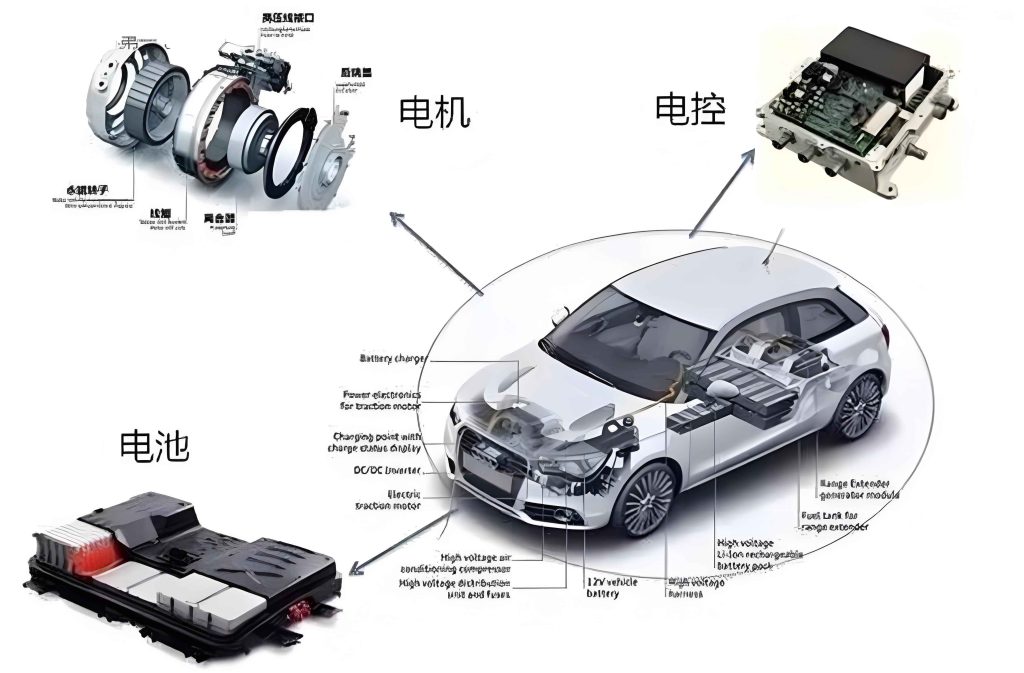
In recent years, the automotive industry has undergone a rapid transformation, driven by advancements in electronic control systems. As an educator in this field, I have observed significant gaps in how we teach automotive electronic control technology. Traditional methods often fail to keep pace with technological evolution, leading to a disconnect between theoretical knowledge and practical skills. This article explores the current challenges in teaching automotive electronic control technology, analyzes existing teaching modes, and proposes a comprehensive reform based on digital technologies. By integrating digital tools, we can enhance learning outcomes, foster innovation, and better prepare students for the demands of modern automotive engineering. Throughout this discussion, I will emphasize the critical role of the motor control unit (MCU) as a central component in these systems, and I will use tables and formulas to summarize key concepts and methodologies.
The motor control unit, or MCU, is at the heart of automotive electronic control systems, managing functions such as engine performance, transmission, and braking. Understanding its operation is essential for students, yet teaching it effectively requires a blend of theory and hands-on practice. In my experience, many educational institutions struggle to provide this balance, resulting in graduates who may lack the proficiency needed in industry. This article aims to address these issues by detailing a digital-based teaching approach that leverages resources like virtual simulations and online platforms. By doing so, we can create a more engaging and effective learning environment that highlights the importance of the motor control unit in real-world applications.
Current Challenges in Teaching Automotive Electronic Control Technology
Teaching automotive electronic control technology faces several persistent problems that hinder student learning and skill development. First, the教学模式 often remains rooted in mechanical thinking, neglecting the interdisciplinary nature of modern automotive systems. This narrow focus makes it difficult for instructors to integrate knowledge from electronics, software, and control theory, leaving students with fragmented understanding. For instance, when discussing the motor control unit, teachers might emphasize hardware aspects without covering the software algorithms that govern its function, such as PID control or fuzzy logic. This gap can be summarized in the following formula for a basic PID controller used in MCUs:
$$ u(t) = K_p e(t) + K_i \int_0^t e(\tau) d\tau + K_d \frac{de(t)}{dt} $$
where \( u(t) \) is the control output, \( e(t) \) is the error signal, and \( K_p \), \( K_i \), and \( K_d \) are tuning parameters. Without practical exposure, students may memorize this formula but fail to apply it in designing or troubleshooting motor control units.
Second, there is a significant disconnect between theoretical instruction and practical training. In many courses, lectures on topics like sensor networks or communication protocols are delivered in isolation from lab sessions. This separation prevents students from seeing how concepts like CAN bus or LIN protocols operate in actual motor control units. As a result, they may struggle to diagnose issues or optimize systems in real vehicles. Third, limited resources often restrict实践教学. Schools may lack advanced equipment, such as dynamometers or diagnostic tools, due to high costs, making it hard for students to gain hands-on experience with motor control units and other electronic components. The table below summarizes these key issues and their impacts on learning outcomes.
| Problem | Description | Impact on Students |
|---|---|---|
| Outdated Teaching Mode | Reliance on mechanical approaches without interdisciplinary integration. | Difficulty understanding complex systems like motor control units. |
| Theory-Practice Gap | Lack of coordination between lectures and hands-on activities. | Inability to apply theoretical knowledge, e.g., in MCU programming. |
| Insufficient Practical Training | Inadequate equipment and funding for lab work. | Poor mastery of实操 skills related to motor control units. |
To overcome these challenges, we must rethink our pedagogical strategies. Digital technologies offer promising solutions by bridging theory and practice, as I will discuss in later sections. For now, it is crucial to recognize that the motor control unit serves as a prime example of why reform is needed—its complexity demands a holistic teaching approach that digital tools can facilitate.
Analysis of Existing Teaching Modes
In automotive electronic control technology education, two primary teaching modes are commonly employed: project-based and interactive. Each has distinct characteristics that influence how students learn about components like the motor control unit. The project-based mode centers on tasks or projects where students combine theory and practice to analyze and implement specific objectives. This mode encourages deep understanding and innovation, as learners engage directly with real-world scenarios, such as designing a motor control unit for an electric vehicle. However, it can be time-consuming, often exceeding allocated course hours, which may limit coverage of broader topics.
In contrast, the interactive mode emphasizes dialogue between teachers and students, fostering collaborative discussion and critical thinking. This approach helps build creative problem-solving skills and self-learning abilities, which are valuable for grasping abstract concepts in electronic control. For example, when exploring the software architecture of a motor control unit, interactive sessions can allow students to debate design choices or simulate outcomes. Yet, this mode may lack the hands-on rigor needed for technical proficiency. The table below compares these two modes in the context of teaching motor control unit-related content.
| Teaching Mode | Key Features | Advantages for MCU Learning | Limitations |
|---|---|---|---|
| Project-Based | Focus on practical tasks, integration of theory and practice. | Enhances understanding of motor control unit applications; fosters innovation. | Time-intensive; may not cover all theoretical aspects. |
| Interactive | Emphasis on discussion, teacher-student interaction. | Develops critical thinking on MCU algorithms; improves self-learning. | Less hands-on; may lack practical depth. |
From my perspective, neither mode is sufficient alone. A blended approach that leverages digital technologies can combine the strengths of both. For instance, virtual simulations can support project-based learning by allowing students to experiment with motor control unit designs without physical hardware, while online forums can facilitate interactive discussions. This integration aligns with the goal of making motor control unit education more accessible and effective. Additionally, mathematical models can enhance understanding; for example, the dynamics of a motor controlled by an MCU can be represented as:
$$ J \frac{d\omega}{dt} + B\omega = T_e – T_l $$
where \( J \) is the moment of inertia, \( \omega \) is angular velocity, \( B \) is damping coefficient, \( T_e \) is electromagnetic torque from the motor control unit, and \( T_l \) is load torque. Such formulas, when taught through digital interactive tools, can help students visualize and manipulate parameters in real-time.
Constructing a Digital-Based Teaching Mode for Automotive Electronic Control Technology
To address the shortcomings in current teaching, I propose a comprehensive digital-based教学模式 that focuses on four key areas: digital教学资源, digital teaching methods, digital evaluation systems, and digital practice platforms. This approach aims to create a seamless learning experience where the motor control unit and other components are taught through integrated theoretical and practical modules. By adopting digital tools, we can overcome resource constraints and enhance student engagement, ultimately producing graduates who are proficient in modern automotive technologies.
Developing Digital Teaching Resources
Digital教学资源 form the foundation of this reform. These resources include multimedia libraries, e-textbooks, online courses, instructional videos, case studies, and question banks. For automotive electronic control technology, a well-curated digital resource库 can provide students with diverse materials to explore topics like the motor control unit in depth. For example, a video demonstration of an MCU’s internal circuitry can supplement textbook descriptions, making abstract concepts tangible. Additionally, virtual仿真实验 platforms are crucial for实践教学. They allow students to simulate motor control unit operations in a risk-free environment, practicing skills such as parameter tuning or fault diagnosis. The benefits of these resources are summarized in the formula for learning efficiency:
$$ L_e = \frac{R_d \times E_p}{T_s} $$
where \( L_e \) represents learning efficiency, \( R_d \) is the quality of digital resources, \( E_p \) is student engagement, and \( T_s \) is time spent. Higher-quality resources, like interactive MCU simulators, can boost \( L_e \) by increasing \( E_p \) and reducing \( T_s \) for skill acquisition.
Specifically, we should build a digital教学资源库 for automotive electronic control technology, containing standardized curricula, lesson plans, e-books, and网络课程. This库 can be accessed anytime, supporting self-paced learning and revision. For the motor control unit, modules could include animations of signal processing or downloadable schematics. Furthermore, a digital试题库 with adaptive difficulty levels can help students assess their understanding of MCU principles. The table below outlines the components of an ideal digital resource system.
| Resource Type | Description | Example Related to Motor Control Unit |
|---|---|---|
| Multimedia Library | Collection of videos, images, and audio explaining concepts. | 3D animation of MCU architecture and data flow. |
| Virtual Simulation Platform | Software for simulating electronic control systems. | Interactive tool to program and test motor control unit algorithms. |
| Digital Question Bank | Database of quizzes and exams with varying difficulty. | MCU-specific problems on calibration or troubleshooting. |
| E-Textbooks | Online textbooks with embedded links and updates. | Chapters detailing motor control unit design for hybrid vehicles. |
By investing in these resources, institutions can provide equitable access to high-quality education, even with limited physical equipment. The motor control unit, as a complex device, benefits greatly from such digital representations, allowing students to explore its functions without the cost of physical prototypes.
Exploring Digital Teaching Methods
Digital教学模式 involves innovative pedagogical strategies that leverage technology to enhance learning. One effective method is the blended online-offline approach, where students use digital platforms for预习 and then apply knowledge in hands-on sessions. For instance, before a lab on motor control unit calibration, students might watch a tutorial video or complete an online module on calibration techniques. This prepares them for practical work, improving efficiency and outcomes. Another method is project-based learning enhanced by digital tools. Students can work on projects like optimizing a motor control unit for energy efficiency, using simulation software to model scenarios and analyze data. This fosters creativity and teamwork while deepening understanding of MCU operations.
Moreover,多元化教学方法, such as scenario simulations, case analyses, group discussions, and role-playing, can be facilitated through digital means. In a scenario simulation, students might role-play as engineers diagnosing a faulty motor control unit in a virtual automotive shop, using digital diagnostic tools. These methods make learning interactive and relevant, especially for technical topics like the motor control unit. The effectiveness of these approaches can be quantified using a learning gain formula:
$$ G = \frac{P_f – P_i}{P_i} \times 100\% $$
where \( G \) is the percentage gain in knowledge, \( P_i \) is initial proficiency (e.g., in MCU theory), and \( P_f \) is final proficiency after digital intervention. Studies show that digital methods often yield higher \( G \) values due to increased engagement and personalized pacing.
To illustrate, consider a case where students use a digital platform to collaborate on designing a motor control unit for an autonomous vehicle. They can share code, run simulations, and receive instant feedback, mimicking real-world engineering workflows. This not only teaches technical skills but also soft skills like communication and project management. The following table compares traditional and digital teaching methods in the context of motor control unit education.
| Method Type | Traditional Approach | Digital Approach | Impact on MCU Understanding |
|---|---|---|---|
| Lecture-Based | In-person lectures with static slides. | Online lectures with interactive quizzes and MCU animations. | Digital approach increases retention of MCU principles. |
| Lab Sessions | Physical labs with limited equipment. | Virtual labs using simulation software for MCU testing. | Digital labs allow unlimited practice with motor control units. |
| Assessment | Written exams on theory. | Digital portfolios including MCU project reports and simulations. | Digital assessment provides holistic evaluation of MCU skills. |
By adopting these digital methods, educators can create a dynamic learning environment where the motor control unit is studied through multiple lenses, reinforcing both theoretical and practical knowledge. The key is to ensure that technology complements, rather than replaces, human interaction, maintaining the benefits of interactive teaching while adding digital enhancements.
Building a Digital Evaluation System
A digital评价体系 is essential for全面评估 student learning and competencies in automotive electronic control technology. Traditional exams often focus on memorization, but digital tools enable more nuanced assessments that reflect real-world skills, such as those needed for working with motor control units. A多元化评价体系 can combine平时成绩, midterms, finals, and practical components, all managed through digital platforms. For example, students might submit video recordings of themselves troubleshooting a motor control unit, which are then graded using rubrics embedded in a learning management system. This approach captures a wider range of abilities, from technical proficiency to problem-solving.
Additionally, implementing student self-assessment and peer review mechanisms can enhance learning. Through digital portals, students can evaluate their own understanding of motor control unit concepts and provide feedback on peers’ projects. This fosters metacognition and collaboration, key traits for automotive engineers. The process can be modeled using a feedback loop equation common in control theory, akin to how a motor control unit regulates output:
$$ Y(s) = G(s) U(s) + H(s) E(s) $$
where \( Y(s) \) is the learning outcome, \( G(s) \) represents the teaching process, \( U(s) \) is student input, \( H(s) \) is feedback from evaluations, and \( E(s) \) denotes errors or gaps. Digital evaluation systems optimize \( H(s) \) by providing timely, data-driven insights, much like an MCU adjusts performance based on sensor feedback.
Furthermore, digital assessment of教学质量 can help institutions improve continuously. Surveys and online评教 tools can collect feedback from students on courses covering motor control unit topics, identifying areas for enhancement. This data-driven approach ensures that teaching methods evolve with technological advancements. The table below outlines the components of a comprehensive digital evaluation system for automotive electronic control technology.
| Evaluation Component | Description | Application to Motor Control Unit |
|---|---|---|
| Formative Assessments | Ongoing quizzes and assignments via digital platforms. | Weekly quizzes on MCU programming languages like C. |
| Summative Assessments | Final exams or projects evaluated digitally. | Digital submission of an MCU design project with simulation results. |
| Self and Peer Assessment | Online tools for students to rate their own and others’ work. | Peer review of MCU code efficiency in a shared repository. |
| Teaching Quality Surveys | Digital questionnaires to gather feedback on instruction. | Survey on the effectiveness of MCU lab sessions. |
By integrating these elements, we can create a robust evaluation framework that not only measures knowledge but also encourages continuous improvement in both students and instructors. For motor control unit education, this means ensuring that assessments reflect the complexity of real-world applications, from hardware interfacing to software debugging.
Establishing Digital Practice Platforms
Digital实践平台 are critical for bridging the theory-practice gap in automotive electronic control technology. These platforms provide opportunities for hands-on experience without the high costs associated with physical equipment. For instance, a virtual实验实训室 can simulate a full automotive workshop where students interact with digital twins of motor control units, testing configurations and diagnosing faults. This allows for repetitive practice, which is essential for mastering skills like calibrating an MCU for optimal engine performance. The benefits can be expressed through a practice efficiency formula:
$$ P_e = \frac{N_s \times F_d}{T_p} $$
where \( P_e \) is practice efficiency, \( N_s \) is the number of simulated scenarios (e.g., MCU failure modes), \( F_d \) is the fidelity of the digital platform, and \( T_p \) is time spent. High-fidelity simulations, such as those replicating exact motor control unit behaviors, can significantly increase \( P_e \).
Moreover, industry-academia collaboration through digital platforms can enhance实践教学. Partnerships with automotive companies can provide access to real-world data and tools, such as proprietary software for motor control unit analysis. Students might participate in online internships, working remotely on projects that involve actual MCU datasets. This exposure prepares them for career challenges and emphasizes the importance of the motor control unit in industry settings. Additionally,创新创业教育 can be integrated by using digital platforms to incubate student ideas, such as developing a novel MCU algorithm for electric vehicles. The table below summarizes key digital practice initiatives.
| Platform Type | Features | Benefits for Motor Control Unit Learning |
|---|---|---|
| Virtual Labs | Cloud-based simulators for electronic control systems. | Safe environment to experiment with MCU parameters and protocols. |
| Industry Collaboration Portals | Online platforms connecting students with companies. | Access to real MCU projects and mentorship from experts. |
| Innovation Hubs | Digital spaces for prototyping and startup ideas. | Opportunity to design and test new MCU applications. |
| Remote Access Labs | Hardware kits controllable via internet for hands-on practice. | Physical interaction with motor control units from any location. |
From my viewpoint, these platforms democratize access to quality实践教学, especially for institutions with limited budgets. By focusing on the motor control unit as a case study, students can gain comprehensive experience—from theoretical design to practical implementation—all within a digital ecosystem. This aligns with the broader goal of making automotive education more adaptive and future-ready.
Reform Measures and Recommendations
While digital technologies offer immense potential for teaching automotive electronic control technology, their implementation must be carefully managed to avoid pitfalls like over-reliance on tools or reduced interpersonal interaction. Based on my analysis, I propose several reform measures to optimize the digital-based教学模式. First, adopt多元化教学方法 that blend project-based, interactive, and digital elements. For example, when teaching about the motor control unit, combine virtual simulations (project-based) with online讨论 forums (interactive) to ensure both hands-on skill development and critical thinking. This balance can be guided by a teaching strategy matrix, where methods are selected based on learning objectives related to the motor control unit.
Second, strengthen teacher training to提升 educators’ digital literacy and instructional skills. Instructors should receive professional development on using tools like MCU simulators or data analytics for assessment. This ensures that technology enhances, rather than hinders, pedagogy. Third, increase实践教学环节 through digital means, such as building more virtual labs or fostering industry partnerships. For instance, schools can collaborate with motor control unit manufacturers to create online modules based on latest products. These measures can be summarized in the following optimization equation for teaching quality:
$$ Q_t = \alpha M_d + \beta T_t + \gamma P_d $$
where \( Q_t \) is overall teaching quality, \( M_d \) represents the diversity of teaching methods, \( T_t \) is teacher training effectiveness, \( P_d \) is the extent of digital practice, and \( \alpha, \beta, \gamma \) are weighting coefficients based on institutional priorities. Maximizing \( Q_t \) requires investing in all three areas, with a focus on motor control unit applications.
Additionally, it is crucial to continuously update digital resources to reflect technological advancements. The motor control unit, for example, evolves with trends like AI integration or vehicle-to-grid communication; teaching materials must keep pace. Regular feedback loops from students and industry can inform these updates. The table below outlines specific actions for implementing these reforms.
| Action Area | Specific Measures | Expected Impact on Motor Control Unit Education |
|---|---|---|
| Methodology Innovation | Integrate blended learning, gamification, and case studies. | Improved student engagement in MCU topics; higher retention rates. |
| Teacher Development | Offer workshops on digital tools and curriculum design. | Instructors better equipped to teach complex MCU concepts. |
| Resource Enhancement | Develop open-source MCU simulation software and datasets. | Reduced costs; broader access to MCU learning materials. |
| Industry Engagement | Create digital internship programs with automotive firms. | Students gain real-world MCU experience; enhanced employability. |
By implementing these measures, educational institutions can create a sustainable and effective teaching ecosystem for automotive electronic control technology. The motor control unit, as a central element, will benefit from this holistic approach, ensuring that graduates are not only knowledgeable but also adept at applying their skills in innovative ways.
Conclusion
In conclusion, reforming the teaching of automotive electronic control technology through digital innovation is imperative to address current challenges and prepare students for the future. By analyzing existing modes and constructing a digital-based approach, we can bridge the theory-practice gap, enhance resource accessibility, and foster a more engaging learning environment. Throughout this article, I have emphasized the critical role of the motor control unit in automotive systems, using it as a lens to explore teaching methodologies. The integration of digital resources, methods, evaluation systems, and practice platforms offers a comprehensive solution that can adapt to evolving industry needs.
From my perspective, the success of this reform hinges on collaborative efforts among educators, institutions, and industry partners. By prioritizing多元化教学方法, investing in teacher training, and leveraging digital tools, we can transform automotive electronic control technology education into a dynamic field that produces skilled engineers. The motor control unit, with its complexity and importance, serves as a perfect testbed for these innovations. As we move forward, continuous refinement based on feedback and technological trends will ensure that our teaching remains relevant and effective. Ultimately, this digital transformation will not only improve learning outcomes but also contribute to advancements in the automotive industry, where the motor control unit continues to drive innovation.