
As the world accelerates its energy transition under the dual-carbon goals, I observe unprecedented growth in the electric vehicle (EV) and energy storage sectors. The EV market is experiencing explosive expansion, with global sales projected to exceed 70 million units by 2030, while energy storage battery shipments surged to 314.7 GW·h in 2024, a 60% year-on-year increase. This rapid development is driven by policy support and technological innovation, yet it also highlights the limitations of current lithium-ion batteries. Traditional liquid electrolytes pose inherent safety risks such as leakage, combustion, and thermal runaway, and energy densities are capped at around 185 W·h/kg for lithium iron phosphate and 260 W·h/kg for ternary cathode systems. These constraints fuel the urgent need for next-generation solutions, and in my view, solid-state batteries emerge as a pivotal technology to address these issues.
Solid-state batteries replace liquid electrolytes with solid electrolytes, fundamentally enhancing safety by eliminating flammable components. Moreover, they promise higher energy densities and faster charging capabilities, potentially overcoming range anxiety and longevity concerns in EVs. The global research community is intensifying efforts to advance solid-state battery technology, aiming to secure a strategic edge in the future energy landscape. From my perspective, this technology represents not just an incremental improvement but a transformative leap for electrochemical energy storage.
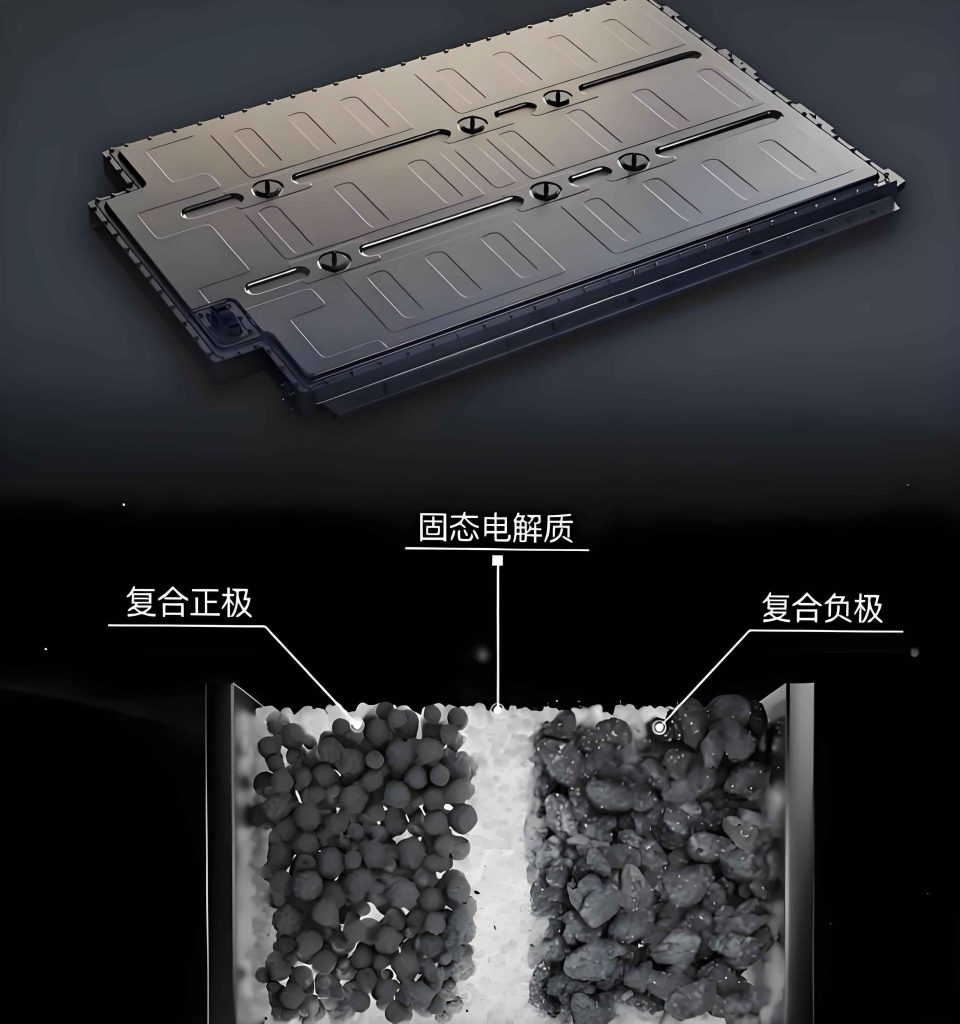
In assessing solid-state batteries, I recognize several core advantages. First, safety is paramount: solid electrolytes are non-flammable and less prone to dendrite formation, reducing risks of short circuits. Second, energy density can be boosted by enabling high-voltage cathodes and lithium-metal anodes. For instance, theoretical energy densities for solid-state batteries with lithium metal anodes can exceed 500 W·h/kg, far surpassing current lithium-ion systems. Third, solid-state batteries offer wider operating temperature ranges and longer cycle life. However, significant hurdles remain, particularly in material science and engineering. The ion conductivity of solid electrolytes, interfacial stability between electrodes and electrolytes, and manufacturing scalability are critical challenges that must be overcome for widespread adoption.
To delve deeper, let’s examine the key materials for solid-state batteries. Solid electrolytes fall into several categories: oxide-based, sulfide-based, polymer-based, and halide-based. Each has distinct properties affecting performance. For example, sulfide electrolytes often exhibit high ionic conductivity but poor stability in air, while oxide electrolytes are stable but may have lower conductivity. I summarize these in Table 1, comparing their typical ion conductivities, stability, and processing requirements.
| Electrolyte Type | Ionic Conductivity (S/cm) | Stability in Air | Processing Complexity | Key Challenges |
|---|---|---|---|---|
| Oxide (e.g., LLZO) | 10−3 to 10−4 | High | High (sintering needed) | Brittleness, interfacial resistance |
| Sulfide (e.g., LPS) | 10−2 to 10−3 | Low (H2S release) | Medium | Moisture sensitivity, compatibility |
| Polymer (e.g., PEO) | 10−5 to 10−4 | High | Low | Low conductivity at room temperature |
| Halide (e.g., Li3YCl6) | 10−3 to 10−4 | Medium | Medium | Cost, electrochemical window |
Ionic conductivity is a crucial parameter for solid electrolytes, often described by the Arrhenius equation: $$ \sigma = A \exp\left(-\frac{E_a}{kT}\right) $$ where $\sigma$ is the conductivity, $A$ is the pre-exponential factor, $E_a$ is the activation energy, $k$ is Boltzmann’s constant, and $T$ is the temperature. For practical applications, conductivity at room temperature should exceed 10−3 S/cm to compete with liquid electrolytes. Recent advances have pushed sulfide electrolytes to near 10−2 S/cm, but stability issues persist. In my research, I focus on optimizing these materials through doping or composite structures to balance conductivity and stability.
Another critical aspect is the interface between solid electrolyte and electrodes. In solid-state batteries, interfacial resistance can dominate overall cell impedance, leading to poor rate performance and capacity fade. The charge transfer at the interface can be modeled using Butler-Volmer kinetics: $$ i = i_0 \left[ \exp\left(\frac{\alpha n F \eta}{RT}\right) – \exp\left(-\frac{(1-\alpha) n F \eta}{RT}\right) \right] $$ where $i$ is the current density, $i_0$ is the exchange current density, $\alpha$ is the charge transfer coefficient, $n$ is the number of electrons, $F$ is Faraday’s constant, $\eta$ is the overpotential, $R$ is the gas constant, and $T$ is temperature. Minimizing $\eta$ requires intimate contact and chemical compatibility. Strategies like interfacial coatings or hybrid designs are essential. For instance, adding a thin layer of lithium phosphorus oxynitride (LiPON) can stabilize the anode-electrolyte interface.
Energy density is a key driver for solid-state battery development. The theoretical energy density of a battery cell can be expressed as: $$ E = \frac{Q \times V}{m} $$ where $E$ is the energy density (W·h/kg), $Q$ is the capacity (A·h), $V$ is the average voltage (V), and $m$ is the mass (kg). By using high-capacity cathodes like sulfur or high-nickel NCM and lithium-metal anodes, solid-state batteries can achieve significant gains. Table 2 compares projected energy densities for different solid-state battery configurations against current lithium-ion batteries.
| Battery System | Cathode Material | Anode Material | Projected Energy Density (W·h/kg) | Status |
|---|---|---|---|---|
| Current Li-ion | NCM811 | Graphite | 260 | Commercial |
| Solid-state (polymer) | NCM622 | Lithium metal | 300–350 | Pilot scale |
| Solid-state (sulfide) | Sulfur | Lithium metal | 400–500 | Research phase |
| Solid-state (oxide) | High-voltage LNMO | Lithium metal | 350–450 | Development |
From my experience, manufacturing solid-state batteries presents unique challenges. Unlike liquid electrolytes, solid electrolytes require precise processing to form dense, thin layers. Techniques like tape casting, screen printing, and vapor deposition are being explored. Scalability and cost are major concerns; for instance, sulfide electrolytes may need dry-room conditions due to moisture sensitivity. I estimate that reducing the thickness of solid electrolyte layers below 50 μm is crucial for achieving high energy densities, but this demands advanced fabrication methods. Moreover, integrating solid-state batteries into modules and packs requires new thermal management approaches, as heat dissipation differs from liquid systems.
In terms of applications, solid-state batteries hold promise for EVs, grid storage, and portable electronics. For EVs, the enhanced safety and energy density could enable longer ranges and faster charging, potentially reducing battery pack size and weight. In grid storage, the inherent safety may lower insurance costs and allow denser installations. However, each application has specific requirements. For example, EVs need high power density for acceleration, while grid storage prioritizes long cycle life and cost per cycle. I analyze these in Table 3, highlighting how solid-state batteries might meet diverse needs.
| Application | Key Requirements | Solid-State Battery Advantages | Challenges for Adoption |
|---|---|---|---|
| Electric Vehicles | High energy density, fast charging, safety | Safe operation, potential for >500 km range | Cost, power density at low temperatures |
| Grid Energy Storage | Long cycle life, safety, low cost | Non-flammability, extended lifespan | Manufacturing scale-up, material costs |
| Consumer Electronics | High energy density, thin form factors | Enable flexible or compact designs | Interface stability, production yield |
| Aerospace | Lightweight, high reliability | High specific energy, thermal stability | Certification, extreme condition performance |
Looking at global research trends, I see intensified efforts in solid-state battery innovation. Countries like Japan, South Korea, the United States, and China are investing heavily in R&D. Numerous startups and established companies aim to commercialize solid-state batteries within this decade. For instance, some target EV applications with pilot production lines, while others focus on niche markets first. The competition is fierce, with patents filed on novel electrolytes, interface engineering, and cell designs. In my assessment, collaboration between academia and industry is vital to accelerate progress, as fundamental discoveries must translate into practical solutions.
Despite the optimism, I identify several persistent challenges for solid-state batteries. First, interfacial degradation over cycles remains a critical issue. Reactions between electrodes and solid electrolytes can form resistive layers, increasing impedance. This can be quantified by the growth of interfacial resistance $R_i$ over time: $$ R_i(t) = R_0 + k t^{1/2} $$ where $R_0$ is the initial resistance and $k$ is a rate constant dependent on materials. Second, dendrite formation in lithium-metal anodes is not fully suppressed in all solid electrolytes; certain soft polymers may still allow penetration. Third, cost considerations are paramount. Raw materials for solid electrolytes, such as germanium or rare earth elements, can be expensive. I believe that developing low-cost alternatives, like sodium-based solid electrolytes, could be a game-changer.
Opportunities abound, however. Advances in computational materials science enable high-throughput screening for new solid electrolyte compositions. Machine learning models can predict properties like ionic conductivity and stability, speeding up discovery. Additionally, hybrid approaches that combine solid and liquid electrolytes (e.g., gel or quasi-solid-state batteries) offer a pragmatic path to near-term commercialization. These systems mitigate some interfacial issues while retaining safety benefits. From my perspective, the evolution of solid-state batteries will likely involve gradual integration, starting with applications where safety is paramount, such as in aerospace or medical devices.
To quantify performance metrics, I often use figures of merit like specific energy and power. The Ragone plot compares these for different battery technologies. For solid-state batteries, the goal is to shift the curve upward. The power density $P$ relates to internal resistance $R_{int}$ and voltage $V$: $$ P = \frac{V^2}{4 R_{int}} $$ Reducing $R_{int}$ through improved interfaces is thus crucial for high-power applications. Moreover, cycle life can be modeled using empirical decay laws, such as capacity fade per cycle: $$ C_n = C_0 \exp(-\beta n) $$ where $C_n$ is capacity at cycle $n$, $C_0$ is initial capacity, and $\beta$ is a degradation coefficient. For solid-state batteries, $\beta$ needs to be below 0.001 per cycle to achieve thousands of cycles.
In conclusion, solid-state batteries represent a transformative technology with the potential to redefine energy storage. The opportunities in safety, energy density, and application versatility are compelling, yet challenges in materials, interfaces, and manufacturing must be addressed. As I continue to explore this field, I am optimistic that interdisciplinary efforts will overcome these hurdles. The journey toward commercial solid-state batteries is complex, but the rewards—safer, longer-lasting, and more efficient energy storage—are worth the pursuit. By leveraging innovation and collaboration, we can navigate these new opportunities and challenges to power a sustainable future.
Throughout this discussion, I have emphasized the multifaceted nature of solid-state battery development. From fundamental material properties to system integration, each aspect requires careful consideration. The keyword ‘solid-state battery’ encapsulates this entire endeavor, symbolizing both the promise and the pitfalls of next-generation storage. As research progresses, I anticipate breakthroughs that will bring solid-state batteries closer to widespread adoption, ultimately contributing to global energy sustainability goals.