
The rapid evolution of automotive electronic control technology presents a significant challenge for traditional engineering pedagogy. Conventional laboratory instruction, often confined to static vehicle testing in controlled environments, fails to capture the dynamic, real-world interplay of parameters within a vehicle’s electronic control units (ECUs) under actual driving conditions. This limitation severely restricts students’ ability to observe and analyze the complex behaviors of systems like engine management, which are governed by the central motor control unit. To bridge this gap between theoretical knowledge and practical, dynamic application, we developed a cloud-based remote experimental teaching platform. This system transcends geographical and temporal constraints, enabling students to conduct and observe experiments on actual vehicles in motion, thereby accessing a richer, more authentic dataset directly from the vehicle’s network.
The core philosophy of our platform is to virtualize the physical laboratory. Students interact with real vehicle ECUs through a web browser, sending commands and receiving live data streams as the vehicle operates. This approach aligns with the New Engineering Education concept, integrating advanced technologies like IoT, cloud computing, and data analytics into traditional automotive engineering training. The system architecture is built on a Browser/Server (B/S) model, chosen for its scalability and ease of access, requiring only a standard web browser on the student’s device. The platform’s ecosystem comprises three main components: the On-board Data Acquisition System, the Cloud Experiment Platform, and the Web-based Remote Experiment Terminal.
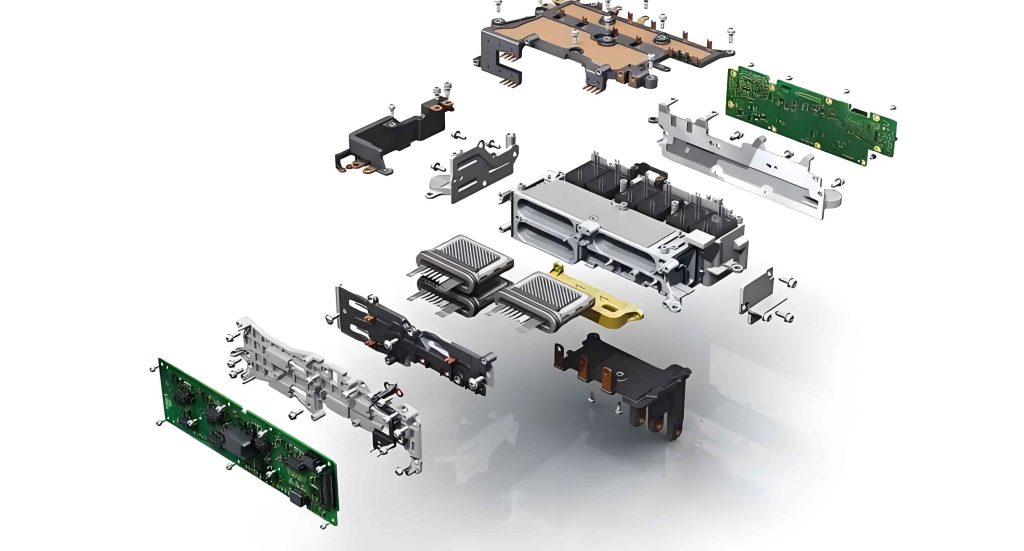
The On-board Data Acquisition System serves as the physical bridge to the vehicle. Based on an STM32F103 microcontroller unit, it is enhanced with critical modules: a 4G wireless communication module for internet connectivity, a GPS module for real-time location tracking, and an LCD for local display. Its primary interface is the vehicle’s OBD-II diagnostic port, through which it communicates via the CAN (Controller Area Network) bus protocol. This allows the system to query the motor control unit and other ECUs for live parameters such as engine speed, load, ignition timing, fuel pressure, and diagnostic trouble codes (DTCs).
A key innovation is the integration of a lightweight operating system, Huawei LiteOS, onto the STM32. This provides a multi-tasking framework, transforming the data acquisition unit from a simple logger into a programmable edge-computing device. Students can develop and deploy custom tasks—for instance, an algorithm to calculate real-time fuel efficiency or to implement a custom alert logic—which then run directly on the vehicle hardware. The system establishes a persistent TCP connection with the cloud server via the 4G network, telemetring all collected data upstream and receiving control commands downstream from users.
The Cloud Experiment Platform, hosted on a commercial cloud server, acts as the system’s brain and data hub. It is a cohesive suite of software comprising a dedicated Remote Experiment Center application, a relational database, and a Web Server. The Remote Experiment Center, developed in LabVIEW, is the operational core for instructors. It manages student authentication, orchestrates active experiments, displays real-time data feeds from the vehicle, and most importantly, handles the bidirectional data flow between the vehicle and the database.
All telemetry from the vehicle—every parameter polled from the motor control unit—is timestamped and stored in the cloud database. This historical data repository is invaluable for post-experiment analysis. The Web Server dynamically generates the user interface seen by students and facilitates the AJAX-style communication needed for real-time updates. The modular design of the LabVIEW application allows for straightforward expansion; new experiment VIs (Virtual Instruments) can be added to the main launcher as they are developed.
The student-facing interface is the Web-based Remote Experiment Terminal. Built using ASP.NET, it presents a series of interactive web pages. After logging in with credentials managed in the cloud database, students access a main dashboard listing all available experiments. Each experiment page is designed with intuitive controls (e.g., virtual buttons to “Start Engine” or “Enable Sensor”) and rich, dynamic visualizations like real-time gauges, plotting charts, and map widgets showing vehicle location. This front-end fetches live data from the cloud server and sends control requests back to it, creating a seamless interactive experience that mimics being physically present in the vehicle.
We have established a novel “Remote Experiment Platform + Live Broadcast” teaching model. During a lab session, the instructor operates the Cloud Experiment Center and simultaneously streams a live video feed from the vehicle’s cabin (showing the dashboard, the data acquisition system’s display, and the road) using a standard streaming service. Students watch the live context while independently interacting with the web interface to control the experiment and collect data. This hybrid approach combines the authenticity of a real-world test with the interactive, scalable nature of digital learning. The platform supports a spectrum of experiments, from foundational to open-ended projects.
Foundational Experiment: Analyzing Ignition Timing Dynamics
A core foundational experiment involves investigating the relationship between ignition advance angle, engine speed, and load. In a traditional lab, measuring this under load is impossible. Our platform allows students to command experiments while the vehicle is driven. The student’s web interface displays real-time gauges for engine RPM, load, and ignition advance. A key feature is the ability to switch to a plot view, which charts these parameters over time as driving conditions change.
The fundamental relationship explored is governed by the engine motor control unit maps, but can be approximated for analysis by a functional dependence:
$$ \theta_{\text{adv}} = f(N, L, T, \ldots) $$
where $\theta_{\text{adv}}$ is the ignition advance angle, $N$ is engine speed, $L$ is engine load, and $T$ is coolant temperature among other factors. Students collect data during various maneuvers (acceleration, cruise, deceleration) and download the dataset post-experiment. Their task is to process this data, often revealing the positive correlation between advance and speed at partial load, and the reduction of advance under high load to prevent knock—concepts that move from textbook static numbers to dynamic, observable phenomena.
Open-Ended Experiment: OTA Updates and Custom Algorithm Deployment
This experiment showcases the platform’s capability for advanced, project-based learning. The objective is for students to develop, remotely deploy, and validate a custom algorithm on the vehicle’s data acquisition hardware. A prime example is implementing a geofence-based speed alert system.
- Algorithm Development: Students write a C program task within the LiteOS framework. The code must read GPS coordinates and speed from the CAN bus (via the motor control unit‘s related network messages), compare them against a predefined geofence boundary and speed limit, and control a digital output or send a specific CAN message to trigger an alert if violated.
- OTA (Over-The-Air) Deployment: The student compiles their code into a binary (.bin) file and uploads it via the experiment’s web page. The Cloud Experiment Center manages the secure transfer of this binary to the STM32 unit in the vehicle, which then reprograms its flash memory and reboots with the new student code.
- Remote Validation: As the vehicle is driven, the student monitors the web interface, which now displays a virtual warning light status based on messages from their custom algorithm. They verify in real-time whether the warning triggers correctly according to the vehicle’s actual speed and location, provided by the live data feed. This闭环 (closed-loop) process of coding, deployment, and real-world validation is a powerful tool for teaching embedded systems and IoT concepts in an automotive context.
| Experiment Category | Example Project | Key Learning Objectives | Parameters Involved (from MCU & Sensors) |
|---|---|---|---|
| Foundational / Verification | Ignition Advance vs. Engine State | Understand ECU calibration maps, cause-effect relationships in engine control. | RPM, Load, Ignition Advance, Coolant Temp. |
| Foundational / Verification | Fuel Pressure Regulation Analysis | Observe closed-loop fuel system control, role of sensors and actuators. | Fuel Rail Pressure, Target Pressure, Fuel Pump Duty Cycle. |
| Open-Ended / Development | Custom OTA-Deployed Alert System | Embedded C programming, OTA update process, real-time system validation. | Vehicle Speed (CAN), GPS Coordinates, Digital Output Control. |
| Open-Ended / Development | PID Controller for a Simulated Actuator | Implement and tune a PID algorithm on the edge device using real sensor data. | Simulated Sensor Input (e.g., Potentiometer), PWM Output for Actuator Control. |
The implementation of this platform has profoundly transformed the instructional dynamic. Below is a comparative analysis of key metrics before and after its deployment:
| Aspect | Traditional Lab Model | Remote IoT Platform Model |
|---|---|---|
| Experimental Context | Static, engine-off or idling only. | Dynamic, vehicle under real load and driving cycles. |
| Data Authenticity & Scope | Limited, often simulated or from static snapshots. | Authentic, streaming data from the vehicle’s live CAN bus. |
| Resource Accessibility | Limited to lab hours and physical capacity. | 24/7 access from any location with internet. |
| Student Engagement Mode | Passive observation or limited hands-on in large groups. | Active, individual control and interaction with a real system. |
| Skill Development Focus | Procedural measurement and basic diagnosis. | Data analysis, systems thinking, and embedded software development. |
| Scalability | Low (limited by hardware setups and space). | High (one vehicle can serve many remote students concurrently). |
The pedagogical benefits are substantial. First, it democratizes access to high-quality experimental resources. Students are no longer bound by lab schedules or the availability of a specific vehicle. Second, it significantly elevates the level of inquiry. Experiments move from verifying known constants to investigating dynamic relationships, fostering deeper analytical skills. The ability to interact with the motor control unit in a realistic context helps students internalize complex concepts like adaptive fuel maps or torque-based ignition strategies, which are defined by multidimensional calibration tables within the ECU:
$$ \text{Fuel}_{\text{Injection}} = \mathcal{T}(N, L, \lambda, T_{\text{air}}, \ldots) $$
where $\mathcal{T}$ represents the complex lookup table managed by the motor control unit software.
Third, the open-ended experiments, particularly the OTA programming tasks, build crucial competencies in software development for cyber-physical systems. Students learn the full lifecycle: writing code for a resource-constrained environment, understanding communication protocols, managing remote deployment, and performing validation against real-world signals. This integrates computer science principles directly into automotive engineering practice.
In conclusion, the design and practical implementation of this IoT-based remote experimental platform address a critical need in modern automotive engineering education. By leveraging cloud connectivity and edge computing, we have successfully virtualized a dynamic vehicle laboratory, making authentic interaction with a vehicle’s electronic control systems—centered on the motor control unit—accessible, scalable, and highly engaging. The platform not only overcomes the inherent limitations of traditional static labs but also introduces a new paradigm for teaching that emphasizes data-centric analysis, remote collaboration, and software-hardware integration. It serves as a concrete realization of New Engineering Education principles, preparing students with the practical skills and systems-thinking mindset required to innovate in the increasingly software-defined automotive industry. Future work will focus on expanding the library of experiments, integrating machine learning modules for predictive diagnostics, and enhancing the collaborative features to allow student teams to work on complex, multi-component projects remotely.