
As a professional deeply immersed in the automotive industry, I have witnessed the rapid evolution of hybrid cars, which have become indispensable in addressing modern transportation challenges. The hybrid car represents a pivotal innovation, blending traditional internal combustion engines with electric propulsion to mitigate environmental degradation and resource depletion. In this article, I will share my first-hand perspective on the principles, components, and real-world applications of hybrid cars, drawing from technical expertise and field experiences. The hybrid car is not just a vehicle; it’s a symbol of sustainable mobility, and its adoption is crucial for a greener future.
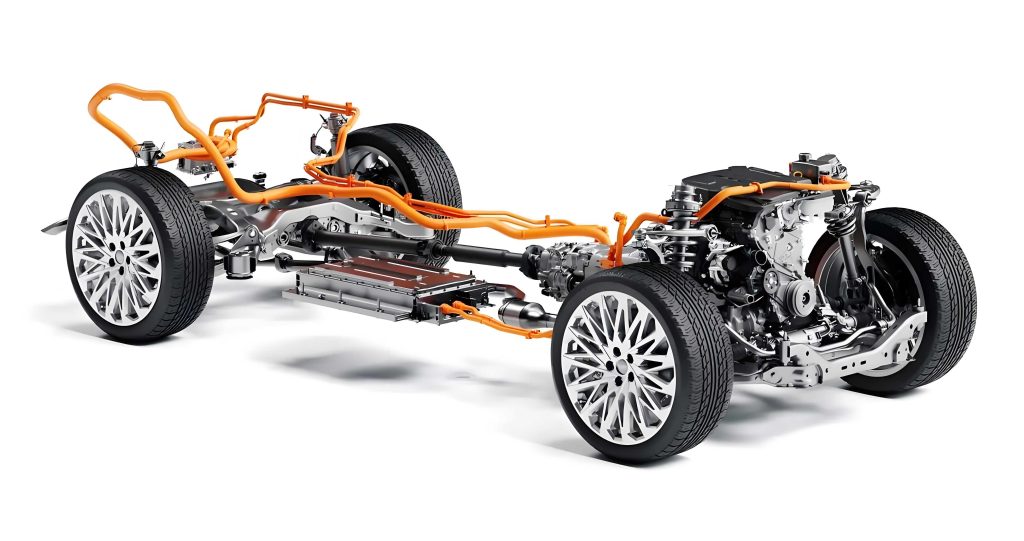
The hybrid car has emerged as a response to societal demands for reduced emissions and improved fuel efficiency. From my observations, the hybrid car leverages dual power sources—typically a gasoline engine and an electric motor—to optimize performance based on driving conditions. This synergy allows the hybrid car to operate in modes such as electric-only, engine-only, or combined power, thereby conserving energy and minimizing pollution. The fundamental appeal of the hybrid car lies in its ability to seamlessly integrate familiar fueling infrastructure with advanced electrification, making it a practical choice for consumers transitioning to greener alternatives.
In exploring the hybrid car, it’s essential to understand its architectural variations. Based on my analysis, hybrid cars can be classified by the placement of the electric motor relative to the engine and transmission. These configurations, often denoted as P0 to P4, influence the hybrid car’s efficiency and capability. Below is a summary table that encapsulates these layouts, which I’ve compiled from industry standards and technical literature.
| Configuration | Description | Typical Applications |
|---|---|---|
| P0 | Motor is longitudinally mounted parallel to the engine, connected via a front belt drive. This is common in mild hybrid cars. | Mild hybrids for start-stop and energy recovery. |
| P1 | Motor is installed between the engine and the flywheel housing, directly coupled to the crankshaft. | Strong hybrids for enhanced torque assist. |
| P2 | Motor is placed between the engine and the transmission, often with a clutch for decoupling. | Full hybrids with electric driving capability. |
| P3 | Motor is located at the transmission output, driving the wheels directly. | Performance-oriented hybrid cars. |
| P4 | Motor is situated on the drive axle or rear bridge, enabling all-wheel drive. | Hybrid SUVs and luxury vehicles. |
The P0 architecture, which I’ve frequently encountered in mild hybrid cars, utilizes a belt-driven starter-generator (BSG) to provide auxiliary torque. This design is cost-effective and minimally invasive, making it popular for entry-level hybrid cars. However, due to belt slippage limitations, the hybrid car with P0 topology typically offers modest hybrid effects, hence termed “mild hybrid.” The hybrid car in this category excels in functions like idle stop-start, rapid engine restart, motor assist, and regenerative braking.
Delving deeper, the hybrid car’s powertrain relies on a sophisticated control system. From my experience, the hybrid control unit (HCU) is the brain of the hybrid car, orchestrating the interplay between the engine and electric motor. It processes data from various sensors via controller area network (CAN) buses to determine optimal power split. Mathematically, the total torque output $T_{total}$ of a hybrid car can be expressed as:
$$T_{total} = T_{engine} + T_{motor} \cdot \eta_{transmission}$$
where $T_{engine}$ is the engine torque, $T_{motor}$ is the motor torque, and $\eta_{transmission}$ represents the transmission efficiency. This equation underscores the additive nature of hybrid propulsion, enabling the hybrid car to achieve superior acceleration while reducing fuel consumption.
The core components of a hybrid car, particularly in mild hybrid systems, include several key elements. I have outlined them in the table below, based on hands-on involvement with hybrid car maintenance and design.
| Component | Acronym | Function | Key Specifications |
|---|---|---|---|
| Hybrid Control Unit | HCU | Integrates with ECU to manage torque distribution and enable start-stop, energy recovery. | CAN bus communication, real-time processing. |
| Motor (Belt-Starter Generator) | BSG | Provides electric motor/generator functions: assists engine, recovers braking energy, starts engine. | 6-phase claw-pole synchronous motor, output up to 10 kW. |
| High-Voltage Battery | 48 V Lithium Battery | Stores energy for electric propulsion and auxiliary systems. | 1P14S configuration, 8 Ah cells, managed by BMS. |
| DC-DC Converter | DCDC | Converts between 48 V and 12 V systems to power low-voltage devices and charge battery. | Boost/buck circuits, efficiency >90%. |
| High-Voltage Junction Box | PDB | Distributes 48 V power with fuses and relays for safety. | Contains main relay, pre-charge circuit. |
In my work with hybrid cars, I’ve found that the BSG is pivotal. Its operation can be modeled using electromechanical principles. The torque generated by the BSG, $T_{BSG}$, is proportional to the current $I$ and magnetic flux $\Phi$:
$$T_{BSG} = k \cdot I \cdot \Phi$$
where $k$ is a motor constant. This torque aids the engine during acceleration, enhancing the hybrid car’s responsiveness. Conversely, during braking, the BSG acts as a generator, converting kinetic energy into electrical energy stored in the battery. The energy recovery efficiency $\eta_{regen}$ for a hybrid car can be estimated as:
$$\eta_{regen} = \frac{E_{stored}}{E_{kinetic}} \times 100\%$$
typically ranging from 60% to 70% in modern hybrid cars.
The 48 V electrical system is a backbone of mild hybrid cars. Based on my inspections, this system powers the BSG and other high-voltage accessories while interfacing with the conventional 12 V network via the DCDC. The circuit topology ensures safe operation, with the PDB managing fault protection. The hybrid car’s energy flow can be visualized through power balance equations. For instance, during motor assist, the battery discharge power $P_{batt}$ supports the BSG output:
$$P_{batt} = V_{batt} \cdot I_{batt} = T_{BSG} \cdot \omega_{BSG} / \eta_{BSG}$$
where $V_{batt}$ is battery voltage, $I_{batt}$ is current, $\omega_{BSG}$ is angular velocity, and $\eta_{BSG}$ is motor efficiency. This interplay is crucial for the hybrid car’s performance.
Communication networks in a hybrid car are vital for integration. From my diagnostics, hybrid cars employ multiple CAN buses—such as hybrid CAN, powertrain CAN, and comfort CAN—with gateways like the ECU facilitating data exchange. This network ensures that the hybrid car operates cohesively, with real-time monitoring of parameters like battery state of charge (SOC). The SOC, often expressed as a percentage, dictates hybrid functions; for example, motor assist requires SOC above a threshold, say 45%. I’ve summarized typical conditions for BSG assist in hybrid cars below.
| Condition Category | Entry Requirements | Exit Triggers |
|---|---|---|
| Driver Input | Accelerator pedal ≥70% open. | Accelerator pedal ≤50% open or clutch pressed. |
| Battery Status | 48 V battery SOC ≥45%. | 48 V battery SOC ≤35%. |
| Vehicle State | Transmission in drive gear (not neutral). | Transmission in park/neutral or gear disengaged. |
| System Readiness | BSG torque capability ≥5 N·m; time since last assist >15 s. | BSG torque ≤1 N·m; assist duration >20 s. |
These conditions ensure that the hybrid car delivers assist only when beneficial, preserving battery life and drivability. In my experience, violating these thresholds often leads to fault codes in hybrid cars, necessitating careful diagnosis.
Ownership of a hybrid car entails unique considerations. I always advise users that hybrid cars, especially with 48 V systems, require mindful parking to prevent battery drain. Disconnecting the 12 V battery during extended storage is prudent, as the hybrid car’s lithium battery can deplete, disabling start-stop functions. Additionally, environmental factors impact hybrid car operation; for instance, temperatures below -10°C may limit hybrid modes until the battery warms up. Similarly, extreme heat can throttle performance. The hybrid car’s start-stop system also depends on conditions like closed doors and seatbelt engagement—oversights that I’ve seen cause unnecessary service visits.
Maintenance of a hybrid car demands safety precautions. Despite 48 V being a “safe” voltage, I emphasize that technicians must de-energize the system before servicing. Key steps include turning the ignition off before handling the lithium battery, ensuring exhaust vents are clear to prevent gas accumulation, and correctly polarizing high-voltage connectors. The hybrid car’s BSG and DCDC terminals are sensitive; short circuits from mishandling can inflict costly damage. I’ve compiled a checklist for hybrid car maintenance based on best practices.
| Task | Precaution | Rationale |
|---|---|---|
| Battery Removal | Verify ignition is OFF; disconnect 12 V battery first. | Prevents accidental activation of high-voltage circuits. |
| Cable Connection | Match “+” and “-” markings; avoid pinching cables. | Ensures proper polarity and avoids short circuits. |
| Component Handling | Use insulated tools; wear protective gear. | Mitigates electrical shock risks in hybrid cars. |
| System Testing | Monitor CAN bus signals with diagnostic tools. | Detects communication faults early in hybrid car systems. |
Fault diagnosis in hybrid cars can be intricate. Reflecting on real cases, I recall instances where hybrid cars exhibited drivability issues due to component failures. For example, a hybrid car with a faulty DCDC converter often logs codes like “48 V pre-charge failure” or “CAN communication errors,” leading to loss of hybrid functions. The root cause is typically a failed power module, disrupting the 48 V supply chain. Another common issue in hybrid cars is wiring damage from improper installation, such as pinched CAN lines under seats, which triggers vague faults like “BSG abuse critical fault.” The hybrid car’s diagnostic system relies on intact communication; any breach can cascade into multiple error codes.
To illustrate, let’s analyze a hypothetical fault scenario in a hybrid car, inspired by typical patterns. Suppose a hybrid car presents with illuminated warning lamps and disabled start-stop. Diagnostic trouble codes (DTCs) include U0120 (BSG CAN fault) and P1A17 (48 V pre-charge issue). Using a systematic approach, I would first check the 12 V battery state and ground connections—common culprits in hybrid cars. If those are fine, I’d probe the DCDC output and CAN bus resistance. A voltage drop or open circuit would point to a defective DCDC, a frequent offender in hybrid cars. Replacing it often restores the hybrid car’s operability, as the control logic resumes normal power sequencing.
Another case involves a new hybrid car with charging anomalies and an EPC light. Here, the hybrid car’s display might show contradictory battery SOC readings. Investigation often reveals physical damage to high-voltage wiring, such as crushed insulation from aftermarket modifications. In hybrid cars, the CAN bus lines are particularly vulnerable; a short to ground can simulate a relay fault, confusing the HCU. Repairing the harness resolves the hybrid car’s issues, highlighting the importance of meticulous assembly.
The hybrid car’s future hinges on continuous improvement. From my vantage point, advancements in battery chemistry and power electronics will make hybrid cars even more efficient. The hybrid car is evolving toward higher voltage systems (e.g., 800 V) for faster charging and stronger assist. Moreover, integration with renewable energy sources could allow the hybrid car to serve as grid storage, amplifying its environmental benefits. The hybrid car, in essence, is a stepping stone to full electrification, balancing practicality with innovation.
In conclusion, the hybrid car represents a transformative technology in automotive history. Through my engagement with hybrid cars, I’ve appreciated their complexity and potential. The hybrid car’s ability to reduce emissions while maintaining drivability makes it a cornerstone of sustainable transport. By understanding its principles—from P0 configurations to fault diagnostics—we can better maintain and advocate for hybrid cars. As the industry progresses, the hybrid car will undoubtedly play a pivotal role in shaping a cleaner, more efficient mobility landscape.