
As the global automotive industry shifts towards electrification, battery electric vehicles (BEVs) have become increasingly prevalent. In my years of experience working with these advanced vehicles, I have observed that the drive system, often referred to as the “power heart,” is critical for performance, safety, and reliability. With the rising number of battery electric vehicles on the road, fault rates in drive systems are gradually increasing, leading to issues such as inability to drive or power interruption. This article delves into the common faults in battery electric vehicle drive systems, focusing on the electric motor and motor controller, and provides detailed diagnostic and maintenance strategies. By incorporating tables and formulas, I aim to summarize key information effectively, aiding technicians and enthusiasts in understanding and addressing these challenges.
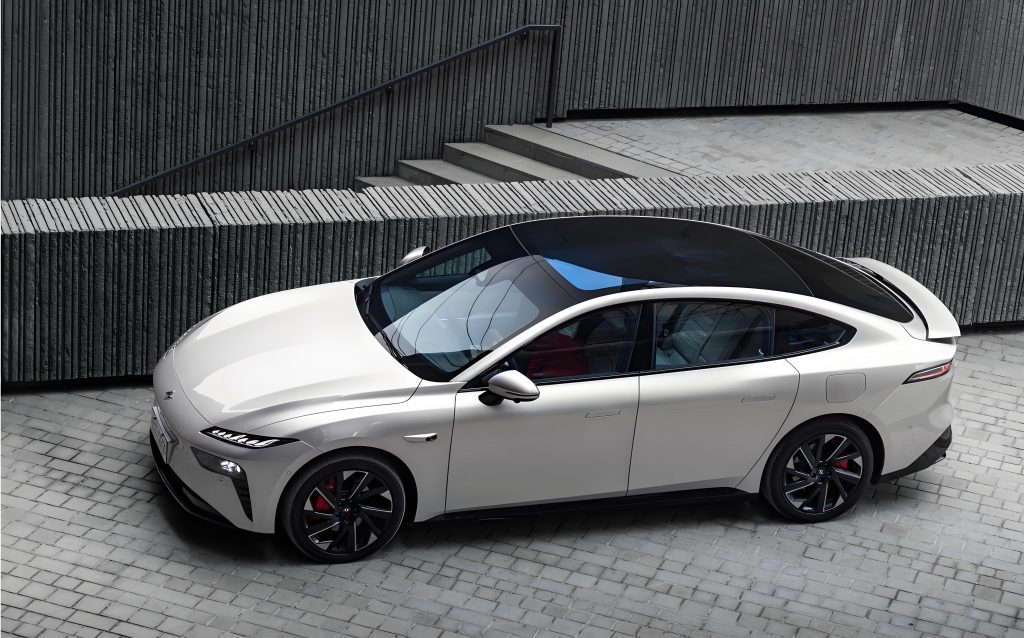
The drive system of a battery electric vehicle converts electrical energy into mechanical energy to propel the vehicle. It primarily consists of an electric motor, a motor controller, and a transmission mechanism. The electric motor serves as the core component for power output, transforming electrical energy into rotational force. The motor controller acts as the “brain,” receiving commands from the vehicle control unit (e.g., acceleration, deceleration, gear shifts) and precisely regulating the motor’s operation, including speed, direction, and torque. The transmission mechanism then transfers this power to the wheels. Understanding the structure and principles is essential for fault diagnosis. For instance, the power output of an electric motor can be expressed using the formula: $$P = \tau \omega$$ where \(P\) is the mechanical power in watts, \(\tau\) is the torque in newton-meters, and \(\omega\) is the angular velocity in radians per second. The efficiency of the motor is given by: $$\eta = \frac{P_{\text{out}}}{P_{\text{in}}} \times 100\%$$ where \(P_{\text{out}}\) is the output mechanical power and \(P_{\text{in}}\) is the input electrical power. In battery electric vehicles, these parameters are closely monitored by the motor controller to optimize performance.
Electric motors in battery electric vehicles can experience various faults. One common issue is difficulty starting or failure to start. This can stem from multiple causes, such as low supply voltage, overload, or mechanical jamming. For example, if the voltage is too low, the electromagnetic field within the motor weakens, reducing the starting torque. According to Ohm’s law, the current \(I\) is related to voltage \(V\) and resistance \(R\) by $$V = IR$$ so a drop in voltage leads to reduced current and torque. Another frequent problem is excessive temperature during operation. Overheating can degrade insulation and shorten motor life. The heat generation in a motor is often linked to losses, including copper losses \(I^2R\) and iron losses. A balanced three-phase supply is crucial; if voltages are unbalanced, additional losses occur. Vibration is another concern, often resulting from mechanical imbalances or electrical asymmetries. To summarize these faults, I have compiled a table below.
| Fault Phenomenon | Possible Causes | Diagnostic Methods | Treatment Procedures |
|---|---|---|---|
| Motor fails to start | Low battery voltage, overload, mechanical blockage | Check voltage with multimeter, inspect load, examine mechanical parts | Adjust voltage, reduce load, clear obstructions |
| Excessive temperature | Overload, winding faults, cooling system failure | Monitor temperature sensors, inspect windings, test cooling fans | Reduce load, repair windings, fix cooling system |
| High vibration during operation | Unbalanced rotor, bearing wear, misalignment | Use vibration analysis tools, visual inspection | Balance rotor, replace bearings, realign components |
| Unusual noise | Bearing damage, loose components, electromagnetic issues | Acoustic analysis, tighten bolts, check electrical supply | Replace bearings, secure parts, ensure stable power |
| Reduced efficiency | Winding degradation, dirt accumulation, aging | Measure input-output power, inspect internally | Clean motor, rewind if necessary, regular maintenance |
For battery electric vehicles, the motor controller is equally prone to faults. A typical symptom is when the motor does not rotate upon pressing the accelerator pedal. This could be due to lost control signals, faulty position sensors, or controller overheating. The controller relies on feedback from sensors, such as the rotor position sensor, to commutate the motor properly. If the sensor fails, the controller cannot determine the rotor position, leading to a standstill. Another issue is the absence of gear or speed signals on the dashboard while the vehicle operates normally. This often points to communication faults between the controller and other systems. In modern battery electric vehicles, controllers use CAN bus networks; a breakdown in communication can disrupt signal transmission. Sudden power interruption during driving is also critical, potentially caused by controller malfunctions or brake system errors. The relationship between controller output and motor response can be modeled using control theory, such as PID control: $$u(t) = K_p e(t) + K_i \int e(t) dt + K_d \frac{de(t)}{dt}$$ where \(u(t)\) is the control signal, \(e(t)\) is the error, and \(K_p\), \(K_i\), \(K_d\) are gains. Faults in these circuits can destabilize the system. Below is a table summarizing controller-related faults.
| Fault Phenomenon | Possible Causes | Diagnostic Methods | Treatment Procedures |
|---|---|---|---|
| Motor does not rotate on acceleration | Signal loss from accelerator pedal, position sensor failure, controller overheating | Scan for error codes, check sensor signals, monitor temperature | Repair wiring, replace sensor, improve cooling |
| No gear/speed display on dashboard | Communication fault, dashboard malfunction, wiring issues | Test CAN bus signals, inspect dashboard power | Reset communication, repair wiring, replace dashboard |
| Vehicle stops suddenly while driving | Controller fault, gearshift mechanism error, brake system problem | Read real-time data, check brake switch voltage | Update controller software, repair gearshift, fix brake system |
| Error codes not stored | Internal controller failure, memory corruption | Use diagnostic tools to access internal logs | Reset controller, replace if persistent |
| Reduced power output | Software glitches, component degradation, voltage fluctuations | Perform performance tests, analyze power curves | Update firmware, replace damaged parts, stabilize voltage |
Diagnosing faults in battery electric vehicle drive systems requires a combination of tools and techniques. Advanced diagnostic equipment can interface with the controller to retrieve error codes and live data. For example, measuring three-phase voltages and currents helps identify imbalances. The power in a three-phase system is given by: $$P = \sqrt{3} V_L I_L \cos \phi$$ where \(V_L\) is line voltage, \(I_L\) is line current, and \(\cos \phi\) is the power factor. Deviations from expected values indicate faults. Regular maintenance is crucial to prevent issues. I recommend scheduled inspections of cooling systems, as overheating is a common culprit in battery electric vehicle failures. Cleaning air filters, checking coolant levels, and ensuring proper ventilation can extend component life. Additionally, software updates for the motor controller can patch bugs and improve efficiency. For battery electric vehicles, maintaining the high-voltage battery also impacts drive system performance, as voltage drops can affect motor operation.
To further illustrate, let’s consider a case study. In a battery electric vehicle experiencing intermittent power loss, diagnostic logs showed erratic torque commands. By analyzing the motor current waveforms, I discovered harmonics indicating winding insulation breakdown. The current distortion can be represented as a Fourier series: $$i(t) = I_0 + \sum_{n=1}^{\infty} I_n \sin(n\omega t + \phi_n)$$ where \(I_n\) are harmonic amplitudes. High harmonics pointed to faults, leading to winding replacement. Another example involves vibration analysis. Using accelerometers, I measured vibration frequencies and compared them to motor rotational frequency \(f_r\), given by $$f_r = \frac{N}{60}$$ where \(N\) is speed in RPM. Peaks at multiples of \(f_r\) suggested rotor imbalance, corrected by dynamic balancing. These examples highlight the importance of systematic diagnosis.
Preventive maintenance strategies for battery electric vehicle drive systems include regular checks of electrical connections, as loose terminals can cause arcing and overheating. The resistance of a connection can be modeled as $$R = \frac{\rho L}{A}$$ where \(\rho\) is resistivity, \(L\) is length, and \(A\) is cross-sectional area. Increased resistance leads to voltage drops and heat. Thermal management is vital; the heat dissipation rate can be estimated using $$Q = hA(T – T_{\text{amb}})$$ where \(h\) is heat transfer coefficient, \(A\) is surface area, \(T\) is component temperature, and \(T_{\text{amb}}\) is ambient temperature. Ensuring proper cooling maintains temperatures within safe limits. For battery electric vehicles, I also advise monitoring insulation resistance, as high-voltage systems require isolation. The insulation resistance \(R_{\text{ins}}\) should be above a threshold, typically measured with a megohmmeter.
Looking ahead, advancements in battery electric vehicle drive systems may incorporate more integrated designs and AI-based fault prediction. However, the core principles of diagnosis remain. By understanding common faults and employing methodical approaches, technicians can ensure reliable operation. In summary, the drive system is a key component in battery electric vehicles, and its maintenance demands attention to detail. Through tables and formulas, I have summarized critical aspects, hoping to empower readers with knowledge for effective troubleshooting. Regular upkeep not only reduces failure rates but also enhances the safety and longevity of battery electric vehicles, contributing to a sustainable transportation future.
In conclusion, as battery electric vehicles continue to evolve, mastering drive system fault diagnosis is essential. I encourage continuous learning and adoption of new tools to keep pace with technology. Remember, a well-maintained battery electric vehicle drive system ensures optimal performance and reliability on the road.