
Addressing global warming necessitates a concerted effort to reduce greenhouse gas emissions, with the transportation sector being a significant contributor. Within this sector, vehicular carbon emissions are a primary focus for control measures. Accurately quantifying these emissions is crucial for setting policy targets, evaluating technological pathways, and informing consumer choice. However, prevailing methodologies for calculating automotive carbon footprints often rely on complex, proprietary data concerning materials and manufacturing processes, making them difficult to generalize and apply. This study addresses this gap by proposing a simplified yet robust modeling framework based on the Life Cycle Assessment (LCA) principle, specifically tailored for comparing Internal Combustion Engine Vehicles (ICEVs) and Battery Electric Vehicles (BEVs). The framework strategically defines the system boundary around the vehicle use phase—a dynamic period reflecting real-world consumer behavior—and utilizes publicly available, standardized technical data. This approach balances analytical rigor with practical applicability.
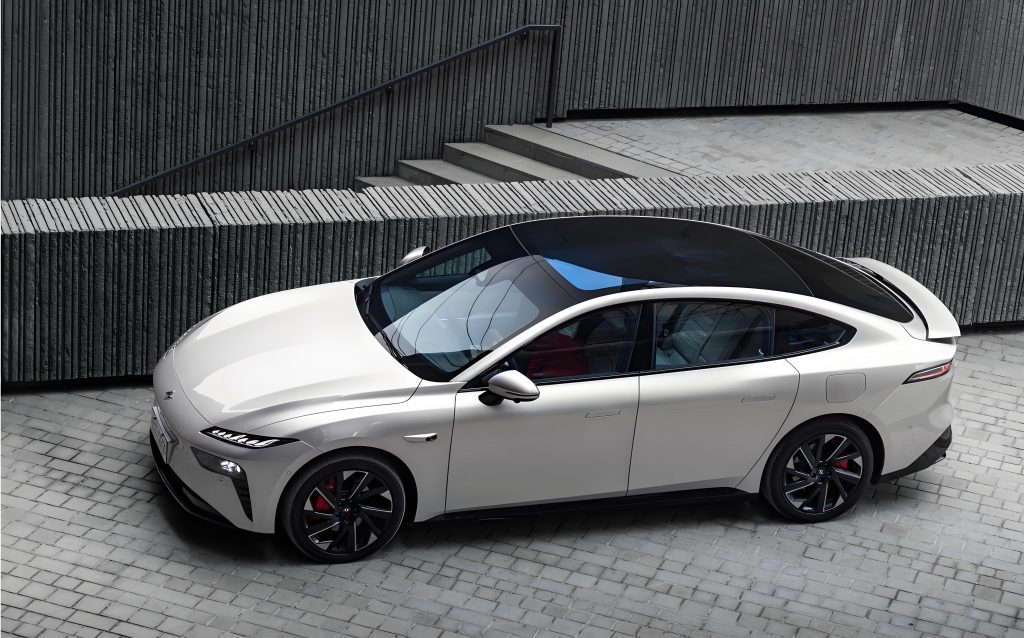
The rationale for concentrating on the use phase is threefold. First, it constitutes the longest and most variable period in a vehicle’s lifecycle, dominated by operational energy consumption. Second, it directly correlates with individual carbon footprints, allowing the model to reflect personalized usage patterns. Third, the required input data, such as fuel economy, electrical energy consumption, and grid emission factors, are widely published and standardized, enhancing the model’s transparency and reproducibility. This study leverages vehicle model data to empirically apply the framework, demonstrating that the average carbon emissions of a traditional ICEV are approximately twice those of a comparable battery EV car. Furthermore, the analysis reveals that for a typical battery EV car, emissions from the electricity grid during charging account for the dominant share (approximately 88%) of its use-phase carbon footprint, while the amortized emissions from the battery pack’s lifecycle contribute a smaller but non-negligible portion (around 12%).
1. Literature Review and Modeling Rationale
The Life Cycle Assessment (LCA) methodology is the established scientific approach for evaluating the environmental impacts of products and services from “cradle to grave.” Its application in automotive research predominantly focuses on two streams: full vehicle LCA and battery-specific LCA. Full vehicle LCAs segment the lifecycle into stages—production, use, and end-of-life—to compare the total emissions of different powertrains, such as ICEVs, hybrids, and BEVs. These studies often project emissions into the future, factoring in anticipated improvements in energy efficiency and decarbonization of the electricity grid. The second stream delves into the carbon footprint of traction batteries, which are the core and most emission-intensive component of a battery EV car. These studies break down the battery lifecycle into material extraction, cell and pack manufacturing, distribution, use, and recycling. They compare different battery chemistries, like Lithium Iron Phosphate (LFP) and Nickel Cobalt Manganese (NCM), highlighting the significant variance in embedded carbon based on material sourcing and production energy.
While comprehensive, these detailed LCA studies frequently depend on non-public, industry-specific data regarding material compositions, manufacturing yields, and logistics. This reliance creates barriers for broader application, policy benchmarking, and consumer-facing tools. Furthermore, the complexity of full LCA models can obscure the direct link between measurable vehicle performance indicators and their resulting carbon impact. Therefore, a need exists for a simplified, standardized calculation model that maintains the systemic perspective of LCA but operates on readily available parameters. The proposed framework answers this need by adopting a “fuel-cycle” or “well-to-wheels” perspective for the use phase, incorporating upstream emissions from energy production and supply. This provides a more accurate comparison than a mere “tank-to-wheels” analysis, especially for a battery EV car whose tailpipe emissions are zero but whose upstream grid emissions can be substantial.
2. Carbon Emission Modeling Framework
The core of the framework is the calculation of grams of CO2-equivalent emitted per 100 kilometers driven (g CO2e/100 km). This functional unit allows for direct comparison across vehicle types. The models for ICEVs and BEVs are constructed separately, each adhering to the LCA principle by including emissions from energy production and delivery.
2.1. Internal Combustion Engine Vehicle (ICEV) Model
For an ICEV, the use-phase carbon emissions are derived from the lifecycle carbon footprint of the fuel consumed. This encompasses emissions from crude oil extraction (well), refining (to-tank), and final combustion in the engine (tank-to-wheels). The model is elegantly simple, requiring only the vehicle’s certified fuel consumption and a lifecycle emission factor for the fuel.
The total lifecycle emissions for the fuel is given by:
$$C_{total}^{fuel} = C_{extraction} + C_{refining} + C_{combustion}$$
where $C_{total}^{fuel}$ is the total lifecycle carbon emission of the fuel, typically expressed per liter or megajoule.
The carbon emission per 100 km for an ICEV is then calculated as:
$$C_{hundred}^{ICEV} = E_{hundred}^{fuel} \times CF_{fuel}^{lifecycle}$$
where:
$C_{hundred}^{ICEV}$ = ICEV carbon emission per 100 km (kg CO2e/100 km)
$E_{hundred}^{fuel}$ = ICEV fuel consumption per 100 km (L/100 km)
$CF_{fuel}^{lifecycle}$ = Lifecycle carbon emission factor of the fuel (kg CO2e/L)
For gasoline in China, a representative lifecycle emission factor is approximately 3.0 kg CO2e per liter, integrating upstream and combustion emissions.
2.2. Battery Electric Vehicle (BEV) Model
The model for a battery EV car is more nuanced, as it must account for two distinct carbon sources: 1) the amortized carbon cost of manufacturing the battery pack over its useful life, and 2) the carbon emissions from generating the electricity used to charge the battery.
2.2.1. Battery Pack Lifecycle Emissions Amortization
The first component recognizes that the production of a battery EV car‘s high-voltage battery pack is energy- and resource-intensive, incurring a significant “carbon debt.” This debt must be amortized over the total distance the battery powers the vehicle. The model requires the battery’s capacity, a lifecycle carbon intensity factor per kWh of capacity, and the battery’s lifetime in terms of total driving range.
The total lifecycle emissions of the battery pack are:
$$C_{life}^{battery} = Cap_{rated} \times CF_{battery}^{lifecycle}$$
where:
$C_{life}^{battery}$ = Total lifecycle carbon emissions of the battery pack (kg CO2e)
$Cap_{rated}$ = Rated capacity of the battery pack (kWh)
$CF_{battery}^{lifecycle}$ = Lifecycle carbon emission factor per kWh of battery capacity (kg CO2e/kWh)
The rated capacity can often be inferred from published vehicle specifications (range and efficiency):
$$Cap_{rated} \approx \frac{R_{mile} \times E_{consume}}{100}$$
where:
$R_{mile}$ = Official driving range (km)
$E_{consume}$ = Electrical energy consumption (kWh/100 km)
The total driving range over the battery’s usable life is estimated based on its cycle life and capacity:
$$M_{life} = \frac{Cap_{rated} \times Cycle_{life}}{E_{consume}}$$
where:
$M_{life}$ = Total lifetime driving range of the battery (km)
$Cycle_{life}$ = Number of full equivalent charge cycles until end-of-life (e.g., capacity falls to 80%)
Thus, the amortized battery emissions per 100 km are:
$$C_{share}^{battery} = \frac{C_{life}^{battery}}{M_{life}} \times 100$$
Simplifying, this can be expressed directly as:
$$C_{share}^{battery} = \frac{100 \times CF_{battery}^{lifecycle}}{Cycle_{life}}$$
This reveals that the amortized battery emission per distance is independent of battery size or vehicle efficiency; it is solely a function of the battery’s carbon intensity per kWh and its cycle life.
2.2.2. Grid Charging Emissions
The second and typically larger component for a battery EV car is the emissions from electricity generation. This is calculated using the vehicle’s energy consumption and the carbon intensity of the grid electricity.
$$C_{charge}^{grid} = E_{consume} \times CF_{grid}$$
where:
$C_{charge}^{grid}$ = Grid charging emissions per 100 km (kg CO2e/100 km)
$E_{consume}$ = Electrical energy consumption (kWh/100 km)
$CF_{grid}$ = Carbon emission factor of the grid electricity (kg CO2e/kWh)
2.2.3. Total BEV Use-Phase Emissions
The total carbon emission per 100 km for a battery EV car is the sum of the amortized battery emissions and the grid charging emissions:
$$C_{hundred}^{BEV} = C_{share}^{battery} + C_{charge}^{grid}$$
Substituting the derived terms, a comprehensive formula for a battery EV car is:
$$C_{hundred}^{BEV} = \frac{100 \times CF_{battery}^{lifecycle}}{Cycle_{life}} + E_{consume} \times CF_{grid}$$
3. Empirical Application and Results Analysis
To demonstrate the framework, it is applied to a dataset of mainstream vehicle models. The parameters used are: Gasoline lifecycle factor $CF_{fuel}^{lifecycle}$ = 3.0 kg CO2e/L; Battery lifecycle factor $CF_{battery}^{lifecycle}$ = 90 kg CO2e/kWh (a median value for prevalent NCM and LFP chemistries); Battery cycle life $Cycle_{life}$ = 1000 cycles (to 80% capacity); Grid emission factor $CF_{grid}$ = 0.56 kg CO2e/kWh (approximate average for China’s national grid).
3.1. ICEV Carbon Emissions
Applying the ICEV model to a sample of vehicles yields results as shown in the table below. The carbon emissions are directly proportional to the fuel consumption value.
| Vehicle Type | Engine Displacement (L) | Fuel Consumption (L/100 km) | Carbon Emission (kg CO2e/100 km) |
|---|---|---|---|
| Passenger Car (M1) | 2.0 | 7.9 | 23.7 |
| Passenger Car (M1) | 1.5 | 7.0 | 21.0 |
| Light Truck (N1) | 1.6 | 8.7 | 26.1 |
| Light Truck (N1) | 1.6 | 6.7 | 20.1 |
| Light Bus (M2) | – | 9.8 | 29.4 |
The distribution of emissions for a larger sample typically clusters between 17 and 30 kg CO2e/100 km, with variations due to vehicle size, weight, and engine technology.
3.2. BEV Carbon Emissions
Applying the battery EV car model reveals the contribution of each component. The amortized battery emission, based on the chosen parameters, is constant at:
$$C_{share}^{battery} = \frac{100 \times 90}{1000} = 9.0 \text{ kg CO2e per 100 km of battery life}$$
This value is then distributed over the actual distance per charge cycle. For a vehicle with a 500 km range, the amortized emission per 100 km would be 1.8 kg CO2e/100 km. The grid emissions vary with the vehicle’s efficiency. Sample calculations are shown below.
| Vehicle Type | Energy Consumption (kWh/100 km) | Battery Amortized Emission (kg CO2e/100 km) | Grid Charging Emission (kg CO2e/100 km) | Total BEV Emission (kg CO2e/100 km) |
|---|---|---|---|---|
| Passenger Car (M1) | 14.9 | 1.19 | 8.34 | 9.53 |
| Passenger Car (M1) | 12.3 | 1.04 | 6.89 | 7.93 |
| Light Truck (N1) | 17.8 | 1.42 | 9.97 | 11.39 |
| Light Bus (M2) | 20.1 | 1.61 | 11.26 | 12.87 |
The distribution for a battery EV car fleet typically clusters between 9 and 13 kg CO2e/100 km.
3.3. Comparative Analysis and Discussion
Aggregating the results by vehicle category provides a clear comparative picture.
| Vehicle Category | Avg. ICEV Emission (kg CO2e/100 km) | Avg. BEV Emission (kg CO2e/100 km) | Battery Share in BEV (%) | Grid Share in BEV (%) | ICEV:BEV Ratio |
|---|---|---|---|---|---|
| Passenger Car (M1) | 25.5 | 11.1 | ~12% | ~88% | 2.3 : 1 |
| Light Truck (N1) | 24.6 | 13.0 | ~12% | ~88% | 1.9 : 1 |
| Light Bus (M2) | 29.5 | 14.5 | ~12% | ~88% | 2.0 : 1 |
The results consistently show that the average carbon emission of a traditional ICEV is approximately double that of a comparable battery EV car under the current average grid mix. For every battery EV car, the dominant source of emissions is the electricity grid (around 88%), underscoring the critical importance of grid decarbonization for maximizing the climate benefits of electric mobility. The amortized emissions from the battery pack, while smaller, represent a fixed carbon cost that is independent of driving behavior or grid cleanliness. This component can be reduced by improving battery manufacturing efficiency, using lower-carbon materials, and extending battery cycle life.
This model also provides context for regulatory standards. For instance, an ICEV would need to achieve a fuel economy of about 4.0 L/100 km to match the carbon footprint of a current-average battery EV car (at ~12 kWh/100 km and a 0.56 kg/kWh grid). This aligns with the direction of stringent future corporate average fuel economy (CAFE) targets. Conversely, a battery EV car‘s advantage grows significantly as the grid becomes cleaner. If the grid emission factor were halved, the total emissions for the battery EV car in the passenger car category would drop to around 6.5 kg CO2e/100 km, making the ICEV-to-BEV ratio nearly 4:1.
4. Conclusion and Implications
This study developed a transparent and practical carbon emission modeling framework for ICEVs and BEVs based on a use-phase, lifecycle-informed perspective. Its primary advantage lies in its simplicity and reliance on standardized, publicly available data—vehicle fuel/energy consumption ratings, battery cycle life, and regional grid emission factors—making it suitable for policy analysis, consumer education, and corporate sustainability reporting. The framework successfully establishes a direct, quantifiable link between technical performance indicators and carbon outcomes.
The key findings from the empirical application are twofold. First, under typical current conditions, the use-phase carbon emissions of a traditional ICEV are approximately twice as high as those of a comparable battery EV car. This confirms the fundamental carbon-reduction potential of electrification in the transportation sector. Second, for a battery EV car, the carbon footprint is predominantly (approx. 88%) determined by the cleanliness of the electricity grid, while the amortized emissions from the battery manufacturing lifecycle constitute a smaller but consistent share (approx. 12%).
The model’s implications are significant. For policymakers, it underscores that the climate benefit of promoting battery EV car adoption is intrinsically linked to parallel efforts in decarbonizing the power sector. It also provides a straightforward method for benchmarking and projecting the carbon performance of vehicle fleets. For consumers and industry, it offers a clear rationale: driving a battery EV car is a lower-carbon choice, and its advantage will only increase over time with a greener grid. Future work can extend this framework by incorporating regional variations in grid mix, more granular battery chemistry data, and the potential impacts of vehicle-to-grid (V2G) technologies or second-life battery applications, further refining our understanding of the sustainable mobility landscape.