
The evolution of electrification is fundamentally driven by the continuous pursuit of superior performance and enhanced safety. The development of the solid-state battery epitomizes this pursuit. As a transformative technology, it promises to address the inherent limitations of conventional lithium-ion batteries, paving the way for a new era in energy storage. This article explores the rationale behind this shift, the current state of development, key technological challenges, and the profound implications for materials and manufacturing equipment.
Why Solid-State Batteries? The Imperative for Higher Performance and Safety
At the heart of electric vehicle (EV) adoption lies the critical metric of driving range. Consumer acceptance is heavily influenced by the ability to alleviate “range anxiety.” While lithium-ion batteries marked a monumental leap from earlier technologies like lead-acid, their energy density is approaching theoretical limits. The solid-state battery emerges as the next evolutionary step, offering a path to significantly higher energy density, which directly translates to longer ranges or lighter battery packs. Beyond performance, safety remains a paramount concern for lithium-ion batteries. The flammable liquid electrolyte and the growth of lithium dendrites, which can penetrate the separator and cause internal short circuits, pose significant risks. The solid-state battery, by replacing the liquid electrolyte with a solid counterpart, inherently mitigates these fire hazards and suppresses dendrite propagation, representing a quantum leap in safety.
The classification of batteries based on electrolyte content is crucial for understanding the transition:
- Liquid Battery: Liquid electrolyte mass占比 10-25 wt%.
- Semi-Solid Battery: Liquid electrolyte mass占比 5-10 wt%.
- Quasi-Solid Battery: Liquid electrolyte mass占比 0-5 wt%.
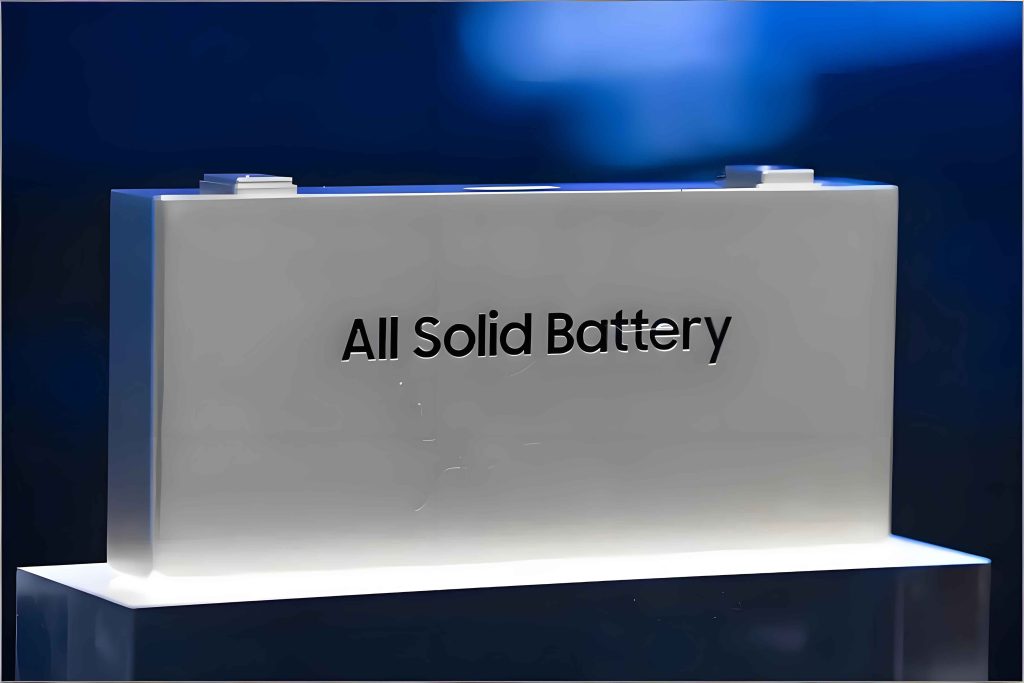
- All-Solid-State Battery: Liquid electrolyte mass占比 0 wt%.
The latter three categories are collectively referred to as solid-state batteries. The advantages are compelling but come with significant technical hurdles.
| Performance Metric | Liquid Lithium-ion Battery | Solid-State Battery |
|---|---|---|
| Energy Density | ~250-300 Wh/kg (current mass production) | Potential > 500 Wh/kg |
| Safety | Moderate (flammable electrolyte, dendrite risk) | High (non-flammable, dendrite suppression) |
| Cycle Life | 1,000 – 3,000 cycles | Potential for > 5,000 cycles |
| Operating Temperature Range | Limited, requires thermal management | Wider intrinsic range |
| Fast-Charging Capability | Good, but limited by interface kinetics | Challenged by low ionic conductivity at interfaces |
| Key Challenge | Safety, energy density ceiling | Solid-solid interface impedance, cost |
The core advantages of the solid-state battery can be summarized by the following key equations. The gravimetric energy density $E$ is a function of capacity $C$ and voltage $V$:
$$E = \frac{C \times V}{m}$$
where $m$ is the mass. The solid-state battery enables the use of high-capacity cathodes (e.g., lithium-rich manganese-based) and high-voltage anodes (e.g., lithium metal), directly increasing $C$ and $V$, thereby pushing $E$ beyond 500 Wh/kg. Furthermore, the elimination of the liquid electrolyte and the potential for bipolar stacking increases the volumetric energy density.
The Global Race: Current State of Development
The global landscape for solid-state battery development is highly competitive, with different regions adopting distinct strategies.
- Japan has a long-standing foundational research lead, particularly in sulfide-based solid electrolytes. National projects and industry-academia consortia have been established for over a decade, with major automotive companies targeting commercialization.
- China, leveraging its dominant position in the conventional lithium-ion battery supply chain, is aggressively pursuing industrialization. Numerous battery manufacturers, automakers, and start-ups are engaged in development, with significant capital investment and planned capacity.
- South Korea‘s major battery giants are advancing along different technical paths—sulfide, polymer, and composite routes—with clear corporate roadmaps.
- The United States innovation is largely driven by well-funded start-ups, which have formed strategic partnerships with European automakers to co-develop and validate technology.
The anticipated timeline for meaningful industrialization and scaling converges around the 2027-2030 period across these regions.
Application Frontiers: From Premium EVs to the Skies
The initial application of solid-state batteries is crystallizing in areas where performance and safety outweigh current cost premiums.
1. Premium Electric Vehicles: Semi-solid batteries have already achieved commercialization in high-end vehicle models. These vehicles, often in the luxury sedan segment, serve as the proving ground for the technology. The progression from semi-solid to all-solid-state is expected to follow this top-down path, as cost sensitivity is lower and the demand for superior performance (range, safety) is higher.
2. Electric Vertical Take-Off and Landing (eVTOL) Aircraft: This emerging application presents a perfect use-case for solid-state batteries. The paramount requirements for eVTOL power sources are ultra-high energy density (for range), extreme safety (for flight certification), and lightweight design. The solid-state battery‘s potential to meet these demands makes it a key enabler for the urban air mobility revolution.
Beyond these, applications in energy storage, commercial vehicles, robotics, and premium consumer electronics are likely to follow as costs decrease with scale.
| Timeframe | Stage | Dominant Chemistry | Primary Applications | Estimated Energy Density |
|---|---|---|---|---|
| 2024-2026 | Initial Commercialization | Semi-Solid (Polymer/Oxide Composite) | Premium EVs, Special Applications | 300-400 Wh/kg |
| 2027-2030 | Scaling & Cost Reduction | Improved Semi-Solid / Early All-Solid (Oxide/Sulfide) | High-end EVs, eVTOL, Specialty | 400-500 Wh/kg |
| 2030+ | Mass Market Penetration | All-Solid-State (Sulfide-dominated) | Broad EV Market, Aviation, Grid Storage | >500 Wh/kg |
Materials Revolution: The Electrolyte as the Core Variable
The most fundamental shift in moving to a solid-state battery is the replacement of the liquid electrolyte and separator with a solid electrolyte (SE). This single component must fulfill multiple roles: ion conductor, electronic insulator, and mechanical separator. Its properties dictate the battery’s performance. The ionic conductivity $\sigma$ of the SE is governed by the Arrhenius equation:
$$\sigma = A \exp\left(-\frac{E_a}{kT}\right)$$
where $E_a$ is the activation energy for ion hopping, $k$ is Boltzmann’s constant, and $T$ is the temperature. A high $\sigma$ at room temperature and a low $E_a$ are critical targets.
| Type | Examples | Advantages | Disadvantages | Ionic Conductivity (Room Temp.) |
|---|---|---|---|---|
| Polymer | PEO with Li salts | Flexible, easier processing, low cost | Low conductivity at RT, narrow voltage window | ~10-4 S/cm |
| Oxide | LLZO, LLTO, LATP | Good stability, moderate conductivity | Brittle, high grain boundary resistance | 10-3 – 10-4 S/cm |
| Sulfide | LGPS, Li3PS4, Argyrodites | Highest conductivity, good mechanical properties | Air/ moisture sensitive, stability vs. Li metal | 10-2 – 10-3 S/cm |
Among these, sulfide electrolytes, with their superior ionic conductivity (approaching that of liquid electrolytes) and favorable mechanical properties for creating intimate solid-solid contact, are considered the most promising route for ultimate high-performance all-solid-state batteries. The total cell resistance $R_{\text{total}}$ in a solid-state battery is dominated by interfacial resistances:
$$R_{\text{total}} = R_{\text{bulk}} + R_{\text{cathode|SE}} + R_{\text{anode|SE}}$$
Minimizing $R_{\text{cathode|SE}}$ and $R_{\text{anode|SE}}$ is the central challenge for sulfide and other SEs.
Electrode Materials: Ongoing Evolution
Cathodes: In the near-to-mid term, existing high-nickel NCM or NCA materials can be adapted for use in solid-state batteries. The wider electrochemical stability window of solid electrolytes allows the use of even higher-voltage cathodes. The long-term direction points to materials like lithium-rich manganese-based (LRM) oxides, which offer high specific capacity (>250 mAh/g) and higher operating voltages, pushing energy density further. The capacity of a cathode material is crucial, as shown in the energy density formula.
Anodes: The journey is more transformative. While graphite may be used initially, its low theoretical capacity (372 mAh/g) is a bottleneck. Silicon-based anodes, with a much higher theoretical capacity (>4000 mAh/g for pure Si), represent the likely mid-term solution, despite challenges with volume expansion. The ultimate goal for maximizing energy density is the use of a lithium metal anode. The solid-state battery is considered the only viable path to safely harness lithium metal’s exceptional capacity (3860 mAh/g) and low potential, which is essential for breaking the 500 Wh/kg barrier.
Auxiliary Materials: Elevated Requirements
The shift to solid-state systems increases the demand and performance specifications for auxiliary materials.
- Conductive Agents: The lack of a wetting liquid electrolyte exacerbates poor interfacial contact. Conductive agents like carbon nanotubes (CNTs) are not only needed for electronic conduction but also play a role in forming percolation networks that aid in ion transport within the composite cathode. The required dosage and performance grade (e.g., few-walled vs. multi-walled CNTs) are expected to increase.
- Binders: For dry-process electrode manufacturing (see below), the binder’s role is critical. Materials like polytetrafluoroethylene (PTFE) are favored for their ability to fibrillate, creating a fibrous, three-dimensional network that mechanically locks active material particles together without solvents, offering excellent chemical stability and safety.
| Component | Current (Liquid LIB) | Near-Term (Semi-Solid) | Long-Term (All-Solid-State) |
|---|---|---|---|
| Electrolyte | Liquid Carbonates + LiPF6 | Liquid + Polymer/Oxide filler | Sulfide or Oxide Solid Electrolyte |
| Cathode | NCM811, NCA, LFP | High-Ni NCM, LNMO | Lithium-Rich Manganese-Based, High-Voltage |
| Anode | Graphite/SiOx | Si-dominant, Composite | Lithium Metal |
| Separator | Polyolefin membrane | Ceramic-coated or integrated | None (function integrated in SE) |
| Key Process | Wet slurry coating | Wet coating / Hybrid | Dry electrode process |
Manufacturing Disruption: The Rise of Dry Electrode Process
The traditional wet slurry coating process—mixing active materials with binders and conductive agents in a solvent, coating onto a current collector, and then drying—faces compatibility issues with solid-state batteries, especially sulfide-based ones. Sulfides react vigorously with polar solvents and moisture. The dry electrode process is thus identified as a critical, enabling manufacturing technology for all-solid-state batteries.
This process involves dry mixing of solid powders (active material, solid electrolyte, conductive carbon, binder) and then forming a self-supporting electrode film through mechanical pressure and/or electrostatic forces, which is then laminated onto the current collector. The binder fibrillization method is the leading approach, where a fibrillizable binder like PTFE is mixed and sheared to form a web that holds the composite powder together.
The advantages are significant: elimination of toxic and costly solvents (NMP), reduced factory footprint (no massive drying ovens), lower energy consumption, and the ability to produce thicker electrodes suitable for high-energy-density cells. The core equipment for this process, particularly high-precision calendering (rolling) machines that compact the dry film to the required density and thickness without solvents, becomes a new and vital segment in the battery manufacturing equipment chain. The pressure $P$ applied during this dry calendering process must be optimized:
$$P = f(\rho_{\text{target}}, \text{material properties}, \text{binder fiber strength})$$
to achieve the ideal porosity for ion transport while maintaining mechanical integrity.
Outlook and Path to Commercialization
The development of the solid-state battery is not a question of “if” but “when and how.” The trajectory is becoming clearer:
- Industrialization Path: Gradual transition from semi-solid to all-solid-state batteries. Technical routes will evolve from oxide/polymer composites towards sulfide-dominated systems. Performance parameters (energy density, cycle life, rate capability) will see continuous improvement.
- Application Path: Market entry through cost-insensitive, performance-critical niches like premium EVs and eVTOLs. Successful deployment here will drive scale, learning curves, and cost reduction, enabling penetration into the broader automotive, energy storage, and consumer electronics markets.
- Cost Reduction Path: Cost remains the biggest hurdle. The learning curve and scale effect will be powerful drivers. The cost $C$ per watt-hour ($/Wh) is expected to follow an experience curve model:
$$C(t) = C_0 \times e^{-kt}$$
where $C_0$ is the initial cost, $k$ is the learning rate constant, and $t$ represents cumulative production experience. Projections suggest semi-solid battery costs could fall significantly by 2035, while all-solid-state battery costs may approach competitiveness with advanced liquid lithium-ion batteries in the 2030-2035 timeframe as gigawatt-hour-scale production commences.
In conclusion, the solid-state battery represents a paradigm shift in energy storage technology. While formidable challenges in materials interfaces, manufacturing, and cost persist, the global industrial and research momentum is unprecedented. Its successful commercialization will not merely be an incremental improvement but a foundational technology enabling the next phase of electrification across transportation, aerospace, and beyond.