
As we delve into the future of energy storage, solid-state batteries stand out as a transformative technology with immense potential. From powering electric vehicles to enabling advanced portable electronics, the solid-state battery represents a leap forward in safety, energy density, and longevity. In this article, I will explore the current state, comparative advantages, and significant hurdles facing the industrialization of solid-state batteries, using tables and formulas to elucidate key points. The journey toward widespread adoption of solid-state batteries is fraught with technical and economic challenges, but the rewards could redefine our energy landscape.
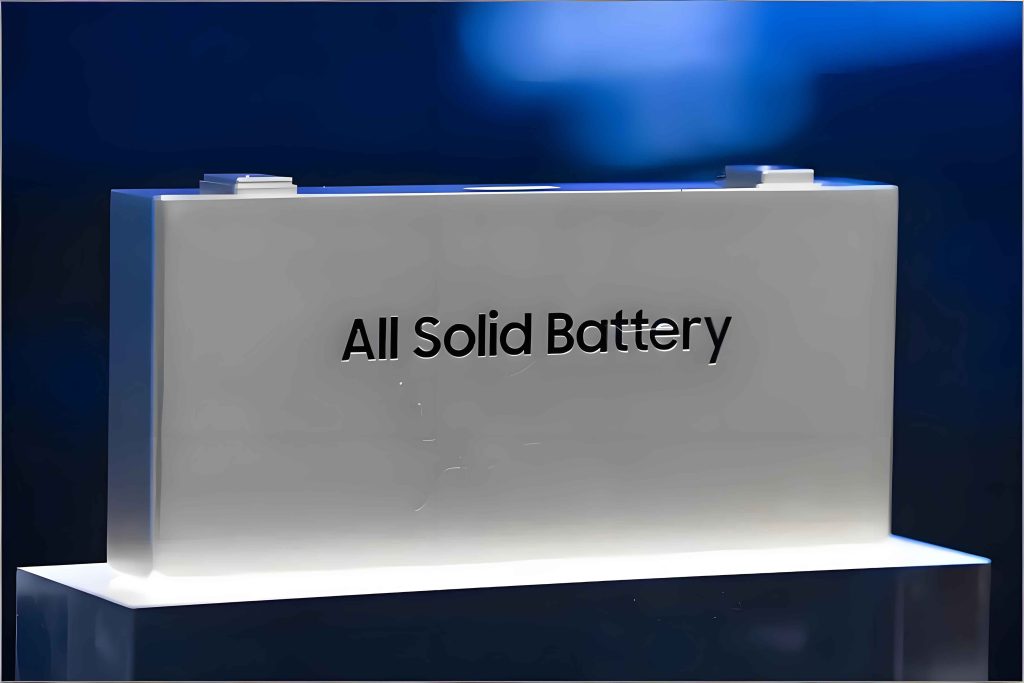
The concept of a solid-state battery is straightforward: it employs solid electrodes and a solid electrolyte, as opposed to the liquid or gel electrolytes found in conventional lithium-ion batteries. This fundamental shift brings numerous benefits, including enhanced safety due to reduced flammability, higher energy density from improved ion conductivity, and longer cycle life by minimizing electrode-electrolyte side reactions. A solid-state battery typically consists of a cathode, an anode, and a solid electrolyte, with materials carefully chosen to optimize performance. The core component, the solid electrolyte, must exhibit high ionic conductivity and stability, which is central to the development of solid-state batteries.
To understand the composition of a solid-state battery, we can break it down into key materials. Solid electrolytes are broadly categorized into three types: polymers, oxides, and sulfides. Each has distinct properties and challenges. For instance, polymer electrolytes, such as poly(ethylene oxide) (PEO), offer flexibility but often suffer from lower ionic conductivity at room temperature. Oxide electrolytes, like lithium lanthanum zirconate (LLZO), provide good stability but can be brittle. Sulfide electrolytes, such as Li10GeP2S12 (LGPS), exhibit high ionic conductivity but may react with moisture. The choice of electrolyte directly impacts the overall performance of the solid-state battery.
In terms of electrode materials, the solid-state battery often uses lithium metal as the anode due to its high theoretical capacity, while cathodes may include high-nickel layered oxides or sulfur-based compounds. The interface between the solid electrolyte and electrodes is critical, as parasitic reactions can degrade performance. Researchers are actively working on coating techniques and composite materials to mitigate these issues. The evolution of solid-state battery technology hinges on advancing these material systems through iterative testing and innovation.
To quantify the advantages of solid-state batteries, let’s consider some fundamental formulas. The energy density of a battery, a key metric, is given by:
$$E = \frac{Q \times V}{m}$$
where \(E\) is the energy density (Wh/kg), \(Q\) is the capacity (Ah), \(V\) is the voltage (V), and \(m\) is the mass (kg). For solid-state batteries, the use of lithium metal anodes can significantly increase \(Q\), while solid electrolytes may enable higher \(V\) through wider electrochemical windows. Additionally, the ionic conductivity \(\sigma\) of the solid electrolyte, crucial for power delivery, follows the Arrhenius equation:
$$\sigma = \sigma_0 \exp\left(-\frac{E_a}{kT}\right)$$
where \(\sigma_0\) is the pre-exponential factor, \(E_a\) is the activation energy, \(k\) is Boltzmann’s constant, and \(T\) is the temperature. Improving \(\sigma\) while maintaining stability is a major research focus for solid-state batteries.
The development status of solid-state batteries can be summarized in a table highlighting key electrolyte types and their properties:
| Electrolyte Type | Examples | Ionic Conductivity (S/cm) | Advantages | Challenges |
|---|---|---|---|---|
| Polymer | PEO, polycarbonates | 10-5 to 10-4 | Flexible, low cost | Low conductivity at room temperature |
| Oxide | LLZO, LATP | 10-4 to 10-3 | High stability, wide voltage window | Brittle, interfacial resistance |
| Sulfide | LGPS, Li3PS4 | 10-3 to 10-2 | High conductivity, soft | Moisture sensitivity, reactivity |
This table underscores the trade-offs involved in selecting solid electrolytes for solid-state batteries. Each type requires further refinement to meet the demands of commercialization.
When comparing solid-state batteries to traditional lithium-ion batteries, the differences are stark. Below is a comprehensive table that outlines key parameters:
| Parameter | Solid-State Battery | Traditional Lithium-Ion Battery |
|---|---|---|
| Electrolyte State | Solid | Liquid or gel |
| Safety | High (non-flammable) | Moderate (flammable electrolyte) |
| Energy Density | Potentially >500 Wh/kg | ~250-300 Wh/kg |
| Cycle Life | Longer due to reduced side reactions | Limited by electrolyte degradation |
| Operating Temperature | -20°C to 100°C | 0°C to 45°C (optimal) |
| Charging Time | Fast (minutes) | Slower (hours) |
| Cost | Currently high | Relatively low |
The superior safety of solid-state batteries stems from the absence of liquid electrolytes, which reduces risks of leakage and thermal runaway. Energy density benefits from the ability to use high-capacity electrodes without compatibility issues. For example, the theoretical energy density of a solid-state battery with a lithium metal anode can be approximated as:
$$E_{\text{theoretical}} = \frac{F \times V_{\text{cell}}}{3.6 \times M_{\text{active}}}$$
where \(F\) is Faraday’s constant (96485 C/mol), \(V_{\text{cell}}\) is the cell voltage, and \(M_{\text{active}}\) is the molar mass of active materials. This formula highlights how material choices in solid-state batteries can push boundaries.
Despite these advantages, the industrialization of solid-state batteries faces formidable challenges. The primary difficulties can be categorized into several areas: electrolyte stability, electrode compatibility, manufacturing processes, cost, safety reliability, and scale-up. Let’s delve into each.
First, the stability of solid electrolytes is paramount. In a solid-state battery, the electrolyte must maintain ionic conductivity over thousands of cycles without degrading. Issues like interfacial reactions between the solid electrolyte and electrodes can lead to increased resistance and capacity fade. The stability window of an electrolyte, defined by the voltage range it can withstand without decomposition, is critical. For a solid electrolyte, this can be expressed as:
$$\Delta V = E_{\text{HOMO}} – E_{\text{LUMO}}$$
where \(E_{\text{HOMO}}\) and \(E_{\text{LUMO}}\) are the highest occupied and lowest unoccupied molecular orbital energies, respectively. Expanding this window is key for high-voltage solid-state batteries.
Second, electrode material selection and matching pose significant hurdles. The solid-state battery requires electrodes that form stable interfaces with the solid electrolyte. For instance, lithium metal anodes can suffer from dendrite growth, which may puncture the electrolyte. Research focuses on protective coatings and composite anodes. The charge transfer resistance at the interface, \(R_{ct}\), is a crucial parameter given by:
$$R_{ct} = \frac{RT}{nF i_0}$$
where \(R\) is the gas constant, \(T\) is temperature, \(n\) is the number of electrons transferred, \(F\) is Faraday’s constant, and \(i_0\) is the exchange current density. Minimizing \(R_{ct}\) is essential for efficient solid-state battery operation.
Third, manufacturing processes and costs are major barriers. Producing a solid-state battery involves steps like thin-film deposition, sintering, and lamination, which are more complex than those for liquid batteries. The cost breakdown often shows that materials account for a large portion, as seen in this table:
| Cost Component | Solid-State Battery | Traditional Lithium-Ion Battery |
|---|---|---|
| Electrolyte Materials | High (e.g., sulfides, oxides) | Low (liquid electrolytes) |
| Electrode Materials | High (specialized coatings) | Moderate |
| Manufacturing Equipment | Expensive (precision tools) | Standardized |
| Yield Rate | Low (process sensitivity) | High |
| Total Cost per kWh | >$500 (estimated) | <$150 |
Reducing costs will require innovations in material synthesis and scalable production techniques for solid-state batteries.
Fourth, safety and reliability in mass applications remain concerns. While solid-state batteries are inherently safer, they must withstand extreme conditions. For example, mechanical stress from expansion during cycling can crack solid electrolytes. Reliability metrics, such as failure rate \(\lambda\), can be modeled using the Weibull distribution:
$$F(t) = 1 – \exp\left[-\left(\frac{t}{\eta}\right)^\beta\right]$$
where \(F(t)\) is the cumulative failure probability, \(t\) is time, \(\eta\) is the scale parameter, and \(\beta\) is the shape parameter. Ensuring low \(\lambda\) over the lifespan of a solid-state battery is vital for automotive and grid storage use.
Fifth, scaling up production is a daunting task. Moving from lab-scale to gigafactory output involves optimizing processes like electrolyte sheet formation and cell assembly. The throughput rate \(R\) for a production line can be expressed as:
$$R = \frac{N_{\text{cells}}}{t_{\text{cycle}}}$$
where \(N_{\text{cells}}\) is the number of cells produced per cycle and \(t_{\text{cycle}}\) is the cycle time. Increasing \(R\) while maintaining quality is a key goal for solid-state battery manufacturers.
Looking ahead, the future industrialization prospects for solid-state batteries are bright across multiple sectors. In electric vehicles, solid-state batteries could enable ranges exceeding 1000 km on a single charge, addressing range anxiety. The energy density gain can be quantified as:
$$\Delta E = E_{\text{SSB}} – E_{\text{Li-ion}}$$
where \(\Delta E\) might reach 200 Wh/kg or more. In consumer electronics, solid-state batteries could lead to thinner devices with longer battery life. For energy storage systems, they offer enhanced safety for grid-scale applications. Aerospace is another promising area, where weight savings from high-energy-density solid-state batteries are crucial.
Recent advancements include improvements in fast-charging capabilities and capacity. For instance, some research has reported up to a 3.8-fold increase in charging speed and a 1.8-fold boost in areal capacity for solid-state batteries. These strides highlight the dynamic nature of this field.
In conclusion, the solid-state battery represents a paradigm shift in energy storage technology. While challenges like electrolyte stability, material costs, and manufacturing scalability persist, ongoing research and development are paving the way for commercialization. The solid-state battery has the potential to dominate future markets, from EVs to portable gadgets, but it will require concerted efforts to overcome industrialization hurdles. As we continue to innovate, the solid-state battery may soon become the cornerstone of a sustainable energy ecosystem, powering our world with greater efficiency and safety.
The journey toward widespread adoption of solid-state batteries is complex, but with each breakthrough, we move closer to realizing their full potential. The solid-state battery is not just an incremental improvement; it is a transformative technology that could redefine how we store and use energy. By addressing the key challenges outlined here, we can accelerate the transition to a future where solid-state batteries are ubiquitous, driving progress in numerous industries and contributing to a cleaner, more resilient world.