
As a researcher in the field of energy storage, I have witnessed the rapid evolution of battery technologies, particularly the shift toward solid-state batteries. The global push for electric vehicles (EVs) and renewable energy integration has highlighted the limitations of traditional lithium-ion batteries, such as safety concerns and energy density bottlenecks. In this article, I will delve into the development, characteristics, advantages, challenges, and current status of solid-state batteries, drawing from extensive research and industry trends. My aim is to provide a detailed overview that underscores why solid-state batteries are poised to revolutionize the energy storage landscape. Throughout this discussion, I will emphasize the keyword “solid-state battery” to reinforce its importance.
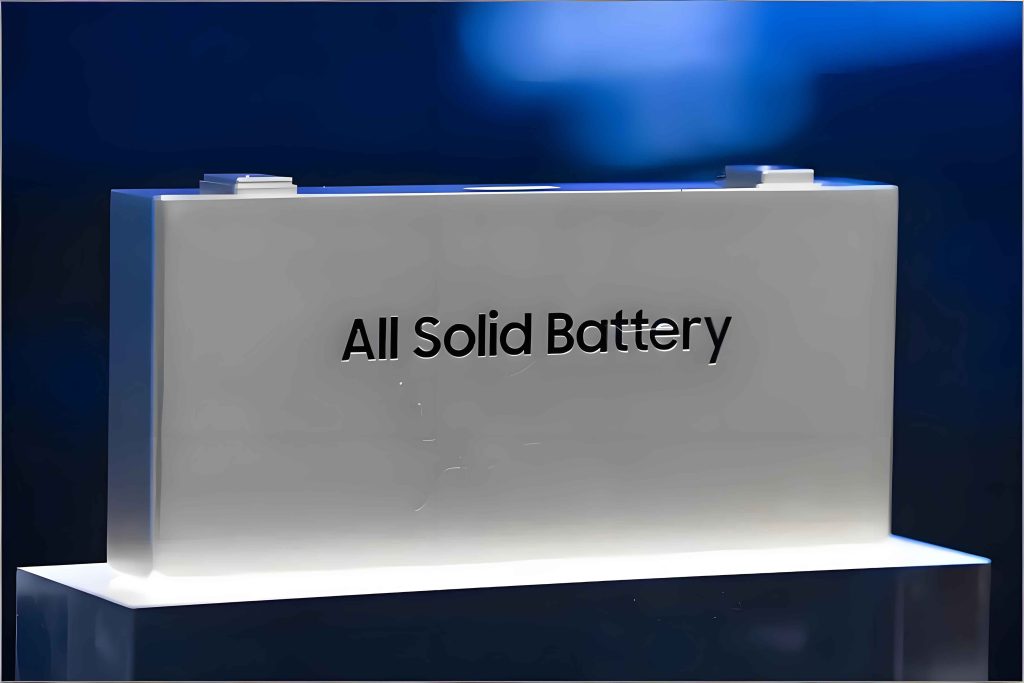
The concept of a solid-state battery is not new; it dates back to the early 19th century when Michael Faraday discovered solid electrolytes like silver sulfide and lead fluoride, laying the groundwork for solid-state ionics. However, it wasn’t until the late 20th century that significant advancements were made, driven by the need for safer and higher-energy-density batteries. A solid-state battery replaces the organic liquid electrolyte in conventional lithium-ion batteries with a solid electrolyte, which can be composed of materials such as sulfides, oxides, polymers, or chlorides. This fundamental change addresses critical issues like leakage, flammability, and thermal instability, making solid-state batteries a focal point for national energy strategies and corporate R&D efforts. In my analysis, I will explore how this technology has progressed from lab-scale curiosities to near-commercialization prototypes, with a particular focus on the electrolyte materials that define their performance.
To understand the appeal of solid-state batteries, we must first examine their core components. A solid-state battery consists of a solid electrolyte sandwiched between solid electrodes, eliminating the need for separators and liquid fillers. This design not only enhances safety but also allows for higher energy densities through the use of high-capacity electrodes like lithium metal. The ionic conductivity of the solid electrolyte is a key metric, often described by the Arrhenius equation for ion transport: $$ \sigma = \sigma_0 \exp\left(-\frac{E_a}{kT}\right) $$ where $\sigma$ is the ionic conductivity, $\sigma_0$ is the pre-exponential factor, $E_a$ is the activation energy, $k$ is Boltzmann’s constant, and $T$ is the temperature. Achieving high $\sigma$ at room temperature is crucial for practical applications, and different electrolyte classes offer varying performances. Below, I summarize the primary types of solid electrolytes in a table to highlight their properties.
| Electrolyte Type | Ionic Conductivity (S/cm) at Room Temperature | Key Advantages | Major Challenges | Representative Materials |
|---|---|---|---|---|
| Sulfide | 10^{-4} to 10^{-2} | High conductivity, good mechanical flexibility, low grain boundary resistance | Moisture sensitivity (produces toxic H₂S), high production costs, stringent handling requirements | Li₁₀GeP₂S₁₂ (LGPS), Li₉.₅₄Si₁.₇₄P₁.₄₄S₁₁.₇Cl₀.₃ |
| Oxide | 10^{-6} to 10^{-3} | High thermal and chemical stability, good voltage tolerance, air stability | Brittleness, poor solid-solid interface contact, high sintering temperatures | Li₇La₃Zr₂O₁₂ (garnet), LiPON (thin film), NASICON-type structures |
| Polymer | 10^{-8} to 10^{-6} at room temp; 10^{-4} at elevated temps (60-80°C) | Lightweight, flexible, ease of processing, compatibility with existing manufacturing | Low room-temperature conductivity, limited thermal stability, risk of lithium dendrite penetration | PEO-based electrolytes with Li salts (e.g., LiPF₆, LiClO₄) |
| Chloride | ~10^{-3} (emerging data) | Balanced conductivity and stability, moisture tolerance, cost-effectiveness | Poor stability with lithium metal, early-stage development | Li₂ZrCl₆, other halide-based compounds |
The evolution of solid-state batteries has been marked by incremental improvements in these electrolytes. For instance, sulfide electrolytes, with their superior ionic conductivity, have been championed by Japanese and Korean firms, but their hygroscopic nature complicates large-scale production. In contrast, oxide electrolytes offer robustness but require innovative interface engineering to reduce impedance. Polymer electrolytes, while technologically mature, suffer from low conductivity unless heated, limiting their use in ambient conditions. Recently, chloride electrolytes have emerged as a promising compromise, as seen in materials like Li₂ZrCl₆, which exhibit reasonable conductivity and stability. The ionic conductivity $\sigma$ can be modeled using the Nernst-Einstein relation: $$ \sigma = \frac{n q^2 D}{kT} $$ where $n$ is the carrier density, $q$ is the charge, $D$ is the diffusion coefficient, and $k$ and $T$ are as defined earlier. Optimizing these parameters is key to advancing solid-state battery performance.
Beyond electrolytes, the electrode materials in a solid-state battery play a pivotal role. Traditional lithium-ion batteries use graphite anodes and layered oxide cathodes, but solid-state batteries enable the use of lithium metal anodes, which have a theoretical capacity of 3860 mAh/g, compared to graphite’s 372 mAh/g. This leap in energy density can be quantified by the specific energy formula: $$ E = \frac{V \times C}{m} $$ where $E$ is the specific energy (Wh/kg), $V$ is the average cell voltage, $C$ is the capacity (Ah), and $m$ is the mass (kg). For a solid-state battery with a lithium metal anode and a high-voltage cathode like NMC811, values can exceed 500 Wh/kg, significantly higher than the 250-300 Wh/kg of current liquid electrolyte batteries. However, the interfacial issues between solid components remain a hurdle. The charge-transfer resistance at the electrode-electrolyte interface often follows a Butler-Volmer-like behavior: $$ j = j_0 \left[\exp\left(\frac{\alpha n F \eta}{RT}\right) – \exp\left(-\frac{(1-\alpha) n F \eta}{RT}\right)\right] $$ where $j$ is the current density, $j_0$ is the exchange current density, $\alpha$ is the transfer coefficient, $n$ is the number of electrons, $F$ is Faraday’s constant, $\eta$ is the overpotential, $R$ is the gas constant, and $T$ is temperature. Minimizing $\eta$ through interface design is critical for efficient cycling.
The advantages of solid-state batteries are manifold, driving global investment. Firstly, safety is paramount: the absence of flammable liquids eliminates risks of leakage and thermal runaway, which can be described by the thermal stability window. Solid electrolytes typically have decomposition temperatures above 200°C, whereas liquid electrolytes degrade around 80°C. Secondly, energy density gains are substantial; by enabling bipolar stacking and thinner layers, solid-state batteries can achieve higher volumetric energy densities. Thirdly, cycle life improves due to reduced side reactions, such as SEI growth, which in liquid batteries follows a parabolic growth law: $$ \delta_{SEI} = \sqrt{k t} $$ where $\delta_{SEI}$ is the SEI thickness, $k$ is a rate constant, and $t$ is time. In solid-state systems, this growth is suppressed, extending battery lifespan. Lastly, operational temperature ranges widen, allowing use in extreme environments from -40°C to 150°C. These benefits make solid-state batteries a cornerstone for future EVs and grid storage.
Nevertheless, challenges persist. The solid-solid interface issue leads to high interfacial resistance, which can be modeled as a series of resistors in equivalent circuit models: $$ R_{total} = R_{bulk} + R_{interface} + R_{charge transfer} $$ where $R_{bulk}$ is the electrolyte bulk resistance, $R_{interface}$ is the interfacial resistance, and $R_{charge transfer}$ is the charge-transfer resistance. Reducing $R_{interface}$ through coatings or composite electrolytes is an active research area. Additionally, manufacturing scalability and cost are concerns; for example, sulfide electrolytes require dry rooms with dew points below -50°C, increasing capital expenditure. Mechanical stresses during cycling also pose durability challenges, described by strain-energy relationships: $$ U = \frac{1}{2} \sigma \epsilon $$ where $U$ is the strain energy, $\sigma$ is stress, and $\epsilon$ is strain. Addressing these issues is essential for commercialization.
Globally, the development of solid-state batteries is accelerating. In East Asia, Japan and South Korea have made significant strides, with numerous patents and prototypes. For instance, Japanese initiatives focus on sulfide electrolytes, aiming for mass production by 2025. Korean efforts emphasize thin-film and large-format cells, targeting energy densities over 400 Wh/kg. In Europe and North America, partnerships between automakers and startups are common, with goals to deploy solid-state batteries in EVs by the late 2020s. Research often centers on oxide and polymer electrolytes, leveraging existing infrastructure. China has emerged as a major player, with extensive academic and industrial projects on all electrolyte types, driven by national policies like the “Carbon Peak and Carbon Neutrality” goals. The global patent landscape shows a compound annual growth rate of over 45% since 2016, reflecting intense competition.
To quantify progress, I present a table summarizing key milestones and targets for solid-state battery development across regions.
| Region/Country | Preferred Electrolyte Type | Key Players (Generalized) | Current Energy Density (Wh/kg) | Target Energy Density (Wh/kg) by 2030 | Estimated Commercialization Timeline |
|---|---|---|---|---|---|
| Japan | Sulfide | Automotive and electronics corporations | ~300 (lab scale) | >500 | 2025-2030 for EVs |
| South Korea | Sulfide and oxide | Battery manufacturers and conglomerates | ~350 (prototypes) | >450 | 2027-2030 for mass production |
| United States | Oxide and polymer | Startups and automotive alliances | ~250 (pilot lines) | >400 | 2028-2035 for full-scale deployment |
| Europe | Oxide and composite | Automakers and research consortia | ~280 (testing phases) | >420 | 2026-2032 for vehicle integration |
| China | All types (sulfide, oxide, polymer, chloride) | Universities, state-owned enterprises, private firms | ~320 (demonstration projects) | >500 | 2025-2030 for industrial adoption |
The trajectory of solid-state battery innovation often follows an S-curve model of technology adoption, where performance improves exponentially before plateauing. The energy density $E$ as a function of time $t$ can be approximated by: $$ E(t) = E_{max} \left(1 – \exp\left(-\frac{t}{\tau}\right)\right) $$ where $E_{max}$ is the theoretical maximum and $\tau$ is a time constant. Current trends suggest $\tau$ is decreasing due to accelerated R&D. Moreover, cost reduction is critical; the levelized cost of storage (LCOS) for solid-state batteries must compete with liquid lithium-ion batteries, which is projected using learning curves: $$ C = C_0 \left(\frac{X}{X_0}\right)^{-b} $$ where $C$ is the cost per kWh, $C_0$ is the initial cost, $X$ is cumulative production, $X_0$ is initial production, and $b$ is the learning rate (typically 0.1-0.2 for batteries). As production scales, costs are expected to drop, making solid-state batteries economically viable.
In terms of materials science, composite electrolytes are gaining attention for their ability to balance properties. For example, a sulfide-polymer composite might combine high conductivity with flexibility, described by percolation theory: $$ \sigma_{composite} = \sigma_{filler} (\phi – \phi_c)^t $$ where $\sigma_{composite}$ is the composite conductivity, $\sigma_{filler}$ is the filler conductivity, $\phi$ is the volume fraction of filler, $\phi_c$ is the percolation threshold, and $t$ is a critical exponent. Such composites could mitigate interfacial issues while maintaining performance. Additionally, advanced characterization techniques like impedance spectroscopy are vital for analyzing solid-state batteries, with data fitting to equivalent circuits to extract parameters like $R_{interface}$.
Looking ahead, the solid-state battery landscape will likely see a phased adoption. Semi-solid batteries, with reduced liquid content, will serve as intermediates, offering incremental improvements in safety and energy density. Full solid-state batteries represent the ultimate goal, but their success hinges on solving interfacial and manufacturing challenges. Policy support, such as research funding and emission regulations, will accelerate this transition. As a researcher, I believe that interdisciplinary collaboration—materials science, electrochemistry, and engineering—is key to unlocking the potential of solid-state batteries.
In conclusion, solid-state batteries stand at the forefront of next-generation energy storage, promising transformative gains in safety and energy density. From sulfide to chloride electrolytes, each material class offers unique trade-offs, necessitating continued innovation. Global efforts are converging on commercialization, with timelines extending into the 2030s. While hurdles remain, the progress in patent filings, prototype demonstrations, and academic publications is encouraging. As we advance, the solid-state battery will not only power electric vehicles but also enable broader renewable energy integration, contributing to a sustainable future. This review underscores the importance of sustained investment and research in solid-state battery technology to overcome existing barriers and realize its full potential.