
As the world increasingly prioritizes environmental protection and sustainable development, electric vehicles have emerged as a mainstream alternative to traditional internal combustion engine vehicles. In particular, the China EV market has experienced rapid growth, becoming a key player in the global automotive industry. However, the range of electric vehicles and the lifespan of their power batteries remain critical factors limiting widespread adoption. From my perspective as a researcher in this field, I have observed that scientific battery maintenance strategies can significantly delay battery degradation, extend battery life, and enhance range stability. This article delves into the factors influencing electric vehicle range, explores effective battery保养 practices, and discusses future trends and challenges, all while incorporating data-driven insights through tables and formulas to provide a comprehensive analysis.
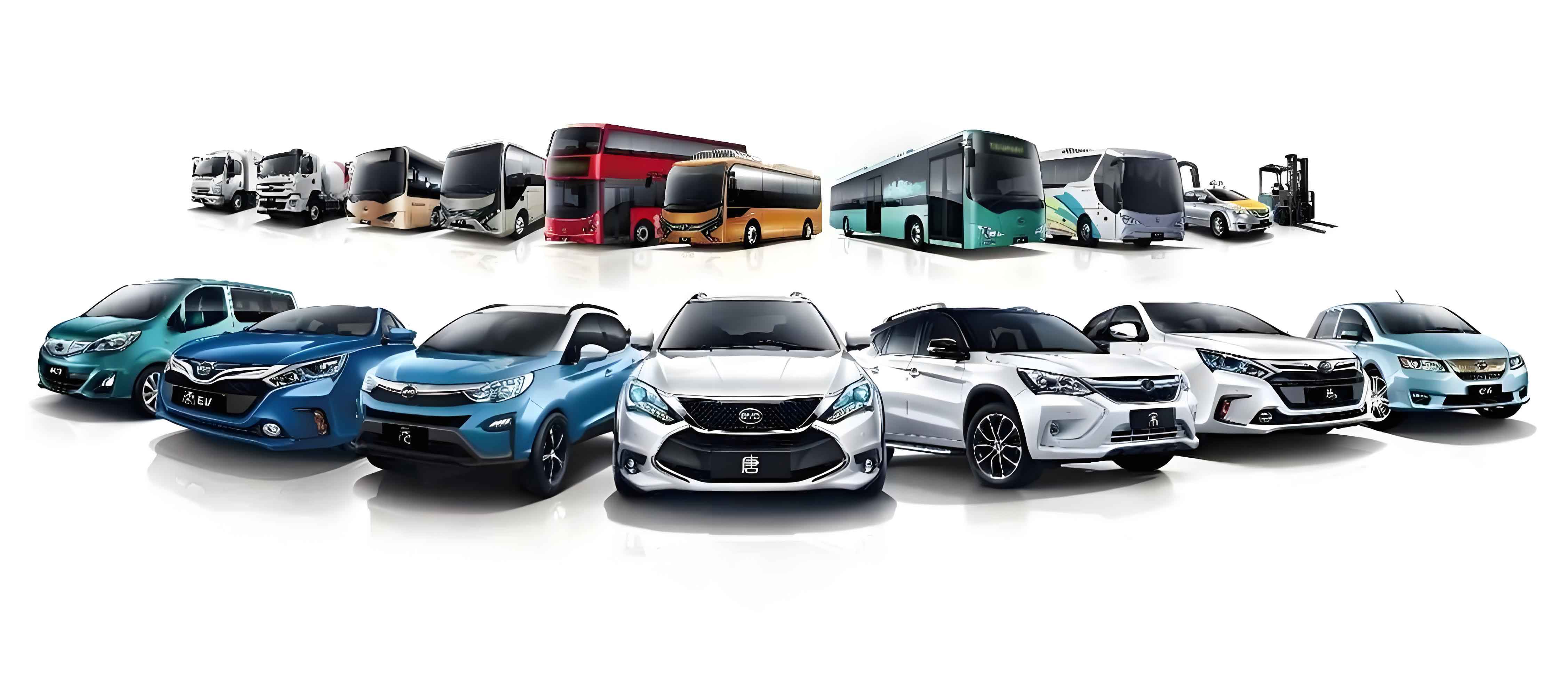
The performance of power batteries is a cornerstone of electric vehicle range. Different types of batteries, such as ternary lithium and lithium iron phosphate (LFP), exhibit varying energy densities and capacities, which directly impact how far an electric vehicle can travel on a single charge. Energy density, in particular, is a crucial parameter; higher energy density means more energy storage per unit volume or mass. For instance, ternary lithium batteries typically offer higher energy density compared to LFP batteries, resulting in longer range for vehicles equipped with them. However, increasing battery capacity to boost range can lead to added vehicle weight, potentially offsetting gains in energy efficiency. This relationship can be expressed using a simplified formula for range estimation: $$ R = \frac{C \times \eta}{E_v} $$ where \( R \) is the range in kilometers, \( C \) is the battery capacity in kilowatt-hours, \( \eta \) is the efficiency factor, and \( E_v \) is the energy consumption per kilometer. In the context of China EV development, optimizing this balance is essential for meeting consumer expectations.
To illustrate the differences between common battery types, consider the following table summarizing key characteristics based on industry data:
| Battery Type | Energy Density (Wh/kg) | Typical Cycle Life (Cycles) | Impact on Electric Vehicle Range |
|---|---|---|---|
| Ternary Lithium | 200-250 | 1500-2000 | Higher range due to superior energy density |
| Lithium Iron Phosphate (LFP) | 150-180 | 2000-3000 | Moderate range with longer lifespan |
Charging technology also plays a pivotal role in influencing electric vehicle range. The depth of discharge and charging speed are two critical aspects. Laboratory studies show that repeatedly charging a battery from 0% to 100% can reduce its cycle life by up to 30% compared to maintaining a state of charge between 20% and 80%. This phenomenon can be modeled with a degradation formula: $$ D = D_0 \times (1 + \alpha \times \Delta SOC) $$ where \( D \) is the degradation rate, \( D_0 \) is the base degradation, \( \alpha \) is a coefficient, and \( \Delta SOC \) is the deviation from the optimal state of charge. In practice, for electric vehicles in China, adopting a shallow charge-discharge strategy—such as keeping the battery between 20% and 80% for daily use—can prolong battery health. Moreover, fast-charging technologies, like the 800 V high-voltage platforms used in some China EV models, have improved charging efficiency, reducing time significantly. For example, a 300 kW charger can replenish 80% of capacity in about 15 minutes. However, frequent fast charging accelerates battery aging due to high current-induced side reactions. I recommend a 3:1 ratio of fast to slow charging—after every three fast charges, use a slow charge for balance. The following table outlines optimal charging practices for electric vehicles:
| Charging Aspect | Recommendation | Impact on Battery Life |
|---|---|---|
| Depth of Discharge | Maintain 20%-80% SOC for daily use | Reduces degradation by up to 30% |
| Fast Charging Frequency | Limit to 3 times per month, follow with slow charge | Minimizes thermal stress and aging |
| Temperature Management | Charge at 15°C-25°C; avoid above 45°C | Prevents capacity fade by 3x at high temperatures |
Driving conditions significantly affect the energy efficiency and range of electric vehicles. Habits such as smooth acceleration and braking can conserve energy, whereas aggressive driving—like rapid acceleration and deceleration—increases power consumption. For instance, instantaneous power during hard acceleration can reach three times the rated value, straining the battery and reducing its longevity. Environmental factors, especially temperature, also play a major role; at 40°C, battery capacity degrades three times faster than at 25°C. This relationship can be described by the Arrhenius equation for temperature-dependent degradation: $$ k = A e^{-E_a / (RT)} $$ where \( k \) is the degradation rate constant, \( A \) is the pre-exponential factor, \( E_a \) is the activation energy, \( R \) is the gas constant, and \( T \) is the temperature in Kelvin. In China EV applications, maintaining an economical speed of 50-80 km/h can save up to 30% energy compared to driving at 120 km/h. Additionally, using regenerative braking systems can recover up to 30% of kinetic energy during deceleration, further enhancing range.
Moving to battery maintenance, proactive care is essential for maximizing the lifespan of electric vehicle batteries. For ternary lithium batteries, it is advisable to keep the state of charge between 20% and 80%, only charging to 95% for long trips, and avoiding full charge storage beyond 24 hours. In contrast, LFP batteries can be charged weekly from 20% to 100%. Temperature control is critical; at -10°C, capacity衰减速率 increases sixfold compared to 25°C, so preheating the battery or charging in garages is recommended in cold climates. A monthly check for bulging or leakage, along with cleaning charging ports, can prevent efficiency drops of up to 20%. Furthermore, quarterly battery balancing helps equalize cell voltages, which is vital for consistent performance. The following formula estimates battery life based on maintenance: $$ L = L_0 \times \prod_{i=1}^{n} (1 – f_i) $$ where \( L \) is the effective battery life, \( L_0 \) is the initial life, and \( f_i \) represents factors like temperature abuse or deep discharge. In the China EV context, adhering to these practices can extend battery life by 20-30%.
Charging habits are equally important for preserving electric vehicle batteries. Using original chargers and cleaning connectors every three months prevents oxidation-related losses. After exposure to high temperatures, such as 40°C for an hour, allowing the vehicle to cool for an hour before charging can mitigate a 15% range reduction. For闲置 vehicles, storing at 50%-70% charge in environments with humidity below 60% is ideal. The impact of fast charging on battery health can be quantified: frequent fast charging at 50°C internal temperature may lead to an 8% annual capacity loss. Thus, I emphasize a balanced approach, with slow charging for voltage均衡 after multiple fast charges. The table below summarizes key maintenance actions for electric vehicles:
| Maintenance Activity | Frequency | Benefit for Electric Vehicle Battery |
|---|---|---|
| State of Charge Management | Daily | Prevents deep discharge and extends cycle life |
| Temperature Monitoring | Continuous | Reduces capacity fade by up to 6x in cold |
| Battery均衡 | Quarterly | Ensures uniform cell performance |
| Connector Cleaning | Every 3 months | Maintains charging efficiency |
Driving habits directly influence the energy consumption of electric vehicles. Adopting a predictive driving style that leverages regenerative braking for 80% of braking needs can significantly reduce wear on the battery. In hilly terrain, switching to eco-mode allows the battery management system to optimize power distribution, while coasting downhill can recover substantial energy. The energy savings from such habits can be modeled as: $$ E_{saved} = \int (P_{regen} – P_{loss}) \, dt $$ where \( E_{saved} \) is the energy conserved, \( P_{regen} \) is the regenerated power, and \( P_{loss} \) is the power loss. In China EV scenarios, promoting these habits through education and technology can alleviate range anxiety and enhance user satisfaction.
Daily养护 for electric vehicle batteries involves avoiding extreme states of charge and using smart storage practices. For long-term parking, disconnecting the low-voltage battery and setting the main battery to 50% charge can prevent deep discharge issues. Data indicates that storing a battery at -10°C for one month equates to six months of natural aging at 25°C, highlighting the importance of temperature management. Implementing intelligent thermal control systems or using constant-temperature garages can maintain optimal conditions between 15°C and 25°C. This proactive approach is crucial for the longevity of electric vehicles, especially in regions with harsh climates.
Looking ahead, the technology trends for electric vehicle batteries are promising. Solid-state batteries and sodium-ion technologies are on the horizon, potentially doubling energy density and reducing costs. The proliferation of 800 V high-voltage platforms and 10-minute fast charging will further shorten charging times, making electric vehicles more convenient. However, challenges persist, such as the risk of thermal runaway in liquid batteries, the theoretical limits of energy density, and the uneven distribution of charging infrastructure. In China EV development, these hurdles must be addressed through coordinated efforts in research and policy. The evolution of battery maintenance strategies will also become more standardized, with companies offering precise recommendations to users.
In conclusion, the range and battery health of electric vehicles are intricately linked to multiple factors, including battery performance, charging practices, driving conditions, and maintenance routines. Through scientific approaches—such as shallow cycling, temperature control, and balanced charging—users can significantly enhance battery longevity and range stability. As the China EV market continues to expand, embracing these strategies will be key to overcoming adoption barriers and achieving sustainable mobility. The integration of advanced formulas and data-driven insights, as discussed, provides a solid foundation for optimizing electric vehicle performance in the years to come.