
The rapid advancement of energy storage technologies is crucial for addressing global energy shortages and environmental pollution. Among these, lithium-ion batteries have emerged as pivotal devices due to their high energy density, long cycle life, and versatility in applications ranging from portable electronics to electric vehicles. However, conventional liquid electrolytes pose safety risks such as leakage and flammability, driving the shift toward solid-state batteries. Solid-state batteries utilize solid electrolytes—including polymers, ceramics, and composites—which offer enhanced safety, wider electrochemical windows, and better compatibility with high-voltage electrodes. Despite these advantages, the practical implementation of solid-state batteries is hindered by interfacial issues at the electrode-solid electrolyte junctions. These interfaces exhibit problems like lithium dendrite growth at the anode, volume expansion in alloy-based anodes, and poor contact or side reactions at the cathode. Graphene, with its exceptional two-dimensional structure, high electrical conductivity, mechanical strength, and flexibility, has shown promise in mitigating these interfacial challenges. This article explores the application of graphene in modifying interfaces within solid-state batteries, focusing on both anode and cathode sides, and provides insights into future research directions.
The interface between electrodes and solid electrolytes in solid-state batteries is a critical factor influencing performance. Unlike liquid electrolytes that can permeate porous electrodes, solid electrolytes form rigid contacts, leading to high interfacial resistance and instability. For instance, at the anode side, lithium metal deposition can become uneven, resulting in dendrite formation that may penetrate the electrolyte and cause short circuits. Similarly, alloy-based anodes like silicon and tin undergo significant volume changes during lithiation and delithiation, causing mechanical degradation and loss of electrical contact. At the cathode side, issues such as space charge layers, chemical incompatibility, and structural mismatches further exacerbate interfacial resistance. Graphene, as a conductive and mechanically robust material, can be integrated into these interfaces to enhance charge transfer, buffer mechanical stress, and improve stability. Its large surface area and tunable functional groups allow for tailored modifications, making it a versatile tool for advancing solid-state battery technology.
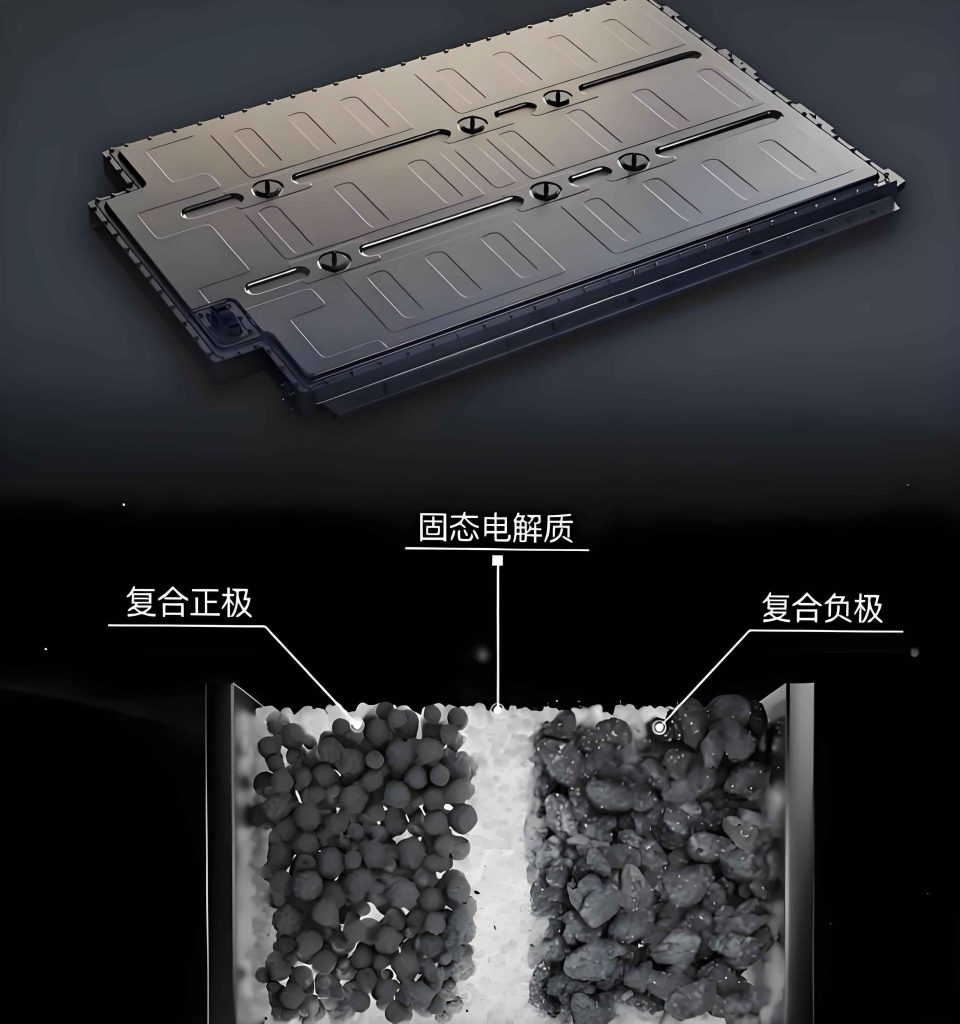
Solid-state batteries rely on solid electrolytes with high ionic conductivity to facilitate lithium-ion transport. Various types of solid electrolytes have been developed, each with distinct properties. For example, polymer-based electrolytes like poly(ethylene oxide) (PEO) offer flexibility but limited ionic conductivity at room temperature. In contrast, ceramic electrolytes such as garnet-type LLZO or sulfide-based LPS exhibit higher ionic conductivities but suffer from brittleness and poor interfacial contact. The ionic conductivity (σ) of these materials can be expressed using the Arrhenius equation: $$ \sigma = \sigma_0 \exp\left(-\frac{E_a}{kT}\right) $$ where σ₀ is the pre-exponential factor, Eₐ is the activation energy, k is Boltzmann’s constant, and T is the temperature. Enhancing σ while maintaining interfacial compatibility remains a key challenge. Graphene can be incorporated into solid electrolytes to form composite structures that improve both ionic and electronic transport. For instance, graphene oxide aerogels have been used as frameworks in polymer electrolytes to create continuous ion-conduction pathways and reduce interfacial resistance. The integration of graphene into solid-state battery components is thus a multifaceted approach to address core limitations.
In the context of anode interfaces, graphene plays a vital role in stabilizing lithium metal anodes. Lithium metal is an ideal anode due to its high theoretical capacity (3860 mAh·g⁻¹) and low redox potential, but its uneven deposition leads to dendrite growth. Graphene-based structures, such as three-dimensional frameworks or layered composites, can homogenize current distribution and guide uniform lithium plating. For example, crumpled graphene balls act as conductive scaffolds that disperse lithium ions and prevent localized accumulation. The effectiveness of such modifications can be quantified by the overpotential (η) during cycling, which is related to the interfacial resistance (Rᵢ) and current density (i): $$ \eta = i \cdot R_i $$ By reducing Rᵢ through graphene integration, the overpotential decreases, leading to more stable cycling. Additionally, graphene coatings on solid electrolytes can serve as protective layers that mitigate side reactions between lithium and electrolyte materials. This is particularly important for sulfide-based electrolytes, which are prone to reduction at the anode interface.
For alloy-based anodes like silicon and tin, graphene helps accommodate volume changes and maintain electrical connectivity. Silicon anodes, with a theoretical capacity of 4200 mAh·g⁻¹, undergo a volume expansion of up to 400% during lithiation, causing pulverization and capacity fade. Graphene encapsulation, such as in graphene cages or composite nanosheets, provides mechanical support and confines the expansion within flexible carbon networks. The stress (σ_s) generated during volume change can be modeled using linear elasticity theory: $$ \sigma_s = E \cdot \epsilon $$ where E is the Young’s modulus and ε is the strain. Graphene’s high tensile strength (over 1 TPa) allows it to withstand these stresses without fracture. Similarly, tin-based anodes benefit from graphene composites that buffer volume changes and enhance conductivity. The performance improvements are evident in metrics like capacity retention and cycle life, as summarized in Table 1 for various graphene-modified anodes.
| Anode Material | Graphene Modification | Specific Capacity (mAh·g⁻¹) | Cycle Life (Cycles) | Key Improvement |
|---|---|---|---|---|
| Lithium Metal | Crumpled Graphene Framework | ~3390 (theoretical) | 750 | Dendrite suppression, high Coulombic efficiency |
| Silicon Nanoparticles | Graphene Cage Encapsulation | 2395.8 at 0.05 A·g⁻¹ | 100 | Volume expansion buffering, stable SEI formation |
| Tin Oxide (SnO₂) | Graphene Nanosheet Composite | 654 at 2 A·g⁻¹ | 1200 | Enhanced conductivity, reduced aggregation |
| Germanium (Ge) | Graphene-Carbon Nanotube Hybrid | 863.8 at 100 mA·g⁻¹ | 100 | Improved rate capability and cycling stability |
| Antimony (Sb) | Graphene-Anchored Nanocomposite | 1034 (first discharge) | 50 | Activated lithium storage, reduced polarization |
The table above illustrates how graphene modifications enhance the electrochemical performance of various anodes in solid-state batteries. For lithium metal anodes, the graphene framework reduces dendrite formation, as evidenced by extended cycle life and low overpotential. In silicon anodes, graphene cages maintain electrical contact during volume changes, leading to high capacity retention. These improvements are critical for realizing high-energy-density solid-state batteries. Moreover, graphene’s role extends to other anode materials like germanium, antimony, and phosphorus, where it similarly mitigates volume effects and boosts kinetics. The underlying mechanism often involves the formation of stable solid electrolyte interphases (SEI) and facilitated lithium-ion diffusion. The diffusion coefficient (D) of lithium ions in graphene composites can be estimated using the Randles-Sevcik equation for cyclic voltammetry: $$ I_p = 0.4463 \cdot nFAC \sqrt{\frac{nFvD}{RT}} $$ where Iₚ is peak current, n is electron transfer number, F is Faraday’s constant, A is electrode area, C is concentration, v is scan rate, R is gas constant, and T is temperature. Higher D values in graphene-modified electrodes indicate faster ion transport, contributing to better rate performance.
Transitioning to the cathode side, interfacial issues in solid-state batteries are equally challenging. Cathode materials like lithium cobalt oxide (LiCoO₂) or lithium iron phosphate (LiFePO₄) often have poor contact with solid electrolytes due to their rigid surfaces. This results in high interfacial resistance and limited charge transfer. Additionally, chemical reactions at the cathode-electrolyte interface can degrade performance, especially with sulfide or hydride electrolytes. Graphene addresses these problems through two primary pathways: improving charge transfer and acting as a buffer layer. For charge transfer enhancement, graphene is incorporated into cathode composites to increase electronic conductivity. This reduces the overall impedance of the solid-state battery, as described by the equivalent circuit model where the total resistance (R_total) includes bulk electrolyte resistance (R_b) and interfacial resistance (R_int): $$ R_{\text{total}} = R_b + R_{\text{int}} $$ By lowering R_int via graphene, the cell’s power capability improves. Furthermore, graphene can form gradient interfaces that promote uniform ion and electron distribution, minimizing polarization during cycling.
As a buffer layer, graphene is placed between the cathode and solid electrolyte to prevent direct contact and side reactions. For instance, fluorinated graphene layers can be converted in situ to lithium fluoride and graphene composites, creating a soft interface that accommodates volume changes and enhances lithium-ion transport. The effectiveness of such interlayers can be evaluated by measuring the charge-transfer resistance (R_ct) using electrochemical impedance spectroscopy (EIS). A decrease in R_ct indicates better interfacial kinetics. In some designs, graphene is combined with solid polymer electrolytes to form hybrid cathodes with continuous ion-conduction networks. This approach not only improves interface contact but also suppresses lithium dendrite growth at the anode side, contributing to overall solid-state battery stability. The performance metrics for graphene-modified cathodes are summarized in Table 2, highlighting key advancements.
| Cathode Material | Graphene Modification | Initial Capacity (mAh·g⁻¹) | Capacity Retention | Interface Resistance Reduction |
|---|---|---|---|---|
| LiNi₀.₅Co₀.₂Mn₀.₃O₂ | Graphene Interlayer | ~160 at 0.5C | 97.9% after 50 cycles | ~20 Ω |
| CuCo₂S₄ | Graphene Nanosheet Composite | 1102.25 at 50 mA·g⁻¹ | 556.41 mAh·g⁻¹ after 100 cycles at 500 mA·g⁻¹ | Enhanced charge transfer |
| LiFePO₄ | Graphene-Electrolyte Infiltration | ~140 (theoretical) | Stable cycling | Continuous ion network formation |
| H₂V₃O₈ Nanowires | Gradient Graphene-PEO Interface | High rate capability | Improved cycle stability | Lowered impedance |
The data in Table 2 demonstrate that graphene integration into cathodes significantly boosts the performance of solid-state batteries. For example, in LiNi₀.₅Co₀.₂Mn₀.₃O₂ cathodes, a graphene interlayer reduces interfacial resistance to below 20 Ω, leading to excellent capacity retention. Similarly, graphene composites with sulfide cathodes like CuCo₂S₄ enable high initial capacities and good rate performance. These improvements stem from graphene’s ability to form conductive percolation networks and mitigate space charge effects. The space charge layer (Δφ) at the cathode-electrolyte interface can be described by the Poisson-Boltzmann equation: $$ \frac{d^2\phi}{dx^2} = -\frac{\rho}{\epsilon} $$ where φ is electric potential, ρ is charge density, and ε is permittivity. Graphene’s high electron density helps neutralize such layers, reducing polarization and enhancing lithium-ion flux. Additionally, graphene’s mechanical flexibility allows it to maintain intimate contact during cycling, preventing delamination that commonly plagues solid-state battery interfaces.
Beyond specific electrode modifications, graphene also contributes to the development of composite solid electrolytes. By dispersing graphene oxide or reduced graphene oxide into polymer or ceramic electrolytes, researchers have created materials with balanced ionic and electronic conductivities. This is crucial for preventing lithium dendrite growth, as a mixed conductor can redistribute current density. The ionic transference number (t₊) of such composites, defined as: $$ t_+ = \frac{\sigma_+}{\sigma_+ + \sigma_-} $$ where σ₊ and σ₋ are cationic and anionic conductivities, respectively, often increases with graphene addition, indicating preferential lithium-ion transport. Moreover, graphene-based electrolytes exhibit improved thermal stability and wider electrochemical windows, making them suitable for high-voltage solid-state battery applications. For instance, graphene oxide-aerogel reinforced PEO electrolytes have shown ionic conductivities up to 2.22×10⁻⁴ S·cm⁻¹ at room temperature and stability up to 4.8 V. These advancements underscore graphene’s multifunctional role in overcoming the intrinsic limitations of solid-state batteries.
Looking forward, several challenges and opportunities exist for graphene in solid-state battery interface modification. First, the fundamental mechanisms of interface evolution during cycling are not fully understood. In situ characterization techniques, such as spectroscopy and microscopy, coupled with computational modeling, are needed to elucidate how graphene affects interfacial dynamics. For example, molecular dynamics simulations can reveal lithium-ion pathways through graphene-containing interfaces, as described by diffusion equations: $$ \frac{\partial C}{\partial t} = D \nabla^2 C $$ where C is concentration and t is time. Second, the mechanical-electrochemical coupling at interfaces requires deeper investigation. Stress generation during volume changes can be modeled using continuum mechanics, and graphene’s role in stress dissipation should be quantified. Third, the cost of graphene production remains a barrier to large-scale adoption. Developing efficient, low-cost synthesis methods, such as chemical vapor deposition or exfoliation techniques, is essential for commercialization.
In conclusion, graphene serves as a powerful enabler for enhancing interfacial properties in solid-state batteries. Its unique combination of high conductivity, mechanical strength, and chemical stability allows it to address critical issues at both anode and cathode interfaces. For anodes, graphene suppresses dendrite growth and buffers volume expansion, leading to longer cycle life and higher safety. For cathodes, graphene improves charge transfer and acts as a buffer layer, reducing resistance and mitigating side reactions. Furthermore, graphene-based composite electrolytes offer synergistic benefits for overall cell performance. As research progresses, focusing on interface characterization, mechanistic understanding, and scalable fabrication will unlock graphene’s full potential in solid-state battery technology. The continued integration of graphene into solid-state battery designs promises to accelerate the development of next-generation energy storage systems with superior energy density, safety, and longevity.
The application of graphene in solid-state batteries is a rapidly evolving field, with ongoing innovations in material design and processing. For instance, three-dimensional graphene architectures, such as foams or aerogels, provide porous scaffolds that enhance electrolyte infiltration and electrode contact. These structures can be tailored to optimize lithium-ion transport and mechanical resilience. Additionally, functionalized graphene derivatives, like nitrogen-doped or sulfur-doped graphene, introduce active sites that further improve interfacial interactions. The doping effect on electronic structure can be approximated using density functional theory calculations, showing modified band gaps and enhanced lithium adsorption energies. Such modifications contribute to better kinetics and stability in solid-state battery operation.
Another promising direction is the use of graphene in hybrid solid-state battery configurations that combine different electrolyte types. For example, graphene layers can bridge polymer and ceramic electrolytes, creating graded interfaces that minimize impedance. The overall cell performance in such hybrids can be evaluated using parameters like energy density (E) and power density (P): $$ E = \frac{1}{2} C V^2 $$ and $$ P = \frac{V^2}{R} $$ where C is capacitance and V is voltage. By reducing R through graphene integration, both E and P can be enhanced. Moreover, graphene’s role in solid-state battery safety cannot be overstated—its thermal conductivity helps dissipate heat, reducing the risk of thermal runaway in high-demand applications.
In summary, the versatility of graphene makes it a cornerstone material for advancing solid-state battery technology. From anode to cathode, and within the electrolyte itself, graphene-driven modifications lead to more robust and efficient interfaces. As the demand for safer and higher-energy-density batteries grows, the insights gained from graphene research will be instrumental in shaping the future of energy storage. The journey toward commercialization of graphene-enhanced solid-state batteries requires collaborative efforts in materials science, engineering, and economics, but the potential rewards—in terms of performance and sustainability—are substantial.