
Accurately monitoring the State of Charge (SOC) and State of Health (SOH) of lithium-ion batteries is fundamentally crucial for the safety, longevity, and performance of modern battery electric vehicles. The Battery Management System (BMS), a core component in every battery electric vehicle, relies on precise estimates of these two internal states to prevent overcharge/over-discharge, optimize energy usage, predict driving range, and schedule maintenance. However, direct measurement of SOC and SOH is infeasible. They must be estimated indirectly from measurable signals like terminal voltage, current, and temperature, a process complicated by the battery’s strong non-linearity, dynamic operational conditions, and inherent performance degradation over time. Traditional estimation methods often struggle with the complex, time-correlated, and potentially non-Gaussian noise encountered in real-world battery electric vehicle applications, leading to reduced accuracy and robustness.
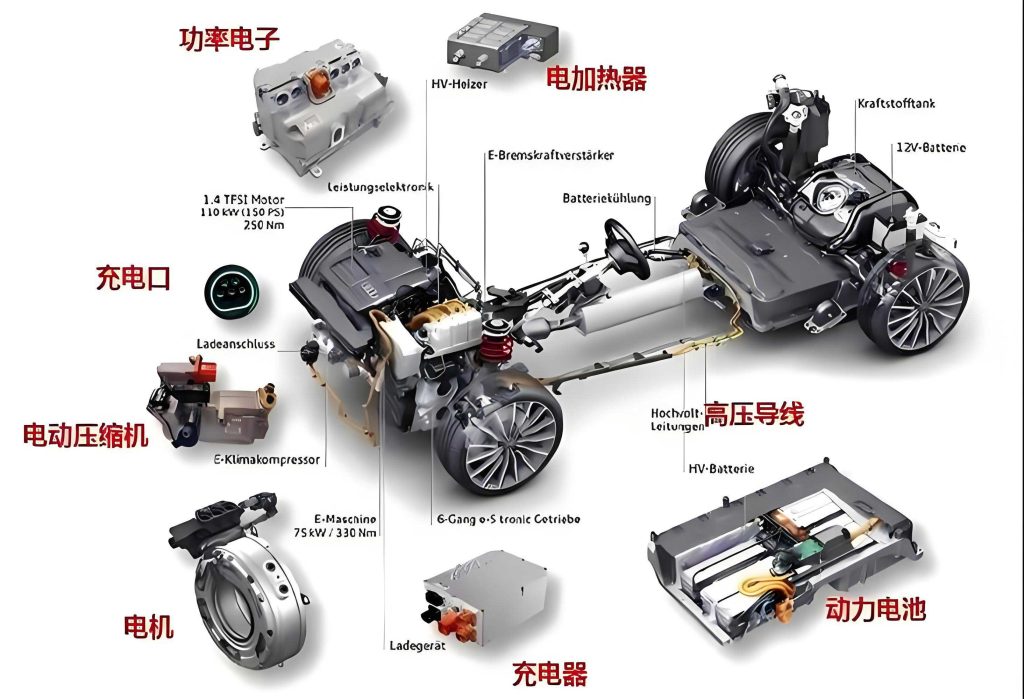
This work addresses these challenges by proposing a novel Dual-time-scale Robust Unscented Kalman Filter (DRUKF) algorithm for the joint online estimation of SOC and SOH. The algorithm is specifically designed for the demanding environment of a battery electric vehicle BMS. It is built upon a second-order RC equivalent circuit model and integrates online parameter identification with a robust filtering strategy. By leveraging the different time-varying characteristics of SOC (fast-changing) and SOH (slow-changing), the DRUKF framework decouples their estimation into two interacting filters operating at different timescales. Furthermore, it incorporates H-infinity filtering principles to enhance robustness against noise statistical uncertainty and model parameter deviations, which are common in the complex drivetrain of a battery electric vehicle. The performance of the proposed DRUKF algorithm is rigorously validated under standardized dynamic driving cycles, demonstrating superior accuracy and robustness compared to conventional methods.
1. BMS Algorithm Testing Platform and Experimental Methodology for Engineering Application
1.1 BMS Architecture and Core Components
The BMS is the central intelligence unit managing the high-voltage battery pack in a battery electric vehicle. A typical BMS architecture for a battery electric vehicle comprises several key modules: a data acquisition unit, a main processing and control unit, a state estimation module, and the battery pack itself. The data acquisition unit is responsible for high-precision, synchronous measurement of cell voltages, pack current, and temperature points. The main processing and control unit executes core algorithms, including the state estimation algorithms, and manages thermal and electrical control functions. The state estimation module, which is the focus of this research, continuously calculates critical internal states like SOC and SOH based on the acquired sensor data. For the development and validation of advanced algorithms like the proposed DRUKF, a reliable and precise hardware-in-the-loop or bench testing platform is essential before deployment in a real battery electric vehicle.
1.2 Engineering-Oriented BMS Algorithm Test and Validation Platform
1.2.1 Hardware Configuration and Battery Specification
The testing platform was established to emulate real BMS operational conditions. A commercial Samsung ICR18650-26H lithium-ion cell was used for all experiments. Its key specifications are summarized in Table 1.
| Parameter | Value |
|---|---|
| Rated Capacity | 2.6 Ah |
| Nominal Voltage | 3.7 V |
| Charge Cut-off Voltage | 4.20 V |
| Discharge Cut-off Voltage | 2.75 V |
| Standard Charge Current | 1.3 A (0.5C) |
| Maximum Continuous Discharge Current | 5.2 A (2C) |
1.2.2 Test Data Acquisition Procedures
Two primary experimental procedures were conducted: capacity tests and hybrid pulse tests. The capacity test, performed at a constant 25°C, determines the actual available capacity of the cell (crucial for SOH reference) by a standard constant-current-constant-voltage (CC-CV) charge followed by a constant-current (CC) discharge. The hybrid pulse test is designed for model parameter identification. It involves applying a series of discharge current pulses at different SOC setpoints (from 90% to 10% in 10% steps), each followed by a long rest period. The voltage relaxation response to these pulses provides the dynamic data necessary to fit the parameters of the equivalent circuit model.
1.2.3 Dynamic Driving Cycle Tests for Engineering Validation
To validate algorithm performance under realistic conditions akin to a battery electric vehicle in operation, three internationally recognized standard driving cycles were employed:
- Urban Dynamometer Driving Schedule (UDDS): Simulates low-speed, stop-and-go urban traffic.
- New European Driving Cycle (NEDC): Represents a mix of urban and suburban driving.
- Highway Fuel Economy Test (HWFET): Represents steady, high-speed highway cruising.
These dynamic current profiles, derived from the velocity traces of these cycles, were applied to the cell on the test bench. The ability of the DRUKF algorithm to accurately track SOC and SOH under these varying, dynamic loads is a critical test of its suitability for a battery electric vehicle BMS.
2. Battery Modeling and Offline Parameter Identification
2.1 Second-Order RC Equivalent Circuit Model (SECM)
Equivalent circuit models offer a favorable balance between accuracy and computational complexity for BMS applications. For this work, a second-order RC model is adopted. The model consists of an open-circuit voltage (OCV) source $E(SOC)$, a series ohmic resistor $R_0$, and two parallel RC branches $(R_1, C_1)$ and $(R_2, C_2)$ representing the short-term and long-term transient voltage dynamics, respectively. The state-space representation in discrete time is given by:
State Equation:
$$
x_k = A_k x_{k-1} + B_k I_k + w_k
$$
where the state vector $x_k = [SOC_k, U_{1,k}, U_{2,k}]^T$ includes the SOC and the voltages across the two RC pairs. $I_k$ is the applied current (positive for discharge). The system matrices are:
$$
A_k = \begin{bmatrix}
1 & 0 & 0\\
0 & e^{-\Delta t / \tau_1} & 0\\
0 & 0 & e^{-\Delta t / \tau_2}
\end{bmatrix}, \quad
B_k = \begin{bmatrix}
-\frac{\eta \Delta t}{Q_n} \\
R_1(1 – e^{-\Delta t / \tau_1}) \\
R_2(1 – e^{-\Delta t / \tau_2})
\end{bmatrix}
$$
with time constants $\tau_1 = R_1C_1$, $\tau_2 = R_2C_2$, sampling interval $\Delta t$, coulombic efficiency $\eta$, and nominal capacity $Q_n$. $w_k$ is the process noise.
Measurement (Output) Equation:
$$
U_k = OCV(SOC_k) – I_k R_0 – U_{1,k} – U_{2,k} + v_k
$$
where $U_k$ is the measured terminal voltage and $v_k$ is the measurement noise.
2.2 Offline Parameter Identification and OCV-SOC Relationship
Data from the hybrid pulse tests are used for initial offline parameter identification. The OCV-SOC relationship is first established by fitting an 8th-order polynomial to the steady-state voltage points after each long rest period at different SOCs:
$$
OCV(SOC) = a_8SOC^8 + a_7SOC^7 + … + a_1SOC + a_0
$$
Subsequently, the model parameters $\theta = [R_0, R_1, R_2, C_1, C_2]$ for the SECM are identified at each SOC point using a least-squares optimization technique that minimizes the error between the model output and the measured voltage response to the current pulse. The averaged parameter set provides the nominal model used to initialize the online estimators. This initial model is critical for ensuring stable convergence of the online algorithms in a battery electric vehicle BMS.
3. Design of the Dual-Time-Scale Robust Unscented Kalman Filter (DRUKF) Algorithm
The core contribution of this work is the DRUKF algorithm, designed to tackle the joint estimation problem in the presence of complex noise and model parameter uncertainty typical in a battery electric vehicle.
3.1 Foundation: The Unscented Kalman Filter (UKF)
The UKF provides a superior alternative to the Extended Kalman Filter (EKF) for nonlinear systems like battery models. It uses a deterministic sampling approach (the Unscented Transform) to propagate the mean and covariance of the state distribution through the nonlinear system equations, avoiding the need for linearization and Jacobian calculations. The standard UKF steps are: 1) Sigma point generation around the prior state estimate; 2) Time update (prediction) by propagating sigma points through the state equation; 3) Measurement update by propagating predicted sigma points through the measurement equation and computing the Kalman gain.
3.2 Enhancing Robustness: Integration of H-Infinity Principles
The standard UKF assumes known noise statistics (zero-mean, white Gaussian). In real battery electric vehicle operation, noise can be time-correlated and non-Gaussian. To enhance robustness, concepts from H-infinity ($H_\infty$) filtering are integrated, forming a Robust UKF (RUKF). The $H_\infty$ filter aims to minimize the worst-case estimation error energy caused by disturbances (noise and model uncertainty) without requiring precise noise statistics. This is achieved by modifying the measurement update. An auxiliary matrix $M_k$ is introduced to enforce an $H_\infty$ norm bound $\gamma$:
$$
M_k = P_k – \gamma^{-2} P_k H_k^T H_k P_k
$$
where $P_k$ is the predicted state covariance and $H_k$ is a linearized observation matrix (approximated using sigma points in the UKF context). The modified observation covariance $P^{r}_{yy,k}$ and robust Kalman gain $K^{r}_k$ are then computed as:
$$
\begin{aligned}
P^{r}_{yy,k} &= P_{yy,k} + \begin{bmatrix} \gamma^2 M_k & \gamma^{-2}M_k H_k P_k \\ (H_k P_k)^T & R_k \end{bmatrix} \\
K^{r}_k &= P_{xy,k} (P^{r}_{yy,k})^{-1}
\end{aligned}
$$
Finally, the state and covariance are updated with this robust gain: $x^r_k = x_k + K^{r}_k (y_k – \hat{y}_k)$, $P^r_k = P_k – K^{r}_k (P^{r}_{yy,k})^{-1} (K^{r}_k)^T$. This RUKF core forms the basis for both estimators in the DRUKF structure.
3.3 The DRUKF Framework for Joint SOC and SOH Estimation
The DRUKF algorithm employs a dual-time-scale structure to efficiently and accurately estimate both SOC (fast dynamics) and SOH (slow dynamics), which is essential for the long-term reliability of a battery electric vehicle.
State-Space Model for Joint Estimation: The joint state is augmented. The “fast” state is $x_k = [SOC_k, U_{1,k}, U_{2,k}]^T$. The “slow” parameter state is $\theta_k = [R_0, R_1, R_2, C_1, C_2, Q_k]^T$, where $Q_k$ is the actual capacity at time $k$. SOH is defined as $SOH_k = Q_k / Q_{nominal} \times 100\%$.
Dual-Time-Scale Structure:
1. Fast Timescale (RUKF$_x$ for SOC): Operates at a high frequency (e.g., 1 Hz). It uses the latest parameter estimate $\theta_{k|l}$ from the slow filter and the measured current/voltage to estimate the fast state $x_k$. Its state equation is $x_k = f(x_{k-1}, \theta_{k|l}, I_{k-1}) + w_{x,k}$.
2. Slow Timescale (RUKF$_\theta$ for SOH & Parameters): Operates at a lower frequency (e.g., 0.017 Hz or every 60 seconds). It treats the parameter vector $\theta$ as a slowly varying state. It uses a batch of recent SOC estimates from RUKF$_x$ and corresponding measurements to update the parameter state. Its model is $\theta_{l+1} = \theta_l + w_{\theta,l}$. This update refines all model parameters, including the capacity $Q_k$, thereby providing the SOH estimate.
Information Flow: The slow-scale RUKF$_\theta$ periodically provides updated model parameters $\theta$ to the fast-scale RUKF$_x$. This closed-loop adaptation allows the SOC estimator to always use a model that reflects the current battery state, significantly improving long-term accuracy for a battery electric vehicle. Concurrently, the fast-scale RUKF$_x$ provides the essential, accurate SOC history needed for the slow-scale capacity/parameter identification. The integrated online parameter identification within RUKF$_\theta$ is key to maintaining model fidelity as the battery ages, a critical feature for the lifecycle management in a battery electric vehicle.
4. Experimental Validation and Results Analysis
The proposed DRUKF algorithm was tested and compared against three benchmark algorithms using offline-identified parameters: Extended Kalman Filter (EKF), standard UKF, and the single-scale RUKF (without dual timescale and online parameter identification). All tests were conducted on the experimental platform using the UDDS, NEDC, and HWFET dynamic current profiles. The true SOC for validation was calculated using high-precision coulomb counting with a known initial SOC and the accurately measured actual capacity. SOH validation was based on periodic reference capacity tests.
4.1 SOC Estimation Performance
The SOC estimation results demonstrate the clear superiority of the DRUKF algorithm. Under all dynamic driving cycles, the DRUKF-estimated SOC curve clings most closely to the reference truth. The quantitative analysis, presented in Table 2 and Table 3, confirms this observation.
| Driving Cycle | EKF (%) | UKF (%) | RUKF (%) | DRUKF (%) |
|---|---|---|---|---|
| UDDS | 0.96 | 0.80 | 0.36 | 0.17 |
| NEDC | 0.90 | 0.83 | 0.33 | 0.13 |
| HWFET | 1.41 | 1.32 | 0.82 | 0.46 |
| Driving Cycle | EKF (%) | UKF (%) | RUKF (%) | DRUKF (%) |
|---|---|---|---|---|
| UDDS | 2.68 | 2.16 | 0.94 | 0.37 |
| NEDC | 2.93 | 2.25 | 0.86 | 0.38 |
| HWFET | 2.78 | 2.44 | 2.04 | 0.75 |
The tables show that DRUKF achieves the lowest errors across all metrics and cycles. The performance ranking is consistent: DRUKF > RUKF > UKF > EKF. The significant error reduction of DRUKF compared to the single-scale RUKF (e.g., MAE reduction of 52.8% on UDDS, 60.6% on NEDC, 43.9% on HWFET) highlights the critical benefit of the dual-time-scale structure and online parameter adaptation. This performance is vital for providing a reliable “fuel gauge” to the driver of a battery electric vehicle.
4.2 SOH Estimation Performance
The DRUKF algorithm also provides accurate SOH tracking. The slow-scale RUKF$_\theta$ filter successfully updates the capacity estimate $Q_k$ online. When the battery was subjected to intermittent reference capacity tests during aging cycles, the DRUKF’s estimated SOH consistently aligned with the measured degradation trend. The estimated SOH remained stable during individual drive cycles but showed a clear and accurate downward drift over the course of hundreds of cycles, demonstrating the algorithm’s capability for long-term battery health monitoring in a battery electric vehicle.
4.3 Analysis of Results and Algorithm Advantages
The superior performance of the DRUKF algorithm stems from its synergistic design features tailored for the battery electric vehicle environment:
- Dual-Time-Scale Decoupling: Separating fast SOC dynamics from slow SOH/parameter dynamics reduces cross-interference and computational load, allowing each filter to be tuned optimally for its specific task.
- Online Parameter Identification via RUKF$_\theta$: This is the cornerstone for long-term accuracy. By continuously updating the model parameters (including capacity), the algorithm compensates for battery aging and operational variability, keeping the underlying model accurate. This is something offline-parameter methods (EKF, UKF, RUKF) cannot do.
- Robustness via H-infinity Fusion: The integration of $H_\infty$ principles into both RUKF filters reduces their sensitivity to uncertainties in noise statistics and small model biases, which are inevitable in the complex electromagnetic environment of a battery electric vehicle.
- Closed-Loop Information Flow: The mutual feedback between the fast and slow filters creates a robust adaptive system. Improved parameters lead to better SOC estimates, which in turn lead to more accurate parameter identification.
5. Conclusion
This paper has presented a novel Dual-time-scale Robust Unscented Kalman Filter (DRUKF) algorithm for the high-precision joint online estimation of State of Charge (SOC) and State of Health (SOH) in lithium-ion batteries. The algorithm is specifically designed to meet the stringent requirements of a Battery Management System (BMS) in a modern battery electric vehicle. By leveraging a second-order equivalent circuit model, the DRUKF framework effectively decouples the estimation problem using two interacting robust filters: a fast one for SOC and a slow one for SOH and model parameters. The key innovation lies in the integration of online parameter identification within a robust $H_\infty$-based Unscented Kalman Filtering structure, enabling the algorithm to adapt to battery aging and dynamic operating conditions while maintaining robustness against noise and model uncertainty.
Extensive experimental validation under UDDS, NEDC, and HWFET dynamic profiles confirmed the algorithm’s superiority. The DRUKF algorithm significantly outperformed conventional EKF, UKF, and even the single-scale RUKF method that used offline parameters. It achieved the lowest mean and maximum absolute errors in SOC estimation across all tests and demonstrated stable and accurate SOH tracking capability. The results conclusively show that the proposed DRUKF algorithm offers a reliable, accurate, and robust solution for state estimation, which is fundamental for ensuring the safety, performance, and longevity of the battery pack in a battery electric vehicle.
Future Work: To further enhance the practical applicability for battery electric vehicles, future research will focus on explicitly incorporating the effects of temperature and its coupling with aging into the DRUKF model and estimation process. Developing a multi-model approach or adaptive thermal coupling could improve accuracy across the wide operational temperature range experienced by a battery electric vehicle. Additionally, research into reducing the computational footprint for deployment on embedded BMS hardware is warranted.