
The rapid growth of the electric vehicle industry in China has underscored the critical role of traction batteries as core components, directly influencing safety, performance, and longevity. Standards play a pivotal role in regulating product quality and facilitating technological advancement. GB/T 31486—2024, “Electrical performance requirements and test methods for traction battery of electric vehicle,” represents a significant update to the 2015 version, aligning with evolving industry trends and enhancing performance benchmarks. This article provides a comprehensive interpretation of the revised standard, analyzing key changes in testing methodologies, requirements, and their implications for the electric vehicle sector in China EV development.
The revision of GB/T 31486 was driven by several factors, including the shift towards cell-to-pack (CTP) designs in traction batteries, improved understanding of real-world operating conditions, and advancements in battery performance beyond the 2015 baseline. By transitioning testing focus from modules to cells and refining test conditions based on empirical data, the 2024 version aims to better reflect actual usage scenarios while elevating consistency and performance criteria. This analysis compares the 2024 standard with its predecessor and international counterparts, such as IEC 62660-1:2018, highlighting technical evolutions and their impact on product development for electric vehicles.
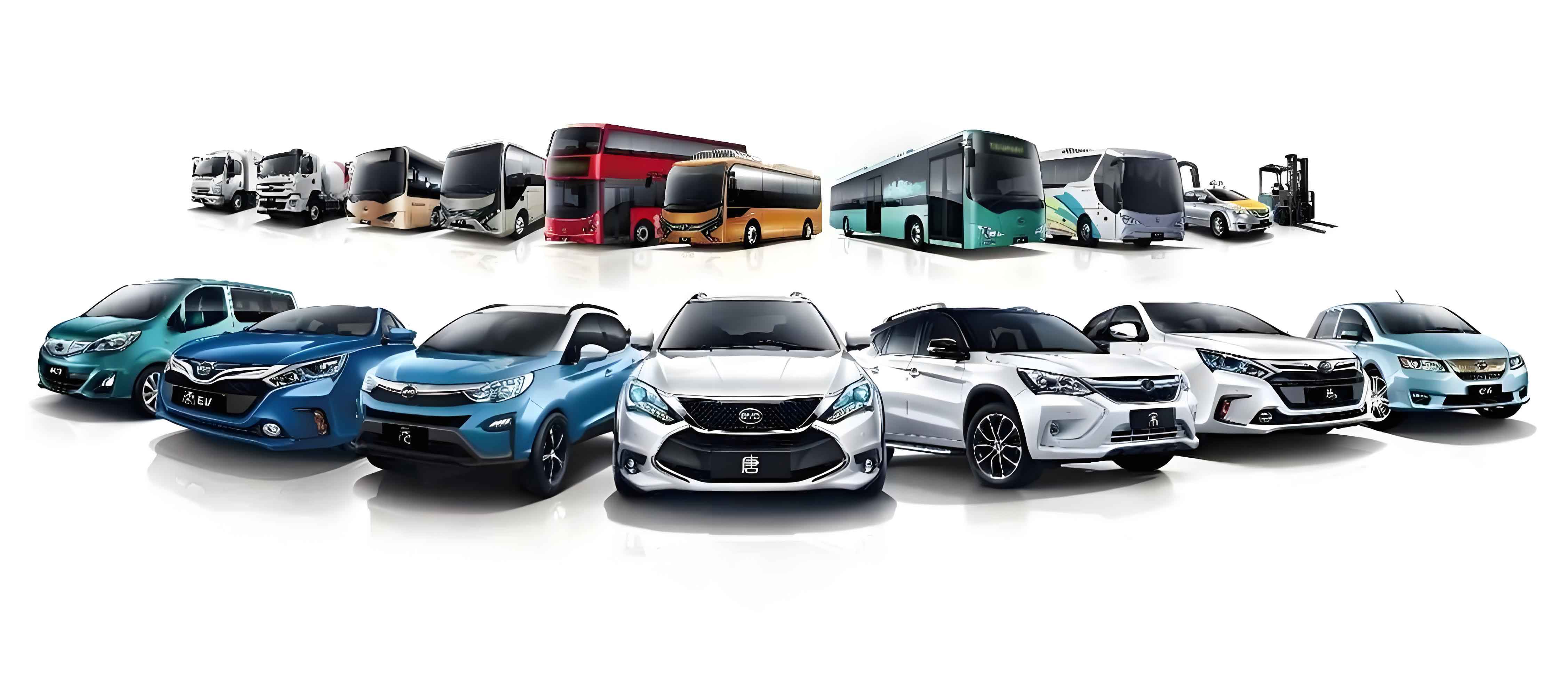
In the context of China EV expansion, traction batteries must meet rigorous electrical performance standards to ensure reliability across diverse environments. Key parameters like capacity, energy density, temperature-dependent performance, rate capability, and state-of-charge retention are central to user experience and vehicle efficiency. GB/T 31486—2024 addresses these by introducing stricter test protocols and higher thresholds, fostering innovation and quality control. For instance, the standard now mandates a larger sample size for consistency evaluation and optimizes discharge rates to mirror typical electric vehicle driving patterns, where discharge rates often remain below 0.3C. This adjustment ensures that test results are more representative of real-world conditions, supporting the sustainable growth of the electric vehicle market in China.
To illustrate the scope of revisions, Table 1 compares the test items covered in GB/T 31486—2024, the 2015 version, and IEC 62660-1:2018. Notably, the 2024 edition removes vibration resistance testing, as it falls outside electrical performance scope and is covered in other standards like GB 38031—2020, while adding energy efficiency tests at room and high temperatures. This alignment with international practices, coupled with China-specific requirements, underscores the standard’s role in advancing electric vehicle technology.
| Test Item | GB/T 31486—2024 | GB/T 31486—2015 | IEC 62660-1:2018 |
|---|---|---|---|
| Room Temperature Discharge Capacity | ✓ | ✓ | ✓ |
| Room Temperature Discharge Energy | ✓ | ✓ | ✓ |
| Room Temperature Specific Energy | ✓ | ✓ | ✓ |
| Room Temperature Rate Discharge Capacity | ✓ | ✓ | |
| Room Temperature Rate Charge Capacity | ✓ | ✓ | |
| Power | ✓ | ||
| Regenerative Power | ✓ | ||
| Low-Temperature Discharge Capacity | ✓ | ✓ | ✓ |
| High-Temperature Discharge Capacity | ✓ | ✓ | ✓ |
| Room Temperature Charge Retention and Capacity Recovery | ✓ | ✓ | ✓ |
| Room Temperature Energy Efficiency | ✓ | ✓ | |
| High-Temperature Charge Retention and Capacity Recovery | ✓ | ✓ | |
| High-Temperature Energy Efficiency | ✓ | ✓ | |
| Storage | ✓ | ✓ | ✓ |
| Vibration Resistance | ✓ |
The technical content of GB/T 31486—2024 encompasses revisions in terminology, general test conditions, and specific performance requirements. A key change involves the definitions for high-energy and high-power batteries, which now use discharge rates based on real-world data from electric vehicle operations. For high-energy batteries, the rated capacity and initial capacity are determined using a 1 I3 discharge current (3-hour rate), replacing the previous 1 I1 (1-hour rate), as studies of China EV usage show that over 90% of discharge events occur below 0.3C. This adjustment better reflects typical driving conditions, enhancing the standard’s relevance for electric vehicle applications.
General test conditions have been refined to improve accuracy and reproducibility. The ambient temperature for tests is now specified as 25 °C ± 2 °C, compared to the previous 25 °C ± 5 °C, aligning with GB/T 31467—2023 and accounting for the sensitivity of battery performance to temperature variations. Relative humidity ranges have been adjusted to 10%–90% for consistency with related standards. Additionally, environmental adaptation procedures now include a dynamic termination mechanism: batteries must reach thermal equilibrium within 12 hours or when the temperature differential is within 2 °C and the change rate is below 1 °C/h for 30 minutes. This ensures efficient testing while maintaining precision, crucial for evaluating traction batteries in electric vehicles.
Test objects have shifted from modules to cells, reflecting the industry’s move towards CTP designs in China EV production. This change eliminates the use of simulated modules (e.g., 1P5S configurations), providing a more direct assessment of cell performance. To strengthen consistency evaluation, the sample size has increased, as shown in Table 2, which compares the number of test samples between versions. For example, room temperature discharge capacity testing now requires 30 cells instead of 10 modules, emphasizing the importance of uniformity in mass production for electric vehicles.
| Test Item | 2015 Version Samples | 2024 Version Samples |
|---|---|---|
| Appearance, Polarity, Mass, and Dimensions | Cells 1#-10#, Modules 1#-10# | Cells 1#-30# |
| Room Temperature Discharge Capacity | Modules 1#-10# | Cells 1#-30# |
| Room Temperature Rate Discharge Capacity | Modules 1#, 2# | Cells 1#-5# |
| Room Temperature Rate Charge Performance | Modules 1#, 2# | Cells 1#-5# |
| Low-Temperature Discharge Capacity | Modules 1#, 2# | Cells 1#-5# |
| High-Temperature Discharge Capacity | Modules 1#, 2# | Cells 1#-5# |
| Room Temperature Charge Retention and Capacity Recovery | Modules 3#, 4# | Cells 6#-10# |
| High-Temperature Charge Retention and Capacity Recovery | Modules 5#, 6# | Cells 11#-20# |
| Storage | Modules 9#, 10# | Cells 21#-30# |
Testing equipment requirements have been updated to address environmental factors like airflow, which can impact results. The standard now stipulates that test chambers must have wind speeds below 1.7 m/s, or use fixtures to minimize air influence, ensuring that cell positioning mimics real electric vehicle installations. Data recording intervals have been shortened to 100 seconds for general tests and 100 milliseconds for rate-dependent tests, facilitating detailed analysis of performance parameters such as voltage, current, and temperature.
Specific performance requirements and test methods have undergone significant revisions, as summarized in Table 3. For room temperature discharge capacity, high-energy batteries are tested at 1 I3 instead of 1 I1, with all samples required to meet capacity within 100%–110% of rated value. This change aligns with actual electric vehicle usage, where lower discharge rates prevail. The capacity can be calculated using the formula: $$C = I \times t$$ where \(C\) is capacity in ampere-hours (Ah), \(I\) is current in amperes (A), and \(t\) is time in hours (h). This ensures that tests accurately represent the energy delivery in typical China EV scenarios.
| Test Item | 2015 Version Object/Method/Requirement | 2024 Version Object/Method/Requirement |
|---|---|---|
| Room Temperature Discharge Capacity (Initial Capacity) | Object: Cell & Module; Method: 1 I1 discharge; Requirement: 100%–110% of rated capacity | Object: Cell; Method: High-energy: 1 I3 discharge, High-power: 1 I1 discharge; Requirement: 100%–110% of rated capacity |
| Room Temperature Rate Discharge Capacity | Object: Module; Method: High-energy: 3 I1 discharge, High-power: 8 I1 discharge; Requirement: High-energy: ≥90% initial capacity, High-power: ≥80% initial capacity | Object: Cell; Method: High-energy: 3 I3 discharge, High-power: 10 I1 discharge; Requirement: High-energy: ≥95% initial capacity, High-power: ≥80% initial capacity |
| Room Temperature Rate Charge Capacity | Object: Module; Method: 2 I1 charge followed by room temperature discharge; Requirement: ≥80% initial capacity | Object: Cell; Method: Charge within 30 min using manufacturer’s strategy; Requirement: ≥80% initial capacity |
| Low-Temperature Discharge Capacity (Li-ion) | Object: Module; Method: -20 °C discharge; Requirement: ≥70% initial capacity | Object: Cell; Method: -20 °C discharge; Requirement: ≥70% initial capacity |
| High-Temperature Discharge Capacity | Object: Module; Method: 55 °C discharge; Requirement: ≥90% initial capacity | Object: Cell; Method: 45 °C discharge; Requirement: ≥95% initial capacity |
| Room Temperature Charge Retention (Li-ion) | Object: Module; Method: 100% SOC, room temperature storage for 28 days; Requirement: Retention ≥85%, recovery ≥90% initial capacity | Object: Cell; Method: 100% SOC, room temperature storage for 30 days; Requirement: Retention ≥90%, recovery ≥95% initial capacity; Consistency: range ≤5% for all samples |
| High-Temperature Charge Retention (Li-ion) | Object: Module; Method: 100% SOC, 55 °C storage for 7 days; Requirement: Retention ≥85%, recovery ≥90% initial capacity | Object: Cell; Method: 100% SOC, 45 °C storage for 7 days; Requirement: Retention ≥90%, recovery ≥95% initial capacity; Consistency: range ≤5% for all samples |
| Storage | Object: Module; Method: 50% SOC, 45 °C storage for 28 days; Requirement: Recovery ≥90% initial capacity | Object: Cell; Method: 50% SOC, 45 °C storage for 30 days; Requirement: Recovery ≥95% initial capacity; Consistency: range ≤5% for all samples |
Rate performance tests have been optimized to reflect real-world electric vehicle conditions. For room temperature rate discharge capacity, high-energy batteries are discharged at 3 I3 instead of 3 I1, as data from China EV operations indicate that peak discharges rarely exceed 0.7 I1. High-power batteries now use 10 I1 discharge, with the current limit raised to 800 A from 400 A, accommodating technological advancements. The requirement for high-energy batteries has tightened from 90% to 95% of initial capacity, pushing for better performance in electric vehicles. Similarly, rate charge capacity testing allows manufacturer-defined charging profiles within 30 minutes, removing the fixed 400 A limit to address larger capacity cells, with the discharge capacity requirement maintained at ≥80% initial capacity.
Temperature-dependent tests have been adjusted for greater practicality. Low-temperature discharge capacity remains at -20 °C with a ≥70% initial capacity requirement, but the shift to cell testing and refined environmental controls make it more stringent. High-temperature discharge capacity now uses 45 °C instead of 55 °C, aligning with IEC 62660-1:2018 and actual electric vehicle thermal management, where cells seldom operate at 55 °C. The requirement has increased from ≥90% to ≥95% initial capacity, emphasizing reliability in warmer climates common in China EV usage.
Charge retention and storage tests now include longer durations and stricter criteria. Room temperature charge retention extends storage from 28 to 30 days, with retention and recovery requirements raised to ≥90% and ≥95% initial capacity, respectively. High-temperature charge retention similarly uses 45 °C and adds energy efficiency measurements, requiring all samples to have a range within 5% for consistency. Storage tests also adopt 45 °C and 30 days, with recovery capacity upgraded to ≥95% initial capacity and consistency checks. These changes enhance the evaluation of battery longevity and stability, critical for electric vehicle applications.
Energy efficiency is a new focus in GB/T 31486—2024, introduced for room and high-temperature conditions. The energy efficiency \(\eta\) can be expressed as: $$\eta = \frac{E_{\text{discharge}}}{E_{\text{charge}}} \times 100\%$$ where \(E_{\text{discharge}}\) is the energy discharged and \(E_{\text{charge}}\) is the energy charged during a cycle. This metric helps assess the overall efficiency of traction batteries in electric vehicles, supporting efforts to reduce energy losses and improve range.
The removal of vibration resistance testing streamlines the standard, as it is covered in GB 38031—2020, avoiding duplication and focusing on core electrical performance. This aligns with international norms and reduces testing burdens for manufacturers, facilitating faster innovation in the electric vehicle sector.
In summary, GB/T 31486—2024 represents a significant step forward in standardizing traction battery performance for electric vehicles in China. By updating test objects, conditions, and requirements based on real-world data and industry trends, it ensures that batteries meet higher consistency and performance benchmarks. Future work should explore performance grading systems to distinguish premium products, develop robust power characteristic testing methods accounting for internal resistance challenges, and establish lifecycle performance evaluation protocols for used batteries. These efforts will further support the advancement of China EV technology, driving sustainable mobility solutions globally.
The revisions in GB/T 31486—2024 are poised to shape the future of electric vehicle development in China, encouraging manufacturers to enhance product quality and align with global standards. As the electric vehicle market expands, such standards will play a crucial role in ensuring safety, efficiency, and consumer satisfaction, solidifying China’s position as a leader in sustainable transportation.