
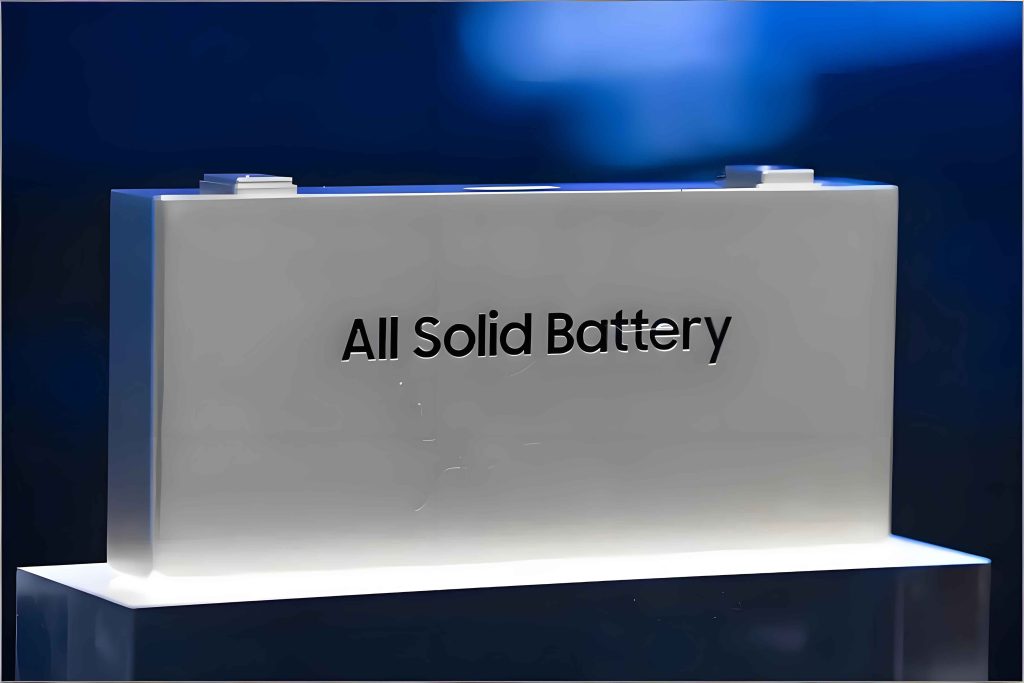
The relentless global transition towards sustainable energy systems and the imperative of achieving carbon neutrality have placed immense demands on advanced electrochemical energy storage technologies. While conventional lithium-ion batteries, based on liquid organic electrolytes, have achieved commercial success, their inherent limitations—particularly safety risks from flammable components and the energy density ceiling imposed by material compatibility—pose significant barriers to future progress. In this context, the solid-state battery has emerged as the most promising successor, offering a paradigm shift by replacing volatile liquid electrolytes with non-flammable, solid ion conductors. This fundamental change unlocks the potential for employing high-capacity lithium metal anodes and high-voltage cathodes, paving the way for solid-state battery systems with significantly superior energy density and intrinsic safety.
The heart of an all-solid-state battery is its solid-state electrolyte (SSE), which must fulfill a stringent set of requirements simultaneously: high ionic conductivity (ideally > 10−3 S cm−1 at room temperature), a wide electrochemical stability window (> 4.5 V vs. Li/Li+), excellent mechanical strength to suppress lithium dendrites, and superb chemical/electrochemical compatibility with both electrodes. Unfortunately, single-component SSE families each suffer from critical shortcomings that hinder their standalone application in a practical solid-state battery, as summarized in Table 1.
| Class | Representative Materials | Key Advantages | Critical Disadvantages |
|---|---|---|---|
| Polymer | PEO, PVDF, PAN | Excellent flexibility, easy processing, low interfacial resistance | Low room-temperature conductivity, poor thermal stability |
| Oxide | LLZO, LATP, LISICON | High chemical stability, high mechanical strength, air-stable | High interfacial resistance, high sintering temperatures |
| Sulfide | LPS, LGPS, Argyrodites | Very high ionic conductivity, good interfacial contact | Air/moisture sensitive, narrow electrochemical window |
| Halide | Li3YCl6, LiAlCl4 | Wide electrochemical window, solution processable | Moisture sensitive, low mechanical strength |
To overcome the limitations of single-phase materials, the research community has focused on composite solid-state electrolytes (CSSEs). By intelligently combining two or more solid-state components, CSSEs aim to leverage synergistic effects to achieve properties unattainable by any single component. The guiding principles for designing high-performance CSSEs include: (1) Chemical Compatibility: ensuring minimal deleterious interfacial reactions between components; (2) Ionic Transport Continuity: constructing continuous, low-resistance pathways for Li+ migration across the composite; and (3) Mechanical Property Balancing: integrating rigid phases for dendrite suppression with soft phases for maintaining intimate electrode contact. Based on their architecture, CSSEs are primarily categorized into two distinct types: Filler-type (or Blended) Composites and Layered (or Multi-layered) Composites.
Filler-Type Composite Solid-State Electrolytes: Synergy Through Blending
Filler-type CSSEs are created by uniformly dispersing one solid electrolyte phase (the filler) within a matrix of another. This approach is versatile and can be applied to both polymer/inorganic and inorganic/inorganic systems.
1. Polymer/Inorganic Filler Composites
This is one of the most extensively studied CSSE configurations. It typically involves dispersing inorganic SSE particles (oxides, sulfides) within a polymer matrix (like PEO with a lithium salt). The inorganic filler addresses the weaknesses of the polymer (low conductivity, poor mechanical strength), while the polymer matrix improves interfacial contact and processability.
The enhancement mechanisms are multifaceted and depend on filler properties:
- Reduction of Polymer Crystallinity: Fillers disrupt the orderly arrangement of polymer chains, increasing the amorphous domain where ion transport is faster. The degree of crystallinity reduction ($X_c$) can be related to filler volume fraction ($\phi_f$) by an empirical relation: $$X_c \approx X_{c,0} (1 – \alpha \phi_f)$$ where $X_{c,0}$ is the crystallinity of the pure polymer and $\alpha$ is a constant dependent on filler-polymer interaction.
- Creation of Fast Ion Transport Pathways: Conductive fillers like LLZO or LPS can form percolating networks. The composite ionic conductivity ($\sigma_{comp}$) often follows a percolation theory model: $$\sigma_{comp} = \sigma_m (\phi_f – \phi_c)^t \quad \text{for} \quad \phi_f > \phi_c$$ where $\sigma_m$ is the matrix conductivity, $\phi_c$ is the critical percolation threshold, and $t$ is a critical exponent.
- Promotion of Salt Dissociation: Lewis acid-base interactions between filler surface groups and anions from the lithium salt (e.g., TFSI−) can enhance Li+ transference number.
The filler’s dimensionality plays a crucial role in determining the efficiency of these mechanisms, as summarized in Table 2.
| Filler Dimensionality | Typical Materials | Key Mechanism & Benefit | Performance Example |
|---|---|---|---|
| 0D Nanoparticles | LLZO, SiO2, TiO2 NPs | Large surface area for polymer/filler interaction; inhibits crystallization. | PEO-LLZTO (40 nm): ~2.1×10⁻⁴ S/cm at 30°C. |
| 1D Nanowires/Nanofibers | LLTO, LATP nanowires | Forms long-range connective pathways; bridges grain boundaries effectively. | PAN/LLTO nanowire: 2.4×10⁻⁴ S/cm vs. 2.1×10⁻⁷ S/cm for particles. |
| 2D Nanosheets | Garnet nanosheets, h-BN, GO | Ultra-high aspect ratio provides extensive interfaces; can create aligned ion channels. | PEO-Garnet nanosheet: 3.6×10⁻⁴ S/cm at RT. |
| 3D Sintered Framework | Porous LLZO, LATP scaffold | Provides a rigid, continuous 3D highway for Li+; excellent mechanical support. | LLZO framework/P(ETPTA): ~1.2×10⁻³ S/cm at RT. |
2. Inorganic/Inorganic Filler Composites
This strategy combines different inorganic SSEs to achieve complementary properties. A common motif is blending a high-conductivity but soft/chemically unstable phase (like a sulfide) with a mechanically robust and stable but lower-conductivity phase (like an oxide).
The ion transport in such composites is complex. In addition to percolation through the more conductive phase, interfaces between the two inorganic phases often become active regions for enhanced ion migration due to space-charge layer effects or the formation of amorphous interfacial phases with lower activation energy for Li+ hopping. The effective medium theory (EMT) is sometimes used to model conductivity: $$\phi_1 \frac{\sigma_1 – \sigma_{eff}}{\sigma_1 + 2\sigma_{eff}} + \phi_2 \frac{\sigma_2 – \sigma_{eff}}{\sigma_2 + 2\sigma_{eff}} = 0$$ where $\sigma_{eff}$ is the composite conductivity, and $\sigma_1$, $\sigma_2$, $\phi_1$, $\phi_2$ are the conductivities and volume fractions of the two phases. However, this model often fails for highly asymmetric composites where interface effects dominate.
Table 3 lists selected inorganic/inorganic composites and their achieved properties.
| Matrix (Ionic Conductivity) | Filler (Ionic Conductivity) | Composite Ratio | Composite Conductivity | Primary Benefit |
|---|---|---|---|---|
| Li6PS5Cl (~2.9×10⁻³ S/cm) | LLZTO (~1×10⁻⁴ S/cm) | 95:5 wt% | 5.4×10⁻⁴ S/cm | Enhanced dendrite suppression, stable Li cycling |
| Li3PS4 (~4×10⁻⁴ S/cm) | LLZO (~1.6×10⁻⁴ S/cm) | 60:40 wt% | ~5.4×10⁻⁴ S/cm | Improved mechanical strength, stable interface |
| Li1.3Al0.3Ti1.7(PO4)3 (LATP) | Li3InCl6 | 80:20 wt% | 1.4×10⁻⁴ S/cm | Cold-sinterable, good Li metal interface |
Layered Composite Solid-State Electrolytes: Function by Design
Layered CSSEs adopt a stratified architecture where distinct electrolyte layers are stacked together. Each layer is designed to perform a specific function, allowing for precise optimization of interfaces and bulk properties independently. This approach is particularly powerful for solving interfacial instability problems in an all-solid-state battery.
1. Polymer/Inorganic Layered Structures
The classic design is a “polymer-ceramic-polymer” sandwich structure. A rigid, high-strength ceramic layer (e.g., LATP, LLZO) is placed in the middle to block lithium dendrites and provide a wide electrochemical window. This ceramic core is then coated on both sides with thin, soft polymer electrolyte layers. The polymer layers serve as adaptive interfacial buffers: they conform to the rough surfaces of the lithium metal anode and the composite cathode, drastically reducing interfacial impedance compared to a bare ceramic electrolyte. The total area-specific resistance (ASR) of such a trilayer can be approximated as the sum of the resistances of individual layers and their interfaces: $$ASR_{total} = ASR_{polymer, bulk} + ASR_{interface, polymer/ceramic} + ASR_{ceramic, bulk} + ASR_{interface, ceramic/polymer} + ASR_{polymer, bulk}$$. Successful designs have reduced interfacial impedance from tens of thousands of Ω cm² to a few hundred Ω cm².
2. Inorganic/Inorganic Layered Structures
This advanced concept involves stacking different inorganic SSE films. A typical configuration places a halide electrolyte (with high oxidation stability, e.g., > 4.5 V) on the cathode side to ensure compatibility with high-voltage active materials, and a sulfide electrolyte (with high shear modulus and conductivity) on the anode side to suppress dendrites. The challenge lies in the chemical and electrochemical stability at the interface between the two dissimilar inorganic layers. Thermodynamic calculations based on the Gibbs free energy of possible reactions: $$\Delta G_{rxn} = \sum \nu_i \mu_i$$ where $\nu_i$ are stoichiometric coefficients and $\mu_i$ are chemical potentials of reactants and products, are essential to predict interface stability. Often, a thin, kinetically stable interlayer is required to prevent mutual degradation. When stable, such asymmetric structures can enable outstanding performance in an all-solid-state battery, such as cycling over 3000 times with 80% capacity retention.
Ion Conduction Mechanisms in Composite Systems
The superior ionic conductivity in CSSEs arises from the confluence of several mechanisms, which can be quantitatively described or modeled:
- Percolation and Effective Medium Effects: As described earlier, when a highly conductive filler exceeds its percolation threshold ($\phi_c$), it forms a continuous network. The conductivity enhancement can be dramatic.
- Interfacial Ionic Transport: The interface between two solid phases often exhibits distinct Li+ dynamics. The conductivity in this interfacial region ($\sigma_{int}$) can be higher than in the bulk phases due to structural disorder. The total conductivity enhancement ($\Delta \sigma$) from interfaces scales with the specific interfacial area ($S_V$): $$\Delta \sigma \propto S_V \cdot \sigma_{int} \cdot \delta$$ where $\delta$ is the effective thickness of the high-conductivity interfacial shell.
- Modification of Polymer Chain Dynamics: The presence of fillers increases the system’s configurational entropy, reducing polymer crystallinity. The ionic conductivity ($\sigma$) in amorphous polymer regions is governed by the Vogel-Tammann-Fulcher (VTF) equation: $$\sigma = \frac{A}{\sqrt{T}} \exp\left[-\frac{B}{k_B (T – T_0)}\right]$$ where $A$ and $B$ are constants, $k_B$ is Boltzmann’s constant, and $T_0$ is the ideal glass transition temperature. Fillers effectively lower the effective $T_0$ or increase the pre-exponential factor $A$ by providing more hopping sites.
- Space-Charge Layer Effects: At the interface between two ionic conductors with different chemical potentials for Li+ (or different transference numbers), a space-charge layer forms. The resulting electric field can enhance or deplete Li+ concentration at the interface, modifying local conductivity. The space-charge layer potential ($\phi_0$) can be estimated from the difference in electrochemical potentials.
Conclusion and Future Perspectives
Composite solid-state electrolytes represent the most pragmatic and promising path toward realizing high-performance, commercially viable all-solid-state batteries. By strategically combining materials into filler-type or layered architectures, CSSEs successfully decouple and synergistically optimize the traditionally conflicting requirements of ionic conductivity, mechanical strength, and interfacial stability. Table 4 summarizes the key characteristics and trade-offs of the different composite structures.
| Structure | Key Advantages | Main Challenges | Typical Performance |
|---|---|---|---|
| Filler-Type (Polymer/Inorg.) | Simple processing, good flexibility, improved interfacial contact. | Filler agglomeration, limited upper operating temperature. | σ ~ 10−4–10−3 S/cm; Stable Li plating/stripping for 100s of hours. |
| Filler-Type (Inorg./Inorg.) | High RT conductivity, good mechanical properties. | Interfacial reactions, air sensitivity of sulfides. | σ ~ 10−4–10−3 S/cm; Enables high-energy-density cathode pairing. |
| Layered Structures | Unparalleled interface optimization, independent property tuning. | Complex fabrication, delamination risks, thickness penalty. | Ultra-low ASR (< 100 Ω cm²), long cycle life (>1000 cycles). |
Despite remarkable progress, translating CSSEs from lab-scale prototypes to mass-produced components for an all-solid-state battery requires overcoming significant hurdles. Future research directions should focus on:
- Multiscale Understanding and Design: Integrating advanced in-situ/operando characterization (e.g., neutron depth profiling, solid-state NMR, EIS-AFM) with multi-scale modeling (from DFT to continuum models) to unravel the dynamic evolution of interfaces and ion transport pathways during cycling of a solid-state battery.
- Novel Material Discovery: Exploring new compositional spaces, such as hybrid organic-inorganic frameworks or self-healing polymers, to create electrolytes with autonomously repairing interfaces and wider stability windows.
- Advanced Manufacturing Techniques: Developing scalable, low-temperature processing methods (e.g., cold sintering, solvent-free tape casting, photopolymerization) to produce ultrathin (< 20 µm), dense, and defect-free CSSE membranes with controlled architecture at high throughput and low cost.
- Holistic Cell Integration: Designing CSSEs in tandem with compatible electrode architectures (e.g., 3D interdigitated or porous electrode designs) to minimize interfacial stresses and maximize active material utilization, ultimately pushing the volumetric and gravimetric energy density of the all-solid-state battery to its theoretical limit.
The journey towards the ultimate solid-state battery is undoubtedly complex, but the rational design and continuous innovation in composite solid-state electrolytes provide a clear and powerful roadmap. By mastering the synergy between different materials and architectures, we are steadily overcoming the fundamental barriers, bringing the promise of safe, dense, and long-lasting energy storage closer to reality.