
As the global adoption of battery electric cars accelerates, the infrastructure supporting these vehicles, particularly charging facilities, has become a critical focus for safety and reliability. In my experience, grounding measures are fundamental to the protection of Class I equipment, ensuring that charging stations for battery electric cars operate safely under various conditions. This article delves into the principles of safety grounding, analyzes different grounding methods, explores the relationship between grounding and abnormal operational scenarios, proposes countermeasures, and provides standardized testing methodologies. The goal is to enhance the safety and reliability of charging infrastructure for battery electric cars, which is essential for widespread electric mobility.
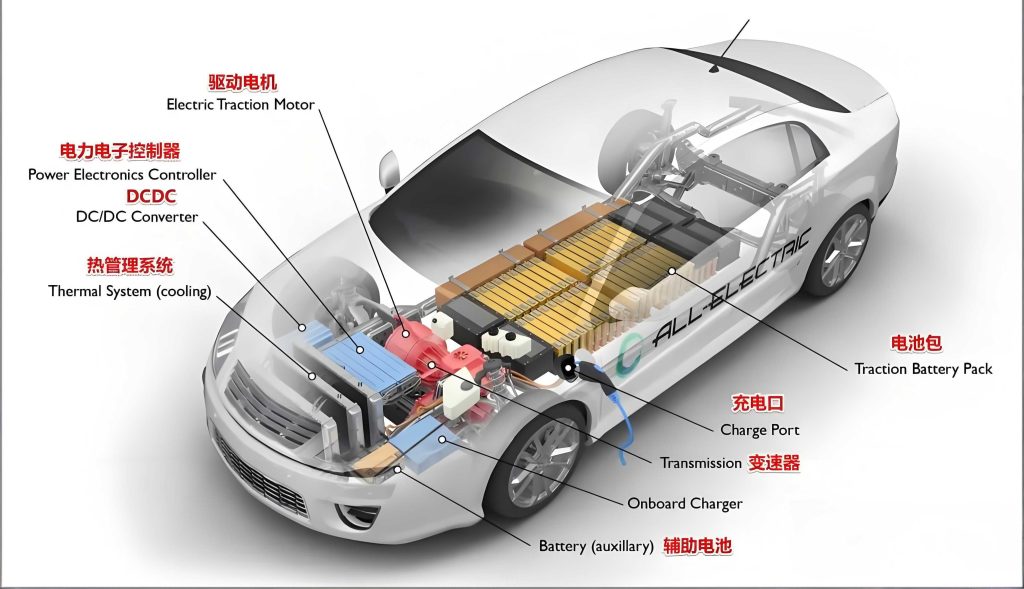
The importance of grounding in electrical systems cannot be overstated. For battery electric car charging facilities, a robust grounding system prevents electric shock, reduces electromagnetic interference, and mitigates fire hazards. When a charging station experiences electrostatic discharge, leakage currents, or lightning strikes, proper grounding safely directs excess current to the earth, protecting both users and equipment. I will discuss how grounding continuity is paramount; any compromise can lead to catastrophic failures, especially in high-power charging environments for battery electric cars. This analysis is based on established electrical safety principles and practical insights from industry standards.
Grounding methods vary depending on the power system configuration. In three-phase AC systems, the neutral point grounding approach influences fault currents and protection strategies. For battery electric car charging facilities, common grounding systems include TT and TN systems. Below is a table summarizing key characteristics of these systems in the context of charging infrastructure for battery electric cars:
| Grounding System | Description | Application in Battery Electric Car Charging |
|---|---|---|
| TT System | The power system has a direct earth connection, and equipment exposed conductive parts are connected to an independent earth electrode. | Less common; used in some三相四线制 systems with separate PE lines from the user end. |
| TN System | The power system neutral is directly earthed, and equipment exposed conductive parts are connected via protective conductors to this earth point. | Widely used; includes TN-C, TN-C-S, and TN-S subtypes for reliable protection in charging stations for battery electric cars. |
| TN-C | Combined neutral and protective earth (PEN) conductor, with repeated grounding at entry points. | Found in older installations; may require upgrades for modern battery electric car charging due to potential safety issues. |
| TN-C-S | PEN conductor splits into separate N and PE lines at the user end, with local TN-S configuration. | Popular in new installations for battery electric car charging facilities, offering a balance of safety and cost. |
| TN-S | Separate N and PE lines from the transformer neutral, with repeated grounding of the PE line. | Considered optimal for high-reliability charging infrastructure for battery electric cars, minimizing ground potential differences. |
Equipotential bonding is another critical aspect, often more effective than mere earthing. By connecting all metallic parts—such as enclosures, partitions, and handles—to a common grounding network, potential differences are eliminated. This is crucial for battery electric car charging facilities, where transient events like electrostatic discharge can induce dangerous voltages. The electric field strength from electrostatic discharge, based on P.F. Wilson’s dipole model, is given by:
$$E = \frac{il}{2\pi r^3}$$
where \(E\) is the electric field strength, \(i\) is the discharge current, \(l\) is the discharge channel length, and \(r\) is the distance from the observation point. This formula highlights how rapid current changes during discharge can generate significant fields, potentially damaging sensitive electronics in charging stations for battery electric cars. Equipotential bonding helps mitigate this by ensuring all components remain at the same potential, reducing the risk of arc flashes or component failure.
Abnormal conditions in battery electric car charging facilities often relate to grounding inadequacies. Electrostatic risks arise from charge accumulation during operations, such as when users connect cables. The discharge energy can reset control systems or cause permanent damage. For battery electric cars, this might interrupt charging or corrupt data. The current through the human body during an electric shock follows Ohm’s law:
$$I = \frac{V}{R}$$
where \(I\) is the current, \(V\) is the voltage, and \(R\) is the body resistance. If grounding is faulty, touch currents can exceed safe limits. Studies show that currents above 100 mA for over 1 second can be lethal, emphasizing the need for reliable grounding in charging facilities for battery electric cars. Lightning strikes, both direct and indirect, pose another threat. Direct strikes inject high currents, while induced surges from nearby strikes can couple into charging circuits. The surge voltage \(V_s\) from a lightning-induced transient can be approximated by:
$$V_s = L \frac{di}{dt}$$
where \(L\) is the inductance of the conductor and \(\frac{di}{dt}\) is the rate of current change. Without proper grounding and surge protection, these voltages can overwhelm charging equipment for battery electric cars, leading to fires or explosions. I have observed that grounding resistance plays a key role; it should be kept below 10 Ω to ensure effective fault current dissipation.
To address these risks, several countermeasures are essential. First, implementing reliable grounding is non-negotiable. All metallic parts in battery electric car charging facilities must be connected to a protective earth conductor, with接地端子 designed to prevent accidental loosening. Second, using isolation transformers at the power supply can reduce common-mode voltage interference. The transformer output resets the neutral-to-ground potential, enhancing safety for battery electric car charging. Third, protective devices like Residual Current Devices (RCDs) and Surge Protective Devices (SPDs) are vital. RCDs detect leakage currents and cut power within milliseconds, while SPDs divert surge energies to ground. The effectiveness of an SPD depends on its接地 connection; separate grounding for SPDs is often recommended to avoid impedance issues. For battery electric car charging stations, integrating these measures into a cohesive system is key to long-term reliability.
Safety grounding analysis reveals that equipotential bonding often outperforms simple earthing. By creating a unified reference potential, bonding prevents step and touch potentials that could harm users of battery electric cars. In分体式直流供电设备, for example, all modules should be bonded to a common ground bar. The resistance of protective conductors must be minimized; standards typically require连续性电阻 values below 0.1 Ω. I recommend regular testing to ensure compliance, as environmental factors like corrosion can degrade connections over time. For battery electric car charging networks, adopting TN-S systems with repeated grounding is advisable, as they provide a clear separation of neutral and protective earth, reducing the risk of neutral faults affecting safety.
Standardized testing validates grounding safety. Key tests include protection bonding verification,接地 resistance measurement, contact current assessment, and abnormal charging protection checks. Below is a table outlining common tests for battery electric car charging facilities:
| Test Type | Procedure | Acceptance Criteria | Relevance to Battery Electric Car Charging |
|---|---|---|---|
| Protection Bonding | Verify connections between exposed conductive parts and接地端子 using low-resistance ohmmeters. | Resistance ≤ 0.1 Ω; continuity must remain under fault conditions. | Ensures safe discharge paths during faults in charging stations for battery electric cars. |
| Ground Resistance | Measure resistance between接地 electrode and remote earth using fall-of-potential method. | Resistance ≤ 10 Ω for general systems; lower for sensitive applications. | Critical for dissipating lightning or fault currents in battery electric car charging infrastructure. |
| Contact Current | Apply test voltages and measure current flow through a simulated human body model. | Current must not exceed limits per standards (e.g., below 0.5 mA for normal conditions). | Protects users from shock when handling connectors for battery electric cars. |
| Charging异常 Protection | Simulate power loss or control circuit failures and monitor system response. | Voltage drops below 30 V AC within 1 second; energy storage ≤ 0.2 J. | Prevents hazardous conditions during abrupt disconnections in battery electric car charging. |
Contact current testing is particularly important for battery electric car charging facilities. If the protective earth conductor is compromised, the touch current should remain within safe limits. Using a standardized human body model, the current \(I_c\) can be calculated as:
$$I_c = \frac{V_{test}}{Z_{body}}$$
where \(V_{test}\) is the applied voltage and \(Z_{body}\) is the impedance of the model (typically 1 kΩ to 2 kΩ). For battery electric car chargers, this test ensures that even under fault conditions, users are not exposed to dangerous currents. Another critical test is for control pilot circuit (CC) anomalies in DC charging. The system must detect接地 faults and disconnect within specified times, such as 44 ms for current reduction to 5 A. This rapid response is vital for high-power battery electric car charging, where delays could lead to arc flashes or equipment damage.
In practice, I have found that integrating advanced monitoring systems can enhance grounding safety for battery electric car charging facilities. Real-time sensors can track接地 resistance and alert operators to degradation. Additionally, using mathematical models to predict fault scenarios helps in design optimization. For instance, the capacitance current \(I_C\) in ungrounded systems during a single-phase fault can be expressed as:
$$I_C = 3 \omega C V_{ph}$$
where \(\omega\) is the angular frequency, \(C\) is the phase-to-earth capacitance, and \(V_{ph}\) is the phase voltage. This formula aids in selecting appropriate grounding methods for battery electric car charging stations, especially in areas with high capacitive loads. Furthermore, regular maintenance schedules should include thermographic inspections to identify hotspots in grounding connections, which are common in high-current applications like fast charging for battery electric cars.
The evolution of battery electric car technology demands continuous improvement in charging infrastructure safety. As charging powers increase—with some stations now exceeding 350 kW—grounding systems must handle higher fault currents without failure. I advocate for the adoption of smart grounding solutions that dynamically adjust to environmental conditions, such as soil moisture changes affecting接地 resistance. For battery electric car charging networks in urban areas, where space is limited, compact grounding designs using chemical electrodes or deep-driven rods can be effective. Standards like GB 39752-2024 and GB 44263-2024 provide a framework, but local adaptations are often necessary to address specific risks, such as salt corrosion in coastal regions impacting battery electric car charging stations.
In conclusion, proper grounding is indispensable for the safe operation of battery electric car charging facilities. From electrostatic discharge to lightning strikes, a well-designed grounding system mitigates risks and ensures reliable energy transfer to battery electric cars. By combining equipotential bonding, reliable接地 connections, protective devices, and rigorous testing, operators can create a safe environment for users. Future research should focus on integrating renewable energy sources with charging infrastructure for battery electric cars, as this may introduce new grounding challenges. As I continue to study this field, I emphasize that safety must always precede convenience; every battery electric car charging station should undergo comprehensive grounding assessments to protect both people and property. The journey toward sustainable transportation via battery electric cars relies heavily on such foundational safety measures.