
As an engineer deeply embedded in the field of advanced energy storage, I have witnessed firsthand the tantalizing promise and formidable challenges of the solid-state battery. For years, the concept of replacing the flammable, liquid organic electrolyte in conventional lithium-ion cells with a stable, solid ion conductor has been the holy grail. It promises a paradigm shift: unparalleled safety, dramatically higher energy density, and longer cycle life. Today, I can assert with conviction that this transition is no longer a distant academic pursuit but an accelerating industrial reality. The recent advent of dedicated, high-volume manufacturing for solid-state battery components is the critical catalyst, pushing this technology from the lab bench toward mainstream adoption.
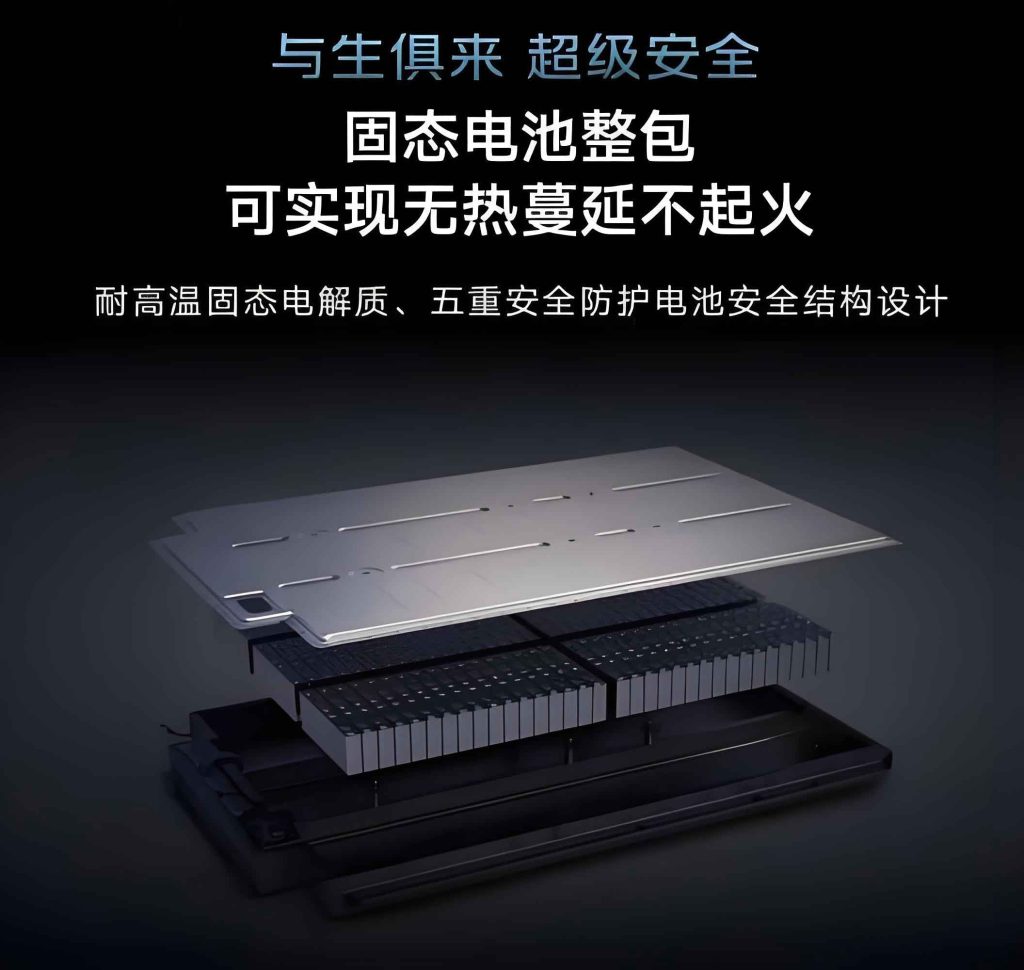
The core allure of the solid-state battery lies in its fundamental re-architecture. Eliminating the liquid electrolyte mitigates the risk of thermal runaway and fire—a paramount concern for electric vehicles and portable electronics. Furthermore, the solid electrolyte can, in theory, enable the use of lithium-metal anodes, which have a theoretical specific capacity nearly ten times that of conventional graphite anodes (3860 mAh/g vs. ~372 mAh/g). The potential energy density gains are staggering, often summarized by the target of exceeding 500 Wh/kg, a figure that current lithium-ion technology struggles to approach. However, the path to a commercial, high-performance solid-state battery is paved with intricate materials science and engineering hurdles.
The Central Challenge: Interfaces and Ionic Conductivity
The performance of a solid-state battery is dictated by a few key parameters, where the ideal solid electrolyte must excel simultaneously. These can be expressed through fundamental relationships:
Ionic Conductivity ($\sigma_{ion}$): This is the rate at which lithium ions can move through the solid electrolyte. It must rival that of liquid electrolytes (≈10$^{-2}$ S/cm at room temperature). The conductivity follows an Arrhenius-type relationship:
$$\sigma_{ion} T = A \exp\left(\frac{-E_a}{k_B T}\right)$$
where $E_a$ is the activation energy for ion hopping, $k_B$ is Boltzmann’s constant, and $T$ is temperature. A low $E_a$ is crucial for good room-temperature performance.
Stability Windows: The electrolyte must be chemically and electrochemically stable against both the high-voltage cathode and the lithium-metal anode. The thermodynamic stability window is calculated from the electrolyte’s band gap ($E_g$) and the positions of the valence band (VB) and conduction band (CB) edges relative to the Li/Li$^+$ potential.
$$ \text{Cathodic Limit} \approx E_{VB} – E_{Li/Li^+} $$
$$ \text{Anodic Limit} \approx E_{CB} – E_{Li/Li^+} $$
In practice, kinetic stability often forms a passivating interface, but minimizing unwanted side reactions is critical.
Interfacial Impedance ($R_{int}$): This is arguably the most critical challenge. The rigid solid-solid contact between electrode and electrolyte creates high interfacial resistance. This impedance grows during cycling due to volume changes and interface degradation. The total cell resistance can be modeled as:
$$ R_{total} = R_{bulk} + R_{cathode/SE} + R_{anode/SE} $$
where $R_{bulk}$ is the resistance of the electrolyte bulk, and $R_{cathode/SE}$ and $R_{anode/SE}$ are the cathode and anode interfacial resistances, respectively. Managing $R_{int}$ is the key to achieving high power density.
The quest for the perfect solid electrolyte has led to several distinct material families, each with its own trade-offs, as summarized below:
| Electrolyte Class | Exemplary Materials | Room-Temp $\sigma_{ion}$ (S/cm) | Key Advantages | Key Challenges |
|---|---|---|---|---|
| Oxides | LLZO (Garnet), LATP, LLTO (Perovskite) | 10$^{-4}$ – 10$^{-3}$ | High stability vs. Li-metal, good oxidative stability. | Brittle, high sintering temps, poor interfacial contact. |
| Sulfides | LPS (Li$_3$PS$_4$), LGPS (Li$_{10}$GeP$_2$S$_{12}$) | 10$^{-4}$ – 10$^{-2}$ (≈Liquid) | Superior ionic conductivity, good processability. | Sensitive to moisture (H$_2$S release), narrow stability window. |
| Polymers | PEO-LiTFSI composites | 10$^{-5}$ – 10$^{-4}$ (at 60-80°C) | Flexible, low-cost, good electrode contact. | Low room-temp conductivity, limited anodic stability. |
| Halides | Li$_3$YCl$_6$, Li$_3$InCl$_6$ | 10$^{-3}$ – 10$^{-2}$ | Good conductivity, stability vs. oxide cathodes. | Sensitivity to humidity, cost of raw materials. |
The Manufacturing Breakthrough: From Lab to Fab
The historical bottleneck for the solid-state battery has been scaling production. Laboratory-scale cells, often made by hand-pressing powders in argon-filled gloveboxes, bear little resemblance to a scalable, cost-effective manufacturing process. The announcement of a dedicated, high-volume wafer-scale fabrication facility marks a watershed moment. This approach treats the solid-state battery not just as a chemical cell, but as a multi-layer semiconductor-like device.
The core innovation lies in applying thin-film deposition and patterning techniques—such as Physical Vapor Deposition (PVD), Chemical Vapor Deposition (CVD), and atomic layer deposition (ALD)—to create precise, uniform, and dense layers of solid electrolyte and electrode materials. This allows for exquisite control over layer thickness and interface quality, directly addressing the $R_{int}$ problem. The manufacturing flow for a thin-film solid-state battery can be simplified into a sequential process:
| Process Step | Technique | Material Layer | Critical Parameters |
|---|---|---|---|
| Substrate Preparation | Cleaning, Patterning | Si Wafer / Metal Foil | Surface roughness, cleanliness. |
| Current Collector Deposition | Sputtering (PVD) | Pt, Al, Cu | Adhesion, conductivity, uniformity. |
| Cathode Deposition | RF Sputtering / PLD | LiCoO$_2$, NMC | Stoichiometry, crystallinity, density. |
| Solid Electrolyte Deposition | ALD / CVD / Sputtering | Lipon, LLZO, Sulfide films | Pinhole-free density, ionic conductivity. |
| Anode Formation | Evaporation / Sputtering | Lithium Metal | Uniform thickness, interfacial stability. |
| Encapsulation | PECVD, ALD | Al$_2$O$_3$, SiN$_x$ | Hermeticity, moisture barrier properties. |
This wafer-scale approach brings immediate, tangible benefits. First, it dramatically improves consistency and yield compared to batch-based ceramic sintering or slurry casting. Second, it enables the production of ultra-thin, high-energy-density cells perfect for miniaturized electronics, medical implants, and IoT devices. Third, and most crucially for market adoption, it drives down cost through semiconductor economics: higher throughput, better material utilization, and process automation. The cost per unit area ($C_{area}$) of a deposited layer can be modeled as:
$$ C_{area} = \frac{C_{target} \cdot \rho \cdot t}{U_{target}} + \frac{C_{tool} \cdot t_{proc}}{T \cdot A_{wafer}} $$
where $C_{target}$ is the cost of the target material, $\rho$ is density, $t$ is layer thickness, $U_{target}$ is the utilization efficiency of the target, $C_{tool}$ is the tool depreciation cost, $t_{proc}$ is process time, $T$ is tool uptime, and $A_{wafer}$ is the wafer area. High-volume production optimizes every term in this equation.
Performance Comparison: Solid-State vs. Incumbent Technologies
To understand the value proposition of the modern solid-state battery, one must compare it directly with existing energy storage solutions. The following table provides a comprehensive, first-principles comparison. It’s important to note that “solid-state battery” here refers to the emerging generation of manufacturable cells, not early experimental prototypes.
| Parameter | Lithium-Ion (Liquid) | Solid-State Battery (Advanced) | Supercapacitor | Thin-Film Solid-State (Micro-battery) |
|---|---|---|---|---|
| Energy Density (Wh/kg) | 150 – 300 | 350 – 500+ (projected) | 1 – 10 | 50 – 200 (per device weight) |
| Power Density (W/kg) | 250 – 1000 | 500 – 2000+ (potential) | 10,000 – 100,000 | 1,000 – 10,000 |
| Cycle Life (#) | 500 – 2000 | >1000 – 10,000 (target) | >100,000 | 1,000 – 5,000 |
| Thermal Runaway Risk | High (Flammable electrolyte) | Very Low (Solid electrolyte) | Very Low | Negligible |
| Operating Temp. Range | -20°C to +60°C | -30°C to +100°C (potential) | -40°C to +85°C | -20°C to +85°C |
| Self-Discharge Rate | ~5% per month | Potentially lower | High (~50%/month) | Very Low (~1%/month) |
| Form Factor | Rigid, cylindrical/prismatic | Flexible, thin-film possible | Cylindrical, coin | Ultra-thin, customizable |
| Key Limitation | Safety, energy ceiling | Cost, interfacial impedance | Low energy density | Absolute capacity |
The data underscores the disruptive potential. A solid-state battery isn’t just an incremental improvement; it targets a simultaneous leap in safety and energy density. Its power density, once interfacial issues are solved via advanced manufacturing, could also surpass today’s lithium-ion. Unlike supercapacitors, it provides substantial energy storage. The thin-film variant of the solid-state battery opens entirely new application spaces where traditional coin cells or capacitors were previously the only option, offering a superior balance of energy and power in a robust, leak-proof package.
The Innovation Enabler: New Product Architectures
The unique properties of the solid-state battery are unlocking product designs previously deemed impossible. Consider wearable electronics: a flexible, non-flammable solid-state battery can be seamlessly integrated into the fabric of clothing or the band of a smartwatch, conforming to curved surfaces without safety concerns. In medical technology, the biocompatibility and reliability of a hermetically sealed thin-film solid-state battery make it ideal for long-term implantable devices like pacemakers, neurostimulators, and drug delivery systems.
For the Internet of Things (IoT), the combination of long shelf life, low self-discharge, and wide operating temperature range means sensors and tags can be deployed in harsh or remote environments for years without maintenance. The energy density advantage of the solid-state battery directly translates to longer runtime or smaller device footprints. This drives a virtuous cycle: the new battery enables new devices, which create market pull, which funds further manufacturing scale-up and cost reduction for the solid-state battery itself.
The economic impact is captured by the learning curve model, common in manufacturing:
$$ C_n = C_1 \cdot n^{-b} $$
where $C_n$ is the cost of the $n^{th}$ unit produced, $C_1$ is the cost of the first unit, $n$ is the cumulative production volume, and $b$ is the learning coefficient (typically 0.1-0.3 for manufacturing). The establishment of a dedicated high-volume fabrication line dramatically increases $n$, accelerating the journey down the learning curve and making the solid-state battery cost-competitive. Initial price premiums are rapidly being eroded by this scale effect and strategic supply chain improvements for key raw materials.
Conclusion: A Solid Foundation for the Future
The journey of the solid-state battery from a promising concept to a commercially scalable technology is a testament to the convergence of materials science, electrochemistry, and semiconductor-inspired manufacturing. The challenges of ionic conductivity and interfacial resistance are being systematically overcome through innovative electrolyte compositions and precision engineering at the atomic scale. The recent establishment of dedicated, high-volume production capacity is the pivotal step that transforms technical potential into economic reality.
As we look forward, the roadmap for the solid-state battery is clear. Continued research will focus on composite and hybrid electrolytes to combine the best properties of different material classes. Manufacturing innovations will drive toward roll-to-roll processing for even lower costs. Integration with next-generation cathodes (e.g., high-nickel NMC, sulfur) and stabilized lithium-metal anodes will unlock the full energy density promise. The solid-state battery is no longer a question of “if,” but “when and how broadly.” It stands as the foundational energy storage technology for a safer, more energy-dense, and more innovatively designed electronic future, poised to power everything from next-generation EVs to the ever-expanding universe of connected devices. The revolution is not on the horizon; it is being manufactured today.