
…
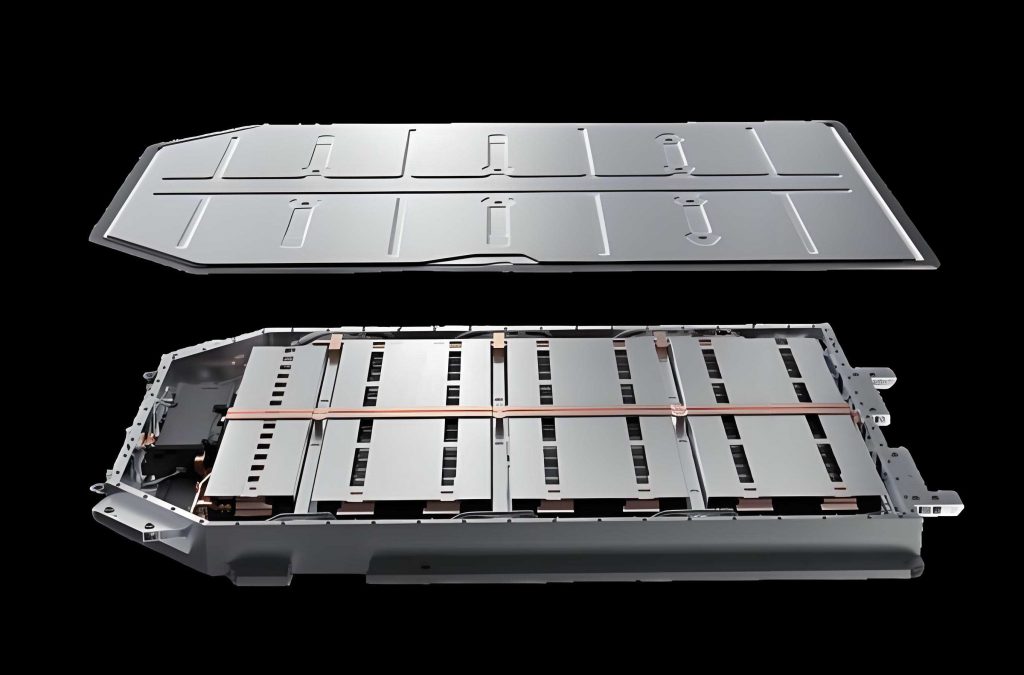
The global automotive industry is currently experiencing the most profound transformation in more than a century. Electrification, connectivity, and intelligence have become decisive competitive dimensions. For new-energy vehicles, the EV battery pack is the most valuable and technically complex subsystem. It is the EV battery pack that determines driving range, safety, charging speed, and the residual value of a used vehicle. I therefore focus on EV battery pack innovation and retired-pack remanufacturing. My central research objects are the upstream EV battery pack supplier and the downstream electric-vehicle manufacturer. Throughout this article I repeatedly use the term EV battery pack, because the analytical unit is not merely battery chemistry or a battery cell, but the integrated battery pack and its associated manufacturing, recycling, and remanufacturing system.
1. Motivation and Research Scope
New-energy vehicles are widely regarded as an effective response to the twin challenges of fossil-fuel dependence and urban air pollution. However, two consumer anxieties remain major barriers to the mass adoption of new-energy vehicles: range anxiety and resale anxiety. Both anxieties are strongly related to the quality and durability of the EV battery pack. When a consumer worries that an EV battery pack degrades quickly, the perceived future driving range decreases and the expected resale value of the vehicle decreases. Therefore, the improvement of the EV battery pack in terms of cycle life, energy density, consistent performance under various temperatures, and overall durability becomes an essential issue. I investigate how investment in battery-pack R&D can alleviate these anxieties and stimulate market demand.
At the same time, the first wave of EV battery pack retirement has arrived. Retired battery packs still contain valuable metals and reusable components. If they are simply discarded, the environmental burden is significant. In contrast, if the EV battery pack is recycled and remanufactured through an effective closed-loop supply chain, the economic and environmental benefits can be high. In my research I examine an EV battery pack closed-loop supply chain consisting of a battery supplier, an electric-vehicle manufacturer, and consumers. The supplier must invest in remanufacturing process R&D, while the collection channel may be controlled either by the supplier or by the vehicle manufacturer.
I therefore address three questions. First, when consumer anxiety about the EV battery pack exists, what is the optimal R&D investment for each supply chain member? Second, which form of R&D cooperation—manufacturer-led development, supplier-led development with cost-sharing, or joint development—provides the highest R&D level, the greatest market expansion, and the strongest profit incentives? Third, in the closed-loop remanufacturing business, which collection mode is more conducive to the supplier’s process innovation and to the profitability of all partners?
2. Literature Position and My Approach
I organize the existing literature into three streams. The first stream analyzes the promotion of new-energy vehicles through subsidies, dual-credit policies, charging infrastructure, and consumer psychology. The second stream investigates R&D and innovation in supply chains, particularly vertical R&D collaboration mechanisms, cost-sharing contracts, uncertainty, and spillover effects. The third stream examines product remanufacturing, closed-loop supply chains, collection channel choice, and the role of process innovation in reducing remanufacturing cost. These three streams offer valuable insights but rarely treat the EV battery pack as the central analytical unit. In particular, few papers jointly model consumer anxiety, EV battery pack performance improvement, and remanufacturing process innovation.
My approach is to construct normative game-theoretic models. I use linear demand functions, convex R&D cost functions, and a Stackelberg timing structure. I derive the subgame-perfect equilibrium for each governance mode and compare the equilibria. Numerical experiments with MATLAB verify my analytical propositions. The main advantage of this approach is that it reveals who in the EV battery pack supply chain should lead the R&D activity and who should control the reverse channel.
3. R&D Investment Strategies for the EV Battery Pack
3.1 General Model Setup
Consider a supply chain composed of one EV battery pack supplier, one vehicle manufacturer, and final consumers. The supplier produces an EV battery pack and sells it to the vehicle manufacturer at a wholesale price \(w\). The manufacturer assembles vehicles and sells them at retail price \(p\). R&D effort improves the performance of the EV battery pack. Better performance alleviates consumer range anxiety and resale anxiety, thereby increasing vehicle demand.
Let consumer anxiety be denoted by the parameter \(\alpha \in [0,1]\). When \(\alpha=1\), anxiety is so severe that consumers ignore performance improvements and make purchases only according to price. When \(\alpha=0\), there is no anxiety. The vehicle demand function is
$$
q = 1-p+(1-\alpha)\theta,
$$
where \(\theta\) is the effective R&D level of the EV battery pack. The term \((1-\alpha)\theta\) is the incremental demand created by the improved battery pack after discounting for anxiety. This specification is widely used in the green-supply-chain literature. R&D investment is subject to diminishing returns, so the cost faced by an investing firm is \(I\theta^{2}\), where \(I\) is the R&D investment cost coefficient. A larger \(I\) means more expensive R&D and weaker R&D capability.
I compare three R&D modes:
| Abbreviation | Name | Investor | Major cost |
|---|---|---|---|
| model d | Manufacturer-led R&D | vehicle manufacturer | \(I\theta^{2}\), plus initial set-up cost \(S\) |
| model u | Supplier-led R&D with cost sharing | supplier and manufacturer | manufacturer shares \(\lambda\), supplier shares \(1-\lambda\) |
| model c | Joint R&D between supplier and manufacturer | both undertake R&D tasks | supplier effort \(\theta_{s}\), manufacturer effort \(\theta_{m}\), total \(\theta=\theta_{s}+\theta_{m}\) |
3.2 Mode d: Manufacturer-Led R&D
In the first mode, the vehicle manufacturer undertakes the complete development of the EV battery pack. The manufacturer invests in battery laboratories, testing equipment, and production lines. The manufacturer also bears a fixed up-front cost \(S\), reflecting the significant threshold for entering battery development.
The manufacturer maximizes
$$
\max_{p,\theta} \; \pi_{m}^{d}=p\left[1-p+(1-\alpha)\theta\right]-I\theta^{2}-S.
$$
Because the vehicle manufacturer controls both the battery-pack design and the final vehicle price, the manufacturer can internalize the benefit of innovation. Solving the first-order conditions give the following results. The optimal R&D level is reported in my numerical analysis after setting the exogenous parameters to industry-calibrated values.
I find that in this mode the retail price is relatively low because the double marginalization between the battery supplier and the vehicle manufacturer is avoided. The demand for vehicles is the highest among all modes whenever a manufacturer enters battery R&D at a reasonable up-front cost. This result supports the recent trend of vertical integration by vehicle manufacturers into the EV battery pack domain.
3.3 Mode u: Supplier-Led R&D with Cost Sharing
In the second mode, the EV battery pack supplier is the main R&D investor. The supplier has deep technical knowledge in cell design, material selection, and battery safety. However, the supplier may not know precisely how consumers react to an improvement in a battery pack. The vehicle manufacturer can support the supplier by paying fraction \(\lambda\) of the R&D cost. The sequence is as follows: first the manufacturer announces the sharing ratio \(\lambda\), then the supplier chooses the R&D level \(\theta\), and finally the manufacturer sets the retail price \(p\).
The supplier solves
$$
\max_{\theta} \; \pi_{s}^{u}=w \left[1-p+(1-\alpha)\theta\right]-(1-\lambda)I\theta^{2},
$$
and the manufacturer solves
$$
\max_{p,\lambda} \; \pi_{m}^{u}=(p-w)\left[1-p+(1-\alpha)\theta\right]-\lambda I\theta^{2}.
$$
By backward induction I obtain the optimal cost-sharing ratio, R&D level, wholesale price, retail price, and demand. I compare these results with the other modes in the following proposition.
Proposition 3.1. Under the three modes, the R&D levels satisfy
$$
\theta_{d}=\theta_{c}>\theta_{u}.
$$
This proposition reveals a clear ranking. Supplier-only R&D with partial cost sharing produces the lowest investment in EV battery pack technology. The combination of upstream R&D effort plus manufacturer market knowledge has the strongest effect on technology. When the manufacturer participates in R&D—either fully by itself in model d or jointly in a cooperative mode—the resulting improvement in the EV battery pack is greater.
Proposition 3.2. As consumer anxiety \(\alpha\) increases, the equilibrium R&D level under every mode decreases:
$$
\frac{\partial \theta_{j}}{\partial \alpha}<0, \quad j\in\{d,u,c\}.
$$
Moreover, the gap between the R&D levels of the manufacturer-involved modes and the supplier-only mode shrinks when anxiety becomes more severe.
The intuition is important. If consumers remain worried about EV battery pack durability and residual value, even major technological gains will not translate into sufficient sales. The investing firm therefore earns a lower marginal benefit from R&D. In an extreme case, no R&D strategy is profitable. Thus, reducing anxiety through warranty schemes, battery health certification, and standardized battery quality labels is complementary to R&D.
3.4 Mode c: Joint R&D between the Supplier and the Manufacturer
In the third mode, the EV battery pack supplier and the vehicle manufacturer jointly develop the battery pack. Each partner focuses on its own comparative advantage. For example, the supplier works on electrochemical materials, cooling systems, and battery management algorithms, whereas the manufacturer contributes vehicle integration, crash safety requirements, and user behavioral data. Let \(\theta_{s}\) be the supplier R&D contribution and \(\theta_{m}\) be the manufacturer contribution. Total R&D performance is \(\theta=\theta_{s}+\theta_{m}\).
The supplier maximizes
$$
\pi_{s}^{c}=w \left[1-p+(1-\alpha)(\theta_{s}+\theta_{m})\right]-I\theta_{s}^{2},
$$
while the manufacturer simultaneously maximizes
$$
\pi_{m}^{c}=(p-w)\left[1-p+(1-\alpha)(\theta_{s}+\theta_{m})\right]-I\theta_{m}^{2}.
$$
The entire game is played in a cooperative R&D phase followed by a pricing phase.
Proposition 3.3. The vehicle prices in the three modes are ordered as
$$
p_{d}<p_{u}<p_{c}. $$=""
However, the vehicle demand in the three modes is ordered as
$$
q_{d}>q_{c}>q_{u}.
$$
Joint R&D yields a high-quality EV battery pack, but the double markup and coordination effort leads to a high retail price. Manufacturer-led R&D yields a relatively low price and the highest demand, because channel coordination is efficient. Supplier-led R&D yields the weakest incentive, the lowest performance, and therefore the lowest demand.
I also examine the monotonicity of the equilibrium with respect to the R&D difficulty parameter \(I\). When battery technology is difficult to improve, the marginal cost of each unit of \(\theta\) rises. Consequently, the optimal R&D level falls, demand falls, and the manufacturer must reduce price to stimulate purchase. From a policy perspective, this result implies that any external action that reduces the effective R&D difficulty coefficient—for example, shared standards for EV battery pack testing, public battery research platforms, or subsidies for battery equipment—will lead to a lower vehicle price and a higher diffusion rate.
3.5 Profitability and Strategic Preferences
Proposition 3.4. For the EV battery pack supplier, the profit under joint R&D is always higher than the profit under supplier-led R&D with cost sharing:
$$
\pi_{s}^{c}>\pi_{s}^{u}.
$$
Thus, the supplier always has an incentive to invite the vehicle manufacturer to participate in the R&D process. Joint development benefits the supplier not because the supplier shares the R&D cost but because joint R&D increases perceived battery quality, reduces consumer anxiety, expands demand, and thereby raises the revenue flowing through the upstream supplier.
For the vehicle manufacturer, the profit ranking is more subtle. It depends on the up-front investment \(S\), the wholesale price \(w\), and the R&D investment coefficient \(I\).
Proposition 3.5. The manufacturer’s profit comparisons are characterized as follows.
| Comparison | Condition | Manufacturer’s preferred mode |
|---|---|---|
| model d versus model u | low initial set-up cost \(S\) | model d |
| model d versus model u | high initial set-up cost \(S\) | model u |
| model d versus model c | low initial set-up cost \(S\) | model d |
| model d versus model c | high \(S\) | model c |
| model u versus model c | strong supplier R&D capability, low \(w\) | model c |
| model u versus model c | weak supplier R&D capability and high \(w\) | model u |
An important strategic message emerges: the manufacturer should not outsource all EV battery pack innovation to the supplier when it has sufficient in-house engineering capability and when the one-time investment is not excessive. Manufacturer participation in EV battery pack R&D improves product performance, helps to overcome range anxiety, and supports a competitive price. Conversely, when the R&D challenge is severe and the supplier’s bargaining power is high, the manufacturer should delegate the task to the supplier to avoid duplication of costly investment.
3.6 Numerical Validation of the R&D Comparison
I calibrate the numerical analysis using typical industry data. I set consumer anxiety \(\alpha=0.4\), because market surveys show that about 40% of consumers remain reluctant to purchase an EV due to range and resale concerns. I set the wholesale price of the EV battery pack at \(w=0.4\), which broadly reflects the fact that battery cost is between 30% and 50% of the total vehicle cost. I then let the R&D coefficient \(I\) vary around its benchmark \(0.6\).
Several observations follow from the numerical experiments.
- R&D level declines monotonically with \(I\) in all modes. More difficult R&D lowers the equilibrium investment in EV battery pack enhancement.
- For a given \(I\), model u has the lowest R&D level, while model d and model c have the same higher R&D level.
- An increase in \(I\) raises prices in model c and model u, but lowers vehicle price and demand in all three modes because demand expansion from R&D becomes weaker.
- The profit advantage of model d over model u is positive when \(S\) is small; after \(S\) exceeds a threshold, the profit difference becomes negative.
- Supplier profit is always highest in model c.
These results are robust to a wide range of parameter values as long as the conditions ensuring a concave objective are satisfied.
4. Remanufacturing and Process R&D for Retired EV Battery Packs
4.1 Closed-Loop Model Design
The second part of my research considers a closed-loop supply chain in which retired EV battery packs are collected and remanufactured. In the closed-loop model, market demand is characterized by the inverse demand function
$$
p=1-q,
$$
where \(p\) is the retail price of the vehicle and \(q\) is the quantity of new-energy vehicles produced. To keep the analysis clean, I normalize production cost outside the EV battery pack to zero. All vehicles are assumed to use remanufactured battery packs.
The remanufacturing variable cost is
$$
c_{r}(x)=c_{r}(1-\eta x),
$$
where \(c_{r}\) is the initial remanufacturing cost before R&D, \(x\) is the R&D level for remanufacturing process innovation, and \(\eta \in [0,1]\) is the conversion efficiency of R&D. If \(\eta=1\), every unit of R&D directly reduces the remanufacturing cost by one unit of \(c_r\). To avoid a negative variable cost, the upper bound of the R&D level is imposed as \(x\le 1/\eta\).
The cost of R&D is \(Kx^{2}\). Recycling cost depends on recycling quantity and the difficulty of collection. If the collection quantity is \(q\), the recycling cost is \(h q^{2}\), where \(h\) is the collection difficulty coefficient.
Two collection modes are considered.
| Mode | Recycling principal | Remanufacturing principal |
|---|---|---|
| Model s | EV battery pack supplier collects retired packs | EV battery pack supplier performs R&D |
| Model m | vehicle manufacturer collects retired packs and sells them to the supplier at transfer price \(g\) | EV battery pack supplier performs R&D |
4.2 Supplier Recycling Model
In model s, the EV battery pack supplier controls the reverse channel. The supplier’s profit is
$$
\Pi_{s}^{s}=\left(w-c_{r}(1-\eta x_{s})\right)q_{s}-h q_{s}^{2}-Kx_{s}^{2},
$$
and the vehicle manufacturer’s profit is
$$
\Pi_{m}^{s}=(p_{s}-w)q_{s}.
$$
The supplier maximizes profit by simultaneously choosing the wholesale price \(w_s\) and the process R&D level \(x_s\). Anticipating these choices, the manufacturer sets the quantity \(q_s\).
Depending on the value of the R&D cost coefficient \(K\), the optimal solution is either at an upper bound \(1/\eta\) or in an interior region. The table below summarizes the structure of the equilibrium.
| Region | R&D level \(x_{s}\) | Wholesale price \(w_{s}\) |
|---|---|---|
| moderate difficulty: \(K_{1}<k\leq k_{2}\) | \(x_{s}=1/\eta\) | given by the solution of the supplier’s first-order condition |
| high difficulty: \(K>K_{2}\) | \(x_{s}<1/\eta\) | endogenously lower after R&D reduces cost |
The numerical solution in the interior region shows that the supplier increases R&D when the base cost \(c_r\) is high, because the cost saving from innovation is more valuable. However, the supplier decreases R&D when the collection difficulty coefficient \(h\) is high, because costly collection diverts financial resources from innovation.
4.3 Manufacturer Recycling Model
In model m, the vehicle manufacturer operates the collection network. The manufacturer first sells a new vehicle to the consumer. After the EV battery pack is retired, the manufacturer collects the retired pack from the consumer and sells it to the supplier at transfer price \(g\). The supplier remanufactures the EV battery pack and resells it to the manufacturer as a replacement battery. The supplier now incurs the transfer payment \(g\) in addition to the remanufacturing cost.
The supplier’s profit is
$$
\Pi_{s}^{m}=\left(w_{m}-g-c_{r}(1-\eta x_{m})\right)q_{m}-Kx_{m}^{2},
$$
and the manufacturer’s profit is
$$
\Pi_{m}^{m}=(p_{m}-w_{m})q_{m}-h q_{m}^{2}+g q_{m}.
$$
Using backward induction, I solve the equilibrium for the transfer price \(g\), the collection difficulty \(h\), the conversion efficiency \(\eta\), and the R&D cost coefficient \(K\). A key result is that the wholesale price \(w_m\) is increasing in the transfer price \(g\):
$$
\frac{\partial w_{m}}{\partial g}>0.
$$
Although the manufacturer receives revenue \(g\) from selling the retired battery, the manufacturer also knows that a higher \(g\) inflates the supplier’s marginal cost and thus increases the wholesale price of the remanufactured pack. The transfer price is not a purely neutral wealth transfer; it distorts the upstream innovation incentive.
4.4 Equilibrium Comparison between the Two Collection Modes
Proposition 4.1. The R&D level of the EV battery pack supplier is weakly higher when the supplier controls the collection channel than when the manufacturer controls the collection channel:
$$
x_{s}\ge x_{m}.
$$
The equality can hold in the constrained region \(x=1/\eta\), but in the interior region the inequality is strict. Under supplier recycling, the supplier avoids the payment of transfer price \(g\). Since the supplier retains a larger margin, the marginal profitability of process R&D is higher and the supplier invests more.
Proposition 4.2. The retail price and the quantity sold satisfy
$$
p_{s}
q_{m}.
$$
Because the supplier’s R&D level is higher under supplier recycling, the remanufacturing cost is lower. A lower cost is passed through a lower wholesale price, which reduces the final vehicle price and expands demand. This expansion further improves collection scale and facilitates the circular economy.
Proposition 4.3. For the EV battery pack supplier, the profit in model s is always larger than the profit in model m:
$$
\Pi_{s}^{s}>\Pi_{s}^{m}.
$$
Thus, if the supplier has the option to build or operate a collection channel, it should do so from the standpoint of its own profitability and process innovation.
For the vehicle manufacturer, the profit comparison depends on the pair \((h,K)\). I summarize the result in the table below.
| Collection difficulty \(h\) | R&D difficulty \(K\) | Profit comparison |
|---|---|---|
| low \(h\) | low to moderate \(K\) | \(\Pi_{m}^{s}<\Pi_{m}^{m}\) |
| low \(h\) | moderate \(K\) with a specific interval | \(\Pi_{m}^{s}>\Pi_{m}^{m}\) |
| medium/high \(h\) | any \(K\) | \(\Pi_{m}^{s}<\Pi_{m}^{m}\) |
The existence of a region where both the supplier and the manufacturer earn more profit under supplier recycling is important. In that region, the collection difficulty is low and the R&D difficulty falls into a favorable medium interval. Under these conditions, the supplier’s high R&D effort greatly reduces the cost of each remanufactured EV battery pack. The resulting large demand expansion benefits the manufacturer even without direct ownership of the recycling channel.
4.5 Comparative Statics on Remanufacturing R&D
I now examine the sensitivity of the remanufacturing R&D level and wholesale prices to the parameters.
Result 4.1. When \(K\) is low or moderate, the optimal R&D level may be capped at \(1/\eta\). In that case, an increase in \(\eta\) permits the same cost reduction with a smaller nominal R&D effort, so \(x\) may decrease:
$$
\frac{\partial x}{\partial \eta}<0.
$$
When \(K\) is sufficiently large, R&D becomes expensive, and the optimal interior solution satisfies
$$
\frac{\partial x}{\partial \eta}>0,\qquad
\frac{\partial x}{\partial K}<0,\qquad
\frac{\partial x}{\partial c_{r}}>0.
$$
Thus, in the high-difficulty regime, an improvement in the R&D conversion rate encourages more R&D because every unit of process innovation produces a larger cost reduction. At the same time, higher R&D cost suppresses innovation, whereas a higher base remanufacturing cost motivates innovation.
Result 4.2. In both collection modes, the wholesale price decreases with \(\eta\) and increases with \(K\). The collection difficulty \(h\) increases the wholesale price because recycling expense is passed along the chain:
$$
\frac{\partial w_{s}}{\partial h}>0,\qquad
\frac{\partial w_{m}}{\partial h}>0.
$$
From a consumer perspective, the wholesale price of the EV battery pack is a significant element of vehicle price. Therefore, policies that reduce recycling difficulty—such as standardized battery-pack design, common diagnostic interfaces, and shared collection infrastructure—benefit consumers through a lower vehicle price.
4.6 Numerical Analysis of the Remanufacturing Strategies
For the numerical experiment I set \(\eta=0.2\), \(c_r=0.4\), and \(h=0.9\). The R&D coefficient \(K\) varies over the feasible interval. The numerical results confirm the analytical findings.
- As \(K\) increases, the R&D level \(x_s\) declines monotonically. The same monotonic pattern holds for \(x_m\), but \(x_s\) remains above \(x_m\) until both approach low values at very large \(K\).
- The vehicle price is lower under model s than under model m for all feasible combinations of parameters that I tested. For example, at the benchmark parameter values, the retail price under model s is several percent lower than under model m.
- Supplier profit is consistently higher under model s. The difference is pronounced when \(K\) is moderate, because the supplier can exploit both collection margin and innovation benefit.
- The vehicle manufacturer’s profit comparison depends on \(h\). For low \(h\) and intermediate \(K\), model s gives the manufacturer a higher profit. For high \(h\), model m gives the manufacturer a higher profit because the manufacturer can offset its collection disadvantage through the transfer price \(g\).
The numerical exercises strengthen my strategic recommendation: an EV battery pack supplier should actively participate in recycling and remanufacturing, especially when recycling is not too difficult. Supplier-led closed-loop operation and supplier-led process innovation create a virtuous cycle: more R&D reduces remanufacturing cost, which lowers price, which raises quantity, which increases collection volume, which further improves economies of scale in remanufacturing.
5. Managerial Implications
5.1 Implications for the EV Battery Pack Supplier
First, the supplier should avoid being the only firm responsible for EV battery pack development. Supplier-only R&D with cost sharing is the weakest mode in my comparison. The supplier can benefit more if the vehicle manufacturer is either vertically integrated in development or works under a joint R&D agreement. Joint development should be designed with clear ownership of R&D outcomes and balanced cost burdens. Because joint R&D always dominates supplier-only R&D in my model, the supplier should seek partnerships rather than merely receiving cost-sharing subsidies from downstream.
Second, in the remanufacturing stage, the EV battery pack supplier should prefer to take charge of the collection channel. Supplier-controlled collection gives the supplier access to retired packs at their true marginal value, without a costly intermediate transfer price. This independence increases the incentive to invest in process R&D, lowers the remanufacturing cost, and creates a more sustainable circular business model.
5.2 Implications for the Vehicle Manufacturer
The vehicle manufacturer should not automatically assume that outsourcing all EV battery pack R&D to the supplier is optimal. In-house R&D creates strong consumer recognition, allows faster response to market feedback, and can be cheaper than paying high wholesale prices. However, in-house development is only profitable when the initial investment is not too large and when the manufacturer already possesses complementary technological capabilities.
When the manufacturer is responsible for collecting retired EV battery packs, it should set the transfer price of retired packs carefully. A high transfer price appears to generate revenue from recycling, but it increases the supplier’s input cost, reduces remanufacturing innovation, and raises the wholesale price. The resulting contract inefficiency can hurt the manufacturer’s primary profit from vehicle sales. Coordination between the two parties must account for this strategic effect.
5.3 Implications for the Supply Chain and Regulation
From a whole-chain perspective, coordination between R&D and recycling is essential. An improved EV battery pack not only increases driving range and durability but also facilitates later disassembly and remanufacturing. If suppliers and manufacturers jointly set design standards, future retired packs can be collected, tested, and remanufactured at lower cost. This joint design thinking reduces the effective recycling difficulty coefficient \(h\) and raises conversion efficiency \(\eta\), which in turn increases R&D investment, lowers vehicle prices, and expands market adoption.
Governments and industry associations should support battery-maker-manufacturer R&D alliances and collection-system cooperation. Financial subsidies should be directed not only to vehicle purchase but also to battery-pack process innovation and collection infrastructure. In particular, support for remanufacturing R&D is valuable because it attacks the root cause of the high cost of circular use.
6. Conclusion and Future Directions
In this article I have examined two interconnected strategic problems. The first is the optimal R&D investment strategy for improving the EV battery pack performance in the presence of consumer anxiety. The second is the optimal remanufacturing process R&D strategy under different collection-channel structures. My analysis delivers the following conclusions.
First, consumer anxiety reduces the profitability of EV battery pack R&D. The R&D level in every governance mode declines as anxiety rises. Therefore, the industry must tackle consumer confidence through warranties, battery health certificates, and standardized state-of-health reporting. These measures complement R&D and make R&D investment more attractive.
Second, the manufacturer’s involvement in EV battery pack R&D substantially improves the equilibrium technology level. In my three-mode comparison, manufacturer-led R&D and joint R&D produce the same R&D level and both outperform supplier-led R&D with cost sharing. The vehicle price under manufacturer-led R&D is the lowest, and the demand is the highest. If the supply chain can avoid costly duplication, manufacturer participation in battery technology is an effective way to accelerate the adoption of new-energy vehicles.
Third, in a closed-loop EV battery pack supply chain, supplier-controlled recycling is more beneficial for process R&D than manufacturer-controlled recycling. The supplier’s R&D level is higher, the final price is lower, and the quantity sold is higher under supplier recycling. The supplier prefers its own collection channel unconditionally, while the vehicle manufacturer usually prefers its own collection channel unless the recycling difficulty is low and R&D difficulty is moderate. In that particular situ ation, both firms agree that supplier recycling is better.
Fourth, remanufacturing process innovation is a powerful instrument for cutting cost in the circular economy. The conversion rate \(\eta\) of R&D is especially important when R&D is difficult. A high conversion rate makes R&D more profitable and gives an EV battery pack supplier a stronger motivation to innovate. By contrast, a high recycling difficulty coefficient suppresses both innovation and demand. Public policy that reduces the complexity of EV battery pack collection therefore promotes both economic and environmental objectives.
My research also has limitations. First, the demand function is linear and deterministic. Real-world battery demand is uncertain, subject to innovations such as sodium-ion chemistry, solid-state batteries, and fast-charging networks. Future work should introduce stochastic demand and information asymmetry. Second, I have not considered the public charging infrastructure, even though charging networks strongly interact with consumer anxiety. A model that includes charging-station investment and EV battery pack R&D would be valuable.
Third, my remanufacturing model is a single-period model in which all retired packs are remanufactured. In reality, the EV battery pack has a multi-life cycle. A two-period model could differentiate new packs sold in period one from remanufactured packs sold in period two. The original equipment manufacturer might design the EV battery pack to be easier to disassemble, which would affect remanufacturing process R&D and the competition between new and remanufactured products.
Fourth, I have assumed that the supplier and manufacturer are profit maximizers with full rationality. Behavioral phenomena such as fairness concern, risk aversion, and trust between firms might change the equilibrium. Future extensions can incorporate these behavioral factors into the EV battery pack R&D and remanufacturing framework.
Despite these limitations, the strategic lessons are clear. The EV battery pack is the heart of the new-energy vehicle. Whether in the forward direction—through research and development—or in the reverse direction—through recycling and remanufacturing—the supplier and manufacturer must coordinate their investments. Manufacturer involvement in R&D is beneficial, supplier involvement in closed-loop recycling is beneficial, and policy support for process R&D amplifies both effects. My research offers a theoretical benchmark that can guide managers as they design contracts, choose partners, and invest in a more sustainable EV battery pack ecosystem.
</p_{u}