
In my assessment, the solid state cell is not merely an incremental improvement over conventional lithium-ion batteries. It is a structural change in materials, interfaces, manufacturing, safety logic, and industrial organization. By replacing a flammable liquid electrolyte with a solid electrolyte, a solid state cell can potentially achieve higher safety, higher energy density, and longer cycle life. The global competition around the solid state cell has therefore become a competition over patents, pilot lines, standards, supply chains, and the ability to convert laboratory performance into reproducible mass production.
I base my analysis on patent and industrial information, with particular attention to technology research and development, industrial layout, and policy environment. The patent evidence I use covers invention applications and utility model records with application dates before the end of 2025, using a search logic that combines solid state cell terminology with electrochemical and power management classifications. After simple family merging, the global solid state cell patent landscape contains approximately 42,962 families. I use this landscape to compare Japan, South Korea, the United States, Europe, and China, and then I propose pathways for high-quality development of China’s solid state cell industry.
1. Global Patent Concentration and Regional Positions
I begin with a simple measure of regional patent share. If \(P_i\) is the number of simple families from region \(i\), and \(n\) is the number of regions, then the share of region \(i\) is:
$$S_i=\frac{P_i}{\sum_{j=1}^{n}P_j}\times100\%$$
Using this measure, the solid state cell patent landscape is highly concentrated. Japan, China, South Korea, the United States, and Germany together account for 90.28% of global solid state cell patent families. Japan leads with 41.41%, followed by China with 28.68%, South Korea with 10.57%, and the United States with 7.29%. This concentration is not only a numerical fact; it reflects different industrial models. Japan’s model is automotive-led and sulfide-focused. South Korea’s model is conglomerate-led and full-chain. The United States model is startup-led and capital-driven. Europe’s model is policy-led and OEM-startup coordinated. China’s model is large-scale, diverse, and increasingly standards-oriented, but still fragmented at the level of core breakthroughs and supply chain coordination.
| Region | Global solid state cell patent share | Dominant technological emphasis | Industrial coordination model | Key strength | Main constraint |
|---|---|---|---|---|---|
| Japan | 41.41% | Sulfide solid electrolytes, interface engineering, automotive integration | Automakers, battery suppliers, universities, and public agencies | Deep patent moat and long-term materials experience | High cost, slower scale-up, limited raw material flexibility |
| China | 28.68% | Oxide, sulfide, composite, semi-solid and hybrid routes | Large battery firms, automakers, universities, local governments | Fast application growth, cost control, standards momentum | Fragmented innovation, interface and manufacturing bottlenecks |
| South Korea | 10.57% | Sulfide systems, composite electrolytes, silver-carbon anodes, lithium metal protection | Conglomerates with research institutes and universities | Full-chain integration and rapid pilot planning | Dependence on external raw materials and equipment ecosystems |
| United States | 7.29% | Solid-liquid hybrid, oxide ceramics, lithium metal protection, roll-to-roll | Startups, venture capital, automakers, national laboratories | High-value patents and rapid commercialization attempts | Manufacturing scale and supply chain gaps |
| Europe | Part of the top five cluster | Polymer, oxide thin film, sulfide-polymer composites, regulation | OEMs, startups, research centers, EU policy | Regulatory leadership and automotive demand | Limited domestic large-scale cell production and raw material dependence |
The concentration can also be expressed through a Herfindahl-Hirschman style index:
$$HHI=\sum_{i=1}^{n}S_i^2$$
A higher \(HHI\) implies that a few regions control a large share of solid state cell innovation. In this landscape, Japan’s share alone is close to the combined shares of China and South Korea, which means that any serious solid state cell strategy must treat Japan as a benchmark in patent depth, not merely in patent quantity.
| Rank | Applicant | Country or region | Patent families | Active application period | Solid state cell relevance |
|---|---|---|---|---|---|
| 1 | Toyota Motor | Japan | 2518 | 1978-2025 | Sulfide electrolytes, manufacturing, system integration |
| 2 | Samsung Group | South Korea | 1333 | 1978-2025 | Sulfide systems, composite electrolytes, silver-carbon anodes |
| 3 | Panasonic | Japan | 1316 | 1975-2025 | Electrolyte materials, performance optimization, manufacturing |
| 4 | Mitsubishi Group | Japan | 1086 | 1978-2025 | Materials, components, integrated systems |
| 5 | LG Group | South Korea | 1051 | 2002-2025 | Electrolyte innovation, interface engineering, scale-up |
| 6 | NGK Group | Japan | 1040 | 1978-2025 | Ceramics, solid electrolytes, cell architecture |
| 7 | Nissan Motor | Japan | 934 | 1977-2025 | Automotive solid state cell integration |
| 8 | Honda Motor | Japan | 927 | 1991-2025 | Materials, electrodes, automotive systems |
| 9 | Hitachi Group | Japan | 891 | 1975-2025 | Materials, devices, control systems |
| 10 | Chinese Academy of Sciences system | China | 687 | 1990-2025 | Solid electrolytes, interfaces, electrode materials |
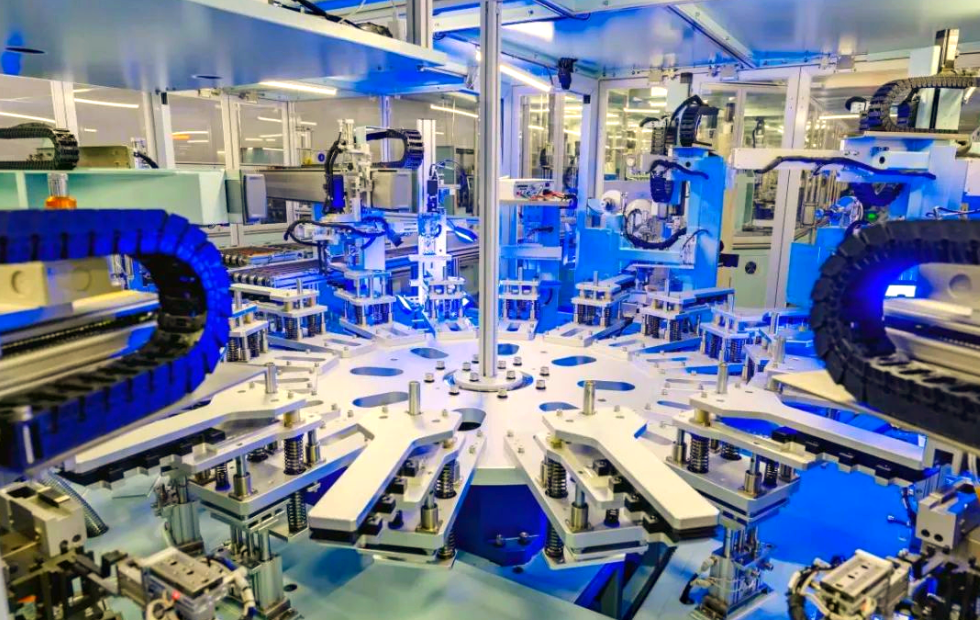
This table shows something important for the solid state cell industry: the leading applicants are not only battery manufacturers. They are automakers, electronics conglomerates, ceramic specialists, and research systems. The solid state cell is therefore a systems technology, not a single-component technology. A high-quality pathway must connect materials, electrodes, electrolytes, cell design, equipment, testing, and vehicle integration.
2. Japan: Sulfide Leadership and Automotive Coordination
In my reading of the evidence, Japan’s solid state cell strategy is the most patent-mature. Japanese applicants hold 41.41% of global solid state cell families, and seven of the top ten global applicants are Japanese. The center of gravity is sulfide solid electrolytes, especially compositions with high ionic conductivity. The scientific milestone was the discovery of a lithium superionic conductor family, which demonstrated that solid electrolytes could approach or exceed liquid electrolyte conductivity in certain conditions. This changed the strategic logic of the solid state cell.
Japan’s industrial model links universities, automakers, and battery suppliers. One automotive applicant alone holds more than 2500 solid state cell patent families, nearly twice the second-ranked applicant. Its patent coverage extends from material science to manufacturing processes, system integration, and control strategies. Another major Japanese electronics firm has a broad portfolio covering solid electrolyte materials, performance optimization, and manufacturing, with partnerships across automakers and supply chain actors. Japanese policy has supported this ecosystem through long-term programs. Early public projects aimed at next-generation automotive storage systems. Later programs funded collaborative solid state cell research involving many firms and academic institutions. More recent public investment has targeted high volumetric energy density, with goals around 700 to 800 Wh/L, and a national strategy has set full commercialization around 2030 with substantial public support.
| Policy or program | Approximate period | Main target | Instrument | Solid state cell relevance |
|---|---|---|---|---|
| Next-generation automotive storage system project | 2007 onward | Advanced batteries for electric and hybrid vehicles | Public research funding and coordination | Established materials and cell foundations |
| Collaborative all-solid-state lithium battery program | 2018-2022 | Joint R&D among firms and academic institutions | Approximately 10 billion yen | Built pre-competitive solid state cell platform |
| High-performance battery and material program | 2022 onward | High capacity, 700-800 Wh/L | Approximately 150 billion yen for multiple topics | Accelerated solid state cell scale-up |
| National battery industry strategy | 2022 | Commercialization of all-solid-state batteries by 2030 | Approximately 200 billion yen support | Aligned automotive and battery supply chains |
I see Japan’s main advantage as depth. Its disadvantage is that depth can also create path dependence. Sulfide solid state cell routes require strict environmental control, high-purity raw materials, and specialized manufacturing. If costs remain high, Japan may lead in patents while losing speed in mass deployment. For China, the lesson is not to copy Japan’s route blindly, but to match Japan’s long-term patience while preserving China’s cost and scale advantages.
3. South Korea: Full-Chain Coordination and Sulfide Systems
South Korea ranks third globally in solid state cell patent share at 10.57%. Its strategy is full-chain coordinated, with conglomerates playing the central role. Samsung, LG, and SK Innovation are the principal leaders. Samsung’s emphasis is on second-generation sulfide solid state cells, with research moving from material innovation to system integration. Its portfolio includes composite electrolyte systems, silver-carbon anodes, lithium metal anode protection, full-cell integration, and scale-up compatibility. Samsung has announced plans for mass production around 2027.
LG’s solid state cell work covers electrolyte materials, electrode interfaces, structural design, integrated applications, manufacturing processes, safety, and performance. It has collaborated with research institutes and universities. Its roadmap includes polymer semi-solid cells before 2026, polymer all-solid-state cells around 2028, and sulfide all-solid-state cells around 2030. This staged approach is pragmatic because it uses semi-solid or hybrid designs as a bridge to full solid state cell products.
| Policy or strategy | Period | Quantified target | Public and private investment | Industrial implication |
|---|---|---|---|---|
| Fourth battery industry strategy | 2023-2030 | Commercialize all-solid-state batteries by 2027; exceed 500 Wh/kg by 2030 | Approximately 1 trillion won public and 19.5 trillion won private | Focused support for solid state cell and lithium metal batteries |
| Battery industry innovation strategy | 2024-2030 | Mass production by 2027; 20% global market share by 2030 | Conglomerate-led research and production centers | Integrated R&D, pilot production, and market expansion |
The Korean model deserves attention because it links cell makers, automakers, electronics firms, and research organizations. It treats the solid state cell as a platform for multiple product categories, including electric vehicles, consumer electronics, and energy storage. However, South Korea’s weakness is similar to Japan’s: high dependence on imported raw materials and specialized equipment. Its speed will depend on whether its supply chain can localize high-purity sulfides, lithium metal handling, and dry-room manufacturing.
4. United States: Startup Breakthroughs and Capital-Driven Innovation
The United States holds 7.29% of global solid state cell patent families, but its influence is larger than its share suggests. The U.S. model is startup-driven and capital-intensive. General Motors, Nanotek Instruments, and Polyplus Battery Company are among the high-value patent holders. General Motors has used strategic investment and partnerships, with emphasis on solid-liquid hybrid routes and exploration of all-solid-state designs. Nanotek Instruments has worked on surface-mediated cells, lithium dendrite suppression, and supercapacitor electrode materials. Polyplus Battery Company has focused on solid lithium electrode technology and protective conductive glass separators to prevent lithium metal anodes from reacting with electrolytes.
Two startups illustrate the U.S. commercialization model. QuantumScape has partnered with Volkswagen to develop oxide electrolytes and multilayer ceramic electrolyte structures, targeting energy density above 400 Wh/kg. Solid Power has received investment from Ford and BMW, focuses on roll-to-roll production, delivered initial all-solid-state cell samples in 2023, and targets mass production around 2026. These examples show that the U.S. solid state cell ecosystem relies on venture capital, strategic automaker investment, and national laboratory support.
| Policy or program | Approximate start | Main mechanism | Solid state cell focus | Industrial effect |
|---|---|---|---|---|
| Battery500 consortium | 2016 | National laboratory-led consortium with universities and industry | Next-generation lithium batteries | Built advanced battery research network |
| Department of Energy battery awards | 2019 onward | Direct grants to firms and universities | Solid state cell interfaces and sulfide systems | Supported pre-commercial R&D |
| Annual battery technology budget expansion | By 2025 | Public budget around 780 million dollars | Pilot line construction and fast charging | Reduced early scale-up risk |
| DARPA MINT program | 2021 | Defense-oriented manufacturing innovation | Next-generation batteries | Linked national security and advanced manufacturing |
| Federal battery blueprint | 2021-2030 | Roadmap for cobalt-free and nickel-free batteries | Solid state cell and lithium metal batteries | Set long-term scale targets |
| Inflation Reduction Act incentives | 2022 | Tax credits for battery components | Solid state cell components | Attracted foreign investment into U.S. manufacturing |
The U.S. advantage is pluralism: multiple solid state cell routes receive funding, and failure in one route does not stop the entire ecosystem. The U.S. disadvantage is manufacturing fragmentation. Without a dense domestic supply chain for solid electrolytes, lithium metal, and specialized equipment, even excellent patents can face long delays between sample delivery and gigafactory production.
5. Europe: Policy Frameworks and OEM-Startup Linkages
Europe’s solid state cell strategy is policy-rich and automotive-demand-driven. European automakers often collaborate with U.S. startups. Ford and BMW invested in a U.S. solid state cell company focused on roll-to-roll production, sulfide electrolytes, and silicon-based anodes. Volkswagen partnered with a U.S. oxide solid state cell startup to advance multilayer stacking, with plans for production in Germany. A European automaker formed a joint venture with an Asian solid state cell producer to build a gigawatt-hour scale line in Europe, focusing on sulfide-polymer composite electrolytes. Another European automaker partnered with a French polymer solid state cell company for commercial vehicles and bus pilots. A UK company focused on oxide thin-film solid state cells and roll-to-roll processes with support from the EU Battery 2030+ initiative.
Patent activity in Europe is concentrated in Germany, France, the United Kingdom, and Switzerland. Major participants include automotive suppliers, automakers, national research centers, universities, and industrial groups. Their technical interests span electrolyte materials, anode materials, cell manufacturing, and system integration.
| Policy or regulation | Approximate period | Main requirement or target | Solid state cell implication |
|---|---|---|---|
| European battery research innovation roadmap | 2021 | Fourth-generation solid state cell materials for transport by 2030 | Set long-term R&D priorities and cost targets |
| EU battery and waste battery regulation | 2023 | Lifecycle rules, carbon footprint, recycled material ratios | Created compliance framework for solid state cell production |
| German battery alliance funding | Recent years | Approximately 1.7 billion euros for supply chain | Supported material localization and solid state cell research |
| Climate-neutral industry plan | 2030 target | Domestic battery capacity for 70% of EV demand; tax relief for solid state cell | Linked industrial policy with demand growth |
| French battery industry support | Recent years | Up to 200 million euros in tax incentives | Attracted battery investment and solid state cell activity |
I view Europe’s greatest contribution as regulatory foresight. The EU battery regulation does not merely fund research; it defines carbon footprint, recycling, and lifecycle requirements. This means the solid state cell industry cannot be evaluated only by energy density and cost. It must also be evaluated by carbon intensity, material circularity, and supply chain transparency. For China, this is a warning: if Chinese solid state cell products are to enter global markets, they must meet standards that go beyond electrochemical performance.
6. China’s Current Position, Strengths, and Structural Gaps
China’s solid state cell research has grown rapidly. In the most recent five-year window, China’s total solid state cell patent applications have surpassed Japan’s, ranking first globally. However, China’s patent landscape is more dispersed. Among the top ten global applicants, only the Chinese Academy of Sciences system appears. This indicates a system with many participants but fewer globally dominant corporate portfolios. The leading Chinese applicants include research universities, automakers, battery manufacturers, and new energy material firms. Their topics cover sulfide, oxide, and composite electrolytes; silicon-based composite anodes; lithium metal protection; solid electrolyte coating; gradient electrode design; dry electrode and electrolyte membrane preparation; three-dimensional printing; in-situ polymerization; multilayer heterogeneous electrolytes; bipolar all-solid-state design; and self-heating films.
| Category | Representative Chinese actors | Main solid state cell contributions | Strength | Gap |
|---|---|---|---|---|
| Research universities and institutes | Chinese Academy of Sciences system, Harbin Institute of Technology, Central South University, Tsinghua University, Beijing Institute of Technology, University of Electronic Science and Technology | Solid electrolytes, interface modification, electrode materials, characterization | Strong basic research and talent pipeline | Limited integration with mass production |
| Automakers | Great Wall Motor, FAW Group, BYD, Geely | Vehicle integration, cell validation, pack design | Demand-side pull and application validation | Deep materials and equipment dependence |
| Battery and material firms | CATL, QingTao Energy, Guoxuan High-Tech, Ganfeng Lithium | Electrolyte production, cell design, pilot lines, material supply | Scale, cost control, manufacturing experience | Interface stability and yield at high volume |
Chinese research organizations have begun international patent布局, especially in WIPO, the United States, Japan, the European Patent Office, and South Korea. Leading Chinese battery and automotive firms, along with top universities, are among the most active overseas filers. Foreign applicants in China are mainly from the United States, South Korea, and Japan, each with more than 100 families. Their patents focus on safety, such as flame-retardant electrolytes and dendrite suppression, and energy density, such as nano-electrodes and composite electrolytes. U.S. filings emphasize advanced materials such as flexible electrolytes. South Korean filings emphasize process implementation such as wet processes and dynamic pressure control. Japanese filings emphasize interface engineering and sulfide electrolytes. This means that future competition in China’s solid state cell market will revolve around low-cost manufacturing and high-stability materials.
China’s collaboration ecosystem has a distinctive “industry-academia-research-application” structure. Universities and institutes lead fundamental work on solid electrolytes, interface modification, and materials. Firms commercialize and scale. Some battery makers have achieved pilot or mass-ready preparation of sulfide and oxide solid electrolytes. A solid state cell producer has secured electrolyte membrane capacity from a separator supplier for a multi-year period. An automaker and a solid state cell company plan to mass produce cells with volumetric energy density above 820 Wh/L around 2026. From cathode to electrolyte to separator, Chinese firms have localized many core materials, with costs 15% to 20% lower than comparable international materials. This cost advantage is real, but it does not eliminate the need for breakthroughs in interface stability, yield, and safety validation.
| Policy or standard | Approximate period | Main content | Solid state cell relevance |
|---|---|---|---|
| New energy vehicle industry plan | 2020 | Core technology direction for solid state cells | National-level project guidance |
| New energy storage manufacturing action plan | 2025 | Support lithium battery solidification and global leaders | Industrial policy for solid state cell scale-up |
| Automotive standardization work points | 2025 | Forward-looking layout for solid state cells | Standards integration |
| Joint laboratory initiatives | Recent years | Solid state cell R&D and industrialization platforms | Industry-academia cooperation |
| Local subsidies and tax incentives | Recent years | R&D subsidies, pilot line support, tax reductions | Regional industrial acceleration |
| All-solid-state battery determination method | 2025 | Clarified definition of all-solid-state batteries | Reduced terminology confusion |
| National standard draft for terms and classification | 2025 | Global first draft for electric vehicle solid state cells | Moved industry toward standardized commercialization |
Despite these strengths, I identify four major problem areas. First, core technology bottlenecks remain. The solid-solid interface has poor physical contact, high impedance, and low lithium-ion transport efficiency. This limits rate performance and energy density and can trigger lithium dendrite growth at defects. Dendrites can penetrate the electrolyte, cause short circuits, threaten safety, and shorten cycle life. Interface engineering, including coating materials, microstructure control, and in-situ or ex-situ interlayer construction, is a major R&D priority. The interface resistance can be expressed as:
$$R_{int}=R_{total}-R_{bulk}-R_{electrode}$$
Second, manufacturing is fundamentally different from liquid-electrolyte battery production. Existing equipment is often adapted from liquid lines and cannot meet the precision, cleanliness, and pressure requirements of solid state cell production. This leads to low yield, poor consistency, and slow capacity ramp-up. The yield of a multi-step solid state cell line can be modeled as:
$$Y=\prod_{i=1}^{k} y_i$$
Third, material costs remain much higher than liquid systems. Complex processes and new equipment further increase manufacturing cost. A simplified cost per kilowatt-hour can be written as:
$$C_{kWh}=\frac{C_{mat}+C_{proc}+C_{equip}+C_{labor}}{E_{pack}Y}$$
This equation shows that cost reduction depends on both numerator reduction and denominator improvement. Higher energy density and higher yield can reduce cost per kilowatt-hour even if material costs remain high. That is why solid state cell industrialization must be approached as a coupled problem of materials, process, and design.
Fourth, supply chain coordination is weak. The solid state cell value chain includes high-purity raw materials, solid electrolyte synthesis, electrode fabrication, high-precision equipment, cell assembly, testing, and system integration. Each link is still immature. Equipment suppliers lack mature solutions validated by large-scale production. Material firms, cell makers, equipment suppliers, and end users lack routine joint development mechanisms. Technical standards are not unified, which raises adaptation costs. Safety evaluation and certification systems also lag. Although solid state cells are often described as safer because they remove flammable liquid electrolyte, high-energy-density systems with lithium metal anodes can release energy violently under extreme abuse. There is still no global consensus on dedicated safety test standards, evaluation methods, and mandatory certification. This creates uncertainty for automakers, storage operators, and insurers.
| Problem area | Technical or industrial expression | Quantitative indicator | Consequence | Priority |
|---|---|---|---|---|
| Interface instability | Poor solid-solid contact, high impedance, dendrite growth | \(R_{int}\), \(J_{cc}\), \(CE\) | Lower rate capability, safety risk, shorter life | Critical |
| Manufacturing yield | Equipment mismatch, clean-room demands, pressure control | \(Y\), defect density, line utilization | High cost, slow ramp-up, inconsistent cells | Critical |
| Cost structure | Expensive solid electrolytes, lithium metal handling, low yield | \(C_{kWh}\), material cost ratio | Weak market competitiveness | High |
| Supply chain fragmentation | Missing equipment standards, weak joint development | Localization rate, import dependence | Delay and vulnerability | High |
| Safety standardization | No dedicated all-solid-state abuse tests | \(SRI\), thermal runaway threshold | Low customer confidence | High |
| Substitute competition | Fast charging, sodium-ion, lithium-sulfur, plug-in hybrids | Cost, convenience, maturity | Reduced urgency for solid state cell | Medium to high |
I also note that the market environment is not waiting for the solid state cell. Range anxiety and charging time anxiety are being reduced by fast charging, battery swapping, plug-in hybrid systems, and continuous improvements in liquid lithium-ion batteries. Sodium-ion, lithium-sulfur, and manganese-rich iron phosphate systems are also advancing. Therefore, the solid state cell must prove not only that it is better, but that it is better at an acceptable cost and within a relevant time window. The value proposition can be summarized as:
$$V_{solid state cell}=f(E_g,E_v,S,L,C,T)$$
where \(E_g\) is gravimetric energy density, \(E_v\) is volumetric energy density, \(S\) is safety, \(L\) is cycle life, \(C\) is cost, and \(T\) is time to market. If any variable is weak, the entire value proposition weakens.
7. Pathway 1: Concentrate on Core Technology and Manufacturing Bottlenecks
My first recommendation is to create a national-level solid state cell专项 fund that uses government guidance and market operation to mobilize large-scale private capital. The goal should be to concentrate resources on interface engineering, solid electrolytes, high-purity precursors, silicon-based anodes, and lithium metal protection. I would organize the work around shared pre-competitive platforms rather than isolated grants. The platform should include materials companies, cell makers, equipment suppliers, automakers, and research institutes. The target should be measurable: increase ionic conductivity, reduce interfacial resistance, suppress dendrites, and improve Coulombic efficiency.
$$CE=\frac{Q_{dis}}{Q_{chg}}\times100\%$$
$$R_{cap}(n)=\frac{Q_n}{Q_0}\times100\%$$
For manufacturing, I recommend focused support for dry electrode processing, isostatic pressing, large-area electrolyte membrane formation, high-precision stacking, and low-damage lithium metal handling. The aim is not simply to buy equipment, but to develop equipment that is co-designed with cell architecture. I would set explicit yield and consistency targets. For example, a pilot line should demonstrate stable yield above a defined threshold before public co-funding is converted into scale-up support.
| Technology priority | Key challenge | Performance metric | Suggested target direction | Industrial partner type |
|---|---|---|---|---|
| Solid electrolyte | Ionic conductivity, electrochemical window, air stability | \(\sigma\), stability window | High conductivity with scalable synthesis | Material firms, universities |
| Interface engineering | High \(R_{int}\), dendrite nucleation | \(R_{int}\), \(J_{cc}\) | Low resistance and high critical current density | Cell makers, research institutes |
| Anode protection | Lithium metal reactivity, volume change | \(CE\), cycle life | High Coulombic efficiency and long retention | Battery firms, material firms |
| Dry electrode and membrane | Uniformity, thickness control, scale | Thickness variation, yield | High-speed, low-defect production | Equipment suppliers, cell makers |
| Stacking and packaging | Pressure control, alignment, sealing | Defect density, leak rate | High precision and high throughput | Equipment firms, automakers |
8. Pathway 2: Build a Collaborative Innovation Ecosystem
My second recommendation is to strengthen deep integration among industry, universities, research institutes, and users. The solid state cell cannot be industrialized by one company alone. I would establish a permanent collaborative platform led by leading cell makers, automakers, equipment firms, and research organizations. This platform should define common interfaces and test protocols. It should also create shared pre-competitive data for interface behavior, degradation, and safety. Standardization of interfaces will reduce adaptation costs across the value chain.
I would encourage upstream material firms, midstream cell manufacturers, and downstream automakers to form strategic alliances or equity partnerships. This creates stable and controllable supply chains. The European model of automaker-startup collaboration and the U.S. model of strategic investment show that capital linkage can accelerate technology transfer. China can adapt this model by encouraging firms to invest in solid state cell startups, joint ventures, and overseas research centers. At the same time, China should secure domestic supply of high-purity raw materials, solid electrolyte precursors, and core equipment.
I recommend building three to five national solid state cell industrial clusters in regions with strong electronics, automotive, and materials foundations. Each cluster should have a distinct role: core manufacturing and terminal application, raw material and electrolyte supply, equipment and testing, or recycling. Resource-rich provinces can focus on phosphorus and lithium materials, sulfide electrolyte precursors, and low-cost cathode materials. Manufacturing provinces can focus on cell production, module integration, and vehicle validation. Application provinces can focus on electric vehicles, energy storage, and low-altitude systems. This division avoids homogeneous competition and creates a national division of labor.
| Cluster type | Primary focus | Key inputs | Output | Coordination mechanism |
|---|---|---|---|---|
| Core manufacturing cluster | Solid state cell pilot and mass production | Equipment, electrolytes, electrodes, talent | Cells, modules, packs | Joint line validation with automakers |
| Raw material and electrolyte cluster | High-purity precursors, sulfide and oxide electrolytes | Minerals, chemical processing, energy | Electrolyte powders, membranes, precursors | Long-term supply agreements |
| Equipment and testing cluster | Dry electrode, isostatic pressing, stacking, metrology | Precision machining, automation, software | Turnkey lines, test systems | Co-development with cell makers |
| Application and demonstration cluster | Electric vehicles, storage, low-altitude platforms | System integration, certification, market access | Demonstration products | Government-supported first-use programs |
| Recycling and circularity cluster | Solid electrolyte recovery, lithium metal handling | Collection networks, hydrometallurgy, pyrometallurgy | Recovered materials | Lifecycle regulation and traceability |
9. Pathway 3: Accelerate Safety Standards and Evaluation Systems
My third recommendation is to use China’s early standard-making momentum to build a complete safety and evaluation system for the solid state cell. China has already issued a definition standard for all-solid-state batteries and has advanced a national standard draft for terms and classification. This is a strong starting point. The next step is to create dedicated safety test standards for all-solid-state cells, including solid-solid interface failure, lithium metal thermal runaway, mechanical abuse, high-temperature abuse, and overcharge tolerance. I would also incorporate carbon footprint and recycled material requirements, following the regulatory direction seen in Europe. This will help Chinese solid state cell products meet global market requirements.
I recommend creating two or three national solid state cell test and certification centers in key industrial clusters. These centers should provide material performance testing, safety evaluation, reliability validation, and failure analysis. I also recommend building a national solid state cell high-altitude performance and evaluation center in a region with high altitude and large temperature differences. This would test solid state cell behavior under low pressure, wide temperature swings, and harsh conditions. Such testing is relevant for electric vehicles, grid storage, and low-altitude aircraft.
A safety risk index can be defined as:
$$SRI=w_1 T_{onset}+w_2 H_{gas}+w_3 E_{vent}+w_4 P_{prop}$$
where \(T_{onset}\) is thermal runaway onset temperature, \(H_{gas}\) is gas generation hazard, \(E_{vent}\) is venting energy, and \(P_{prop}\) is propagation probability. Weights \(w_i\) should be calibrated by application. For high-energy-density electric vehicles, propagation probability and venting energy may receive higher weights. For stationary storage, gas toxicity and fire suppression may receive higher weights.
| Standard area | Current gap | Required test or metric | Suggested action | Global relevance |
|---|---|---|---|---|
| Terminology and classification | Partially addressed | Definition of all-solid-state, semi-solid, hybrid | Continue national and international alignment | High |
| Interface failure | No dedicated standard | \(R_{int}\), dendrite onset, short-circuit threshold | Develop accelerated test methods | High |
| Lithium metal safety | Limited data | Thermal runaway onset, gas composition, propagation | Create abuse test protocols | High |
| Mechanical abuse | Adapted from liquid cells | Nail penetration, crush, drop, vibration | Modify for solid-solid mechanics | Medium to high |
| Carbon footprint | Early stage | \(CF=\sum m_i ef_i\) | Require lifecycle inventory | High for export markets |
| Recycling | Underdeveloped | Material recovery rate, purity | Design for disassembly and recovery | High |
10. Pathway 4: Precise Policy Support and Market Application Guidance
My fourth recommendation is to combine multi-route exploration with precise policy support. I would continue to prioritize sulfide and oxide routes, but I would also support polymer and halide routes through targeted grants and risk investment. A portfolio approach reduces the risk of locking into a single solid state cell chemistry before the market has spoken. Policy should support research, pilot production, and line construction through tax credits, equipment purchase subsidies, and R&D expense deductions.
I would use government-led demonstration projects in high-value applications such as premium electric vehicles, low-altitude aircraft, and large-scale energy storage. These applications can tolerate higher initial costs and can provide early field data. Early market validation will pull technology iteration and cost reduction. I would also use border and resource-rich regions to demonstrate solid state cells in cross-border electric motorcycles, storage base stations, and remote microgrids. These use cases require safety, wide temperature performance, and long life, which align with solid state cell strengths.
| Policy instrument | Target actor | Expected effect | Metric | Time horizon |
|---|---|---|---|---|
| National专项 fund | Research institutes, cell makers | Core technology breakthroughs | \(R_{int}\), \(J_{cc}\), \(CE\) | Near to medium term |
| Tax credits | Material firms, equipment firms | Reduce capital burden | Investment volume, cost per kWh | Medium term |
| Equipment subsidies | Pilot lines | Accelerate yield learning | \(Y\), line utilization | Near term |
| R&D super deduction | All innovators | Increase private R&D | Patent quality, pilot data | Continuous |
| Demonstration procurement | Automakers, storage operators | Create early demand | Deployment capacity, field failure rate | Medium term |
| Standards and certification | Testing centers, regulators | Build market trust | Certification pass rate, safety incidents | Near to medium term |
11. Pathway 5: Talent, Finance, and International Cooperation
In my view, the solid state cell industry also needs a talent and finance architecture. The field requires electrochemists, ceramic engineers, polymer scientists, mechanical engineers, automation experts, data scientists, and safety specialists. I recommend creating joint graduate programs between universities and firms, with students working on real pilot-line problems. Financial institutions should develop long-term funds that match the 5 to 10 year horizon of solid state cell commercialization. Venture capital alone may be too short-term for manufacturing scale-up.
International cooperation should be selective and reciprocal. China can participate in international standards, joint research on safety, and pre-competitive materials science. At the same time, it should maintain sovereign control over critical manufacturing equipment and high-purity materials. A supply chain resilience index can be defined as:
$$SCR=\sum_i w_i(1-\frac{M_i}{D_i})$$
where \(M_i\) is import dependence for input \(i\), \(D_i\) is domestic demand, and \(w_i\) is the strategic weight of input \(i\). For solid state cells, high weights should be assigned to solid electrolyte precursors, lithium metal, high-purity sulfides, dry-room equipment, and precision stacking systems.
12. Pathway 6: Circular Economy and Lifecycle Design
I strongly recommend designing solid state cells for circularity from the beginning. The use of lithium metal, sulfides, oxides, and complex composites creates new recycling challenges. If the industry waits until mass production to address recycling, it will face higher costs and regulatory risk. The carbon footprint of a solid state cell can be modeled as:
$$CF=\sum_i m_i ef_i$$
where \(m_i\) is the mass of material \(i\) and \(ef_i\) is its emission factor. Design choices such as low-cobalt cathodes, recycled lithium, low-temperature synthesis, and dry processing can reduce \(CF\). Recycling standards should require high recovery rates for lithium, nickel, cobalt, and electrolyte materials. A circular solid state cell industry will be more resilient against raw material shocks and more acceptable in regulated markets.
| Lifecycle stage | Design choice | Metric | Benefit | Policy need |
|---|---|---|---|---|
| Material sourcing | Low-carbon lithium, recycled metals | \(CF\), recycled content | Lower emissions and supply risk | Traceability standards |
| Electrolyte synthesis | Low-temperature, high-yield routes | Energy per kg, purity | Lower cost and emissions | Process standards |
| Cell manufacturing | Dry electrode, low scrap, high yield | \(Y\), scrap rate | Lower cost per kWh | Equipment subsidies |
| Use phase | High cycle life, safety monitoring | \(R_{cap}(n)\), \(SRI\) | Longer service, higher trust | Safety certification |
| End of life | Design for disassembly, material recovery | Recovery rate, purity | Circular material supply | Recycling mandates |
13. Integrated Roadmap and Quantitative Dashboard
I propose an integrated roadmap with three phases. In the first phase, the focus should be on materials and interface science, standard development, and pilot-line learning. In the second phase, the focus should shift to yield, cost, and application demonstration. In the third phase, the focus should be on global market entry, circularity, and continuous cost reduction. A technology maturity index can be defined as:
$$MRL=\sum_k w_k s_k$$
where \(s_k\) is the maturity score of subsystem \(k\), such as electrolyte, anode, cathode, cell design, equipment, and testing. A route selection score can be defined as:
$$MS_i=w_T T_i+w_C C_i+w_S S_i+w_P P_i+w_R R_i$$
where \(T_i\) is technical performance, \(C_i\) is cost potential, \(S_i\) is safety, \(P_i\) is patent freedom, and \(R_i\) is supply chain readiness. This multi-criteria approach prevents overemphasis on a single metric such as energy density.
| Phase | Time frame | Primary goal | Key actions | Success metrics |
|---|---|---|---|---|
| Phase I: Foundation | 2026-2028 | Establish materials and process baseline | Interface engineering, electrolyte scale-up, test standards, pilot lines | \(R_{int}\) reduction, \(CE\) improvement, certified safety tests |
| Phase II: Scale-up | 2029-2031 | Demonstrate reproducible mass production | Dry electrode, isostatic pressing, yield improvement, vehicle and storage demonstrations | \(Y\), \(C_{kWh}\), field failure rate, cycle life |
| Phase III: Market expansion | 2032-2035 | Compete globally with circular supply chains | International standards, recycling, multi-route products, overseas partnerships | Market share, \(CF\), recovery rate, \(SCR\) |
| Dashboard metric | Definition | Why it matters for solid state cell | Direction |
|---|---|---|---|
| Gravimetric energy density | \(E_g=\frac{V_{cell}C_{cell}}{m_{cell}}\) | Vehicle range and aircraft payload | Higher |
| Volumetric energy density | \(E_v=\frac{V_{cell}C_{cell}}{V_{cell}}\) | Pack size and system integration | Higher |
| Ionic conductivity | \(\sigma=\frac{L}{R_bA}\) | Rate capability and power | Higher |
| Interfacial resistance | \(R_{int}=R_{total}-R_{bulk}-R_{electrode}\) | Efficiency, heat, life | Lower |
| Critical current density | \(J_{cc}=\frac{I_{short}}{A_{cell}}\) | Dendrite resistance | Higher |
| Coulombic efficiency | \(CE=\frac{Q_{dis}}{Q_{chg}}\times100\%\) | Reversibility | Higher |
| Capacity retention | \(R_{cap}(n)=\frac{Q_n}{Q_0}\times100\%\) | Cycle life | Higher |
| Yield | \(Y=\prod_i y_i\) | Manufacturing cost | Higher |
| Cost per kWh | \(C_{kWh}=\frac{C_{mat}+C_{proc}+C_{equip}+C_{labor}}{E_{pack}Y}\) | Market competitiveness | Lower |
| Learning rate | \(C_t=C_0N^{-\alpha}\) | Long-term cost decline | Higher \(\alpha\) |
| Supply chain resilience | \(SCR=\sum_i w_i(1-\frac{M_i}{D_i})\) | Strategic autonomy | Higher |
| Carbon footprint | \(CF=\sum_i m_i ef_i\) | Global market access | Lower |
14. Risk Assessment and Mitigation
I do not assume that solid state cell industrialization is inevitable or linear. There are technical, industrial, market, and policy risks. I summarize them below with mitigation actions.
| Risk | Description | Probability | Impact | Mitigation |
|---|---|---|---|---|
| Interface failure | High resistance and dendrites persist at scale | High | High | Multi-route interface engineering, shared test protocols, AI-assisted materials discovery |
| Low yield | Pilot yield does not transfer to gigafactories | Medium to high | High | Equipment co-development, digital twins, statistical process control |
| Cost overrun | Solid electrolyte and lithium metal remain expensive | High | High | Material localization, dry processing, learning-by-doing subsidies |
| Safety incident | High-energy cell fails under abuse | Medium | Very high | Dedicated safety standards, early certification, conservative deployment |
| Substitute technology | Fast charging and sodium-ion reduce demand | Medium to high | Medium | Target premium applications, emphasize safety and energy density |
| Supply chain disruption | Critical materials or equipment constrained | Medium | High | Strategic stockpiles, domestic capacity, international diversification |
| Policy fragmentation | Inconsistent standards across regions | Medium | Medium | International standard participation, mutual recognition |
15. My Concluding Assessment
In my assessment, the solid state cell will not replace liquid lithium-ion batteries overnight. It will first enter premium and mission-critical applications where safety, energy density, and wide-temperature performance justify higher initial cost. The transition will be staged: semi-solid and hybrid cells, then all-solid-state cells in selected high-value products, then broader scale as yield and cost improve. The global leaders are not all following the same route. Japan has deep sulfide and automotive integration. South Korea has full-chain conglomerate coordination. The United States has startup energy and multiple technology routes. Europe has regulatory foresight and automotive demand. China has scale, cost control, a large patent volume, and emerging standards leadership, but it must overcome interface bottlenecks, manufacturing yield problems, supply chain fragmentation, and safety standardization gaps.
The most important strategic insight I draw is that the solid state cell is a coupled system. Progress in one material alone will not create a competitive industry. The winning pathway will connect high-performance materials, stable interfaces, scalable manufacturing, rigorous safety standards, circular supply chains, and real market applications. The equations and tables in this assessment are not merely descriptive. They are decision tools. They can help policymakers, researchers, and firms compare routes, set milestones, and avoid the illusion that patent quantity alone equals industrial strength.
Therefore, I recommend a balanced strategy: concentrate public resources on pre-competitive bottlenecks, build collaborative platforms that include equipment and materials firms, accelerate dedicated safety and lifecycle standards, use demonstration markets to pull demand, and maintain multiple solid state cell routes until technical and economic uncertainty is reduced. If China follows this path with discipline, the solid state cell can become not only a laboratory achievement but a durable foundation for high-quality industrial growth.