
YIBIN, Sept. 3, 2026 — The 2026 World Power Battery Conference opened here with a clear message: the power battery industry has moved far beyond the early phase of simply adding capacity. After years of rapid expansion, China has built the world’s largest and most complete power battery industrial system, and the next stage of development will be defined less by sheer scale than by value creation, technological depth, application breadth and ecosystem strength.
The conference, held under the theme of electric drive for all and fusion and symbiosis, brought together industry leaders, academicians, battery makers, automakers, equipment suppliers and emerging application developers. Their discussions focused on a shared question: how should the power battery industry perform in its “second half,” when growth must be sustained by innovation, quality, safety and cross-sector integration rather than by volume alone?
In the opening remarks and keynote speeches, the power battery was repeatedly described not merely as the heart of an electric vehicle but as a foundational platform for a much wider energy and intelligence system. That shift in perspective was visible across the agenda, from advanced cell chemistry and solid-state battery road maps to energy storage, computing infrastructure, robotics, low-altitude travel, electric ships and space applications.
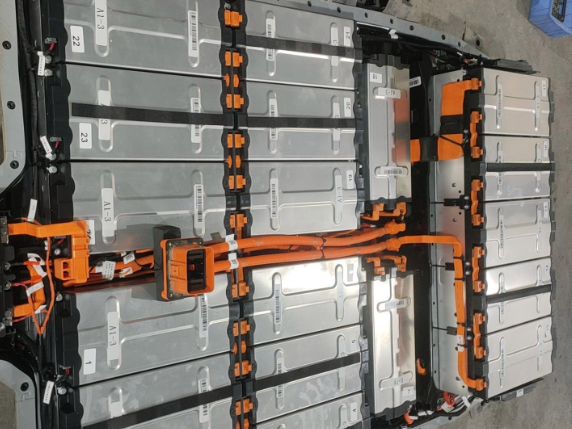
- Scale Leadership Remains a Strong Foundation
China’s power battery industry has grown from nothing into a globally competitive system in a relatively short period. The scale of that achievement was underlined by Ouyang Minggao, an academician of the Chinese Academy of Sciences, who presented a set of industry figures that illustrated both the size and the speed of the expansion.
In 2025, China’s domestic power battery installed capacity reached 769 GWh, up 40 percent year on year. In the global power battery installation ranking for 2025, six of the top ten companies were from China, and their combined installed capacity accounted for 70 percent of the global total. China’s total lithium-ion battery shipment in 2025 was about 1,875 GWh, up 53 percent year on year, accounting for more than 80 percent of the global total.
| Indicator | Reported Figure | Context |
|---|---|---|
| China power battery installed capacity in 2025 | 769 GWh | Up 40 percent year on year |
| Chinese companies in the global power battery top ten in 2025 | 6 companies | Combined installed capacity share of 70 percent |
| China lithium-ion battery shipment in 2025 | About 1,875 GWh | Up 53 percent year on year, more than 80 percent of global total |
| Monthly penetration of new energy passenger vehicles in July 2026 | First exceeded 60 percent | A historic threshold for electrification |
| Cumulative penetration of new energy passenger vehicles from January to July 2026 | Over 50 percent | Power battery described as the primary technology driver |
Those figures matter not only because they confirm China’s scale advantage in the power battery sector, but because they show how deeply the power battery has become embedded in the broader industrial system. The power battery is now a core component in the electrification of transportation, and it is increasingly a strategic enabler for energy storage, digital infrastructure and advanced manufacturing.
Yin Tongyue, chairman of Chery Holding Group, described new energy vehicles as a new species. In his view, they are no longer simply means of transportation. They are mobile intelligent spaces, distributed energy carriers, computing platforms, and ports in an increasingly connected world. The power battery, therefore, is not only the heart of the vehicle; it is a source of vitality for many industries and a platform and foundation for future innovation.
Yin also highlighted the role of the power battery in reaching a historic milestone. In July 2026, monthly penetration of new energy passenger vehicles exceeded 60 percent for the first time. From January to July, cumulative penetration exceeded 50 percent. He said the power battery was unquestionably the primary technology driver behind that leap. For more than a century, he noted, the definition of the automobile was largely controlled by traditional automakers. In the era of electrification and intelligence, breakthroughs in battery technology have become the foundation for the ability to redefine the vehicle.
That view was echoed by Liu Jincheng, chairman of EVE Energy, who described 2026 as a promising year for the industry. One notable change, he said, is that new technology directions are gaining recognition. In the energy storage field, the large prismatic battery route is becoming clearer. In the power battery field, the large cylindrical battery direction has also become more defined. The power battery industry is therefore not standing still after achieving scale; it is continuing to refine technical routes and product architectures.
- From Vehicle Heart to Universal Energy Carrier
The conference made clear that the growth logic of the lithium battery industry is changing. Electric vehicles remain the basic market for the power battery, but new demand is emerging across a much wider range of applications. Zhu Gongshan, chairman of GCL Group, said the application side has abundant potential and that the power battery is becoming a cross-domain universal energy carrier.
In Zhu’s view, the power battery is no longer tied solely to the vehicle market. Energy storage, AIDC computing backup, embodied robots, eVTOL low-altitude travel, electric ships and space energy are opening new demand spaces. The combination of scenario proliferation, technology iteration, carbon compliance dividends and artificial intelligence empowerment is expected to allow effective high-end capacity to earn a premium. That assessment positions the power battery as a central component in the fusion of energy, transportation, computing and advanced robotics.
Wang He, founder and chief technology officer of Beijing Galaxy General Robot, offered a long-term perspective on one of those emerging markets. He said leading companies in the industry may break through the “ChatGPT moment” of embodied intelligence in 2028, opening a steep climbing curve for the humanoid robot industry. Wang is confident that the eventual explosion of humanoid robots will open a new blue ocean for the power battery industry.
For the power battery sector, such application expansion is more than a diversification story. Each new application imposes different requirements on energy density, safety, cycle life, temperature tolerance, charging capability and system integration. Those requirements will feed back into cell design, material selection, manufacturing processes and battery management systems. The power battery industry’s next phase will therefore be shaped by a two-way relationship: advances in the power battery enable new applications, and new applications pull the power battery toward higher performance and more differentiated products.
Yet the development of new markets will not be achieved by automakers or battery manufacturers acting alone. Yin Tongyue called for stronger coordination with more upstream and downstream partners, urging the industry to complete the closed loop and build a thicker ecosystem. A healthy industry ecosystem, he said, is necessary for the entire sector to move forward together. That message was particularly relevant to the power battery industry, where materials, cells, packs, vehicle integration, charging infrastructure, recycling and application scenarios are tightly linked.
- Next-Generation Battery Technologies Take Center Stage
From the remarks of experts and business leaders at the conference, one conclusion was unmistakable: developing next-generation battery technologies, including solid-state batteries, has become a clear policy direction for the power battery industry. The discussion was not limited to laboratory progress; it covered materials, electrolytes, artificial intelligence platforms, validation timelines and the practical rhythm of industrialization.
Wan Gang, honorary chairman of the China Association for Science and Technology, recommended strengthening basic frontier technology innovation in the battery field. He pointed to a series of key issues, including next-generation high-specific-capacity cathode and anode materials and high-stability electrolytes. Around those issues, he called for stronger basic research and technological innovation in new material systems and power batteries. He also urged the industry to deepen research and development of all-solid-state battery technology and promote its gradual entry into industrial application. In addition, he said the landing and large-scale application of mixed solid-liquid battery technology, also described as semi-solid battery technology, should be accelerated.
Ouyang Minggao offered a clear judgment on the necessity of developing solid-state batteries. He said China’s battery industry has two technology routes. One route is high-specific-energy batteries. That route must be pursued, and the industry will move from current liquid lithium-ion batteries to solid-liquid hybrid batteries and then toward all-solid-state batteries. The other route is low-cost, long-life lithium iron phosphate batteries and sodium-ion batteries. For China’s power battery industry, he said, these two routes are both indispensable and equally important.
Ouyang also emphasized the difficulty of all-solid-state battery research and development. Technological breakthroughs in this area, he said, will rely heavily on artificial intelligence research and development platforms. The next five years will be a critical window for battery design to shift toward AI-based research and development platforms. That warning carries major implications for the power battery industry: future competition will depend not only on chemistry and manufacturing scale, but also on how effectively companies use data, simulation and intelligent design to shorten development cycles and reduce trial-and-error costs.
Chery has laid out its own next-generation power battery strategy. Yin Tongyue said the company follows the principle of advancing plans in parallel while never putting a battery into a vehicle unless it is safe enough. The company’s Rhinoceros battery was developed on that principle and has three series: one dedicated to hybrid vehicles, one dedicated to pure electric vehicles, and one dedicated to solid-state applications. The energy density of its solid-state cell has reached 400 Wh/kg.
Yin introduced a detailed timeline. The solid-liquid hybrid version of the Rhinoceros battery is planned for vehicle installation in the fourth quarter of 2026. The all-solid-state battery is planned for vehicle validation in 2027. To support this track, Chery’s dedicated solid-state battery team will exceed 1,200 people within two years, and cumulative special research and development funding will exceed 10 billion yuan.
Changan Automobile also has a clear solid-state battery development plan. Deng Chenghao, vice president of Changan Automobile and chairman of Deepal Automobile Technology, said Changan does not make cells itself and is working with leading battery companies to explore solid-state battery commercialization. The company’s goal is to achieve small-scale mass production of all-solid-state batteries in 2030.
At the same time, industry leaders cautioned that the road to large-scale industrialization of all-solid-state batteries remains long. Yang Hongxin, chairman and chief executive officer of Honeycomb Energy, said that at a closed-door meeting the previous day, battery companies unanimously agreed that liquid batteries will remain the most mainstream technology direction for a long time. All-solid-state batteries will face great difficulty in achieving large-scale application around 2030.
Based on current industrial conditions and market demand, Honeycomb Energy is advancing the commercialization of mixed solid-liquid batteries. In September 2026, the company’s first-generation mixed solid-liquid battery will be mass-produced. Yang said the company plans to fully realize mixed solid-liquid conversion of all ternary products by the end of 2027. The message is important for the power battery industry: the transition to next-generation technology will be gradual, with liquid, hybrid and all-solid-state technologies coexisting and serving different market needs for an extended period.
- Commercialization Rhythm Reflects Safety, Cost and Scale Realities
The discussions at the conference made clear that the power battery industry is not pursuing a single technological finish line. Instead, it is managing multiple technology routes at once. High-specific-energy batteries are needed for premium electric vehicles, long-range transportation and applications where mass and volume are critical. Low-cost, long-life lithium iron phosphate and sodium-ion batteries are needed for cost-sensitive vehicles, stationary energy storage and other applications where durability and economics matter more than maximum energy density.
Mixed solid-liquid batteries occupy an intermediate position. They can offer improvements over conventional liquid batteries while avoiding some of the most difficult challenges of all-solid-state technology. For automakers, the key question is not simply which chemistry has the highest theoretical performance, but which technology can be manufactured at scale, validated for safety, integrated into vehicle platforms and delivered at an acceptable cost. Yin’s principle that a battery should not be put into a vehicle unless it is safe enough captures the central tension in the power battery industry: innovation must move quickly, but safety cannot be compromised.
The same logic applies to all-solid-state batteries. Research and development progress has been rapid, and companies have announced clear targets for vehicle validation and small-scale production. However, large-scale industrialization requires more than a laboratory breakthrough. It requires stable materials supply, mature equipment, high yield rates, consistent quality, comprehensive testing and validation, and a cost structure that can support broad adoption. The power battery industry’s experience with liquid lithium-ion batteries shows that scaling up a new technology is an industrial systems challenge, not only a scientific one.
Artificial intelligence is expected to play a growing role in meeting that challenge. Ouyang’s point that all-solid-state battery development will rely heavily on AI research and development platforms highlights a broader shift in the power battery sector. Battery design involves complex interactions among materials, electrodes, electrolytes, interfaces and manufacturing processes. AI tools can help researchers explore larger design spaces, predict performance, optimize formulations and reduce the number of physical experiments required. In the next five years, the ability to build and use AI-based research and development platforms may become a key source of competitive advantage in the power battery industry.
- Application Expansion Creates a Wider Market for the Power Battery
The conference’s discussion of application scenarios showed that the power battery industry is entering a period of cross-sector fusion. Electric vehicles remain the basic market and will continue to support large-scale production, but energy storage, computing backup, robotics, low-altitude travel, electric ships and space applications are creating new demand with distinct technical requirements.
Energy storage requires long cycle life, high safety, stable performance and low cost. AIDC computing backup requires reliable power supply and high safety, especially in data-intensive facilities where downtime is costly. Embodied robots and humanoid robots require compact, high-energy-density power batteries that can support complex motion and long operating times. eVTOL low-altitude travel demands high energy density, high power output and rigorous safety standards. Electric ships require durable power battery systems that can withstand harsh marine conditions. Space applications require extreme reliability and performance under demanding environmental conditions.
Each of these applications expands the addressable market for the power battery industry, but each also demands tailored solutions. The era in which a single power battery product could serve all markets is giving way to a more segmented landscape. Companies that can combine materials innovation, cell design, system integration and application-specific engineering are likely to capture more value. The power battery will increasingly be judged not only by its energy density or cost per kilowatt-hour, but by how well it performs in a specific application and how fully it is integrated into the customer’s system.
This is why the conference’s theme of fusion and symbiosis resonated across the agenda. The power battery industry must work with automakers, energy companies, robotics developers, aviation innovators, shipbuilders, data center operators and research institutions. It must also work with material suppliers, equipment manufacturers, recycling companies and standards organizations. The power battery is a platform technology, and platform technologies grow through ecosystems.
- Industry Competition Shifts Toward Value and Capability
The Chinese power battery industry has already demonstrated its ability to scale. The next challenge is to convert scale into sustained value. That means improving product performance, raising safety standards, reducing costs through process innovation, increasing manufacturing efficiency and building stronger relationships with customers in diverse application markets.
Zhu Gongshan’s observation that effective high-end capacity will continue to earn a premium points to an important distinction in the power battery industry. Not all capacity is equal. Capacity that can consistently produce high-quality, high-performance and safe power batteries will remain valuable. Capacity that lacks differentiation, technical capability or reliable quality may face increasing pressure. The industry’s future growth will therefore depend on the quality of capacity, not merely the quantity.
Liu Jincheng’s comments on clearer technology routes also suggest that the power battery industry is maturing. When technology directions become clearer, companies can focus their research and development resources, improve manufacturing processes and build supply chains around specific product architectures. The large prismatic route in energy storage and the large cylindrical route in power batteries are examples of this maturation. Clearer routes can reduce waste and help the industry move from broad experimentation to focused execution.
At the same time, the coexistence of multiple routes means that competition will remain intense. Liquid lithium-ion batteries will continue to improve. Mixed solid-liquid batteries will enter the market. All-solid-state batteries will move through validation and small-scale production. Lithium iron phosphate and sodium-ion batteries will serve cost-sensitive and long-life applications. The power battery industry will therefore be characterized by parallel development, with different technologies competing and complementing one another in different segments.
- Policy Direction and Research Priorities Point to the Long Term
The conference sent a clear signal that policy attention is focused on the long-term competitiveness of the power battery industry. Wan Gang’s recommendations emphasized basic frontier innovation, key materials, high-stability electrolytes, all-solid-state battery research and the large-scale application of mixed solid-liquid batteries. These priorities reflect a recognition that leadership in the power battery sector cannot be sustained by manufacturing scale alone.
Basic research is particularly important for next-generation batteries. High-specific-capacity cathode and anode materials, stable electrolytes and reliable interfaces are among the core scientific and engineering challenges. Progress in these areas requires long-term investment, collaboration between research institutions and companies, and a strong talent pipeline. The power battery industry’s future competitiveness will depend on its ability to turn scientific discoveries into manufacturable technologies and reliable products.
The call to deepen all-solid-state battery research and promote gradual industrial application also reflects a realistic understanding of technology timelines. All-solid-state batteries are not expected to replace liquid batteries overnight. Instead, they will move through stages of development, validation and limited application before reaching large-scale production. Mixed solid-liquid batteries are likely to play an important bridging role during that transition. The power battery industry must manage this transition carefully, ensuring that new technologies improve safety and performance without disrupting the supply chain or imposing unreasonable costs on consumers.
Artificial intelligence will be an important part of the long-term research infrastructure. The next five years were described as a critical window for battery design to shift toward AI-based platforms. For the power battery industry, that means investing in data infrastructure, simulation capabilities, machine learning talent and collaborative research models. Companies that build these capabilities early may be able to accelerate materials discovery, optimize cell design and reduce development costs.
- Company Road Maps Show Both Ambition and Caution
The company road maps presented at the conference illustrate the balance between ambition and caution that defines the power battery industry today. Chery is pursuing hybrid, pure electric and solid-state battery series in parallel. Its solid-state cell has reached 400 Wh/kg, and the company has set clear milestones for vehicle installation and validation. It is also investing heavily in dedicated talent and research funding. Those commitments show that automakers increasingly view the power battery as a core technology area rather than a purchased commodity.
Changan’s approach is different but equally instructive. The company does not make cells itself and is working with leading battery companies to explore solid-state battery commercialization. Its target of small-scale mass production in 2030 reflects a collaborative model in which automakers focus on vehicle integration, system design and customer requirements while battery companies focus on cell technology and manufacturing. That division of labor may help accelerate the commercialization of next-generation power batteries.
Honeycomb Energy’s road map emphasizes near-term commercialization. The company will mass-produce its first-generation mixed solid-liquid battery in September 2026 and plans to convert all ternary products to mixed solid-liquid by the end of 2027. At the same time, its leadership acknowledged that all-solid-state batteries will be difficult to scale around 2030. That combination of action and realism is likely to be common across the power battery industry. Companies must commercialize available technologies today while investing in the technologies of tomorrow.
The contrasting timelines also highlight the importance of application segmentation. Mixed solid-liquid batteries may be suitable for certain premium or high-performance applications before all-solid-state batteries become commercially mature. Liquid lithium-ion batteries will continue to serve a large share of the market. All-solid-state batteries may first appear in limited volumes and selected applications, then expand as costs fall and manufacturing matures. The power battery market of the future will be more diverse than the market of the past.
- Ecosystem Collaboration Becomes a Competitive Necessity
Yin Tongyue’s call for stronger upstream and downstream collaboration reflects a broader reality in the power battery industry: no single company can build the entire ecosystem alone. The power battery supply chain spans mining and refining, cathode and anode materials, electrolytes, separators, cell manufacturing, module and pack assembly, battery management systems, charging infrastructure, recycling and application integration. Each link must be reliable, cost-effective and technologically advanced.
Ecosystem collaboration is also essential for safety. Power battery safety depends on materials, cell design, manufacturing quality, pack design, thermal management, vehicle integration and usage conditions. A weakness at any point can undermine the performance of the entire system. Automakers, battery manufacturers, suppliers and standards organizations must therefore work together to establish robust safety requirements, testing methods and quality management systems.
Collaboration will also be critical for recycling and the circular economy. As the power battery market grows, the volume of retired batteries will increase. Efficient recycling can recover valuable materials, reduce environmental impact and improve supply security. The power battery industry must plan for the full life cycle of its products, from raw materials to manufacturing, use, retirement and recycling.
In this context, the conference’s emphasis on fusion and symbiosis was not merely a slogan. It described a practical requirement for the next stage of power battery development. The industry must integrate with the energy system, the transportation system, the digital infrastructure system and the advanced manufacturing system. The power battery will be a key interface among those systems, and its value will depend on how well it connects them.
- Outlook: A New Stage of High-Quality Growth
The 2026 World Power Battery Conference painted a picture of an industry that has achieved remarkable scale and is now entering a more complex and more promising phase. China’s power battery industry has built a strong foundation in manufacturing, supply chains and market application. It now faces the challenge of converting that foundation into long-term value through technological innovation, product quality, safety and ecosystem development.
The next phase of growth will not be a simple continuation of the past. The power battery industry must manage multiple technology routes, serve an expanding set of applications and meet increasingly stringent requirements for safety, performance and sustainability. It must invest in basic research, artificial intelligence platforms and next-generation materials while continuing to improve current liquid lithium-ion and lithium iron phosphate products. It must also build a healthier ecosystem in which automakers, battery makers, material suppliers, equipment manufacturers and application developers can collaborate effectively.
The discussions at the conference showed that the power battery is becoming more than a component. It is a platform for electrification, a carrier of energy, an enabler of intelligence and a connector across industries. From electric vehicles to energy storage, from humanoid robots to low-altitude travel, from electric ships to space applications, the power battery is opening new possibilities. The industry’s future will be shaped by how well it turns those possibilities into safe, reliable and commercially viable products.
For the power battery industry, the journey from scale leadership to value leap has already begun. The coming years will test the industry’s ability to innovate, collaborate and industrialize new technologies at the right pace. If the conference’s message is any guide, the power battery sector is preparing for a new stage of high-quality growth, one in which technology, application and ecosystem strength will matter as much as scale. The power battery will remain central to the global energy transition, and the industry’s next chapter will be written by those who can combine ambition with discipline, speed with safety, and competition with collaboration.