
A new recommended national standard for electric vehicle power battery durability has taken effect in China, giving consumers, manufacturers and the wider industry a common way to measure how much useful energy remains in a vehicle’s power battery after years of use. The standard, GB/T 46991.1-2025, is titled “Electric Vehicles Onboard Power Battery Durability Requirements and Test Methods Part 1: Light Vehicles.” It was organized and formulated by the Ministry of Industry and Information Technology and officially came into force on July 1, 2026.
The central purpose of the standard is straightforward. It is designed to help electric vehicle owners understand, in clear and comparable terms, how much of the original capability of their power battery remains. For many drivers, the condition of the power battery is the most important long-term question about an electric vehicle. A vehicle may still drive smoothly, charge normally and provide comfortable service, but the amount of energy its power battery can store and deliver will change over time. The new standard addresses that concern by establishing a unified evaluation scale, disclosure requirements and minimum performance expectations for light vehicles.
The standard arrives at a time when electric vehicles are becoming more common in everyday use, and when the long-term durability of the power battery has become a practical issue rather than a technical curiosity. Drivers want to know how the power battery will perform after five years, after 100,000 kilometers, after eight years, after 160,000 kilometers, or even after a decade and 200,000 kilometers. They also want to know whether the battery health figure shown on a vehicle display or a manufacturer app can be trusted. The new standard directly responds to those concerns by defining how power battery durability should be expressed, how accurate the displayed information should be, and what minimum performance should be expected at specific stages of a vehicle’s life.
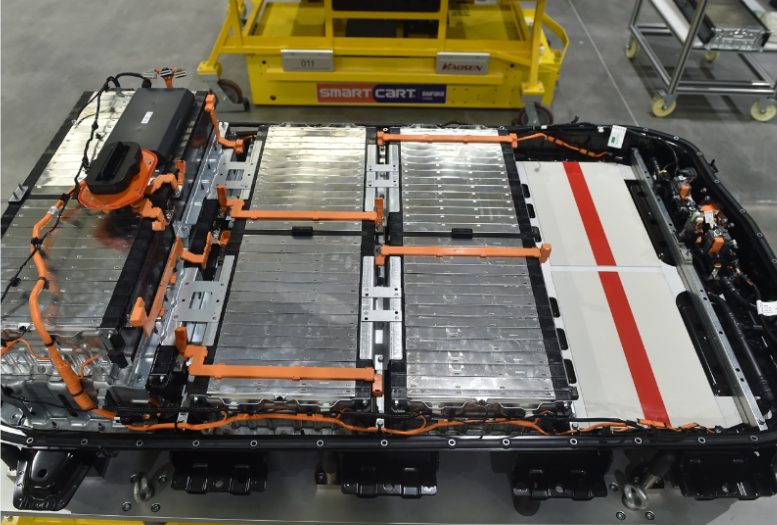
1. A Single Metric for the Real State of an Electric Vehicle Power Battery
The new standard uses SOCE, or State of Usable Energy, as the unified measure for evaluating onboard power battery durability. In simple terms, SOCE is the ratio between the energy currently available from the power battery and the energy that was available from the same power battery when the vehicle was new. This makes SOCE a practical indicator of how close the power battery remains to its original usable condition.
The logic can be illustrated with a straightforward example. If a new electric vehicle’s power battery can store enough energy to support 500 kilometers of driving, and after several years of use the power battery can store enough energy to support 400 kilometers of driving, then the SOCE is 400 divided by 500, or 80 percent. The higher the SOCE value, the more usable energy remains in the power battery and the closer the vehicle’s range is likely to be to its new condition. The lower the SOCE value, the more serious the decline in power battery performance.
This approach gives consumers a clearer understanding of power battery condition than a vague impression based on range alone. Range can be affected by driving style, weather, road conditions, heating and cooling, load and other factors. SOCE focuses on the usable energy state of the power battery itself. It provides a common language for discussing power battery durability and creates a foundation for comparing vehicles, evaluating warranty questions and tracking changes over time.
The use of SOCE also supports a more transparent relationship between drivers and vehicle manufacturers. When the condition of a power battery is expressed through a defined metric, it becomes easier to explain what has changed and why. The standard does not ask consumers to interpret complex engineering data. It reduces the issue to a ratio that can be understood at a glance. For a driver who wants to know whether a power battery still has most of its original capability, SOCE provides a direct answer.
The importance of this metric extends beyond individual vehicles. A consistent method for describing power battery durability helps the entire market speak the same language. It allows used electric vehicle buyers to ask for meaningful power battery information. It allows service providers to discuss power battery condition with greater clarity. It allows manufacturers to present power battery performance in a way that can be checked against a standard. In each case, SOCE acts as a practical reference point for the power battery.
2. Disclosure Rules Turn Power Battery Health into Verifiable Information
The standard does not stop at defining a metric. It also sets disclosure requirements for SOCE data. Under the standard, vehicles must provide SOCE information to consumers, and the difference between the displayed value and the measured value must not exceed 5 percent. This requirement is intended to ensure that the power battery information available to drivers is not only present but also reliable.
Consumers can access SOCE values through the vehicle’s central display or through the manufacturer’s official app. This means that power battery condition can become part of normal vehicle ownership rather than a hidden or uncertain matter. A driver does not need to rely on guesswork, informal estimates or secondhand claims. The SOCE figure provides a defined reference for the remaining usable energy of the power battery, and the 5 percent accuracy requirement places a limit on how far the displayed figure may deviate from the measured figure.
The disclosure requirement is significant because it addresses a common source of doubt. Many electric vehicle owners have wondered whether the battery health number shown by a vehicle is accurate, whether it is calculated in a consistent way, or whether it fully reflects the real condition of the power battery. The new standard responds by requiring that SOCE information be provided and by setting a clear tolerance for displayed data. The intent is to ensure that power battery information is truthful and credible, without exaggeration or cosmetic presentation.
For consumers, this changes the nature of the conversation around power battery durability. Instead of asking whether a battery health figure is believable, owners can refer to a standard-backed SOCE value. Instead of relying on range estimates alone, they can look at the usable energy state of the power battery. Instead of treating power battery condition as an uncertain subject, they can monitor it through a defined indicator. The result is a more informed ownership experience and a stronger basis for discussions about maintenance, resale and warranty coverage.
The 5 percent tolerance should be understood as a data accuracy requirement. It is not a statement that a power battery will lose only 5 percent of its usable energy over time. It is a limit on the difference between what is displayed and what is measured. This distinction is important. The standard uses one number to protect the credibility of power battery information and other numbers to describe durability expectations at specific vehicle age and mileage checkpoints. Together, these provisions create a more complete framework for power battery transparency.
3. Minimum Performance Requirements Create a Floor for Power Battery Durability
The new standard also sets minimum performance requirements, or MPR, for electric vehicle power battery durability. These requirements apply at specific mileage and time checkpoints: five years or 100,000 kilometers, eight years or 160,000 kilometers, and ten years or 200,000 kilometers. At each checkpoint, the standard uses SOCE as the measuring standard for MPR indicators. This creates a structured way to evaluate power battery performance over the life of a light vehicle.
The MPR provisions are described as a minimum performance bottom line. In practical terms, they give consumers a baseline expectation for power battery durability at defined stages of ownership. The standard does not leave durability to general promises or broad statements. It links power battery performance to specific time and distance milestones and uses SOCE to express the result. This approach gives the power battery a measurable standard against which performance can be assessed.
The standard also recognizes that not all light vehicles are used in the same way. It sets differentiated MPR indicators for light passenger vehicles and light commercial vehicles. This differentiation reflects the fact that these vehicle categories can have different operating patterns and different demands on the power battery. A light passenger vehicle may be used mainly for commuting, family travel and daily errands, while a light commercial vehicle may be used for goods delivery, service routes or other business activities. By providing category-specific MPR indicators, the standard aims to be more closely aligned with real-world vehicle use.
The use of multiple checkpoints is important for consumers because power battery durability is not a single moment in time. It is a process that unfolds over years and kilometers. The five-year or 100,000-kilometer checkpoint addresses the medium-term condition of the power battery. The eight-year or 160,000-kilometer checkpoint extends the view further into the vehicle’s service life. The ten-year or 200,000-kilometer checkpoint provides a long-term reference. Together, these checkpoints allow power battery durability to be evaluated in stages rather than through a single snapshot.
For manufacturers, the MPR framework provides a clear durability target for power battery development and validation. It encourages engineering teams to consider how the power battery will perform not only when new but also after years of real-world operation. It supports the design of testing and evaluation methods that reflect the long-term behavior of the power battery. It also reinforces the importance of accurate power battery state estimation, because SOCE-based requirements depend on reliable measurement and reporting.
4. Why Different Vehicle Categories Matter for Power Battery Standards
The standard’s differentiated approach for light passenger vehicles and light commercial vehicles reflects a practical understanding of the market. These vehicles may share the same broad category of light vehicles, but their usage patterns can differ significantly. The power battery in a passenger vehicle may experience different charging habits, daily distances and load conditions than the power battery in a commercial vehicle. A standard that ignored these differences would risk setting expectations that do not match actual use.
By setting differentiated MPR indicators, the standard allows power battery durability requirements to be more closely connected to the real operating environment of each vehicle type. This does not weaken the value of a common SOCE metric. On the contrary, it strengthens the framework by combining a unified measure of power battery usable energy with category-specific performance expectations. The result is a standard that speaks a common language while recognizing practical differences.
This structure is also useful for consumers and businesses. A private owner of a light passenger vehicle can refer to the requirements that apply to that category. A business operating light commercial vehicles can refer to the requirements designed for its use case. Both groups benefit from a clearer understanding of what power battery durability should look like at defined checkpoints. Both groups can use SOCE information to track the condition of the power battery over time.
The category-specific approach may also support more informed purchasing decisions. Buyers of light passenger vehicles can consider power battery durability alongside range, charging performance and other ownership factors. Buyers of light commercial vehicles can consider how the power battery is expected to perform under business use. In both cases, the standard provides a reference point for evaluating power battery claims and for understanding the long-term value of the vehicle.
5. What the Standard Means for Owners of Electric Vehicles with a Power Battery
For electric vehicle owners, the most immediate benefit of the standard is clarity. The power battery is a central and valuable component of an electric vehicle, and its long-term condition has a direct effect on range, usability and resale value. The new standard makes power battery durability more visible through SOCE, more credible through the 5 percent disclosure tolerance, and more predictable through MPR checkpoints. This combination gives owners a stronger basis for understanding the condition of their vehicles.
Owners can monitor SOCE through the central display or the manufacturer’s official app. This makes it possible to follow changes in power battery condition over time. Instead of wondering whether a range change is normal or whether a battery health figure is reliable, owners can refer to a defined indicator. The SOCE value provides a practical way to understand how much usable energy remains in the power battery compared with its new condition.
The standard may also help reduce disputes over warranty coverage. When power battery condition is expressed through a standard metric and displayed within a defined accuracy tolerance, discussions about durability can be based on shared information. Consumers have a clearer reference for what the power battery should deliver at specific age and mileage checkpoints. Manufacturers have a clearer framework for explaining power battery performance. This can make conversations about warranty claims more focused and less dependent on subjective impressions.
For buyers in the used electric vehicle market, the standard offers a potentially valuable tool for assessing power battery condition. A used vehicle’s power battery may have experienced different charging patterns, climate conditions and driving habits. SOCE information can help a buyer understand the remaining usable energy state of the power battery. The MPR checkpoints can provide context for what might be expected at a given age and mileage. This does not remove the need for a proper vehicle inspection, but it adds a standardized power battery indicator to the information available to buyers.
Owners should also understand that the standard is a framework, not a guarantee that every power battery will perform identically. Real-world power battery durability can be influenced by many factors, including usage patterns, charging behavior, temperature exposure and maintenance. The standard provides a common measurement and disclosure structure, but individual vehicles may still vary. The value of the standard lies in making power battery information more consistent, comparable and transparent.
6. What It Means for Manufacturers and the Power Battery Industry
For vehicle manufacturers and the power battery industry, the new standard sends a clear signal about the importance of long-term durability. It encourages companies to increase investment in accurate power battery life evaluation and long-life power battery technology. The standard’s focus on SOCE, disclosure accuracy and MPR checkpoints creates a framework in which power battery durability can be designed, tested and communicated with greater precision.
The requirement for SOCE disclosure within a 5 percent tolerance places attention on the accuracy of power battery state estimation. Manufacturers need to ensure that the information provided to consumers reflects the actual usable energy state of the power battery. This supports the development of more reliable algorithms, sensors and evaluation methods. It also encourages consistency between laboratory testing, real-world performance and consumer-facing information.
The MPR checkpoints give manufacturers a long-term durability target. They encourage engineering teams to consider power battery performance at five years or 100,000 kilometers, eight years or 160,000 kilometers, and ten years or 200,000 kilometers. This long-term view is important because power battery durability is not only about initial performance. It is about maintaining usable energy over the life of the vehicle. By setting minimum performance requirements at defined milestones, the standard supports the development of power batteries that can meet consumer expectations over time.
The standard also aligns with a broader shift in the industry from scale expansion toward quality improvement. As the electric vehicle market grows, competition increasingly depends on product quality, reliability and long-term user experience. The power battery is at the center of that experience. A durable power battery can support stronger resale value, greater consumer confidence and a better reputation for the vehicle brand. A transparent power battery evaluation system can help manufacturers demonstrate the quality of their products and differentiate themselves in a competitive market.
The recommended nature of the standard is also noteworthy. It is currently a recommended national standard, and it is expected to be promoted across the industry in the future. This approach allows the market to adopt the framework, build experience and prepare for broader use. For manufacturers, it provides an opportunity to align product development and consumer communication with a common durability language. For the power battery industry, it supports the creation of a more standardized and trustworthy information environment.
7. How to Read the Standard’s Key Numbers
The standard contains several different types of numbers, and understanding their roles helps avoid confusion. The 5 percent figure is a disclosure accuracy tolerance for SOCE. The five-year or 100,000-kilometer, eight-year or 160,000-kilometer, and ten-year or 200,000-kilometer figures are durability checkpoints. SOCE itself is a ratio that compares current usable energy with new usable energy. MPR is the minimum performance requirement applied at those checkpoints. Each element plays a distinct role in the overall framework.
| Element | Provision in the Standard | What It Means for the Power Battery |
|---|---|---|
| SOCE | State of Usable Energy, calculated as current usable energy divided by new usable energy | Provides a unified indicator of the remaining usable energy state of the power battery |
| Disclosure accuracy | Displayed SOCE value and measured value must differ by no more than 5 percent | Supports credible, verifiable information about the power battery |
| MPR checkpoint one | Five years or 100,000 kilometers | Sets a minimum performance reference for the power battery at a medium-term stage |
| MPR checkpoint two | Eight years or 160,000 kilometers | Extends the durability reference further into the service life of the power battery |
| MPR checkpoint three | Ten years or 200,000 kilometers | Provides a long-term minimum performance reference for the power battery |
| Vehicle categories | Differentiated MPR indicators for light passenger vehicles and light commercial vehicles | Aligns power battery durability expectations with different real-world use patterns |
| Consumer access | SOCE information available through the central display or the manufacturer’s official app | Makes power battery condition visible during normal vehicle use |
The table shows that the standard is not built around a single number. It combines a measurement metric, an accuracy requirement and a set of durability checkpoints. This structure gives consumers multiple layers of information about the power battery. SOCE explains the current usable energy state. The disclosure tolerance protects the credibility of that information. The MPR checkpoints provide a long-term performance reference. The category-specific approach makes the framework more relevant to different types of light vehicles.
8. A Recommended Standard with Room for Broader Adoption
The standard is currently a recommended national standard. This status is an important part of its role in the market. It provides a common framework that can be adopted and promoted across the industry. The expectation is that the standard will be promoted for wider use in the future. As adoption grows, the benefits of consistent power battery evaluation and disclosure can extend to more consumers, more manufacturers and more segments of the electric vehicle market.
A recommended standard can serve as a reference for product development, consumer information and industry practice. It can help build consensus around how power battery durability should be measured and communicated. It can also support the development of related testing methods, data systems and consumer education. Over time, broader adoption can make SOCE a familiar indicator for electric vehicle owners and a common reference in discussions about power battery condition.
For consumers, broader adoption could mean greater consistency in how power battery information is presented. A driver comparing different vehicles could look for SOCE information and understand what it represents. A used vehicle buyer could ask for SOCE data and interpret it with reference to the standard. A fleet operator could use SOCE to track the condition of power batteries across multiple vehicles. The more widely the standard is used, the more useful the common language becomes.
For manufacturers, broader adoption could support fair competition based on real power battery durability. Companies that invest in long-life power battery technology and accurate state evaluation can benefit from a framework that recognizes and communicates those qualities. Companies that provide transparent SOCE information can build trust with consumers. The standard does not replace product differentiation, but it gives durability claims a common reference point.
9. A Clearer Future for Power Battery Durability
The new standard marks an important step in the development of electric vehicle power battery durability evaluation. It moves the discussion from general impressions to a defined metric. It moves consumer information from uncertain estimates to a disclosure requirement with a clear accuracy tolerance. It moves long-term durability from a broad promise to a set of minimum performance checkpoints. These changes are relevant to drivers, manufacturers, service providers, used vehicle buyers and the wider power battery industry.
For electric vehicle owners, the standard offers a practical way to answer a long-standing concern. The condition of the power battery can be expressed through SOCE, accessed through the vehicle display or official app, and evaluated against MPR checkpoints at defined stages of ownership. This makes the power battery more understandable and the ownership experience more transparent. It also provides a stronger foundation for discussions about warranty coverage and vehicle value.
For the industry, the standard supports a shift toward quality and long-term performance. It encourages investment in accurate power battery evaluation and long-life power battery technology. It promotes consistency in how power battery durability is tested, reported and communicated. It aligns consumer information with engineering performance and creates a common language for the market.
The electric vehicle power battery is a key component of the transition to cleaner transportation. Its durability affects consumer confidence, vehicle value and the long-term sustainability of the electric vehicle market. By establishing a unified evaluation scale, a credible disclosure requirement and a minimum performance framework, the new standard gives the power battery a clearer role in the consumer experience. It helps turn a complex technical subject into information that drivers can understand and use.
As the standard is promoted and adopted more widely, its impact will depend on implementation, data accuracy and consumer awareness. The framework is now in place. The next stage is to put it into practice across the industry, so that every electric vehicle owner can have a clearer answer to a simple but important concern: how much usable energy remains in the power battery, and what does that mean for the vehicle’s future performance. The new standard provides the basis for that answer, and it gives the power battery a more transparent and measurable place in the electric vehicle market.