
The global expansion of new energy vehicles has moved the power battery from a behind-the-scenes component to a front-and-center purchase consideration. For consumers in many markets, the power battery is no longer viewed only as the source of driving energy. It is increasingly treated as a measure of vehicle safety, product quality, technological capability and long-term value. That shift is changing the way consumers compare models, assess brands and decide how much they are willing to pay for a new energy vehicle.
A newly released consumer research report from NielsenIQ, titled the 2026 Global New Energy Vehicle Consumer Research Report, shows that consumers in different regions bring different priorities to the showroom. Some see a new energy vehicle as a family-oriented mobile third space. Others connect the purchase with pet-friendly travel and environmental values. Still others regard the purchase as a sign of rising income and social advancement. Yet when consumers are asked why they choose a new energy vehicle, their answers converge around a small set of shared benefits: lower usage costs, environmental friendliness and progress in power battery technology.
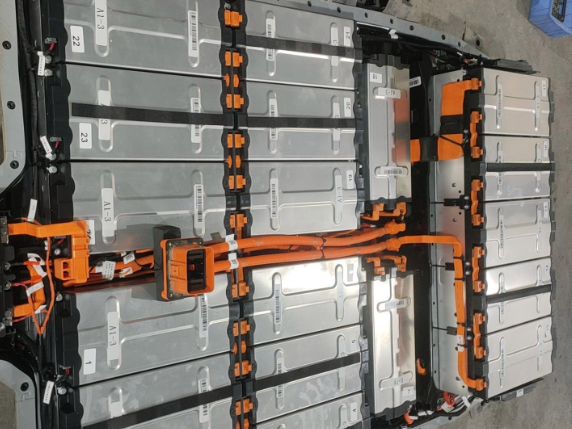
The power battery sits at the intersection of those benefits. It influences how far a vehicle can travel, how quickly it can be recharged, how safe it is in daily use and how well it retains value over time. As a result, the power battery has become a key factor in the global consumer decision process. The report shows that most consumers regard the power battery as a core factor in the safety and overall quality of a new energy vehicle. Eighty percent of respondents identified the power battery as the key factor determining new energy vehicle safety, and the same share linked the quality level of the power battery with the quality level of the whole vehicle.
That finding has broad implications for automakers, battery manufacturers, dealers and policymakers. A vehicle brand can no longer separate its safety story from its power battery story. A power battery supplier can no longer be viewed as an anonymous part of the supply chain. Consumers are paying attention to the power battery brand, the power battery technology and the power battery performance record. The power battery is becoming part of the public identity of the vehicle itself.
-
The Power Battery Becomes a Defining Factor in Safety and Quality
The most striking message from the report is that the power battery has become a consumer-facing safety issue. In the past, many buyers focused on collision protection, braking systems and body structure when they evaluated vehicle safety. Those factors remain important, but the power battery now occupies a central place in the safety conversation. Consumers understand that the power battery is a large, complex and high-energy system. They also understand that its behavior can affect the overall safety of the vehicle in everyday use, during charging and over the full life of the product.
The report’s finding that eighty percent of respondents see the power battery as the key factor in new energy vehicle safety is therefore more than a statistic. It is a signal that the power battery has become a trust marker. When a consumer asks about the power battery, the consumer is often asking a broader question: Is this vehicle engineered to a high standard? Is the manufacturer transparent about its power battery choices? Does the power battery brand have a credible record? Will the power battery remain dependable after several years of use?
The same logic applies to quality. The report shows that most consumers believe the quality level of the power battery represents the quality level of the whole vehicle. This is a significant shift in consumer psychology. The power battery is no longer judged only by capacity or range. It is judged as an indicator of manufacturing discipline, system integration, thermal management, electronic control and long-term durability. A high-quality power battery can therefore elevate the perceived quality of the entire vehicle, while a weak power battery can undermine confidence in the vehicle regardless of other features.
For the industry, this means that communication around the power battery must be clear, verifiable and consistent. Consumers are not merely asking for a larger power battery. They are asking for a safer power battery, a more durable power battery and a more intelligently managed power battery. The power battery has become a proof point for the vehicle’s broader engineering quality.
-
Shared Reasons for Choosing New Energy Vehicles Point Back to the Power Battery
The report identifies three leading reasons why global consumers choose new energy vehicles: lower usage costs, environmental friendliness and progress in power battery technology. Each of these reasons is connected to the power battery. Lower usage costs depend on the efficiency of the power battery and the vehicle’s energy management. Environmental benefits depend on the lifecycle performance of the power battery and the broader energy system. Technological progress is embodied directly in the power battery through improved safety, longer service life, better charging performance and more reliable operation in different conditions.
The power battery therefore functions as a bridge between consumer value and industrial capability. When consumers say they are attracted by lower usage costs, they are implicitly evaluating the power battery’s efficiency and durability. When they say they value environmental friendliness, they are implicitly considering the power battery’s resource intensity and lifecycle impact. When they say they are encouraged by technological progress, they are often responding to visible improvements in the power battery products available in the market.
The report also shows that consumer priorities vary by region. In China, many consumers treat the car as a family-oriented mobile third space and pay close attention to interior space. In Northern Europe, consumers are more likely to value pet-friendly travel and environmental lifestyles. In Southeast Asia, consumers often see the purchase of a new energy vehicle as a marker of rising income and social advancement. These differences shape the way vehicles are positioned, designed and marketed.
Even so, the common thread remains the power battery. A family-oriented mobile third space still requires a safe and reliable power battery. A pet-friendly lifestyle still depends on a power battery that supports flexible travel. A symbol of upward mobility still needs a power battery that delivers confidence and everyday usability. The power battery is the common foundation beneath different regional purchase stories.
-
Decision Weight: The Power Battery Rises Alongside Intelligence and Driving Performance
The report provides a detailed view of how consumers weigh different vehicle attributes. At the global level, intelligence accounts for 8.7 percent of the purchase decision weight, driving performance accounts for 8.6 percent and the power battery accounts for 8.4 percent. These figures place the power battery in the same decision-making tier as two of the most visible and heavily marketed features of modern new energy vehicles. The power battery is not a niche concern. It is a mainstream purchase criterion.
The regional picture is even more revealing. For Chinese consumers, the importance of the power battery rises to 13.8 percent. At that level, the power battery attracts more attention than intelligence and driving performance and becomes the second most important core factor after whole-vehicle safety. This does not mean that Chinese consumers ignore intelligence or driving performance. Rather, it shows that the power battery has become a foundational concern that shapes how other features are evaluated. A vehicle may offer advanced intelligence and strong driving performance, but if the power battery does not inspire confidence, the overall purchase case weakens.
Consumers in Southeast Asia and Northern Europe also place strong emphasis on the actual performance of the power battery. Their specific priorities differ, but the underlying message is similar: the power battery must perform in real-world conditions. It must be safe, durable and convenient to recharge. It must support the use patterns that consumers actually experience, not only the laboratory conditions that appear in promotional materials.
The rising decision weight of the power battery has practical consequences for product planning. Automakers need to decide which power battery technologies to offer, how to explain power battery safety, how to guarantee power battery durability and how to integrate the power battery into the overall vehicle experience. The power battery is no longer a specification line buried in a brochure. It is a central part of the value proposition.
Reported Indicator Figure Respondents who identified the power battery as the key factor in new energy vehicle safety 80 percent Respondents who associated power battery quality with overall vehicle quality 80 percent Global purchase decision weight for intelligence 8.7 percent Global purchase decision weight for driving performance 8.6 percent Global purchase decision weight for the power battery 8.4 percent Importance of the power battery for Chinese consumers 13.8 percent Power battery sales from January to July 790.4 GWh Year-on-year growth in power battery sales 37.1 percent Chinese companies among the global top ten battery companies by installed capacity 6 Combined market share of those Chinese companies More than 70 percent Year-on-year increase in that combined share 3 percentage points -
Regional Priorities Show a Shared Focus on Power Battery Performance
Consumers generally care about power battery capacity degradation, service life, safety levels and charging efficiency. However, the report shows that different regions emphasize different aspects of power battery performance. Chinese consumers place the greatest importance on power battery safety and driving range. Southeast Asian consumers are especially sensitive to charging costs. Consumers in Western and Northern Europe treat charging speed as a primary concern.
These differences reflect different mobility environments and different consumer expectations. In China, the power battery must support a wide range of daily journeys, family travel patterns and high levels of vehicle utilization. Safety and range therefore become immediate, practical concerns. In Southeast Asia, charging costs can shape the total cost of ownership and influence daily decisions about when and where to recharge. In Western and Northern Europe, charging speed can affect long-distance travel, winter usage and the overall convenience of living with a new energy vehicle.
The power battery industry cannot treat these regional priorities as secondary details. A power battery strategy that works in one market may not work in another. The power battery must be adapted to local usage patterns, local charging infrastructure and local consumer expectations. This is one reason why power battery development is becoming more integrated with vehicle development, market research and after-sales service.
The report’s regional findings also reinforce a broader point: consumers are not evaluating the power battery in isolation. They are evaluating how the power battery performs within their own lives. The power battery that wins confidence is the one that delivers safety, range, charging convenience and cost control in the conditions that consumers actually face. The power battery is therefore both a technical product and a consumer experience.
-
Consumers Recognize Power Battery Brand Differences and Are Willing to Pay for Quality
The report shows that consumers can perceive clear differences in quality and technology among power battery brands. This is a major development for the industry. It means that the power battery brand can influence the vehicle brand. It also means that consumers are willing to raise their purchase intention for models equipped with high-quality branded power batteries, and they are even willing to pay additional costs for such power batteries.
This finding changes the economics of the power battery. When consumers recognize and value the power battery brand, the power battery becomes more than a cost item. It becomes a value driver. A well-regarded power battery can support a higher price, strengthen customer confidence and improve the overall market position of a vehicle. A poorly regarded power battery can create hesitation, reduce conversion and damage the reputation of the vehicle.
The report notes that Chinese power battery brands such as CATL and BYD have already gained broad consumer recognition overseas. That recognition is significant because it shows that power battery leadership can travel across borders. Consumers in overseas markets are not automatically loyal to established local or regional suppliers. They are willing to recognize power battery brands that demonstrate quality, technology and reliability.
For automakers, the lesson is that power battery sourcing is also brand strategy. The choice of power battery partner can affect consumer perception before a customer ever drives the vehicle. For power battery manufacturers, the lesson is that consumer trust is an asset that must be earned through consistent performance, transparency and service. The power battery market is becoming a consumer market, not only an industrial market.
-
Chinese Power Battery Companies Deepen Global Integration
In recent years, Chinese power battery industry chain companies have deepened their integration into the global industrial system through overseas plant construction, research and development centers and technology cooperation. This integration supports local production, local employment and local innovation while also strengthening the global supply of power batteries. It reflects a broader shift from exporting products to building capacity, partnerships and service networks in key markets.
The power battery industry is capital-intensive, technology-intensive and quality-intensive. Building a local power battery plant or research center requires long-term commitment. It also requires close coordination with automakers, local suppliers, regulators and consumers. The global integration of Chinese power battery companies therefore represents more than geographic expansion. It represents the transfer of manufacturing know-how, quality systems and engineering capabilities into a wider international ecosystem.
This integration is important for consumers because it can improve the availability of high-quality power batteries, shorten supply chains and support faster after-sales response. It is also important for the global transition to cleaner transport because a reliable power battery supply is essential to the stable production of new energy vehicles. The power battery is a global product, and its supply chain must be resilient, transparent and efficient.
The report’s consumer findings and the industry’s global integration reinforce each other. As consumers pay more attention to the power battery, they create demand for higher-quality power battery products. As power battery companies deepen their global integration, they build the capacity to meet that demand. The result is a more consumer-driven and more globally connected power battery market.
-
Industry Data Shows Scale, Competitiveness and Contribution
The Power Battery Industry Development Index, recently released by a research group of the Equipment Industry Development Center of the Ministry of Industry and Information Technology, shows that China’s power battery industry maintained a sound growth trend from January to July. Cumulative sales reached 790.4 GWh, up 37.1 percent year on year. That growth reflects continued demand for power batteries in new energy vehicles and the broader energy storage and electrification transition.
At the enterprise competitiveness level, six Chinese companies rank among the global top ten battery companies by installed capacity. Their combined market share exceeds 70 percent, an increase of 3 percentage points from the previous year. These figures show that Chinese power battery companies have achieved significant scale and competitive strength in the global market. They also show that the power battery industry is highly concentrated, with a small number of leading companies shaping technology, cost and quality standards.
The center’s director noted that China’s high-quality power battery product supply has made a positive contribution to the steady development of the global new energy vehicle industry and to the green and low-carbon energy transition. That contribution is not limited to volume. It also includes product quality, technological progress and supply chain stability. The power battery is a strategic industry, and its development has implications for energy security, industrial policy and climate goals.
For consumers, these industry figures may seem distant from the showroom, but they are closely connected. Scale supports investment in research and development. Competition supports faster improvement in power battery safety, durability and charging performance. A strong and stable power battery supply chain supports the availability of vehicles and after-sales service. The power battery industry’s health therefore shapes the consumer experience of new energy vehicles.
-
The Power Battery as a Global Purchase Compass
The central message of the report is that the power battery has become a global purchase compass. It helps consumers navigate a complex market. It helps automakers define their product stories. It helps power battery manufacturers understand what consumers value. It helps policymakers see where quality, safety and innovation matter most.
In China, the power battery is second only to whole-vehicle safety in consumer importance, and it outranks intelligence and driving performance in decision weight. In Southeast Asia, the power battery is judged through charging cost and everyday affordability. In Western and Northern Europe, the power battery is judged through charging speed and long-distance convenience. In every region, the power battery is linked to safety, quality and trust.
The power battery has therefore become a shared language for the global new energy vehicle market. A consumer may not know the details of electrochemical design, thermal management or battery management systems, but the consumer can understand the meaning of a safe power battery, a durable power battery and a trustworthy power battery. The power battery is the point where engineering complexity becomes consumer confidence.
The next phase of competition will not be decided only by vehicle features. It will be decided by the ability to deliver a power battery that consumers can trust. That means safer power battery systems, longer-lasting power battery performance, faster and more convenient charging, clearer power battery branding and stronger global service networks. The power battery will continue to shape how consumers choose vehicles, how automakers differentiate products and how the global new energy vehicle industry develops.
The report’s findings make one point clear: the power battery is no longer a hidden component. It is a central factor in safety, a signal of quality, a driver of purchase intention and a defining element of global car-buying logic. As the market matures, the power battery will remain one of the most important measures of whether a new energy vehicle is truly ready for the consumer.
The global consumer has spoken through the report’s findings. Safety, quality, durability, charging efficiency and brand trust all converge on the power battery. The power battery is not simply part of the vehicle. It is part of the promise that the vehicle makes to the consumer. That promise will define the next stage of growth for the global new energy vehicle market.