
I have followed the solid state cell industry long enough to recognize a familiar pattern: a period of extreme narrative excitement, followed by a necessary correction, and then a slower, more technical, and ultimately more consequential phase of engineering work. In my view, the current moment for the solid state cell is not a retreat from the future. It is the beginning of the hard part. The solid state cell is moving away from pure concept marketing and into a stage where pilot lines, yield learning, cost control, standardization, and repeatable validation matter more than headline claims. I see this as a healthy transition, because no energy storage technology can scale on enthusiasm alone.
The solid state cell has always carried a promise that is easy to describe and difficult to manufacture. A solid electrolyte can, in principle, enable higher energy density, improved safety, faster charging, and a wider operating window than conventional liquid-electrolyte lithium-ion cells. Yet the same properties that make the solid state cell attractive also create stubborn engineering problems: solid-solid interfaces, stack pressure, dendrite penetration, dimensional change, process compatibility, and the need for extremely low defect rates. I do not interpret the recent skepticism as evidence that the solid state cell has failed. I interpret it as evidence that the solid state cell has entered the phase where physics and manufacturing economics become the main judges.
What I find most important now is that the solid state cell conversation has shifted from whether the technology is possible to how it can be industrialized. I see progress in standards, policy direction, engineering validation, and supply chain preparation. These are not glamorous milestones, but they are the milestones that determine whether a solid state cell can leave the laboratory and enter a vehicle, a grid storage cabinet, or a specialty application at scale. The solid state cell industry is not cooling down in a fundamental sense. It is accumulating the engineering discipline needed for the next stage.
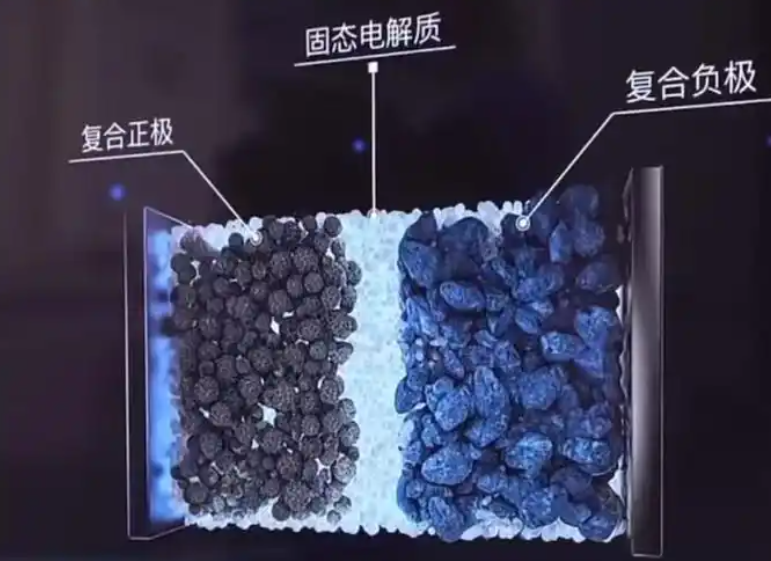
My first principle: industrialization is a relay, not a sprint. I often remind myself that liquid lithium-ion batteries did not become a global industry overnight. They moved from laboratory research to commercial products over a period of roughly three decades, with many cycles of material improvement, process refinement, safety validation, and cost reduction. The solid state cell should be expected to follow a similarly long arc. A solid state cell has different materials and different failure modes, but the logic of scale-up is similar: discovery must become repeatability, repeatability must become yield, yield must become cost, and cost must become market adoption. The solid state cell cannot skip these steps.
I therefore look at the solid state cell through a stage-gate model. Each stage has different evidence requirements. In the laboratory, a solid state cell can be judged by material-level metrics such as ionic conductivity, electrochemical stability window, and cycle life in small coin cells. In a pilot line, the solid state cell must be judged by areal capacity, stacking yield, pressure management, and formation efficiency. In pre-production, the solid state cell must be judged by cost per kilowatt-hour, defect escape rate, and automotive-grade validation. In mass production, the solid state cell must be judged by customer acceptance, warranty performance, and supply chain resilience. I see too many public discussions mixing these stages together, which creates confusion and unrealistic expectations.
| Stage | Dominant Activity | Evidence I Look For | My Assessment of the Solid State Cell Today |
|---|---|---|---|
| Concept exploration | Material discovery, theoretical energy density, academic demonstrations | Papers, patents, small coin-cell data, credible failure analysis | Strong and still expanding, but not sufficient for scale |
| Laboratory validation | Electrolyte formulation, interface coatings, half-cell and full-cell cycling | Reproducible Coulombic efficiency, pressure control, cycle life | Improving, with many material systems still competing |
| Pilot line construction | Coating, sintering, stacking, densification, formation, inspection | Line availability, yield data, scrap rate, throughput | The decisive phase now underway for many solid state cell designs |
| Engineering validation | Cell-to-pack integration, thermal management, abuse testing | Repeatable performance under real duty cycles | Early but accelerating, especially in selected vehicle programs |
| Pre-production | Process capability, cost modeling, supplier qualification | Cost per kilowatt-hour, defect parts per million, warranty models | Not yet mature for most solid state cell routes |
| Mass production | High-volume manufacturing, quality systems, after-sales data | Stable supply, field reliability, competitive economics | The long-term destination, not the near-term reality |
My second principle: market heat and technical progress are different variables. I can observe a decline in speculative attention without concluding that the solid state cell is losing technical momentum. Speculative attention tends to follow stories, while technical progress follows experiments. The solid state cell is now in a phase where the most valuable news is often not a dramatic breakthrough but a lower interface resistance, a higher stacking yield, a longer pilot-line uptime, or a clearer test standard. I see these as leading indicators. When a solid state cell developer reports that a pilot line has achieved a certain yield, I pay more attention than when a press release claims a revolutionary energy density without disclosing test conditions.
The solid state cell industry is also discovering that different applications have different requirements. A solid state cell for a premium electric vehicle may prioritize energy density and fast charging. A solid state cell for grid storage may prioritize cost, cycle life, and safety. A solid state cell for aerospace or medical devices may prioritize reliability and operating temperature. I do not believe there will be one universal solid state cell chemistry or one universal manufacturing process. Instead, I expect a family of solid state cell platforms, each optimized for a specific duty cycle. This diversification is a sign of maturity, not fragmentation.
My third principle: the timeline must respect diffusion, reaction, and mechanics. The solid state cell is not merely a materials problem. It is a coupled problem involving ion transport, electron transport, electrochemical reactions, mechanical stress, thermal gradients, and manufacturing tolerances. I can express the coupling in simplified form. The effective ionic conductivity of a composite solid electrolyte depends on porosity, tortuosity, and grain boundary resistance:
$$ \sigma_{eff} = \frac{\sigma_{bulk} (1 – \phi)}{\tau} $$
where $$ \sigma_{eff} $$ is the effective ionic conductivity, $$ \sigma_{bulk} $$ is the bulk conductivity, $$ \phi $$ is porosity, and $$ \tau $$ is tortuosity. For a solid state cell, even a small increase in porosity or tortuosity can reduce the achievable current density and increase the overpotential. This is why laboratory results obtained under high stack pressure or in thin pellets do not automatically translate into large-format solid state cell performance.
The temperature dependence of ionic transport is often described by an Arrhenius relationship:
$$ \sigma(T) = \sigma_0 \exp\left(-\frac{E_a}{k_B T}\right) $$
where $$ E_a $$ is the activation energy, $$ k_B $$ is the Boltzmann constant, and $$ T $$ is temperature. I use this equation to assess whether a solid state cell material can operate at room temperature without excessive heating. A low activation energy is desirable, but it must be combined with electrochemical stability, mechanical robustness, and manufacturability. A solid state cell that requires high temperature or high pressure to function is not yet an industrially attractive solid state cell.
The interfacial resistance of a solid state cell can be decomposed into several contributions:
$$ R_{cell} = R_{bulk} + R_{grain} + R_{cathode|SE} + R_{anode|SE} + R_{contact} $$
Each term represents a different physical barrier. $$ R_{bulk} $$ is the resistance inside the electrolyte, $$ R_{grain} $$ is the grain boundary resistance, $$ R_{cathode|SE} $$ and $$ R_{anode|SE} $$ are interfacial resistances between the electrodes and the solid electrolyte, and $$ R_{contact} $$ includes current collector and stack contact resistance. I see interface engineering as the single most important technical battleground for the solid state cell. Without low and stable interfacial resistance, the solid state cell cannot deliver high power, long cycle life, or consistent performance.
| Solid State Cell Bottleneck | Physical or Chemical Origin | Manifestation | Engineering Countermeasure | My Readiness Assessment |
|---|---|---|---|---|
| Interfacial resistance | Poor solid-solid contact, space charge layers, side reactions | High overpotential, low power, heat generation | Coatings, interlayers, pressure control, surface treatment | Improving but still a major yield and life limiter |
| Dendrite penetration | Non-uniform plating, defects, grain boundaries, local current density | Short circuit, thermal runaway risk, sudden failure | Dense electrolyte, interface engineering, stack pressure, current limits | Critical for lithium-metal solid state cell designs |
| Stack pressure | Volume change, electrode breathing, contact maintenance | Capacity fade, impedance rise, mechanical degradation | Compliant fixtures, optimized modulus, cell-to-pack pressure design | Often underestimated in early solid state cell claims |
| Manufacturing yield | Thin-film defects, cracks, misalignment, contamination | Scrap, inconsistent cells, low line utilization | Clean rooms, inline inspection, statistical process control | The central pilot-line challenge for the solid state cell |
| Cost | Expensive materials, low throughput, high capital intensity | High cost per kilowatt-hour, limited adoption | Material substitution, scale, yield improvement, process simplification | Long-term competitive potential, but not yet at mass-market parity |
| Standardization | Different test protocols, unclear safety metrics | Hard-to-compare claims, investment uncertainty | Industry standards for performance, safety, and recycling | Progressing and necessary for solid state cell scale |
My fourth principle: yield is the hidden language of the solid state cell. In my experience, yield is where ambitious solid state cell announcements meet reality. A solid state cell can be fabricated in a laboratory with careful manual assembly, but a pilot line must produce thousands or millions of repeatable cells. Total yield is a product of many process steps:
$$ Y_{total} = Y_{material} \times Y_{coating} \times Y_{stacking} \times Y_{densification} \times Y_{formation} \times Y_{inspection} $$
If each step has a yield of 95 percent, then after six steps the total yield is only about 73.5 percent. If each step has a yield of 90 percent, the total yield falls to about 53.1 percent. This arithmetic explains why pilot lines are so important. I can write the yield loss more explicitly:
$$ Y_{total} = \prod_{i=1}^{n} (1 – d_i) $$
where $$ d_i $$ is the defect or loss fraction at step $$ i $$. The solid state cell industry must reduce each $$ d_i $$ to very low levels. A single weak step, such as sintering-induced cracking or stacking misalignment, can dominate the entire line. I therefore look for solid state cell developers who publish yield curves, not just champion-cell data. Champion cells show what is possible. Yield curves show what is manufacturable.
| Process Step for a Solid State Cell | Typical Defect Mode | Why It Matters | Metric I Would Track |
|---|---|---|---|
| Electrolyte powder preparation | Particle size distribution, impurities, moisture | Affects sintering, conductivity, and interface stability | D50, impurity parts per million, moisture content |
| Electrode slurry or dry mixing | Agglomeration, binder distribution, porosity variation | Controls ionic and electronic percolation | Viscosity, solid content, uniformity |
| Coating and drying | Pinholes, cracks, thickness variation | Creates local current hotspots and premature failure | Areal loading, thickness sigma, defect density |
| Stacking and lamination | Misalignment, edge damage, delamination | Reduces active area and increases resistance | Alignment tolerance, peel strength, stack yield |
| Densification or sintering | Cracking, warping, grain growth, contamination | Determines mechanical integrity and ionic contact | Density, shrinkage, crack rate, grain size |
| Formation and aging | High impedance, gas generation, capacity loss | Reveals hidden interface and defect problems | Coulombic efficiency, impedance, capacity spread |
| Final inspection | Escape defects, inconsistent grading | Protects customer safety and warranty | Defect parts per million, outgoing quality |
My fifth principle: cost is a system property, not a material price tag. I often see solid state cell cost discussions focus on lithium metal, sulfide electrolytes, or oxide ceramics. Those material costs matter, but the cost of a solid state cell is determined by the entire system. I use a simplified cost formula:
$$ C_{kWh} = \frac{C_{material} + C_{process} + C_{yield} + C_{capital} + C_{quality}}{E_{pack} \times DOD \times \eta_{cycle}} $$
Here, $$ C_{material} $$ is material cost, $$ C_{process} $$ is conversion cost, $$ C_{yield} $$ is the cost penalty from scrap and rework, $$ C_{capital} $$ is depreciation and equipment cost, and $$ C_{quality} $$ is inspection and warranty cost. The denominator includes pack energy, depth of discharge, and cycle efficiency. A solid state cell with excellent material performance but poor yield and high capital intensity can still be expensive. Conversely, a solid state cell with moderate energy density but high yield and simple processing can be commercially attractive in certain applications.
The learning curve effect is also important. I expect the solid state cell to follow a cost reduction pattern similar to other manufactured technologies:
$$ C(Q) = C_0 \left(\frac{Q}{Q_0}\right)^{-b} $$
where $$ C(Q) $$ is cost at cumulative production $$ Q $$, $$ C_0 $$ is initial cost, and $$ b $$ is the learning elasticity. If $$ b $$ is positive, cost falls as cumulative production rises. For the solid state cell, the value of $$ b $$ will depend on how quickly manufacturers solve yield, automation, and supply chain bottlenecks. I see no reason why the solid state cell cannot learn, but I also see no reason to assume a fast learning rate before pilot lines generate real data.
| Cost Component for a Solid State Cell | Main Drivers | Near-Term Direction | Long-Term Direction |
|---|---|---|---|
| Solid electrolyte material | Raw material scarcity, synthesis complexity, purity | High and variable | Lower through scale and substitution |
| Anode material | Lithium metal, silicon, alloy foils, protective layers | Performance-driven, cost secondary | Cost reduction with mature supply |
| Cathode material | High-nickel, cobalt content, coating, compatibility | Similar to advanced lithium-ion | Optimized for solid state cell interfaces |
| Manufacturing process | Dry rooms, sintering, stacking, pressure management | High capital intensity, low yield | Automation and yield improvement |
| Quality and inspection | Inline metrology, X-ray, CT, electrochemical screening | Increasing as solid state cell matures | Standardized and data-driven |
| Pack integration | Pressure fixtures, thermal management, safety systems | Customized for early solid state cell designs | Platformized and optimized |
My sixth principle: standards turn a promising solid state cell into a comparable product. I cannot overstate the importance of standards. Without common test methods, different solid state cell developers can report energy density, cycle life, and safety under different conditions. That makes investment decisions difficult and slows customer qualification. Standards should define how a solid state cell is tested for capacity, rate capability, temperature performance, mechanical abuse, overcharge, overdischarge, thermal propagation, and aging. They should also define how to report stack pressure, operating window, and end-of-life criteria. I see standards as a bridge between laboratory innovation and industrial adoption.
| Standard Area for the Solid State Cell | What Must Be Defined | Why It Matters | My Observed Status |
|---|---|---|---|
| Performance testing | Capacity, energy density, power, rate capability, temperature range | Allows fair comparison between solid state cell designs | Developing, with room for harmonization |
| Cycle life and aging | Duty cycle, depth of discharge, temperature, end-of-life threshold | Predicts warranty and total cost of ownership | Fragmented across applications |
| Safety validation | Thermal runaway, nail penetration, crush, overcharge, short circuit | Protects users and enables regulatory approval | Increasingly active, especially for vehicle use |
| Mechanical requirements | Stack pressure, swelling, vibration, shock, fixture design | Addresses a key difference from liquid-electrolyte cells | Often under-specified in early solid state cell claims |
| Recycling and sustainability | Material recovery, electrolyte handling, life-cycle assessment | Supports long-term regulatory and environmental acceptance | Early but necessary for solid state cell scale |
| Manufacturing quality | Defect detection, traceability, process capability | Ensures consistent solid state cell production | Being built alongside pilot lines |
My seventh principle: policy and market demand must pull in the same direction. I see a dual pull for the solid state cell. On one side, safety regulations are raising the minimum performance threshold for batteries. On the other side, customers are demanding higher energy density, faster charging, and longer life. These forces are not identical, but they both favor advanced battery technologies. The solid state cell can benefit if it delivers on safety and energy density without sacrificing cost or manufacturability. Policy can accelerate this by funding pre-competitive research, supporting pilot lines, and clarifying standards. Market demand can accelerate it by providing early premium applications that pay for initial learning.
| Force | Direction | Impact on the Solid State Cell | My Expected Timing |
|---|---|---|---|
| Safety regulation | Raises minimum safety requirements | Favors solid electrolytes with reduced flammability | Continuous, with tightening standards |
| Energy density demand | Pushes higher range and lower weight | Creates premium market for solid state cell adoption | Early premium vehicles first |
| Fast charging demand | Requires high current density and thermal control | Challenges solid state cell interfaces and dendrite resistance | Later, after interface maturity |
| Grid storage demand | Prioritizes cost, cycle life, and safety | May adopt solid state cell variants with different chemistry | Medium to long term |
| Specialty applications | Need high reliability, wide temperature, low volume | Can commercialize solid state cell earlier at high price points | Near term |
| Recycling policy | Requires material recovery and traceability | Shapes solid state cell design for circularity | Long term but design-relevant now |
My eighth principle: collaborative innovation is the only way through the valley of death. I see the solid state cell as too complex for any single laboratory, startup, or manufacturer to solve alone. The knowledge required spans materials science, electrochemistry, mechanical engineering, process engineering, automation, metrology, safety, and recycling. A solid state cell must move from a university furnace to a pilot line, then to a vehicle pack, then to a recycling stream. Each handoff introduces new constraints. I believe the most effective innovation model is a relay: research institutions generate fundamental understanding, equipment makers build process tools, material suppliers scale production, cell makers integrate and validate, and original equipment manufacturers provide real-world duty cycles. When these groups align, the solid state cell can move faster. When they work in isolation, the solid state cell remains a collection of impressive but disconnected achievements.
I also see pre-competitive collaboration as essential for standards and testing. It is wasteful for every solid state cell developer to invent its own test protocol. Shared methods for interface resistance, stack pressure, and abuse testing can reduce duplication and increase confidence. I would like to see more round-robin testing, where multiple laboratories test the same solid state cell samples and compare results. This kind of activity may not generate headlines, but it generates the trust needed for investment and procurement.
My ninth principle: the 2027 and 2030 timeline is a statement about learning rates, not a promise. I frequently hear expectations of small-batch vehicle installation around 2027 and scaled application around 2030. I do not treat these dates as guarantees. I treat them as reasonable milestones if the solid state cell industry achieves specific learning rates. To reach 2027, a solid state cell must demonstrate repeatable pilot-line production, acceptable safety, and a clear path to pack integration. To reach 2030, it must show cost reduction, supply chain scale, and field reliability. I can model the probability of meeting a milestone with a simple relationship:
$$ P_{milestone} = f(T_{RL}, Y_{line}, C_{kWh}, S_{supply}, Q_{field}) $$
where $$ T_{RL} $$ is technology readiness level, $$ Y_{line} $$ is manufacturing yield, $$ C_{kWh} $$ is cost, $$ S_{supply} $$ is supply chain readiness, and $$ Q_{field} $$ is field quality data. I see progress in all five variables, but not at the same speed. Yield and cost are currently the strongest constraints on the solid state cell timeline.
| Year | Milestone I Expect for the Solid State Cell | Scale | Key Conditions | Main Risk |
|---|---|---|---|---|
| 2026 | Pilot-line learning and standard development | Sample and small series | Stable processes, repeatable metrology | Premature scale-up before yield is understood |
| 2027 | Small-batch vehicle installation | Limited premium programs | Pack integration, safety validation, supplier readiness | Cost and low-temperature performance |
| 2028-2029 | Early commercial learning | Niche and premium markets | Field data, warranty models, yield improvement | Unexpected failure modes |
| 2030 | Scaled application begins | Multiple platforms and regions | Cost reduction, supply chain maturity, standards | Competition from advanced liquid lithium-ion |
| 2035 | Mainstream solid state cell adoption in selected segments | Large-scale manufacturing | Proven economics, recycling, global supply | Technology diversification and resource constraints |
My tenth principle: engineering validation must include abuse, not only performance. I am interested in how a solid state cell behaves when it is abused. A solid state cell may have a less flammable electrolyte, but it can still fail through short circuits, thermal runaway, or mechanical damage. The solid state cell must be tested under nail penetration, crush, overcharge, overdischarge, external short, and thermal propagation. I see safety as a primary value proposition, but it must be demonstrated, not assumed. A solid state cell that passes normal cycling but fails under abuse is not ready for transportation or grid use.
| Validation Dimension | Test Example | What I Learn About the Solid State Cell | Required Maturity |
|---|---|---|---|
| Electrochemical performance | Capacity, rate, impedance, cycle life | Whether the solid state cell meets basic function | Laboratory to pilot line |
| Thermal behavior | Heat generation, thermal mapping, propagation | Whether thermal management can be simplified | Pilot line to pre-production |
| Mechanical behavior | Stack pressure, swelling, vibration, shock | Whether the solid state cell survives real pack conditions | Engineering validation |
| Safety abuse | Nail penetration, crush, overcharge, short circuit | Whether the solid state cell reduces fire risk | Pre-production |
| Environmental durability | Temperature cycling, humidity, altitude | Whether the solid state cell is robust across regions | Pre-production to mass production |
| Manufacturing quality | Defect screening, traceability, statistical control | Whether the solid state cell can be produced consistently | Mass production |
My eleventh principle: the solid state cell is not one technology but a design space. I see at least three broad solid electrolyte families: oxide, sulfide, and polymer. Each has different trade-offs. Oxide electrolytes can offer good stability but are difficult to densify and contact. Sulfide electrolytes can offer high ionic conductivity but are sensitive to moisture and can generate unwanted byproducts. Polymer electrolytes can be flexible and manufacturable but often require elevated temperature or offer lower conductivity. There are also halide and composite systems. I do not expect one family to dominate every application. Instead, I expect a portfolio. The solid state cell will be selected based on the application’s requirements for energy density, power, temperature, safety, and cost.
| Solid State Cell Family | Potential Strength | Key Challenge | Likely Early Application |
|---|---|---|---|
| Oxide electrolyte | Thermal stability, wide voltage window | High interface resistance, brittle mechanics, sintering | Stationary storage, specialty cells |
| Sulfide electrolyte | High ionic conductivity, good processability in some routes | Moisture sensitivity, hydrogen sulfide risk, interface stability | Premium vehicle, high-energy solid state cell |
| Polymer electrolyte | Flexibility, scalable manufacturing, good contact | Lower room-temperature conductivity, oxidation stability | Consumer electronics, niche vehicles |
| Halide electrolyte | Potential compatibility with high-voltage cathodes | Cost, synthesis, scale-up, moisture control | High-voltage solid state cell platforms |
| Composite electrolyte | Balanced properties, tunable interfaces | Complex manufacturing, reproducibility | Application-specific solid state cell designs |
My twelfth principle: scale-up physics cannot be ignored. I have seen many solid state cell results that are impressive at small scale but difficult to reproduce at large scale. The reasons are often related to dimensionless numbers. For example, the ratio of reaction rate to diffusion rate can be expressed through a Damkohler-like number:
$$ Da = \frac{k L^2}{D} $$
where $$ k $$ is a reaction rate constant, $$ L $$ is a characteristic length, and $$ D $$ is a diffusion coefficient. In a large solid state cell, $$ L $$ increases, so transport limitations become more severe. Similarly, the ratio of convection or pressure-driven transport to diffusion can be expressed through a Peclet-like number:
$$ Pe = \frac{u L}{D} $$
These simplified relationships remind me that a solid state cell cannot be scaled by simply making every layer larger. The design must manage gradients in current, temperature, pressure, and lithium concentration. I see cell architecture, tab design, and thermal management as integral to solid state cell performance, not as afterthoughts.
The critical current density for dendrite resistance is another example of coupled physics. I can write a general functional relationship:
$$ J_{crit} = f(\sigma_{SE}, G_{SE}, t_{SE}, P, T, \Delta \phi, \rho_{defect}) $$
where $$ \sigma_{SE} $$ is electrolyte conductivity, $$ G_{SE} $$ is shear modulus, $$ t_{SE} $$ is electrolyte thickness, $$ P $$ is stack pressure, $$ T $$ is temperature, $$ \Delta \phi $$ is potential difference, and $$ \rho_{defect} $$ is defect density. I use this relationship to evaluate solid state cell claims. A high critical current density in a small cell with high pressure may not translate to a large solid state cell with practical pressure limits. The solid state cell must be designed for the pressure and temperature conditions that the pack can actually provide.
My thirteenth principle: supply chain readiness will decide the pace of the solid state cell. I cannot separate the solid state cell from its supply chain. Solid electrolytes, lithium metal, protective layers, high-nickel cathodes, specialty equipment, and dry-room infrastructure all require investment. If one link is missing, the solid state cell cannot scale. I see supply chain development as a leading indicator of real progress. When material suppliers announce pilot-scale solid electrolyte production, when equipment makers develop inline inspection for solid state cell stacks, and when manufacturers sign long-term agreements, I know the solid state cell is moving from concept to industrial reality.
| Supply Chain Segment | Critical Input for the Solid State Cell | Bottleneck I See | What Would Improve Confidence |
|---|---|---|---|
| Solid electrolyte | Oxide, sulfide, halide, polymer powders and membranes | Purity, moisture control, consistent particle size | Qualified suppliers with automotive-grade quality |
| Lithium metal | Thin foils, surface treatment, protective layers | Handling, safety, cost, uniformity | Roll-to-roll compatible lithium metal supply |
| Cathode | High-nickel, cobalt-free, coated cathodes | Interfacial compatibility with solid electrolytes | Co-development between cathode and cell makers |
| Equipment | Coating, sintering, stacking, densification, metrology | Customization, throughput, capital cost | Standardized tools for solid state cell pilot lines |
| Dry room and environment | Moisture and oxygen control | High operating cost and large footprint | Process simplification and better sealing |
| Recycling | Recovery of lithium, transition metals, solid electrolyte | Immature processes for new material systems | Design-for-recycling and pilot recycling lines |
My fourteenth principle: the solid state cell must compete with improving incumbents. I never evaluate the solid state cell in a vacuum. Liquid-electrolyte lithium-ion batteries are also improving. They are becoming safer, cheaper, and more energy dense. The solid state cell must not only be better than today’s lithium-ion; it must be better than the lithium-ion available when the solid state cell reaches scale. This is a moving target. I see the solid state cell winning first in applications where its advantages are most valued: high energy density, improved safety, and premium performance. In mass-market applications, the solid state cell will need to meet aggressive cost targets. This competition is healthy because it forces the solid state cell industry to focus on real customer value.
I can frame the competition with a simple value equation:
$$ V = \frac{E_{density} \times S_{afety} \times L_{ife} \times C_{harge}}{C_{ost} \times M_{ass} \times V_{olume} \times R_{isk}} $$
where $$ V $$ is the perceived value of the solid state cell relative to alternatives. The numerator includes energy density, safety, life, and charge capability. The denominator includes cost, mass, volume, and risk. A solid state cell does not need to win every term. It needs to create a compelling combination. I see early solid state cell adoption in premium electric vehicles, aerospace, defense, medical, and specialty industrial applications where the numerator advantages justify a higher cost. As the solid state cell matures, the denominator should improve.
My fifteenth principle: investment discipline will strengthen the solid state cell. I believe the recent cooling of speculative interest is beneficial. It forces solid state cell developers to focus on milestones that matter: pilot-line yield, cost per kilowatt-hour, safety validation, and customer contracts. It also encourages investors to distinguish between solid state cell concepts and solid state cell manufacturability. I would rather see a solid state cell company report a 70 percent yield improvement on a pilot line than a 20 percent higher energy density in a coin cell. The former is closer to commercial reality. The latter may still be valuable, but it is not enough.
I also expect consolidation. Not every solid state cell chemistry, startup, or manufacturing route will survive. Some will fail because of cost. Some will fail because of safety. Some will fail because of supply chain dependence. This is normal in a deep technology transition. The solid state cell industry will emerge stronger after this selection process. I see the winners as those that combine excellent materials science with process engineering, quality systems, and customer integration.
My sixteenth principle: the solid state cell needs a clear application ladder. I would sequence solid state cell commercialization from least demanding to most demanding. The first step is specialty applications where high price and low volume allow learning. The second step is premium vehicle programs where energy density and safety justify higher cost. The third step is broader electric vehicle platforms where cost and scale become dominant. The fourth step is stationary storage where cycle life and safety may outweigh energy density. The fifth step is mass-market transportation and grid applications where the solid state cell must be fully cost-competitive. This ladder reduces risk and creates revenue to fund the next stage.
| Application Ladder for the Solid State Cell | Primary Requirement | Price Tolerance | Learning Value | My Expected Sequence |
|---|---|---|---|---|
| Specialty electronics and medical | Reliability, safety, small size | High | Manufacturing discipline, quality control | Early |
| Aerospace and defense | Energy density, safety, wide temperature | High | Abuse tolerance, lightweight design | Early |
| Premium electric vehicles | Range, fast charging, safety | Medium to high | Pack integration, field data | 2027 onward |
| Mainstream electric vehicles | Cost, durability, scale | Low to medium | Mass manufacturing, supply chain | After 2030 |
| Stationary storage | Cycle life, safety, cost | Low | Long-duration validation | Medium to long term |
| Grid and industrial | Reliability, scalability, recycling | Low | System integration, circularity | Long term |
My seventeenth principle: I score the solid state cell on engineering evidence, not narrative. I use a scorecard to keep my own assessment disciplined. The scorecard includes technology readiness, manufacturing readiness, cost trajectory, safety evidence, supply chain, standards, and customer traction. I do not expect any solid state cell to score high in all dimensions at once. I do expect progress over time. When I see a solid state cell developer improve yield, reduce interface resistance, and expand safety data, I become more confident. When I see only higher energy density claims without process data, I remain cautious.
| Scorecard Dimension for the Solid State Cell | Question I Ask | Strong Evidence | Weak Evidence |
|---|---|---|---|
| Technology readiness | Has the solid state cell moved beyond coin cells? | Large-format cells, repeatable cycling | Only small samples, unclear test conditions |
| Manufacturing readiness | Can the solid state cell be produced at yield? | Pilot-line yield curves, process capability | No yield data, manual assembly |
| Cost trajectory | Is cost per kilowatt-hour falling? | Bottom-up cost models, supplier quotes | Only material cost estimates |
| Safety evidence | Does the solid state cell pass abuse tests? | Independent test reports, pack-level validation | Claims without protocols or data |
| Supply chain | Are critical materials and tools available? | Qualified suppliers, long-term agreements | Single-source, laboratory-scale supply |
| Standards | Can the solid state cell be compared fairly? | Participation in standards groups, round-robin tests | Proprietary metrics only |
| Customer traction | Are real customers testing the solid state cell? | Joint development, vehicle integration | Memoranda without engineering milestones |
My eighteenth principle: the solid state cell is a long-duration commitment. I remind myself that the solid state cell will not transform the battery industry in a single year. It will require sustained investment across multiple economic cycles. The good news is that the direction is clear. The solid state cell offers a credible path to higher energy density and improved safety. The difficult news is that the path is full of engineering obstacles. I see the current phase as a necessary accumulation of capabilities. Pilot lines are being built. Standards are being drafted. Supply chains are forming. Engineers are learning how to control interfaces, pressure, and defects. These capabilities will not disappear if market sentiment cools. They will become the foundation for the next wave of solid state cell progress.
I also believe the solid state cell will benefit from digitalization. Process data, inline metrology, machine learning, and digital twins can accelerate yield learning. A pilot line generates enormous amounts of data. If that data is used well, the solid state cell industry can shorten the learning cycle. For example, a digital twin can predict how a change in stack pressure affects interface resistance. A machine learning model can identify which coating defects are most likely to cause cell failure. These tools do not replace physical understanding, but they can make experimentation faster and more targeted.
I can express the value of digital learning with a simple relationship:
$$ L_{rate} = \frac{\Delta K}{\Delta t} = f(D_{quality}, E_{experiments}, M_{models}) $$
where $$ L_{rate} $$ is the learning rate, $$ D_{quality} $$ is data quality, $$ E_{experiments} $$ is experimental throughput, and $$ M_{models} $$ is model fidelity. For the solid state cell, improving any of these variables can accelerate progress. I see digitalization as a multiplier on physical engineering, not a substitute for it.
My nineteenth principle: the solid state cell must be judged by total cost of ownership. I do not only look at cell price. I look at the total cost of ownership, which includes initial cost, energy efficiency, cycle life, maintenance, safety, and replacement. A solid state cell with a higher initial price can still be attractive if it lasts longer, charges faster, or reduces thermal management cost. I can write a simplified total cost of ownership formula:
$$ TCO = C_{initial} + C_{energy} + C_{maintenance} + C_{replacement} – R_{residual} $$
For a vehicle, $$ C_{energy} $$ depends on efficiency and charging losses. For stationary storage, $$ C_{energy} $$ depends on round-trip efficiency and cycling. The solid state cell can improve $$ C_{energy} $$ by reducing cooling needs, but it may increase $$ C_{initial} $$. The net effect depends on the application. I see the most attractive early solid state cell cases where the initial cost premium is offset by performance, safety, or lifetime benefits.
| Total Cost of Ownership Factor | How the Solid State Cell Can Help | How the Solid State Cell Can Hurt | My Assessment |
|---|---|---|---|
| Initial cost | Long-term material efficiency | High material and process cost | Current disadvantage, improving with scale |
| Energy efficiency | Lower cooling load, higher voltage | Interface resistance, pressure systems | Application-dependent |
| Cycle life | Stable interfaces, less side reaction | Mechanical degradation, dendrites | Promising but not fully proven |
| Maintenance | Simpler thermal management | Pressure fixtures, specialized service | System design will decide |
| Replacement | Longer life reduces replacements | Early failure modes may increase risk | Field data needed |
| Residual value | Higher performance retention | Uncertain recycling value | Improving with standards |
My twentieth principle: the solid state cell narrative should be rebalanced toward engineering. I would like to see more public communication about yield, cost, pressure, temperature, and safety. These topics are less exciting than a new chemistry breakthrough, but they are more important for industrialization. I see a healthy solid state cell ecosystem as one where researchers, engineers, investors, and customers share a common language of metrics. When a solid state cell developer says it has achieved a certain areal capacity at a certain pressure and temperature with a certain Coulombic efficiency, that is meaningful. When it says it has achieved a breakthrough without context, that is less meaningful. I believe the solid state cell industry will earn more trust by being precise.
I also see a need for realistic expectations. The solid state cell will not replace all lithium-ion batteries immediately. It will enter through specific applications, learn, and expand. Liquid lithium-ion will continue to improve. The solid state cell will coexist with other technologies for a long time. This is not a failure of the solid state cell. It is how energy storage transitions happen. The solid state cell can become a major platform, but it will do so step by step.
My twenty-first principle: the solid state cell transition is already visible in capital allocation. I can see where money is going. Pilot lines, dry rooms, sintering equipment, metrology tools, and solid electrolyte production are receiving investment. These are not speculative ideas; they are physical assets. They will produce data, and that data will drive the next round of decisions. Some assets may become obsolete, but the learning will remain. I see this as the most reliable sign that the solid state cell is not merely a theme. It is becoming an industry.
| Capital Allocation Area for the Solid State Cell | Purpose | Leading Indicator | My Confidence |
|---|---|---|---|
| Pilot line construction | Validate processes and yield | Equipment orders, clean room build-out | High |
| Solid electrolyte production | Scale material supply | Qualification samples, capacity announcements | Medium to high |
| Lithium metal handling | Enable anode scale-up | Roll-to-roll tools, protective layer patents | Medium |
| Metrology and inspection | Detect defects inline | X-ray, CT, optical inspection adoption | High |
| Pack integration | Manage pressure and thermal conditions | Vehicle prototypes, joint development | Medium |
| Recycling | Support circularity | Pilot recycling lines, design guidelines | Early |
My twenty-second principle: I expect multiple waves of solid state cell commercialization. The first wave will be small, expensive, and highly engineered. It will prove that the solid state cell can work in real products. The second wave will be larger and more cost-sensitive. It will prove that the solid state cell can be manufactured at scale. The third wave will be broad and competitive. It will prove that the solid state cell can compete with advanced liquid lithium-ion on total cost of ownership. Each wave will build on the previous one. I do not expect a single tipping point. I expect a series of tipping points, each expanding the addressable market for the solid state cell.
I can model the adoption of the solid state cell with a logistic curve:
$$ A(t) = \frac{K}{1 + \exp(-r(t – t_0))} $$
where $$ A(t) $$ is adoption, $$ K $$ is the long-term market potential, $$ r $$ is the adoption rate, and $$ t_0 $$ is the inflection point. For the solid state cell, I believe we are still before the inflection point in most applications. The pilot-line phase is building the conditions for $$ r $$ to increase. Standards, cost reduction, and supply chain maturity will determine when $$ t_0 $$ arrives. I do not need to predict the exact date. I need to track the variables that shift the curve.
My twenty-third principle: the solid state cell needs patient capital and technical honesty. I believe the worst outcome for the solid state cell would be a cycle of overpromising and disappointment. That cycle wastes capital and delays real progress. The better path is to communicate milestones honestly, show data, and acknowledge remaining challenges. Patient capital can then support the long engineering journey. Technical honesty does not reduce ambition. It makes ambition credible. I see more companies adopting this approach, and I view that as a positive development for the solid state cell.
In my assessment, the solid state cell is not experiencing a fundamental setback. It is experiencing a transition from concept marketing to engineering reality. The industry is moving into pilot lines, yield improvement, cost control, standards, and validation. These are difficult tasks, but they are the right tasks. The solid state cell will not scale because of a single breakthrough. It will scale because thousands of engineering problems are solved, one by one, and because the ecosystem learns how to produce the solid state cell reliably and affordably.
My final principle: the long-term picture for the solid state cell remains clear. I see a future in which the solid state cell plays a significant role in premium transportation, specialty applications, and selected stationary storage markets. I see a future in which the solid state cell coexists with advanced liquid lithium-ion and other battery technologies. I see a future in which the solid state cell is judged by cost, safety, cycle life, and manufacturability, not by hype. The current phase is not a decline. It is a foundation. The solid state cell is蓄力? No, I must keep all English. The solid state cell is accumulating capability. It is entering a stage of disciplined engineering. That is exactly what a new battery technology must do before it can change the world.
I remain constructive on the solid state cell, but I am constructive for technical reasons, not narrative reasons. I see progress in materials, interfaces, pilot lines, standards, and supply chains. I see a clearer division between realistic milestones and speculative claims. I see an industry that is learning how to manufacture a solid state cell, not just how to describe one. That is the real story. The solid state cell is moving from the laboratory to the factory, and that journey is difficult, expensive, and necessary. I believe the solid state cell will emerge from this phase stronger, more focused, and more valuable than it was during the period of pure concept excitement.
| My Overall Assessment of the Solid State Cell | Status | Reason |
|---|---|---|
| Long-term direction | Positive | Clear value proposition in energy density and safety |
| Near-term timeline | Cautious | Yield, cost, and supply chain still maturing |
| Technical progress | Steady | Interfaces, electrolytes, and process tools improving |
| Manufacturing readiness | Early | Pilot lines are the critical learning platform |
| Market attention | Cooling from speculative highs | Healthy correction toward engineering milestones |
| Investment case | Selective | Favor solid state cell developers with yield and cost data |
| Long-term adoption | Likely | Multiple waves across premium and specialty applications |
I conclude that the solid state cell is not losing momentum. It is changing its basis of competition. The solid state cell that wins will not be the one with the most dramatic press release. It will be the one that can be produced at high yield, low cost, and high safety. It will be the one that survives abuse testing, integrates into real packs, and satisfies customers. It will be the one that learns faster than its competitors. I see the industry moving in that direction. The solid state cell is entering its engineering era, and I believe that era will determine which solid state cell platforms become the foundation of the next generation of energy storage.