
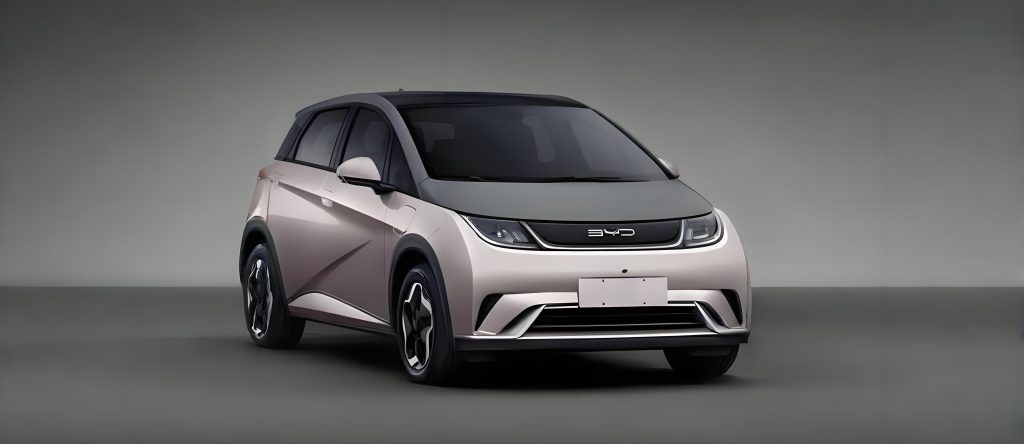
As an experienced automotive technician specializing in electric vehicles, I recently encountered a challenging case involving a BYD EV, specifically a 2020 BYD Han EV model. This BYD car presented with multiple warning indicators on the dashboard, including “Check Brake System” alerts, along with illumination of the anti-lock braking and stability control system warning lights. The owner reported abnormal sensations when applying the brake pedal, including audible clicking noises and feedback through the pedal, accompanied by a significant reduction in maximum vehicle speed to approximately 60 km/h. This comprehensive case study documents my systematic approach to diagnosing and resolving this complex issue in this BYD EV, incorporating detailed technical analysis, multiple diagnostic tables, and relevant engineering formulas to explain the underlying principles.
Upon initial inspection of this BYD car, I connected a professional-grade diagnostic scanner to the vehicle’s onboard systems. The scan revealed two current fault codes within the electro-hydraulic brake system: C055E00 (indicating hydraulic circuit leakage) and C2A1700 (suggesting hydraulic circuit over-compensation, typically associated with air presence in the system). These fault codes in this BYD EV pointed toward potential issues with the Bosch Intelligent Integrated Brake Control system (IPB), which represents a sophisticated integration of traditional hydraulic braking with electronic control systems specifically designed for electric vehicles like this BYD car.
| Fault Code | System Interpretation | Potential Implications |
|---|---|---|
| C055E00 | Hydraulic Circuit Leakage | Possible fluid loss or pressure drop in primary brake circuit |
| C2A1700 | Hydraulic Circuit Over-compensation | Air presence in system or pressure sensor malfunction |
The fundamental hydraulic principles governing brake systems in BYD EV models can be represented mathematically. The basic pressure relationship in a hydraulic brake system follows Pascal’s principle, where pressure applied to a confined fluid is transmitted equally in all directions. This can be expressed as:
$$P = \frac{F}{A}$$
Where P represents hydraulic pressure, F is the applied force, and A is the cross-sectional area. In the context of this BYD car’s brake system, any deviation from expected pressure values would trigger fault codes. The pressure differential that likely triggered the fault codes in this BYD EV can be represented as:
$$\Delta P = P_{actual} – P_{expected}$$
Where a significant ΔP would indicate either leakage (negative deviation) or over-compensation (positive deviation), precisely matching the fault codes stored in this BYD car’s system.
Following standard diagnostic procedures for BYD EV models, I initiated a thorough visual inspection of the entire brake system. This included examining all brake lines, calipers, wheel cylinders, and the master cylinder for any signs of leakage. The vehicle was lifted on a hoist to facilitate comprehensive access to all brake system components. Despite meticulous examination, no obvious leaks were detected during this initial inspection of the BYD car. The absence of visible leakage presented the first diagnostic challenge, suggesting the possibility of a subtle or intermittent issue.
Considering the fault code indicating potential air in the system (C2A1700), I proceeded with a complete brake system bleed procedure on this BYD EV. This process involves systematically removing air from the hydraulic system to restore proper brake function. The procedure for BYD EV models requires specific sequences to ensure complete air removal from all circuits. Following the bleeding process, I performed the necessary system calibration procedures specific to this BYD car’s IPB system. Initial testing appeared successful, with warning lights extinguishing and normal brake function restored during a preliminary 10-kilometer test drive.
| Step | Procedure | Technical Specification |
|---|---|---|
| 1 | Master cylinder inspection | Check fluid level and condition |
| 2 | Right rear circuit bleed | Following farthest-to-closest sequence |
| 3 | Left rear circuit bleed | Maintain continuous fluid flow |
| 4 | Right front circuit bleed | Monitor for air bubbles |
| 5 | Left front circuit bleed | Final circuit completion |
| 6 | System calibration | IPB-specific initialization procedure |
The vehicle was returned to the customer, but unfortunately, the symptoms reappeared approximately two weeks later. The BYD car was returned to our facility with identical warning lights and brake pedal abnormalities. This recurrence indicated that our initial repair had addressed symptoms rather than the root cause. A second, more intensive inspection revealed slight moisture around the left front caliper bleed screw, prompting replacement of the left front brake caliper on this BYD EV. However, this intervention also proved insufficient, as the customer reported recurrence of the fault within one week.
At this stage, having addressed potential external leakage points without resolution, my attention turned to the Intelligent Integrated Brake Control unit itself. The sophisticated nature of the IPB system in BYD EV models includes multiple pressure sensors that monitor hydraulic performance continuously. A malfunctioning pressure sensor could theoretically generate the fault codes observed in this BYD car. The relationship between measured pressure and sensor output can be represented as:
$$V_{out} = S \times P + V_{offset}$$
Where Vout is the sensor output voltage, S is the sensor sensitivity, P is the actual pressure, and Voffset is any zero-pressure offset. An inaccurate sensor would provide erroneous Vout values, leading the control unit to detect non-existent pressure deviations. Based on this reasoning, I replaced the IPB control unit on this BYD EV, which again provided only temporary resolution before the fault recurred after several weeks.
The repeated failure of conventional repair approaches necessitated a more methodical investigation. I decided to conduct a series of operational tests on this BYD car while monitoring all accessible system parameters. During one test that involved repeated application of the parking brake, I noticed an abnormal noise from the left rear parking brake actuator. This subtle clue, which had been overlooked in previous inspections, prompted disassembly of the left rear brake assembly on this BYD EV.
Upon separating the parking brake motor from the brake caliper, I discovered the root cause: a minimal but consistent brake fluid leak at the caliper piston seal. The design of the parking brake assembly in this BYD car included a sealed compartment between the electric motor and the hydraulic piston, which had trapped the leaking fluid and prevented visible external signs. This hidden leakage explained why previous visual inspections had failed to identify the problem and why conventional bleeding procedures provided only temporary relief in this BYD EV.
The leakage mechanism can be understood through fluid dynamics principles. The rate of fluid loss through a small opening follows the Hagen-Poiseuille equation for laminar flow:
$$Q = \frac{\pi r^4 \Delta P}{8 \mu L}$$
Where Q is the volumetric flow rate, r is the effective radius of the leak path, ΔP is the pressure differential, μ is the dynamic viscosity of brake fluid, and L is the length of the leak path. In this BYD EV, the minimal leak rate allowed gradual fluid loss and air ingress during operation, while the sealed compartment contained the evidence until disassembly.
| Diagnostic Phase | Procedure | Outcome | Limitations |
|---|---|---|---|
| Initial Scan | Fault code retrieval | Identified hydraulic circuit issues | Codes indicated symptoms not root cause |
| Visual Inspection | Component examination for leaks | No obvious leaks detected | Hidden leakage not visible |
| System Bleeding | Air removal from hydraulic system | Temporary symptom resolution | Did not address fluid loss source |
| Component Replacement | Front caliper and control unit | Intermittent improvement | Addressed secondary issues only |
| Focused Investigation | Operational testing and disassembly | Identified hidden rear caliper leak | Required systematic elimination process |
Replacement of the faulty left rear brake caliper assembly, followed by a complete system bleed and recalibration, finally resolved the issue in this BYD EV. Follow-up communication with the customer confirmed that the fault had not reappeared after one month of regular use, confirming successful repair of this persistent issue in the BYD car.
This case highlights several important considerations for working on advanced brake systems in modern BYD EV models. The IPB system in these BYD cars incorporates sophisticated monitoring capabilities that can detect even minor deviations from expected performance parameters. Technicians must recognize that the comprehensive sensor networks in these systems can identify issues that might escape conventional diagnostic approaches. The mathematical relationship between actual and expected system parameters can be expressed as:
$$S_{fault} = |P_{measured} – P_{expected}| > T_{threshold}$$
Where Sfault indicates a fault condition when the absolute difference between measured and expected pressure exceeds a predefined threshold Tthreshold. This explains why even minor leaks can trigger significant warning systems in these sensitive BYD EV brake systems.
Another critical technical consideration for BYD EV models is the proper procedure for servicing the IPB system. Unlike conventional brake systems, the IPB system in BYD cars requires specific initialization procedures before any component disassembly. Failure to follow these protocols can result in additional fault codes and system malfunctions. The recommended safety procedure involves placing the system in maintenance mode or ensuring the vehicle has been locked for more than five minutes before attempting any brake system work. If fault codes are inadvertently triggered during service, a specific reset procedure should be followed: power off the vehicle for three minutes, restart without pressing the brake pedal for 15 seconds, then press and hold the brake pedal fully for two minutes without release.
The evolution of brake systems in BYD EV models represents a significant technological advancement, integrating traditional hydraulic principles with sophisticated electronic control. The mathematical representation of the braking force distribution in these systems accounts for both hydraulic pressure and electronic control inputs:
$$F_{brake} = (P_{hydraulic} \times A_{piston} \times \mu_{pad}) + (I_{motor} \times K_{torque} \times R_{mechanical})$$
Where Fbrake is the total braking force, Phydraulic is the hydraulic pressure, Apiston is the piston area, μpad is the friction coefficient, Imotor is the motor current, Ktorque is the motor torque constant, and Rmechanical is the mechanical advantage of the actuation system. This integrated approach in BYD EV models provides enhanced safety and performance but requires more sophisticated diagnostic approaches when malfunctions occur.
| Component | Function | Technical Parameters | Failure Modes |
|---|---|---|---|
| IPB Control Unit | Integrated brake control | Pressure range: 0-200 bar, Response time: <100ms | Sensor drift, Valve blockage |
| Front Brake Caliper | Hydraulic force application | Piston diameter: 45mm, Maximum pressure: 180 bar | Seal degradation, Piston corrosion |
| Rear Brake Caliper | Integrated parking brake | Piston diameter: 38mm, Electric motor torque: 8Nm | Seal leakage, Motor failure |
| Pressure Sensors | System monitoring | Accuracy: ±1.5% FS, Operating temperature: -40°C to 125°C | Calibration drift, Electrical faults |
This diagnostic journey with the BYD EV underscores the importance of systematic problem-solving when dealing with complex automotive systems. The integration of traditional mechanical systems with advanced electronic controls in modern BYD cars demands both conventional diagnostic skills and understanding of sophisticated control systems. The repeated temporary resolutions experienced with this BYD EV illustrate how intermittent faults can be particularly challenging, requiring persistence and methodical elimination of potential causes.
In conclusion, this case study of a BYD EV brake system fault demonstrates the intricate relationship between hydraulic principles and electronic control systems in modern electric vehicles. The successful resolution required understanding both the theoretical foundations of brake system operation and the practical implementation in BYD car designs. The experience reinforces that even subtle issues, such as minimal fluid leakage in concealed locations, can trigger comprehensive warning systems in today’s sophisticated BYD EV models. Technicians working on these systems must combine traditional diagnostic approaches with knowledge of advanced electronic systems and their mathematical foundations to effectively resolve complex faults in BYD cars.
The progressive nature of automotive technology, particularly in BYD EV models, continues to present new diagnostic challenges that require ongoing technical education and adaptation. As brake systems evolve toward greater integration and electronic control, the diagnostic approaches must similarly advance to address the sophisticated monitoring and fault detection capabilities built into these BYD cars. This case stands as a testament to the importance of thorough, systematic diagnostics when addressing complex issues in modern BYD EV vehicles, where multiple systems interact in ways that can obscure the root cause of malfunctions without meticulous investigation.