
As an automotive engineer specializing in electric vehicle systems, I have extensively studied heat pump air conditioning systems in new energy vehicles. These systems are critical for maintaining cabin comfort while optimizing energy efficiency, which is vital for extending the driving range of electric cars. In this article, I will delve into the working principles of heat pump systems, common faults encountered in EV repair, and effective maintenance strategies. The growing adoption of electric vehicles necessitates a deep understanding of these systems to ensure reliable performance and reduce downtime in electrical car repair scenarios. Heat pumps operate based on thermodynamic cycles, and their integration into electric vehicles presents unique challenges and opportunities for innovation in the automotive industry.
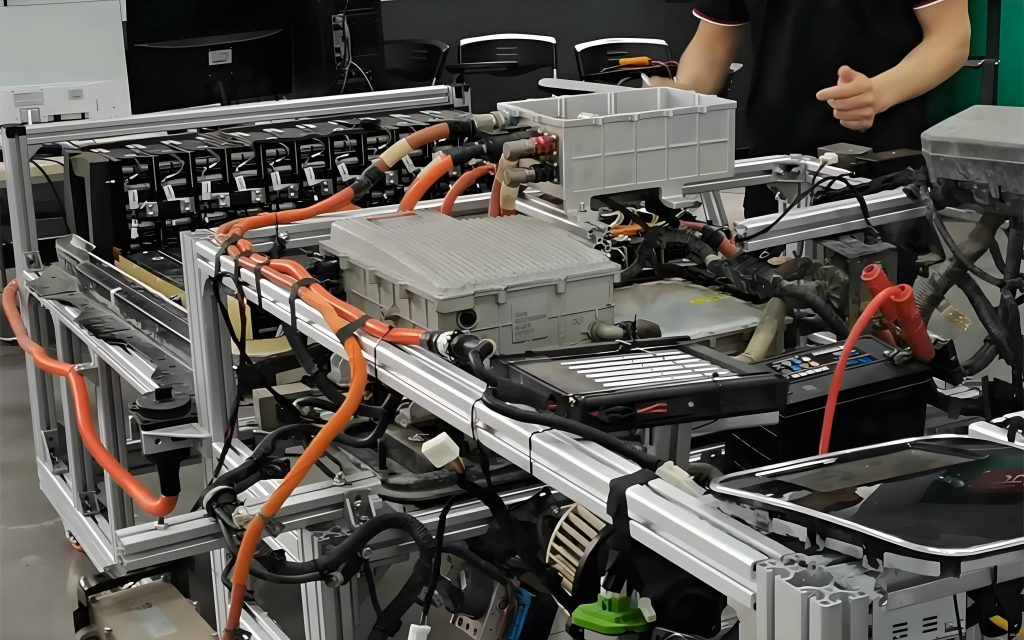
The fundamental principle behind heat pump systems in electric vehicles is the reverse Carnot cycle, which enables efficient heat transfer for both cooling and heating purposes. Unlike conventional systems, heat pumps in EVs leverage electrical energy to drive the cycle, resulting in higher coefficients of performance (COP) and reduced environmental impact. I will explain this cycle in detail, using mathematical formulations to illustrate the energy transformations. For instance, the reverse Carnot cycle consists of two isothermal and two adiabatic processes, described by the following equations for ideal gas behavior:
$$ Q_c = T_c (S_2 – S_1) $$
$$ Q_h = T_h (S_3 – S_4) $$
$$ W = Q_h – Q_c $$
where \( Q_c \) is the heat absorbed at the cold reservoir, \( Q_h \) is the heat rejected at the hot reservoir, \( T_c \) and \( T_h \) are the absolute temperatures, \( S \) denotes entropy, and \( W \) is the work input. In practical terms, for an electric vehicle heat pump, the COP for heating can be expressed as:
$$ \text{COP}_{\text{heating}} = \frac{Q_h}{W} = 1 + \frac{T_c}{T_h – T_c} $$
This high COP makes heat pumps ideal for EVs, as they minimize battery drain—a key consideration in electrical car repair and maintenance. Below, I have summarized the key components of a typical EV heat pump system in Table 1, highlighting their functions and relevance to EV repair.
| Component | Function | Role in EV Repair |
|---|---|---|
| Compressor | Compresses refrigerant to high pressure and temperature | Common failure point; requires checks for electrical issues in EV repair |
| Condenser | Releases heat to the environment | Prone to clogging; cleaning is essential in electrical car repair |
| Expansion Valve | Reduces refrigerant pressure for evaporation | Often inspected for blockages during EV repair procedures |
| Evaporator | Absorbs heat from the cabin | Frequent source of leaks; replacement common in EV repair |
| Four-Way Valve | Switches between heating and cooling modes | Critical for mode transitions; failures lead to heating issues in EV repair |
In the refrigeration cycle, the process begins with the compressor, where low-pressure gaseous refrigerant is compressed to high pressure, increasing its temperature. For example, in many EVs, the compressor power can reach up to 3 kW, elevating refrigerant pressure from around 1 MPa to 2.5 MPa. This step consumes electrical energy, directly impacting the vehicle’s battery life—a focal point in EV repair diagnostics. Next, the high-pressure gas moves to the condenser, where it dissipates heat to the outside air, condensing into a liquid. Assuming a condenser散热功率 of 4 kW at an ambient temperature of 35°C, the refrigerant temperature drops to approximately 60°C. The liquid then passes through an expansion valve, undergoing throttling to reduce pressure and temperature, often to levels like 0.3 MPa and 5°C. Finally, in the evaporator, the refrigerant absorbs cabin heat, evaporating back into a gas and completing the cycle. This continuous process ensures efficient cooling, with evaporator temperatures rising to about 15°C in summer conditions, thereby maintaining comfort without excessive energy use.
For heating cycles, the reverse process occurs, leveraging the same components but with altered refrigerant flow directions. The compressor still elevates the refrigerant to high pressure, but the indoor unit acts as a condenser, releasing heat to warm the cabin. For instance, starting from an initial cabin temperature of 10°C, the system can raise it to 22°C through efficient heat exchange. The outdoor unit then functions as an evaporator, absorbing heat from the external environment, even in cold conditions like -10°C. The four-way valve facilitates this switch, and any malfunction here can severely impact heating performance, necessitating prompt EV repair. The COP for heating in such scenarios often exceeds 3, meaning for every unit of electrical energy input, over three units of heat are produced, underscoring the efficiency gains in modern electrical car repair protocols.
Common faults in EV heat pump systems often stem from operational stresses and environmental factors. In my experience with EV repair,制冷效果不佳 (poor cooling performance) is frequently reported due to refrigerant leaks, condenser blockages, evaporator clogs, or compressor failures. For example, refrigerant leakage might occur at joints or from worn seals, reducing system pressure and impairing cooling capacity. Similarly, condenser散热不良 can result from dirt accumulation or fan malfunctions, while evaporator issues may arise from frozen condensate or debris ingress. Compressor faults, such as motor wear or lubrication deficiencies, directly affect compression efficiency and are a common focus in electrical car repair. To illustrate, I have compiled a table of common cooling-related faults and their typical causes, which aids in systematic EV repair diagnostics.
| Fault Type | Symptoms | Common Causes | Relevance to EV Repair |
|---|---|---|---|
| Refrigerant Leakage | Reduced cooling, low pressure readings | Loose fittings, seal degradation | Requires leak detection and recharge in EV repair |
| Condenser Issues | Overheating, poor heat dissipation | Dirt buildup, fan failure | Cleaning or part replacement in electrical car repair |
| Evaporator Blockage | Insufficient airflow, icing | Dust accumulation, drainage problems | Often addressed through cleaning in EV repair |
| Compressor Failure | No cooling, unusual noises | Electrical faults, mechanical wear | Complex repairs common in EV repair scenarios |
制热效果不佳 (poor heating performance) is another prevalent issue in EV repair, particularly in colder climates. Abnormal defrost function can lead to frost accumulation on outdoor coils, reducing heat exchange efficiency. This might be due to faulty defrost controllers, damaged heating elements, or inaccurate sensors. Four-way valve failures, such as stuck valves or seal leaks, can cause incorrect refrigerant flow, diverting heat away from the cabin. Additionally, auxiliary electric heaters—used to supplement heating in low temperatures—may fail due to broken elements or control circuit issues, further complicating electrical car repair efforts. The energy efficiency of these systems is paramount, as faults can lead to increased battery consumption, highlighting the importance of proactive EV repair strategies.
When addressing these faults in EV repair, specific maintenance strategies are essential. For制冷效果不佳, I recommend first checking and replenishing refrigerant using professional detection tools to identify and seal leaks. The refrigerant type and quantity must adhere to manufacturer specifications to avoid system damage. Next, cleaning the condenser with compressed air or specialized cleaners ensures optimal散热, while also verifying fan operation. Evaporator清洗 involves disassembly and thorough cleaning to remove obstructions; severe cases may require component replacement. Compressor repairs should be handled by skilled technicians, involving motor checks, lubrication servicing, or part replacements as needed. In electrical car repair, these steps are crucial for restoring performance and preventing recurrences.
For制热效果不佳, EV repair focuses on inspecting defrost systems by testing controllers and replacing faulty heating elements. Sensors must be calibrated for accurate frost detection. Four-way valves may need cleaning or replacement if stuck, ensuring proper refrigerant direction. Auxiliary heaters require checks on heating elements and control circuits, with repairs targeting specific failures. To quantify the impact of these strategies, consider the following formula for system efficiency after repair:
$$ \eta = \frac{\text{Actual COP}}{\text{Theoretical COP}} \times 100\% $$
where \( \eta \) represents the efficiency percentage, and COP values are derived from pre- and post-repair measurements. In practice, effective EV repair can restore \( \eta \) to over 90%, significantly enhancing vehicle range and comfort.
Preventive measures are vital in minimizing the need for frequent EV repair. Regular maintenance includes annual checks of refrigerant pressure and purity, as well as biannual cleaning of condensers, evaporators, and fans to prevent dirt-related issues. Electrical system inspections should cover wiring integrity, controller functionality, and sensor accuracy, ideally performed yearly. Proper usage practices, such as setting moderate temperatures and avoiding frequent system cycling, reduce wear and tear. In cold weather, allowing defrost cycles to complete uninterrupted prevents coil damage. These habits not only extend system lifespan but also reduce the incidence of electrical car repair incidents, supporting sustainable EV ownership.
In conclusion, heat pump systems in electric vehicles represent a sophisticated integration of thermodynamics and electronics, offering significant energy savings but requiring specialized knowledge for EV repair. By understanding the reverse Carnot cycle and common fault patterns, technicians can diagnose issues accurately and implement effective repairs. The repeated emphasis on EV repair and electrical car repair throughout this discussion underscores the practical importance of these skills in the evolving automotive landscape. As EV adoption grows, advancing repair methodologies will be crucial for ensuring reliability, efficiency, and user satisfaction, ultimately driving the future of electric mobility forward.