
In the rapidly evolving automotive industry, environmental and energy concerns have garnered significant attention, driving a shift toward low-carbon and clean energy sources. Electric multi-purpose vehicles (electric MPV) represent a key segment in this transition, combining the spaciousness of travel vehicles, the comfort of sedans, and the functionality of vans. Typically featuring a van-like structure, electric MPV models can accommodate 7–8 passengers, making them ideal for various applications. The development of electric MPV platforms is crucial for reducing emissions and enhancing energy efficiency. This paper focuses on the economy optimization of an electric MPV using AVL Cruise software, a powerful tool for simulating vehicle dynamics, economy, emissions, and braking performance. By leveraging AVL Cruise, we aim to shorten the development cycle of the electric MPV while ensuring optimal performance and efficiency.
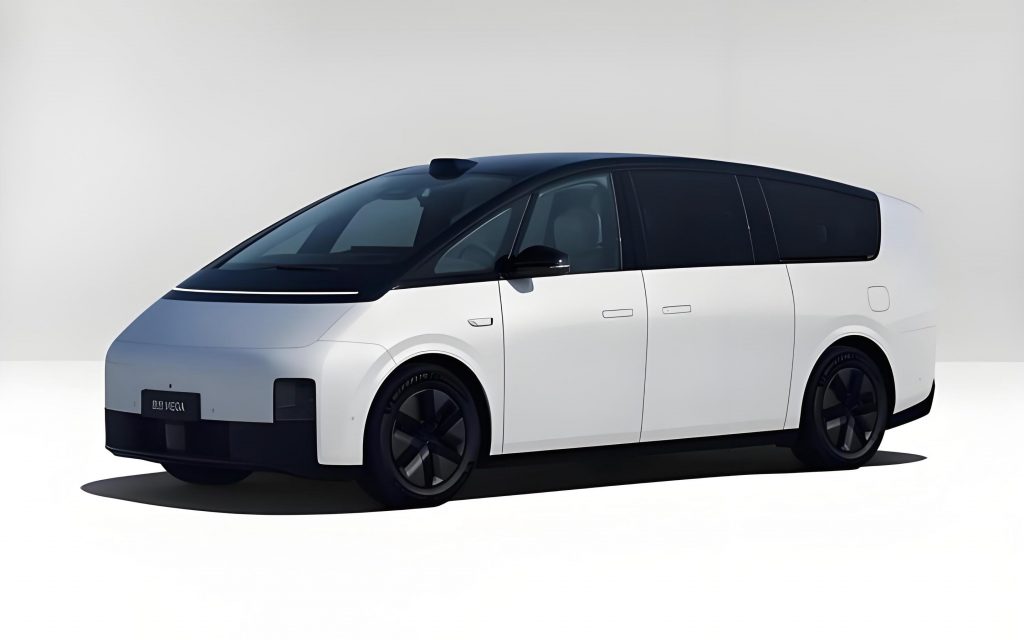
The design process begins with parameter matching for the electric MPV’s key components, including the drive motor, power battery, and transmission system. The electric MPV is equipped with a permanent magnet synchronous motor due to its simplicity, reliability, compact size, light weight, and material efficiency. Based on the AVL Cruise software, we perform a comprehensive analysis of the electric MPV’s dynamic and economic performance. The electric MPV parameters and performance targets are as follows: curb weight of 1215 kg, gross vehicle weight of 1765 kg, dimensions of 4390 mm × 1660 mm × 1750 mm, wheelbase of 2720 mm, frontal area of 2.46 m², drag coefficient of 0.33, tire rolling radius of 0.301 m, rolling resistance coefficient of 0.016, 0–100 km/h acceleration time of 15 s, maximum speed of 140 km/h, maximum gradability of 30%, electricity consumption of 17 kWh per 100 km, and a driving range of 220 km.
For the electric MPV, the motor parameters are critical. The rated and maximum power of the motor must satisfy the requirements for maximum speed, gradability, and acceleration. The maximum power $P_{\text{max}1}$ based on the maximum speed $u_{\text{max}}$ is calculated as:
$$P_{\text{max}1} = \frac{mgfu_{\text{max}}}{3600} + \frac{C_D A u_{\text{max}}^3}{76140 \eta_t}$$
where $m$ is the vehicle mass, $g = 9.8 \, \text{m/s}^2$ is the gravitational acceleration, $f$ is the rolling resistance coefficient, $C_D$ is the drag coefficient, $A$ is the frontal area, and $\eta_t = 0.96$ is the mechanical transmission efficiency. For the electric MPV, with $u_{\text{max}} = 140 \, \text{km/h}$, this yields a specific value. Similarly, the maximum power $P_{\text{max}2}$ based on the maximum gradability $\alpha_{\text{max}} = \arctan(0.25)$ at a speed $u_p = 15 \, \text{km/h}$ is:
$$P_{\text{max}2} = \frac{u_p (mgf \cos \alpha_{\text{max}} + mg \sin \alpha_{\text{max}} + \frac{C_D A u_p^2}{21.15})}{3600 \eta_t}$$
Additionally, the power $P_{\text{max}3}$ required for the 0–100 km/h acceleration in $t_j = 15 \, \text{s}$ is given by:
$$P_{\text{max}3} = \frac{\frac{mgf u_j}{1.5} + \frac{C_D A u_j^3}{21.15 \times 2.5} + \frac{\delta m u_j^2}{2 t_j}}{3600 \eta_t}$$
where $u_j = 100 \, \text{km/h}$ is the target speed, and $\delta = 1.1$ is the rotational mass factor. The rated power $P_e$ and maximum power $P_{e,\text{max}}$ of the electric MPV motor must satisfy $P_e \geq P_{\text{max}1}$ and $P_{e,\text{max}} \geq \max(P_{\text{max}1}, P_{\text{max}2}, P_{\text{max}3})$, with an overload factor $\lambda$ typically between 2 and 3, such that $P_{e,\text{max}} \geq \lambda P_e$. For the electric MPV, the motor parameters are matched as follows: rated speed $n_e = 4347.8 \, \text{r/min}$, maximum speed $n_{\text{max}} = 10000 \, \text{r/min}$, rated torque $T_e = 110.3 \, \text{Nm}$, maximum torque $T_{\text{max}} = 220 \, \text{Nm}$, rated power $P_e = 55 \, \text{kW}$, and maximum power $P_{e,\text{max}} = 165 \, \text{kW}$.
The transmission system parameters for the electric MPV are also optimized. The maximum transmission ratio $i_{\text{max}}$ is determined by the motor’s maximum speed, vehicle maximum speed, and wheel rolling radius $R = 0.301 \, \text{m}$:
$$i_{\text{max}} = \frac{0.377 n_{\text{max}} R}{u_{\text{max}}}$$
which gives $i_{\text{max}} = 8.10$. The minimum transmission ratio $i_{\text{min}}$ is based on the maximum gradability and the motor’s maximum output torque:
$$i_{\text{min}} = \frac{mg(f \cos \alpha_{\text{max}} + \sin \alpha_{\text{max}}) R + \frac{C_D A u_{\text{max}}^2 R}{21.15}}{T_{\text{max}} \eta_t}$$
resulting in $i_{\text{min}} = 5.32$. A transmission ratio of $i = 7.08$ is selected for the electric MPV within this range. For the power battery, a lithium-ion battery is chosen for its high energy density, power output, safety, adaptability, and longevity. The battery parameters include a nominal voltage of 320 V, minimum working voltage of 220 V, maximum working voltage of 420 V, and a total capacity of 140 Ah, with 14 cells connected in series.
The electric MPV model is built in AVL Cruise to simulate dynamic and economic performance. The model includes components such as the motor, battery, transmission, and vehicle body, configured for front-wheel drive. The simulation validates the electric MPV’s performance under standard driving cycles, such as the New European Driving Cycle (NEDC) and the Worldwide Harmonized Light Vehicles Test Procedure (WLTP). These cycles are essential for assessing the electric MPV’s energy consumption and range. The NEDC cycle consists of urban and extra-urban segments, while the WLTP cycle provides more realistic driving patterns. The electric MPV model accuracy is verified by comparing simulated speeds with the NEDC cycle requirements, showing close alignment.
Dynamic performance simulations for the electric MPV reveal a maximum speed of 172 km/h, exceeding the target of 140 km/h. The 0–100 km/h acceleration time is 9.87 s, better than the required 15 s. The maximum gradability is 38.9%, surpassing the 30% target. These results confirm that the electric MPV meets all dynamic performance criteria. Economic performance is evaluated through range and energy consumption simulations. Under the NEDC cycle, the electric MPV achieves a range of 293 km, and under WLTP, 266 km, both above the 220 km requirement. The energy consumption is 14.28 kWh/100 km for NEDC and 15.74 kWh/100 km for WLTP, meeting the design target of 17 kWh/100 km.
To further optimize the electric MPV’s economy, the final drive ratio is adjusted. The final drive ratio impacts both dynamic and economic performance, and an optimal value can reduce energy consumption. Using AVL Cruise’s group calculation module, the final drive ratio is varied from 2.5 to 9.1 in steps of 0.2. The objective function is the electricity consumption per 100 km under the NEDC cycle. The simulation results show that the optimal economy is achieved at a final drive ratio of 4.3, but this does not meet dynamic performance requirements. After verification, a final drive ratio of 5.7 is selected, balancing economy and dynamics. The optimized electric MPV shows a 2.4% reduction in NEDC energy consumption to 13.94 kWh/100 km and a 2.5% reduction in WLTP consumption to 15.34 kWh/100 km. The range also improves to 300 km for NEDC and 272 km for WLTP.
The following table summarizes the economic parameters of the electric MPV before and after optimization:
| Parameter | Before Optimization | After Optimization |
|---|---|---|
| NEDC Electricity Consumption (kWh/100 km) | 14.28 | 13.94 |
| NEDC Range (km) | 293 | 300 |
| WLTP Electricity Consumption (kWh/100 km) | 15.74 | 15.34 |
| WLTP Range (km) | 266 | 272 |
The optimization process for the electric MPV demonstrates the effectiveness of AVL Cruise in refining vehicle parameters. The final drive ratio adjustment is a straightforward yet impactful modification, enhancing economy without compromising performance. Future work on the electric MPV could involve optimizing the entire transmission system or conducting real-world validation of energy consumption. In conclusion, this study successfully matches and optimizes the electric MPV’s parameters using AVL Cruise, ensuring compliance with dynamic and economic targets. The electric MPV’s performance is validated through simulations, and the economy is improved by optimizing the final drive ratio, resulting in significant energy savings. This approach provides a robust framework for the development of efficient electric MPV models, contributing to the advancement of sustainable transportation.
The electric MPV represents a promising direction for reducing carbon emissions in the automotive sector. By integrating advanced simulation tools like AVL Cruise, manufacturers can accelerate the design process and achieve superior performance. The electric MPV’s versatility and efficiency make it suitable for various applications, from personal use to commercial fleets. As technology evolves, further enhancements in battery technology, motor efficiency, and lightweight materials will continue to improve the electric MPV’s economy and range. This study underscores the importance of systematic parameter matching and optimization in the development of electric MPV platforms, paving the way for broader adoption of electric vehicles.
In summary, the electric MPV optimized in this paper exhibits excellent dynamic and economic characteristics. The use of AVL Cruise software enables precise modeling and simulation, facilitating rapid iteration and improvement. The electric MPV’s success in meeting performance targets highlights the potential of simulation-driven design in the automotive industry. Future research could explore multi-objective optimization for the electric MPV, considering factors such as cost, weight, and environmental impact. Overall, the electric MPV stands as a testament to the progress in electric vehicle technology, offering a sustainable and efficient solution for modern transportation needs.