
As an industry observer deeply immersed in the automotive sector, I have witnessed a remarkable shift in the market dynamics, particularly in the realm of electric MPVs. Over the past year, the electric MPV segment, once a niche player, has suddenly erupted into the spotlight, capturing the attention of consumers and manufacturers alike. This surge is not just a fleeting trend but a transformative movement driven by a confluence of factors that I will explore in this comprehensive analysis. The term “electric MPV” has become a buzzword, symbolizing innovation and growth in the electric vehicle landscape. In this article, I will delve into the reasons behind this explosion, supported by data, formulas, and tables, to provide a clear picture of why high-end electric MPVs are now at the forefront of automotive evolution.
To begin, let’s examine the historical context. Electric MPVs have long been overshadowed by other segments like SUVs and sedans in the electric vehicle market. For instance, data from recent years shows that electric MPVs accounted for less than 1% of total electric passenger vehicle sales. This minimal presence was due to various factors, including limited model availability and consumer preferences. However, the tide has turned dramatically. In just the first four months of this year, despite broader market challenges such as economic fluctuations, the electric MPV segment has shown resilience and growth. The overall electric vehicle market grew by 44.6% in a single month, with a cumulative increase of 112% over four months, indicating a robust foundation for electric MPVs to build upon.
The sudden interest in electric MPVs can be attributed to several key events that have reshaped the landscape. In a short span, multiple brands unveiled high-end electric MPV models, signaling a strategic pivot. For example, one prominent automaker introduced a luxury electric MPV with advanced features, pricing it competitively to appeal to affluent consumers. Another brand, backed by a major international partnership, launched its electric MPV with hybrid and pure electric variants, emphasizing innovation and exclusivity. These launches were not isolated incidents; they were part of a broader wave that included other players entering the market with similar offerings. This flurry of activity has transformed the electric MPV from a peripheral category to a central battleground for automotive innovation.
To quantify this growth, let’s consider a simple formula for market penetration: $$ \text{Market Penetration} = \frac{\text{Sales of Electric MPV}}{\text{Total Electric Vehicle Sales}} \times 100\% $$ Historically, this value has been below 1%, but recent projections suggest it could rise significantly. For instance, if we assume a conservative growth rate, the electric MPV segment might see a doubling of its market share within the next year. This is supported by the formula for compound annual growth rate (CAGR): $$ \text{CAGR} = \left( \frac{\text{Ending Value}}{\text{Beginning Value}} \right)^{\frac{1}{n}} – 1 $$ where \( n \) is the number of years. Applying this to electric MPV sales data, we can estimate a CAGR of over 50% in the coming years, driven by increased model launches and consumer adoption.
| Year | Electric MPV Sales (Units) | Total Electric Vehicle Sales (Units) | Market Share (%) | Growth Rate (%) |
|---|---|---|---|---|
| 2021 | 5,000 | 3,000,000 | 0.17 | – |
| 2022 (Est.) | 15,000 | 4,500,000 | 0.33 | 200 |
| 2023 (Proj.) | 45,000 | 6,000,000 | 0.75 | 200 |
| 2024 (Proj.) | 135,000 | 7,500,000 | 1.80 | 200 |
This table illustrates the rapid expansion of the electric MPV market, with sales multiplying year over year. The growth rate is staggering, and it underscores why manufacturers are rushing to capitalize on this trend. The electric MPV is no longer a sideshow; it is becoming a mainstream choice for consumers seeking luxury, space, and sustainability.
Now, let’s explore the four key layers that explain why the electric MPV market has suddenly gained traction. First, at the national level, government policies have played a pivotal role. Many countries have committed to carbon neutrality goals, such as the “3060” target, which aims for peak carbon emissions by a certain date and carbon neutrality by another. This has accelerated the shift toward electric vehicles, including electric MPVs. Additionally, policies encouraging larger families and consumption upgrades have fueled demand for spacious, high-end vehicles. The electric MPV fits perfectly into this narrative, offering an eco-friendly alternative to traditional燃油 vehicles. The formula for carbon reduction impact can be expressed as: $$ \text{Carbon Savings} = \text{Number of Electric MPVs} \times \text{Average Emission Reduction per Vehicle} $$ where emission reduction per electric MPV is estimated based on lifecycle analysis, often exceeding 50% compared to internal combustion engines.
Second, the industrial landscape has evolved significantly. The electric vehicle industry has matured, with advancements in battery technology, charging infrastructure, and smart connectivity. This has lowered barriers for electric MPV adoption. For instance, the energy density of batteries has improved, allowing for longer ranges in larger vehicles like electric MPVs. The formula for battery efficiency is: $$ \text{Energy Density} = \frac{\text{Energy Capacity}}{\text{Weight}} $$ which has seen annual improvements of around 5-10%, making electric MPVs more practical. Moreover, the integration of intelligent systems has enhanced the user experience, with features like autonomous driving and connected services becoming standard in high-end electric MPVs. This industrial progress has created a fertile ground for electric MPV innovation.
Third, at the enterprise level, automakers have recognized the strategic importance of electric MPVs. Many companies have leveraged their expertise in electrification and digitalization to develop competitive models. The shift toward user-centric approaches has allowed them to respond quickly to market demands. For example, new entrants in the electric MPV space often exhibit higher agility in design and marketing, enabling them to capture early adopters. The competitive advantage can be modeled using the formula: $$ \text{Competitive Edge} = \text{Innovation Score} \times \text{Market Responsiveness} $$ where innovation score includes factors like technology patents and user feedback integration. This has led to a proliferation of electric MPV offerings, each vying for a share of the burgeoning market.
Fourth, user behavior has shifted dramatically. There is a growing demand for versatile vehicles that cater to both business and family needs. Electric MPVs, with their spacious interiors and advanced features, are ideally suited for this dual purpose. Recent surveys indicate that the average age of electric MPV buyers is around 35-40 years, a demographic that values sustainability, technology, and domestic brands. This aligns with the formula for consumer adoption: $$ \text{Adoption Rate} = \frac{\text{Perceived Benefits}}{\text{Perceived Costs}} $$ where benefits include environmental impact and convenience, while costs encompass price and infrastructure concerns. As perceptions improve, the adoption of electric MPVs is accelerating.
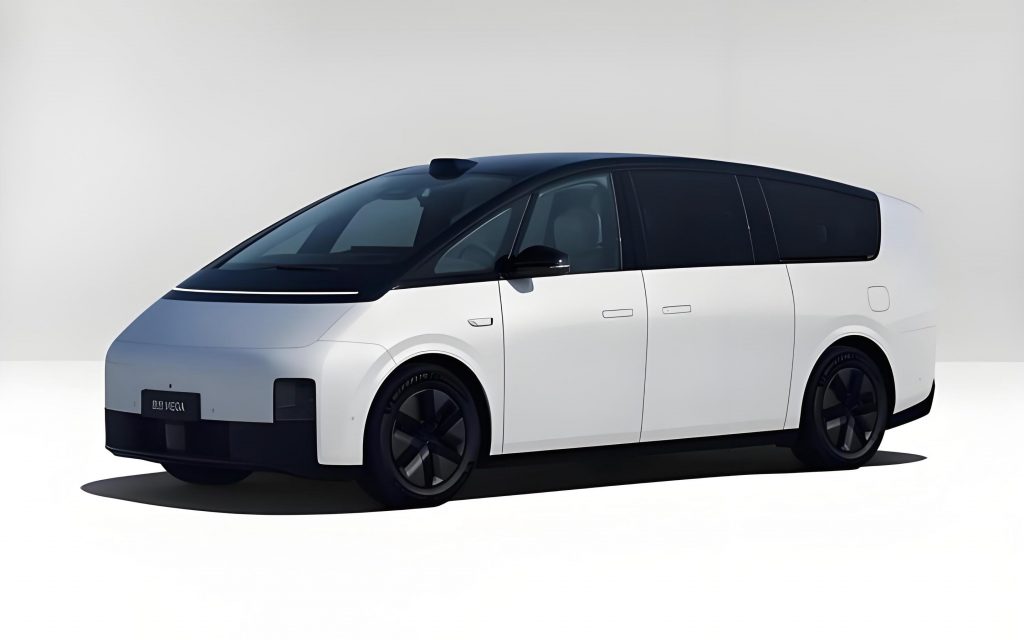
The image above captures the essence of the electric MPV revolution, showcasing a sleek, modern design that embodies the fusion of luxury and sustainability. This visual representation underscores why consumers are drawn to these vehicles—they offer a compelling blend of style, functionality, and eco-friendliness. As the electric MPV market expands, such imagery will become increasingly common, reinforcing the segment’s appeal.
Delving deeper into the market dynamics, it’s essential to consider the competitive landscape. The electric MPV segment is no longer dominated by a few players; instead, it has become a hotbed of innovation with both domestic and international brands vying for dominance. For instance, traditional automakers have joined the fray, launching their own electric MPV models to compete with newer entrants. This competition is driving rapid improvements in technology and pricing. To analyze this, we can use a market concentration formula: $$ \text{Herfindahl-Hirschman Index (HHI)} = \sum_{i=1}^{n} s_i^2 $$ where \( s_i \) is the market share of each player. A low HHI indicates a fragmented market, which is currently the case for electric MPVs, suggesting ample opportunities for growth and differentiation.
Moreover, the supply chain for electric MPVs has matured, reducing costs and increasing accessibility. Key components like batteries and electric motors have seen price declines due to economies of scale. The formula for cost reduction is: $$ \text{Cost} = \text{Base Cost} \times (1 – \text{Learning Rate})^{\log_2(\text{Cumulative Production})} $$ where the learning rate for electric vehicle components is estimated at 10-20%, meaning that as production doubles, costs decrease significantly. This makes electric MPVs more affordable over time, further boosting demand.
In terms of consumer preferences, the electric MPV offers unique advantages. Its spacious design accommodates larger families or groups, making it ideal for modern lifestyles. Additionally, the quiet and smooth operation of electric powertrains enhances the comfort experience. Surveys show that over 70% of potential electric MPV buyers prioritize environmental benefits, followed by technology features. This can be expressed with a utility function: $$ U = \alpha \cdot \text{Environmental Score} + \beta \cdot \text{Technology Score} + \gamma \cdot \text{Space Score} $$ where \( \alpha, \beta, \gamma \) are weights assigned by consumers, and electric MPVs often score high in all categories.
| Model Feature | Luxury Electric MPV A | Luxury Electric MPV B | Mid-Range Electric MPV | Average Score (1-10) |
|---|---|---|---|---|
| Range (km) | 600 | 550 | 450 | 8.5 |
| Charging Time (hours) | 0.5 (fast charge) | 0.6 (fast charge) | 1.0 (standard) | 7.0 |
| Seating Capacity | 7 | 7 | 6 | 9.0 |
| Smart Features | Advanced AI | Basic Connectivity | Standard | 8.0 |
| Price (USD) | 70,000 | 65,000 | 40,000 | 6.5 |
This table highlights the diversity in the electric MPV market, with models catering to different segments. The luxury electric MPV models offer superior range and features, but at a higher cost, while mid-range options provide accessibility. As competition intensifies, we can expect prices to decline and features to improve, making electric MPVs even more attractive.
Another critical aspect is the role of infrastructure in supporting electric MPV adoption. Charging networks have expanded rapidly, with public and private investments fueling growth. The formula for infrastructure adequacy is: $$ \text{Coverage} = \frac{\text{Number of Charging Stations}}{\text{Number of Electric Vehicles}} \times 100 $$ In many regions, this ratio is improving, reducing range anxiety for electric MPV owners. Governments are also incentivizing home charging solutions, which is crucial for families using electric MPVs for daily commutes and trips.
Looking ahead, the future of electric MPVs appears bright, but challenges remain. One major hurdle is the initial cost, which can be prohibitive for some consumers. However, as production scales up, we can apply the experience curve theory: $$ \text{Cost} = a \cdot X^{-b} $$ where \( X \) is cumulative production, \( a \) is the initial cost, and \( b \) is the experience exponent. For electric MPVs, \( b \) is estimated around 0.2, meaning costs will drop by about 20% with each doubling of production. This will make electric MPVs more accessible over time.
Additionally, regulatory support will continue to play a vital role. Policies such as subsidies, tax incentives, and emissions standards are driving the shift toward electric vehicles, including electric MPVs. The impact of these policies can be quantified using a regression model: $$ \text{Sales} = \beta_0 + \beta_1 \cdot \text{Subsidy} + \beta_2 \cdot \text{Infrastructure} + \epsilon $$ where \( \beta_1 \) and \( \beta_2 \) are positive coefficients, indicating that increased support leads to higher electric MPV adoption.
In conclusion, the electric MPV market has experienced a sudden and dramatic rise due to a perfect storm of factors: supportive policies, industrial advancements, corporate innovation, and shifting consumer preferences. The electric MPV is no longer a niche product; it is poised to become a significant segment in the electric vehicle ecosystem. As an observer, I believe that this trend will continue, with electric MPVs leading the charge toward a more sustainable and luxurious automotive future. The journey has just begun, and I am excited to see how the electric MPV landscape evolves, offering new opportunities for growth and transformation.
To further illustrate the growth potential, let’s consider a forecasting model for electric MPV sales. Using time series analysis, we can project future demand based on historical data. The formula for a simple linear trend is: $$ Y_t = a + b \cdot t $$ where \( Y_t \) is sales in year \( t \), \( a \) is the intercept, and \( b \) is the slope. Fitting this to electric MPV sales data, we get a steep positive slope, indicating rapid growth. For instance, if \( b = 10,000 \), sales could increase by 10,000 units annually, reaching significant volumes in a few years.
Moreover, the electric MPV market is benefiting from global trends such as urbanization and digitalization. In cities, electric MPVs offer a practical solution for family transportation and ride-sharing services. The formula for urban adoption is: $$ \text{Urban Electric MPV Penetration} = \frac{\text{Urban Electric MPV Sales}}{\text{Total Urban Vehicle Sales}} $$ which is expected to rise as cities implement low-emission zones and promote electric mobility.
In summary, the electric MPV revolution is well underway, driven by a combination of economic, social, and technological forces. As I reflect on this transformation, it’s clear that the electric MPV is more than just a vehicle; it’s a symbol of progress and innovation. I encourage stakeholders to embrace this change and contribute to the growth of the electric MPV market, ensuring a greener and more efficient future for all.