
As a core component of electric vehicles (EVs), the safety and service life of the EV battery pack directly determine the vehicle’s driving range and overall performance. During operation, batteries generate significant amounts of heat. If this heat is not dissipated promptly and effectively, it leads to elevated battery temperatures. This accelerates battery aging, reduces energy density, and can even trigger thermal runaway, posing severe safety risks. Therefore, equipping the EV battery pack with an efficient thermal management system is imperative to ensure stable operation within an optimal temperature range. The design of this system is critical for the EV’s holistic performance. The choice of cooling medium and its associated design parameters directly influences both cooling efficacy and system cost. Current thermal management systems for EV battery packs predominantly utilize air cooling or liquid cooling, each with distinct advantages and drawbacks. Selecting the optimal cooling solution while considering factors like cost, mass, and reliability remains a vital and pressing research challenge.
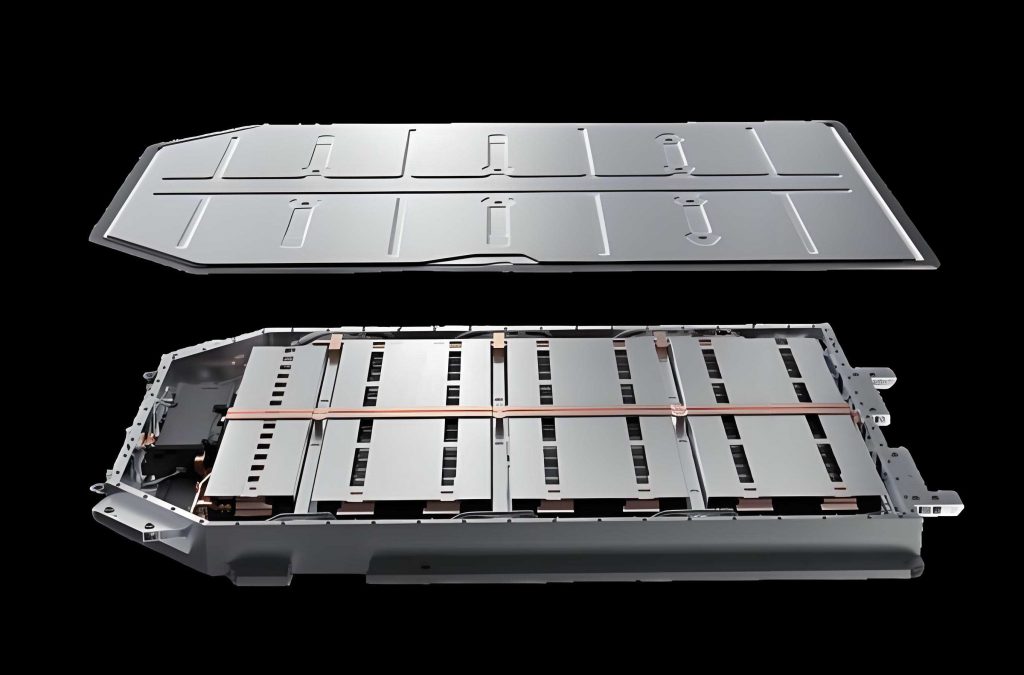
The primary function of a thermal management system for an EV battery pack is to transfer the heat generated by the cells to the external environment via a heat transfer medium, thereby preventing excessive temperatures. The system’s operational principle involves thermodynamics and fluid dynamics. A control unit continuously monitors battery temperature data. If the temperature deviates from the preset optimal range, the control unit activates the cooling (or heating) system. In modern EVs, these systems can be integrated with heat pump technology, which can scavenge heat from the environment to warm the EV battery pack in cold conditions, ensuring performance is maintained. This sophisticated thermal management optimizes the battery’s operating environment, significantly enhancing its efficiency and safety.
Comparative Analysis of Cooling Media and Mechanisms
The selection of the cooling medium is a fundamental decision in the thermal design of an EV battery pack, as it dictates the heat transfer mechanism, system architecture, and ultimate performance. The two primary categories are air-based and liquid-based systems.
Air Cooling Systems
Air cooling relies on forced convection. A fan draws ambient or conditioned air through or across the EV battery pack modules. The air absorbs heat from the battery surfaces and carries it away. The governing equation for convective heat removal is given by Newton’s law of cooling:
$$ q = h A (T_{surface} – T_{air}) $$
where \( q \) is the heat transfer rate, \( h \) is the convective heat transfer coefficient, \( A \) is the surface area, and \( T \) represents temperatures.
The effectiveness of air cooling is highly dependent on the airflow rate, path design, and the thermal properties of air. While simple and low-cost, air’s low volumetric heat capacity (\( \rho c_p \)) and thermal conductivity (\( k \)) limit its heat carrying capacity and rate. This often results in larger temperature gradients within the EV battery pack, especially under high load or high ambient temperature conditions.
Liquid Cooling Systems
Liquid cooling employs a circulating coolant—typically a water-glycol mixture—that flows through channels or cold plates in direct or indirect contact with the EV battery pack cells. Liquids possess significantly higher thermal conductivity and heat capacity than air, enabling more efficient and precise temperature control. The heat absorbed by the coolant is then rejected to the environment via a radiator or a chiller.
The heat transfer in a cold plate can be analyzed using principles of conduction and convection. The overall thermal resistance network is crucial:
$$ R_{total} = R_{cond, cell} + R_{contact} + R_{cond, plate} + R_{conv, liquid} $$
Minimizing each resistance component is key to performance. Liquid systems excel at maintaining temperature uniformity but add complexity, weight, and potential leakage risks.
| Cooling Method | Mechanism | Advantages | Disadvantages | Typical Application |
|---|---|---|---|---|
| Air Cooling | Forced Convection | Simple design, low cost, lightweight, minimal maintenance | Low cooling efficiency, poor temperature uniformity, sensitive to ambient conditions, bulky for high power | Low to medium power density EVs, mild climates |
| Liquid Cooling (Indirect) | Conduction + Liquid Convection | High cooling capacity, excellent temperature uniformity, compact, effective in varied climates | Higher cost, complex system, potential for leakage, added weight | High-performance and long-range EVs |
Key Design Parameters and Performance Metrics
The design of an EV battery pack thermal management system revolves around optimizing several interdependent parameters to meet key performance metrics.
Thermal Performance and Heat Transfer Structure Optimization
The core objective is to maximize heat transfer efficiency from the cell to the coolant. This involves optimizing the thermal interface materials, cold plate/channel geometry, and coolant flow parameters. Computational Fluid Dynamics (CFD) simulation is an indispensable tool for this optimization. Table 1 summarizes different heat transfer structure strategies.
| Design Strategy | Specific Measures | Expected Outcome | Relative Complexity |
|---|---|---|---|
| High Thermal Conductivity Materials | Use of graphene-enhanced composites or aluminum alloys | Significantly reduces conductive thermal resistance within components | Medium |
| Advanced Thermal Interface Materials (TIMs) | Application of high-thermal-conductivity grease, gap pads, or phase change TIMs | Minimizes contact resistance between cell casing and cold plate | Low |
| Complex Cooling Channel Geometries | Serpentine, parallel, or pin-fin array designs within cold plates | Increases heat exchange surface area and improves flow distribution | High (Design & Manufacturing) |
| Flow Distribution Manifolds | Carefully designed inlet/outlet headers | Ensures uniform coolant flow and heat removal across all cells in the EV battery pack | Medium |
| CFD-Based Optimization | Parametric studies on channel width, depth, and layout | Balances pressure drop and heat transfer coefficient for optimal system efficiency | High (Computational) |
The pressure drop (\( \Delta P \)) in cooling channels, which impacts pump power, can be estimated using the Darcy-Weisbach equation for internal flow:
$$ \Delta P = f \frac{L}{D_h} \frac{\rho v^2}{2} $$
where \( f \) is the friction factor, \( L \) is channel length, \( D_h \) is the hydraulic diameter, \( \rho \) is fluid density, and \( v \) is flow velocity. The goal is to achieve a high heat transfer coefficient with an acceptable \( \Delta P \).
Temperature Uniformity
Temperature uniformity is arguably the most critical metric for the longevity and safety of an EV battery pack. A large temperature spread, often characterized by the maximum temperature difference (\( \Delta T_{max} \)) within the pack, leads to uneven aging, state-of-charge (SOC) imbalance, and reduced available capacity. The standard deviation of cell temperatures (\( \sigma_T \)) is another useful statistical measure. Liquid cooling, with its superior heat capacity and designable flow paths, inherently promotes better uniformity than air cooling. An optimized design aims for:
$$ \Delta T_{max} = T_{cell, max} – T_{cell, min} \leq 5^\circ C $$
$$ \sigma_T \text{ as low as possible} $$
This requires not only an effective cooling medium but also a symmetrical cell arrangement, balanced flow paths, and potentially active control of coolant flow to different zones based on real-time temperature feedback.
Impact on Battery Pack Aging
The thermal management system directly influences the degradation rate of the EV battery pack. Key aging mechanisms accelerated by poor thermal management include:
- Solid Electrolyte Interphase (SEI) Growth: Accelerated at elevated temperatures, leading to irreversible lithium inventory loss and capacity fade. The reaction rate often follows an Arrhenius relationship: \( k \propto e^{-E_a/(RT)} \).
- Electrolyte Decomposition: High temperatures can break down the electrolyte, causing gas generation and increased internal pressure.
- Mechanical Stress: Large thermal gradients induce uneven thermal expansion/contraction, causing electrode delamination and micro-crack formation in active materials.
A well-designed thermal management system that maintains the EV battery pack within a mild and uniform temperature range (e.g., 15°C to 35°C) dramatically slows these degradation processes, thereby extending cycle life and sustaining capacity. The relationship between operating temperature and cycle life can be modeled empirically, often showing a logarithmic or exponential decay in cycle count with increasing average temperature.
Emerging Cooling Technologies and Future Directions
Research is actively pursuing advanced cooling solutions to meet the demands of next-generation, high-energy-density EV battery packs. These innovative approaches aim to overcome the limitations of traditional methods.
| Innovative Technology | Working Principle | Potential Advantages for EV Battery Packs | Key Challenges |
|---|---|---|---|
| Phase Change Material (PCM) Cooling | Materials that absorb/release large amounts of latent heat during phase transition (solid-liquid). They are integrated around cells. | Passive operation, excellent temperature homogenization, absorbs high heat pulses, reduces peak temperature. | Low thermal conductivity in pure form, limited heat rejection rate after saturation, adds significant mass and volume. |
| Heat Pipes / Vapor Chambers | Two-phase devices using evaporation/condensation cycle to transfer heat with very high effective thermal conductivity. | Extremely efficient passive heat spreading, can transfer heat over distances with minimal temperature drop, lightweight. | Cost, integration complexity with cell arrays, orientation sensitivity for some types, finite heat transport capacity. |
| Direct Cooling with Dielectric Fluids | Immersion of the entire EV battery pack in a thermally conductive but electrically insulating fluid (e.g., mineral oil, engineered fluorocarbons). | Superior thermal coupling (direct contact), excellent temperature uniformity, inherent fire suppression, potential for simpler pack design. | Very high fluid cost, added mass, fluid maintenance and potential compatibility issues with materials, sealing challenges. |
| Refrigerant-Based Cooling (Two-Phase) | Using the EV’s air conditioning refrigerant (e.g., R134a, R1234yf) that evaporates inside cold plates in direct contact with cells. | Exceptionally high heat transfer coefficients due to latent heat of vaporization, enables very compact and powerful cooling systems. | Extremely high system control complexity, requires precise pressure/temperature management, risk of refrigerant leakage. |
| Hybrid Systems | Combination of multiple techniques (e.g., PCM + liquid cold plates, air + mist spraying). | Leverages strengths of different methods; can provide backup or enhanced cooling for extreme conditions. | Increased design complexity, control logic, and cost. |
The effectiveness of PCMs can be analyzed through the energy balance during melting:
$$ m_{pcm} L = \int Q_{gen} \, dt – \int m_{pcm} c_p \, dT $$
where \( m_{pcm} \) is the mass of PCM, \( L \) is its latent heat of fusion, \( Q_{gen} \) is the heat generation rate of the EV battery pack, and \( c_p \) is the specific heat. This equation helps determine the required PCM mass to absorb a given heat load without a significant temperature rise.
System-Level Design Optimization and Trade-offs
The final design of a thermal management system for an EV battery pack is a multi-objective optimization problem. Engineers must balance competing factors:
1. Performance vs. Cost: Liquid cooling offers superior performance but at a higher Bill-of-Materials (BOM) and assembly cost compared to air cooling.
2. Efficiency vs. Parasitic Load: The energy consumed by pumps, fans, and compressors (parasitic load) reduces the overall vehicle efficiency. An optimized system minimizes this load while meeting cooling demands. The coefficient of performance (COP) for active systems is a key metric.
3. Cooling Capacity vs. Weight/Volume: Adding more cooling capacity (larger radiators, more coolant, thicker cold plates) increases weight and volume, which can negatively impact vehicle range and packaging.
4. Simplicity vs. Control Precision: Air systems are simpler but offer coarse control. Advanced liquid or refrigerant systems enable precise thermal management but require sophisticated sensors, controllers, and software algorithms.
A holistic approach uses tools like Multi-Disciplinary Design Optimization (MDO) to find the Pareto-optimal frontier, considering models for heat transfer, fluid dynamics, battery degradation, and vehicle-level energy consumption.
Conclusion
The thermal management system is a cornerstone technology for the safety, performance, and durability of electric vehicles, centered on the EV battery pack. While conventional air and liquid cooling methods are well-established, the choice between them involves fundamental trade-offs in efficiency, uniformity, complexity, and cost. The relentless push towards higher energy density, faster charging, and longer cycle life is driving innovation in advanced cooling technologies such as phase change materials, heat pipes, and direct immersion cooling. Future development will focus on intelligent, adaptive systems that seamlessly integrate with the vehicle’s overall thermal loop, employing sophisticated control strategies and novel materials. The ultimate goal is to design lightweight, compact, and highly efficient thermal management systems that ensure the EV battery pack operates reliably under all conditions, thereby accelerating the global transition to sustainable electric mobility.