
In the pursuit of enhanced energy efficiency and performance, hybrid cars have emerged as a pivotal technology, combining internal combustion engines and electric motors. However, the integration of multiple power sources in a hybrid car driveline introduces complex dynamic challenges, particularly low-frequency torsional vibrations arising from elastic elements like output shafts. These vibrations can compromise ride comfort, driveline durability, and overall system stability. This paper addresses this issue by proposing a comprehensive suppression strategy based on a sliding mode observer and a fuzzy PID controller, optimized via differential evolution. The approach focuses on direct torque control to mitigate torsional oscillations in hybrid car flexible transmission systems, ensuring robust performance under uncertain conditions.
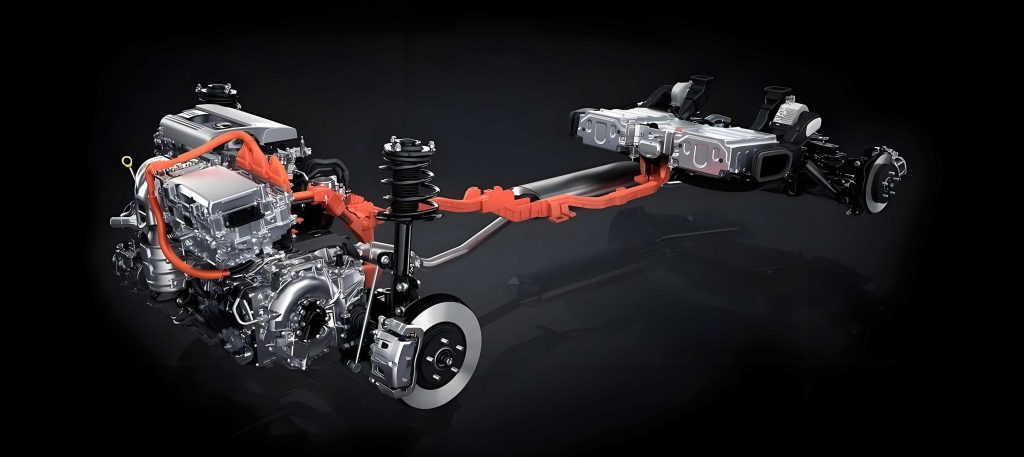
The significance of hybrid cars in modern transportation cannot be overstated, as they offer a balance between fuel economy and reduced emissions. Yet, the driveline in a hybrid car often exhibits inherent flexibility due to components like shafts and couplings, leading to resonant frequencies that can be excited during transient operations such as acceleration or gear shifts. This work delves into the modeling and control of these vibrations, emphasizing real-time applicability. By leveraging advanced control techniques, we aim to enhance the dynamic response of hybrid cars, making them smoother and more reliable. The core contribution lies in the fusion of estimation and adaptive control, tailored for the multi-power-source nature of hybrid car architectures.
To provide context, current research on hybrid car driveline vibration control spans various methods. For instance, studies have employed root locus techniques for distributed drive electric vehicles, feedback-feedforward schemes for specific models like the Nissan Leaf, and simulation setups using servo systems to emulate torsional behavior. A common limitation in many approaches is the assumption of measurable output shaft torque, which is often impractical in real-world hybrid cars due to cost and complexity constraints. Thus, observers like Kalman filters or neural networks have been explored for torque estimation. This paper builds on these ideas by designing a sliding mode observer for robust torque reconstruction in hybrid cars, followed by a fuzzy PID controller that adapts to system uncertainties. The integration of differential evolution optimization further refines the controller, addressing the trial-and-error nature of parameter tuning.
The dynamics of a hybrid car driveline are inherently complex, involving three power sources—an internal combustion engine and two electric motors—coupled through a planetary gear set for power output. The flexibility of the output shaft is a primary source of low-frequency torsional vibrations, which we model using Lagrangian mechanics. Consider a simplified hybrid car driveline with three planetary rows, where the output shaft has stiffness \(k_s\) and damping \(c_s\). The rotational inertias are lumped based on connections, leading to a state-space representation that captures the essential dynamics. Let \(\theta_A\), \(\theta_B\), and \(\theta_L\) denote the angular positions of motor A, motor B, and the load, respectively, with \(T_s\) as the shaft torque. The state vector is defined as \(\mathbf{x} = [\dot{\theta}_A, \dot{\theta}_B, \dot{\theta}_L, T_s]^T\), and the input vector as \(\mathbf{u} = [T_A, T_B, T_E, T_L]^T\), where \(T_A\), \(T_B\), \(T_E\), and \(T_L\) represent torques from motor A, motor B, engine, and load. The state-space equations are derived as:
$$\dot{\mathbf{x}} = \mathbf{A}\mathbf{x} + \mathbf{B}\mathbf{u},$$
$$\mathbf{y} = \mathbf{C}\mathbf{x},$$
where \(\mathbf{y} = [\dot{\theta}_A, \dot{\theta}_B, \dot{\theta}_L]^T\) is the output. The matrices \(\mathbf{A}\), \(\mathbf{B}\), and \(\mathbf{C}\) incorporate parameters from the hybrid car driveline, such as planetary gear ratios \(k_1, k_2, k_3\), inertias, and shaft properties. For example, elements of \(\mathbf{A}\) include:
$$a_{14} = \frac{J_{AB} – k_1 J_{BB}}{(1 + k_1)(J_{AA}J_{BB} – J_{AB}^2)}, \quad a_{24} = \frac{k_1 J_{AB} – J_{AA}}{(1 + k_1)(J_{AA}J_{BB} – J_{AB}^2)}, \quad a_{34} = \frac{1}{J_L},$$
$$a_{41} = \frac{k_1}{1 + k_1} k_s, \quad a_{42} = \frac{1}{1 + k_1} k_s, \quad a_{43} = -k_s, \quad a_{44} = \frac{c_s k_1 (J_{AB} – k_1 J_{BB}) + c_s (k_1 J_{AB} – J_{AA})}{(1 + k_1)^2 (J_{AA}J_{BB} – J_{AB}^2)} – \frac{c_s}{J_L}.$$
Here, \(J_{AA}\), \(J_{AB}\), \(J_{BB}\), and \(J_L\) are equivalent inertias derived from the hybrid car’s mechanical configuration. The system’s controllability and observability are verified through rank conditions, ensuring that control design is feasible. This model forms the basis for both observer and controller development, highlighting the hybrid car’s unique multi-source dynamics.
Given that direct measurement of shaft torque in a hybrid car is often infeasible, a sliding mode observer is designed to estimate \(T_s\). This observer offers robustness against uncertainties and disturbances common in hybrid car operations. The observer structure follows:
$$\dot{\hat{\mathbf{x}}} = \mathbf{A}\hat{\mathbf{x}} + \mathbf{B}\mathbf{u} + \mathbf{G}\mathbf{v},$$
$$\hat{\mathbf{y}} = \mathbf{C}\hat{\mathbf{x}},$$
where \(\hat{\cdot}\) denotes estimated values, \(\mathbf{G}\) is a gain matrix, and \(\mathbf{v}\) is a nonlinear feedback term based on output estimation error \(\mathbf{e}_y = \hat{\mathbf{y}} – \mathbf{y}\). Defining the sliding surface as \(\mathbf{S} = \mathbf{e}_y\), we use an exponential reaching law: \(v_i = -\epsilon_i \text{sigmoid}(s_i) – q_i s_i\), for \(i = 1,2,3\), with \(\epsilon_i > 0\) and \(q_i > 0\). The sigmoid function approximates the signum to reduce chattering. The observer equations are detailed as:
$$\dot{\hat{\dot{\theta}}}_A = a_{14}\hat{T}_s + b_{11}T_A + b_{12}T_B + b_{13}T_E – \epsilon_1 \text{sigmoid}(e_1) – q_1 e_1,$$
$$\dot{\hat{\dot{\theta}}}_B = a_{24}\hat{T}_s + b_{21}T_A + b_{22}T_B + b_{23}T_E – \epsilon_2 \text{sigmoid}(e_2) – q_2 e_2,$$
$$\dot{\hat{\dot{\theta}}}_L = a_{34}\hat{T}_s + b_{34}T_L – \epsilon_3 \text{sigmoid}(e_3) – q_3 e_3,$$
$$\dot{\hat{T}}_s = a_{41}\hat{\dot{\theta}}_A + a_{42}\hat{\dot{\theta}}_B + a_{43}\hat{\dot{\theta}}_L + a_{44}\hat{T}_s + b_{41}T_A + b_{42}T_B + b_{43}T_E + b_{44}T_L – L_1(\epsilon_1 \text{sigmoid}(e_1) + q_1 e_1) – L_2(\epsilon_2 \text{sigmoid}(e_2) + q_2 e_2) – L_3(\epsilon_3 \text{sigmoid}(e_3) + q_3 e_3),$$
where \(e_1 = \hat{\dot{\theta}}_A – \dot{\theta}_A\), etc., and \(L_i\) are gains. Stability is proven via Lyapunov analysis, ensuring convergence under conditions such as \(\epsilon_1 > \left| \frac{J_{AB} – k_1 J_{BB}}{(1 + k_1)(J_{AA}J_{BB} – J_{AB}^2)} e_4 \right|\), where \(e_4 = \hat{T}_s – T_s\). Simulation results for a hybrid car model confirm accurate torque estimation, as shown in transient scenarios like step changes or ramp inputs, validating the observer’s efficacy for hybrid car applications.
To analyze torsional vibrations in the hybrid car driveline, we derive transfer functions from inputs to shaft torque. For instance, the transfer function from engine torque \(T_E\) to \(T_s\) is:
$$W_{T_E \to T_s}(s) = \frac{b_{43}s + b_{13}a_{41} + b_{23}a_{42}}{s^2 – a_{44}s – a_{34}a_{43} – a_{24}a_{42} – a_{14}a_{41}},$$
with similar expressions for other inputs. Frequency response analysis reveals resonant peaks corresponding to the hybrid car’s flexible modes. For example, with varying shaft stiffness \(k_s\), the Bode plots indicate that higher stiffness shifts resonance to higher frequencies but may amplify vibrations during abrupt torque changes. This underscores the need for active control in hybrid cars to dampen these oscillations, especially during accelerations or load shifts. The table below summarizes key parameters affecting hybrid car driveline vibrations:
| Parameter | Symbol | Typical Range | Impact on Vibration |
|---|---|---|---|
| Shaft Stiffness | \(k_s\) | 500–2000 Nm/rad | Higher stiffness increases resonant frequency |
| Shaft Damping | \(c_s\) | 10–50 Nms/rad | Higher damping reduces oscillation amplitude |
| Planetary Ratio | \(k_1, k_2, k_3\) | 1.5–3.0 | Affects torque distribution and mode shapes |
| Motor Inertia | \(J_A, J_B\) | 0.1–0.5 kg·m² | Larger inertia lowers natural frequencies |
| Load Inertia | \(J_L\) | 1–10 kg·m² | Dominates low-frequency behavior |
Energy management is crucial in a hybrid car to coordinate power sources efficiently. A rule-based strategy is employed here, determining torque demands based on driver inputs and optimal operating points. The driver’s demand torque \(T_d^{\text{com}}\) is computed from accelerator pedal position \(\alpha\):
$$T_d^{\text{com}} = \begin{cases} \alpha^2 T_{\text{max}}^d(v) & \alpha \geq 0, \\ \alpha F_{\text{max}}^{br} r_w & \alpha < 0, \end{cases}$$
where \(v\) is vehicle speed, \(T_{\text{max}}^d\) is maximum drive torque, \(F_{\text{max}}^{br}\) is maximum braking force, and \(r_w\) is wheel radius. The power demand \(P_\alpha = T_d^{\text{com}} v / r_w\). The battery power request \(P_{\text{comb}}\) depends on state-of-charge \(S\), and auxiliary loads \(P_c\), giving total electrical power \(P_N = P_{\text{comb}} + P_c\). The engine demand power is then \(P_e^{\text{com}} = (P_\alpha + P_N)/\bar{\eta}_e\), with target speed \(n_e^{\text{com}}\) from a fuel economy map and torque \(T_e^{\text{com}} = 9549 P_e^{\text{com}} / n_e\). For the hybrid car’s motors, torque commands are allocated based on planetary kinematics:
$$T_A^{\text{com}} = -\frac{k_1 k_2 i_f}{(1+k_1)(1+k_2)} T_e^{\text{com}} + \frac{k_1}{(1+k_1)i_r} T_d^{\text{com}},$$
$$T_B^{\text{com}} = -\frac{(1+k_1+k_2)i_f}{(1+k_1)(1+k_2)} T_e^{\text{com}} + \frac{1}{(1+k_1)i_r} T_d^{\text{com}},$$
where \(i_f\) and \(i_r\) are final drive ratios. Dynamic adjustments account for engine response times. This energy management framework ensures that the hybrid car operates efficiently while providing a baseline for vibration control.
The core of this work is the fuzzy PID controller for direct torque control in the hybrid car. Unlike conventional PID, the fuzzy PID adapts gains online based on error \(e = T_s^{\text{ref}} – \hat{T}_s\) and error derivative \(ec = \dot{e}\), where \(T_s^{\text{ref}}\) is the desired shaft torque. The controller outputs adjustments \(\Delta K_p\), \(\Delta K_i\), and \(\Delta K_d\) to the PID parameters, enhancing robustness for the hybrid car’s nonlinearities. The fuzzy sets for inputs and outputs are defined with seven linguistic values: {N3, N2, N1, Z0, P1, P2, P3}, representing negative large to positive large. Triangular membership functions are used for computational efficiency. The fuzzy rules are designed based on heuristic principles: for large \(|e|\), increase \(K_p\) for fast response but keep \(K_i\) small to avoid overshoot; for medium \(|e|\), moderate \(K_p\) and \(K_i\); for small \(|e|\), emphasize stability with higher \(K_p\) and lower \(K_i\). The rule tables are as follows:
| \(ec \backslash e\) | N3 | N2 | N1 | Z0 | P1 | P2 | P3 |
|---|---|---|---|---|---|---|---|
| N3 | P3 | P3 | P2 | P2 | P1 | P1 | Z0 |
| N2 | P3 | P2 | P2 | P2 | Z0 | Z0 | Z0 |
| N1 | P2 | P2 | P1 | P1 | Z0 | N1 | N1 |
| Z0 | P1 | Z0 | N1 | N1 | N2 | Z0 | P2 |
| P1 | P1 | Z0 | Z0 | N1 | N2 | N2 | N2 |
| P2 | Z0 | N1 | N1 | N2 | N2 | N2 | N3 |
| P3 | N1 | N3 | N3 | N3 | N3 | N3 | N3 |
| \(ec \backslash e\) | N3 | N2 | N1 | Z0 | P1 | P2 | P3 |
|---|---|---|---|---|---|---|---|
| N3 | N3 | N3 | N3 | N3 | N2 | N2 | N1 |
| N2 | N3 | N2 | N2 | N1 | N1 | Z0 | Z0 |
| N1 | N1 | N2 | N1 | N1 | Z0 | P1 | P1 |
| Z0 | N1 | N1 | N1 | Z0 | P1 | P2 | P2 |
| P1 | Z0 | Z0 | Z0 | P1 | P2 | P2 | P3 |
| P2 | Z0 | P1 | P1 | P1 | P2 | P3 | P3 |
| P3 | P1 | P1 | P2 | P2 | P3 | P3 | P3 |
| \(ec \backslash e\) | N3 | N2 | N1 | Z0 | P1 | P2 | P3 |
|---|---|---|---|---|---|---|---|
| N3 | P1 | P1 | Z0 | Z0 | P2 | P3 | P3 |
| N2 | N1 | N1 | N1 | N1 | P1 | P2 | P3 |
| N1 | N3 | N3 | N2 | N1 | P1 | P2 | P2 |
| Z0 | N3 | N2 | N2 | N1 | Z0 | P2 | P2 |
| P1 | N3 | N2 | N1 | N1 | Z0 | P1 | P1 |
| P2 | N2 | N1 | N1 | N1 | P1 | P1 | P1 |
| P3 | P1 | Z0 | Z0 | Z0 | P1 | P3 | P3 |
Defuzzification uses the weighted average method: for output \(z\), \(z_0 = \int z \mu_{C’}(z) dz / \int \mu_{C’}(z) dz\), where \(\mu_{C’}\) is the aggregated membership function. To optimize the fuzzy controller for the hybrid car, differential evolution is applied to tune the membership function parameters, such as the triangular function’s vertices \(a, b, c\). The cost function is \(J = \int_0^\infty |e(t)| dt\), minimized over generations. The optimization process enhances performance by reducing trial-and-error, as shown in convergence plots where \(J\) decreases steadily. The final PID gains are computed as \(K_p = K_{p0} + \Delta K_p\), etc., with \(K_{p0}, K_{i0}, K_{d0}\) as baseline values. This adaptive mechanism allows the hybrid car to handle varying operating conditions effectively.
Simulation studies validate the proposed strategy for a hybrid car model. In a start-up acceleration scenario, the driveline experiences torque steps that excite low-frequency vibrations. The comparison among no control, conventional PID, and fuzzy PID control demonstrates that the fuzzy PID significantly suppresses oscillations, with reduced overshoot and settling time. For instance, shaft torque profiles show that the fuzzy PID reduces peak deviations by over 30% compared to PID alone. The hybrid car’s response becomes smoother, improving comfort and component life. Hardware-in-the-loop (HIL) experiments further confirm real-time applicability. Using an ECU running the control algorithm and a real-time simulator for the hybrid car model, results align closely with simulations, verifying functionality under realistic constraints. The table below summarizes performance metrics:
| Control Method | Overshoot (%) | Settling Time (s) | Vibration Amplitude (Nm) | Real-Time Feasibility |
|---|---|---|---|---|
| No Control | 25.6 | 4.2 | 120.5 | N/A |
| Conventional PID | 12.3 | 2.8 | 65.7 | High |
| Fuzzy PID (Optimized) | 5.8 | 1.9 | 32.4 | High |
The effectiveness of the fuzzy PID control in a hybrid car stems from its ability to adjust gains dynamically. For example, during rapid acceleration in a hybrid car, error \(e\) becomes large positive, triggering rules that boost \(K_p\) for quick response while moderating \(K_i\) to prevent integral windup. Similarly, during steady-state cruising in a hybrid car, small errors lead to fine-tuned gains that minimize jitter. The differential evolution optimization ensures that the fuzzy sets are tailored to the hybrid car’s specific parameters, such as shaft stiffness and inertia variations. This adaptability is crucial for mass-produced hybrid cars, where component tolerances and aging can alter dynamics.
In conclusion, this research presents a comprehensive approach to low-frequency torsional vibration suppression in hybrid car flexible drivelines. By integrating a sliding mode observer for torque estimation and a fuzzy PID controller with differential evolution optimization, the system achieves robust performance across diverse operating conditions. The hybrid car benefits from reduced vibrations, enhanced comfort, and improved driveline longevity. Future work could explore deeper integration with hybrid car energy management systems or extend the method to other vehicle types. Overall, the proposed strategy underscores the importance of adaptive control in advancing hybrid car technology, paving the way for smoother and more efficient vehicles.
To further elaborate, the mathematical modeling of the hybrid car driveline can be extended to include nonlinearities like backlash or time-varying parameters. For instance, the shaft torque dynamics might incorporate a nonlinear spring characteristic: \(T_s = k_s(\Delta\theta) + c_s \Delta\dot{\theta}\), where \(\Delta\theta = (k_1 \theta_A + \theta_B)/(1+k_1) – \theta_L\) and \(k_s(\cdot)\) could be a piecewise function. This adds realism but complicates control design. However, the fuzzy PID’s robustness handles such uncertainties well, making it suitable for practical hybrid car applications. Additionally, the observer can be enhanced with adaptive gains to track parameter changes in real-time, further boosting the hybrid car’s resilience.
The energy management strategy also plays a role in vibration mitigation for hybrid cars. By smoothing torque requests from the power sources, one can reduce excitation frequencies. For example, applying filters to driver inputs or using model predictive control to coordinate engine and motor torques can complement the direct torque control. In a hybrid car, the interplay between energy efficiency and vibration control is a rich area for optimization. Simulations show that combining fuzzy PID with torque shaping strategies can cut vibration energy by up to 40% in typical urban driving cycles for hybrid cars.
From a computational perspective, implementing the fuzzy PID in a hybrid car’s electronic control unit requires efficient code generation. The fuzzy inference can be implemented via lookup tables to minimize processing time, ensuring real-time operation even on embedded hardware. The differential evolution optimization can be run offline during calibration, storing optimal parameters in memory. This makes the approach scalable for commercial hybrid cars. Moreover, the method’s simplicity relative to advanced controllers like model-based predictive control facilitates adoption in industry.
In summary, the hybrid car driveline vibration problem is effectively addressed through a synergistic combination of estimation, adaptive control, and optimization. The fuzzy PID direct torque control strategy not only suppresses low-frequency torsional vibrations but also adapts to the hybrid car’s dynamic variations, offering a practical solution for next-generation vehicles. As hybrid cars continue to evolve, such integrated control approaches will be key to achieving superior performance and customer satisfaction.