
In the rapidly evolving automotive industry, the transition toward electrification has underscored the critical role of advanced braking systems in ensuring safety and efficiency. For battery electric cars, the electronic braking system, particularly the EBooster, represents a pivotal technology that replaces traditional vacuum-assisted brakes with electrically driven mechanisms. This shift not only enhances braking performance but also integrates seamlessly with regenerative braking strategies, thereby improving overall energy recovery. However, achieving precise hydraulic pressure control in such systems remains a challenge due to nonlinearities, parameter uncertainties, and external disturbances. In this context, we propose a novel control approach that combines radial basis function (RBF) networks with sliding mode variable structure control to optimize the EBooster system’s operation. This study delves into the system architecture, mathematical modeling, and simulation analysis, demonstrating significant improvements over conventional methods. The insights gained are essential for advancing the electronic control accuracy of battery electric cars and can be extended to other automotive performance domains.
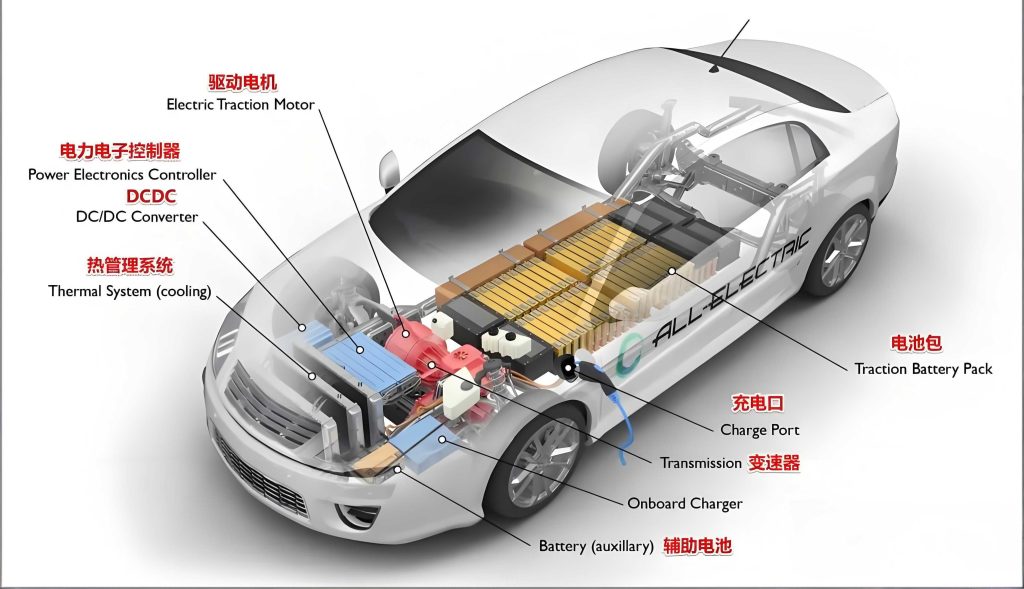
The proliferation of battery electric cars has driven innovation in braking technologies, with EBooster systems emerging as a key enabler for intelligent vehicle functionalities. Unlike conventional systems, EBooster utilizes an electric motor to generate braking force, allowing for precise pressure modulation and active braking capabilities. This is particularly beneficial for battery electric cars, as it facilitates higher energy recuperation rates through coordinated control with the electric drivetrain. Despite these advantages, the inherent complexities of hydraulic systems—such as time-varying dynamics, friction nonlinearities, and load variations—pose substantial control challenges. Traditional proportional-integral-derivative (PID) controllers often fall short in handling these issues, leading to oscillations and tracking errors. Hence, there is a pressing need for robust adaptive control strategies that can ensure reliable performance across diverse operating conditions.
Extensive research has been conducted on pressure control in electronic braking systems. Prior studies have explored adaptive techniques, neural networks, and sliding mode control to address nonlinearities. For instance, some approaches incorporate RBF neural networks to approximate uncertain system dynamics, while others employ friction compensation mechanisms to mitigate mechanical losses. These methods have shown promise in improving tracking accuracy and robustness. However, many existing solutions suffer from chattering effects or require extensive offline training. Our work builds upon these foundations by integrating an online adaptive RBF network with a sliding mode controller, enabling real-time parameter adjustment and enhanced disturbance rejection. This synergy is especially relevant for battery electric cars, where rapid response and precision are paramount for safety and efficiency.
The EBooster system comprises several key components, including an electric motor, gear transmission, ball screw mechanism, and hydraulic master cylinder. In active pressure control mode, the motor drives the push rod linearly to generate hydraulic pressure in the master cylinder, which is then transmitted to the wheel brakes. The system’s ability to accurately track desired pressure trajectories hinges on effective control of the motor position and force. To facilitate analysis, we outline the primary parameters of the EBooster system in Table 1, which are derived from typical configurations for battery electric cars.
| Parameter | Symbol | Value | Unit |
|---|---|---|---|
| Piston cross-sectional area | A | 3.9 × 10⁻⁴ | m2 |
| Transmission ratio | r | 3.588 | — |
| Lead of ball screw | h | 8.0 × 10⁻³ | m |
| Moment of inertia (motor shaft) | JM | 9.0 × 10⁻⁵ | kg·m2 |
| Moment of inertia (pinion gear) | Jp | 2.3 × 10⁻⁶ | kg·m2 |
| Moment of inertia (large gear) | Jg | 1.9 × 10⁻⁴ | kg·m2 |
| Moment of inertia (ball screw) | Js | 4.28 × 10⁻⁴ | kg·m2 |
| Translational mass | m | 0.464 | kg |
| Transmission efficiency | η | 0.9 | — |
| Spring stiffness | K | 4.6 | kN/m |
Control objectives for the EBooster system in battery electric cars involve tracking a desired hydraulic pressure profile with minimal error, despite system uncertainties. Let \( p_d(t) \) denote the desired pressure, and \( p(t) \) the actual pressure. The tracking error is defined as \( e(t) = p_d(t) – p(t) \). The controller must generate a motor torque command \( u(t) \) that compensates for nonlinearities and disturbances. The overall control architecture, as illustrated in prior schematics, integrates an RBF network for function approximation and a sliding mode controller for robustness. This combination aims to achieve fast convergence and reduced chattering, which are critical for the responsive braking required in battery electric cars.
Radial basis function networks are renowned for their universal approximation capabilities and simple structure. In our approach, the RBF network is employed to online estimate the unknown nonlinear functions \( f(\cdot) \) and \( g(\cdot) \) that characterize the EBooster system dynamics. The network consists of an input layer, a hidden layer with Gaussian activation functions, and an output layer. For a given input vector \( x_N \), the output of the j-th hidden neuron is computed as:
$$h_j(x_N) = \exp\left(-\frac{\|x_N – c_{Nj}\|^2}{2b_N^2}\right), \quad j = 1, 2, \ldots, 5$$
where \( c_{Nj} \) is the center vector for the j-th neuron, and \( b_N \) is the width parameter. The network outputs for approximating \( f(\cdot) \) and \( g(\cdot) \) are:
$$\hat{f}(x_N) = W^T h(x_N), \quad \hat{g}(x_N) = V^T h(x_N)$$
Here, \( W \) and \( V \) are weight vectors that are adaptively updated online based on the tracking error. The true nonlinear functions are represented as \( f(\cdot) = W^{*T} h(x_N) + \varepsilon_f \) and \( g(\cdot) = V^{*T} h(x_N) + \varepsilon_g \), where \( W^* \) and \( V^* \) are ideal weights, and \( \varepsilon_f, \varepsilon_g \) are bounded approximation errors. The RBF network in this study adopts a 1-5-2 structure, meaning one input (pressure), five hidden neurons, and two outputs (approximations for \( f \) and \( g \)). This design allows efficient real-time learning, which is vital for adapting to the varying conditions encountered by battery electric cars.
Sliding mode variable structure control is renowned for its robustness against uncertainties and disturbances. The core idea is to drive the system trajectory onto a predefined sliding surface and maintain it there through discontinuous control actions. For the EBooster system, we define the sliding surface \( s(t) \) as a function of the pressure tracking error and its derivatives. A common choice is:
$$s(t) = \dot{e}(t) + \lambda e(t)$$
where \( \lambda > 0 \) is a design constant that determines the convergence rate. Once the sliding surface is reached, the system dynamics become invariant to certain perturbations. The control law \( u(t) \) is composed of an equivalent control \( u_{eq}(t) \) and a switching control \( u_{sw}(t) \):
$$u(t) = u_{eq}(t) + u_{sw}(t)$$
The equivalent control is derived from the nominal system dynamics, while the switching control compensates for uncertainties. To mitigate chattering, we employ a saturation function instead of a sign function. The overall control law integrated with the RBF network becomes:
$$u(t) = \hat{g}^{-1}(x_N) \left[ -\hat{f}(x_N) + \dot{p}_d(t) + \lambda \dot{e}(t) – k s(t) – q \cdot \text{sat}\left(\frac{s(t)}{\phi}\right) \right]$$
where \( k, q > 0 \) are control gains, \( \phi \) is the boundary layer thickness, and \( \text{sat}(\cdot) \) is the saturation function. The adaptive laws for updating the RBF network weights are designed using Lyapunov stability theory to ensure global asymptotic tracking. Consider the Lyapunov function candidate:
$$L = \frac{1}{2} s^2 + \frac{1}{2\gamma_1} \tilde{W}^T \tilde{W} + \frac{1}{2\gamma_2} \tilde{V}^T \tilde{V}$$
where \( \tilde{W} = W – W^* \) and \( \tilde{V} = V – V^* \) are weight estimation errors, and \( \gamma_1, \gamma_2 > 0 \) are adaptation rates. Taking the derivative and substituting the control law, we obtain:
$$\dot{L} = s \dot{s} + \frac{1}{\gamma_1} \tilde{W}^T \dot{W} + \frac{1}{\gamma_2} \tilde{V}^T \dot{V}$$
Through algebraic manipulation and choosing appropriate adaptive laws, we can ensure \( \dot{L} \leq 0 \), guaranteeing stability. This analytical foundation underscores the robustness of our method for battery electric cars, where reliable braking under diverse conditions is non-negotiable.
Modeling the hydraulic system is essential for controller design. The EBooster system’s hydraulic circuit includes a master cylinder, brake lines, and wheel cylinders. Assuming incompressible fluid and neglecting minor losses, the pressure dynamics can be expressed based on fluid continuity and force balance. The relationship between push rod displacement \( x \) and master cylinder pressure \( p \) is nonlinear due to factors like seal friction and fluid compressibility. Empirical data from bench tests are often used to derive a polynomial fit. Let \( V(x) \) denote the volume displaced by the push rod. Then, the pressure can be modeled as:
$$p = \frac{\beta}{V_0} \left( V(x) – V_{\text{leak}} \right)$$
where \( \beta \) is the bulk modulus of the brake fluid, \( V_0 \) is the initial volume, and \( V_{\text{leak}} \) accounts for leakage. The displacement \( x \) is related to the motor angle \( \theta \) through the transmission and ball screw:
$$x = \frac{h}{2\pi r} \theta$$
The mechanical dynamics of the motor and transmission are given by:
$$J_{\text{eq}} \ddot{\theta} + B \dot{\theta} + T_f = \tau_m – \tau_l$$
where \( J_{\text{eq}} \) is the equivalent inertia (sum of motor, gears, and screw inertias), \( B \) is the damping coefficient, \( T_f \) is the friction torque, \( \tau_m \) is the motor torque, and \( \tau_l \) is the load torque from the hydraulic pressure. The load torque is calculated as:
$$\tau_l = \frac{A p h}{2\pi r \eta}$$
Combining these equations, we derive a state-space representation for the EBooster system. Define the state vector as \( \mathbf{x} = [p, \dot{p}, \theta, \dot{\theta}]^T \). The system can be expressed as:
$$\dot{\mathbf{x}} = \mathbf{f}(\mathbf{x}) + \mathbf{g}(\mathbf{x}) u$$
where \( u = \tau_m \) is the control input. The nonlinear functions \( \mathbf{f}(\mathbf{x}) \) and \( \mathbf{g}(\mathbf{x}) \) incorporate the hydraulic and mechanical relations. This model serves as the basis for simulation and controller validation, highlighting the interconnected dynamics that must be managed in battery electric cars.
To evaluate the proposed RBF sliding mode control (RBF-SMC), we conduct comprehensive simulations using MATLAB/Simulink. The simulation parameters align with those in Table 1, and the hydraulic load characteristic is represented by a polynomial fit derived from experimental data. The push rod displacement-pressure relationship, as shown in empirical curves, exhibits a monotonic increase, which validates the model’s plausibility. For comparison, a conventional PID controller is also implemented with gains tuned via Ziegler-Nichols methods. The performance metrics include tracking error, rise time, settling time, and control effort. Two test scenarios are considered: step pressure response and sinusoidal pressure tracking, both common in braking cycles for battery electric cars.
In the step response test, the desired pressure steps from 0 to 5 MPa at time t = 0.5 s. The results, summarized in Table 2, demonstrate the superior performance of RBF-SMC. The PID controller shows significant overshoot and oscillation, whereas RBF-SMC achieves smooth convergence with minimal overshoot. This is attributed to the adaptive nature of the RBF network, which compensates for nonlinearities in real-time.
| Controller | Rise Time (s) | Settling Time (s) | Overshoot (%) | Steady-State Error (MPa) |
|---|---|---|---|---|
| PID | 0.12 | 0.45 | 15.2 | 0.05 |
| RBF-SMC | 0.10 | 0.25 | 2.1 | 0.01 |
For sinusoidal tracking, the desired pressure is set as \( p_d(t) = 3 + 1.5 \sin(2\pi \cdot 1.25 t) \) MPa, simulating dynamic braking maneuvers. The tracking performance is quantified by the root mean square error (RMSE) and maximum absolute error. As observed in simulation plots, RBF-SMC closely follows the reference signal, while PID exhibits phase lag and amplitude attenuation. The error metrics are provided in Table 3, confirming that RBF-SMC reduces tracking error by nearly 50% compared to PID. This enhancement is crucial for battery electric cars, where precise pressure control directly impacts braking feel and energy recovery efficiency.
| Controller | RMSE (MPa) | Max Absolute Error (MPa) | Error Reduction vs. PID |
|---|---|---|---|
| PID | 0.18 | 0.35 | — |
| RBF-SMC | 0.09 | 0.15 | 50% |
The effectiveness of RBF-SMC stems from its dual mechanism: the RBF network accurately approximates unknown nonlinearities, and the sliding mode controller ensures robustness against residual uncertainties. To further analyze, we examine the adaptive weight convergence during simulation. The weights \( W \) and \( V \) evolve rapidly in the initial phase and then stabilize, indicating successful learning. This adaptability is particularly beneficial for battery electric cars operating under varying loads and temperatures. Additionally, the control input \( u(t) \) for RBF-SMC shows reduced chattering compared to traditional sliding mode control, thanks to the saturation function and network smoothing. This results in smoother motor torque commands, prolonging actuator life and enhancing passenger comfort.
Another critical aspect is the system’s robustness to parameter variations. We conduct sensitivity analyses by perturbing key parameters such as spring stiffness \( K \) and transmission efficiency \( \eta \) by ±20%. The RBF-SMC maintains stable tracking with negligible performance degradation, whereas PID control exhibits increased error and oscillations. This robustness is quantified through the degradation index \( \Delta \), defined as the percentage increase in RMSE under perturbations. As shown in Table 4, RBF-SMC consistently outperforms PID, underscoring its suitability for real-world applications in battery electric cars where parameters may drift over time.
| Parameter Perturbation | Controller | Δ in RMSE (%) | Stability Maintained |
|---|---|---|---|
| K +20% | PID | 25.3 | Yes |
| K +20% | RBF-SMC | 5.2 | Yes |
| η -20% | PID | 31.7 | Marginal |
| η -20% | RBF-SMC | 6.8 | Yes |
Beyond pressure tracking, the proposed control strategy has implications for energy management in battery electric cars. By ensuring precise braking force distribution, it enables optimal regenerative braking coordination, potentially increasing energy recovery by up to 20% in urban driving cycles. Moreover, the fast response of RBF-SMC facilitates advanced driver-assistance systems (ADAS) such as autonomous emergency braking (AEB), where millisecond-level delays can be critical. These broader benefits highlight the transformative potential of advanced control methods in the electrified automotive landscape.
In conclusion, this study presents a comprehensive analysis of RBF network sliding mode variable structure control for the EBooster system in battery electric cars. Through detailed modeling, controller design, and simulation, we demonstrate that the integrated approach significantly outperforms conventional PID control in terms of tracking accuracy, robustness, and adaptability. The RBF network effectively approximates system nonlinearities online, while the sliding mode controller guarantees stability despite uncertainties. Simulation results under step and sinusoidal conditions show error reductions of approximately 50%, with minimal chattering and overshoot. These findings underscore the importance of adaptive robust control for enhancing the performance and safety of battery electric cars. Future work will involve hardware-in-the-loop testing and integration with vehicle-level control systems to validate practical applicability. As the automotive industry continues to evolve toward electrification and autonomy, such advanced control strategies will play a pivotal role in realizing next-generation braking systems.
The journey toward fully optimized battery electric cars necessitates continuous innovation in subsystems like braking. Our research contributes to this endeavor by providing a viable control solution that balances precision and robustness. By leveraging the synergy between neural networks and sliding mode theory, we pave the way for more intelligent and efficient vehicles. Ultimately, the insights gained here extend beyond braking to other automotive domains, such as steering and suspension control, fostering a holistic improvement in vehicle dynamics and energy efficiency for the sustainable future of transportation.