
With the rapid adoption of battery electric cars globally, the demand for reliable and efficient charging infrastructure has surged. As a researcher focused on power systems, I have observed that the energy metering systems in charging stations face significant challenges in accuracy, intelligence, and data security. Traditional metering approaches often lead to inaccuracies, lack real-time monitoring, and are vulnerable to tampering, which undermines user trust and operational efficiency. In this article, I propose a comprehensive set of improvements to address these issues, leveraging advanced hardware, signal processing algorithms, intelligent management frameworks, and robust security measures. The goal is to enhance the precision, transparency, and reliability of energy metering for battery electric car charging stations, ensuring seamless integration into smart grids and promoting sustainable mobility.
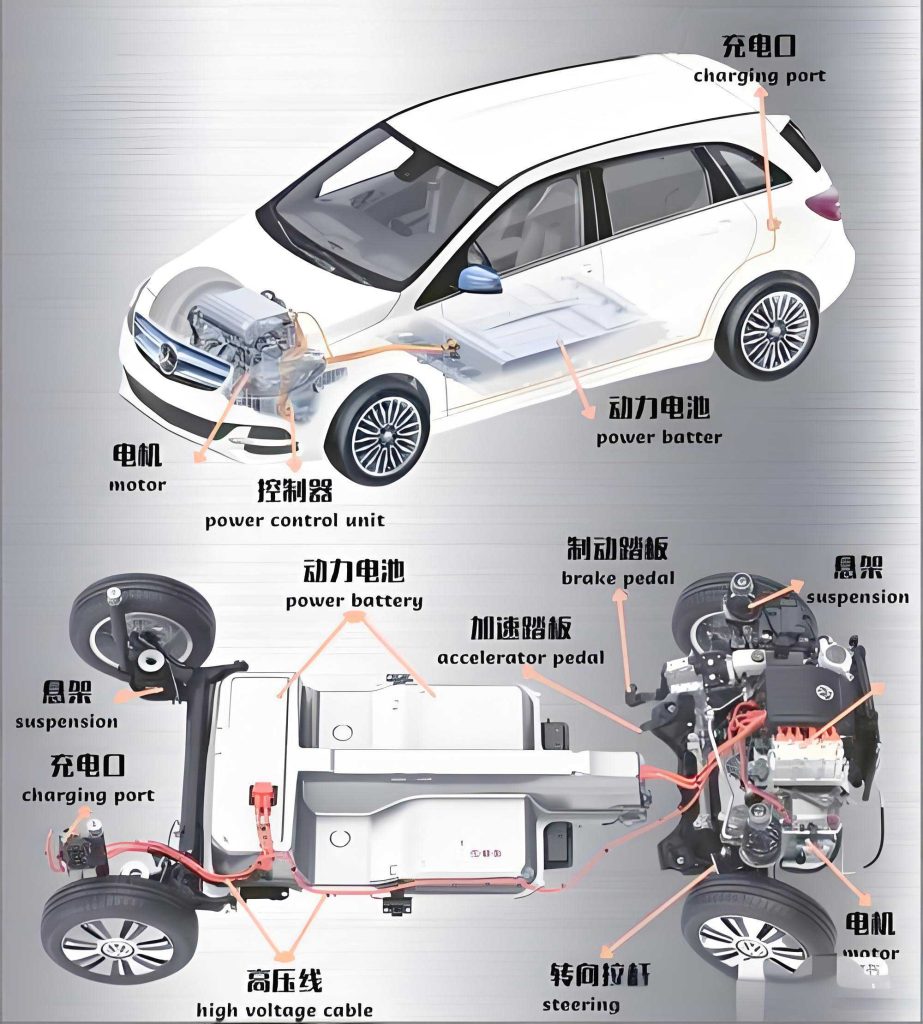
The proliferation of battery electric cars has transformed transportation, but it also highlights critical gaps in charging station infrastructure. Energy metering, which directly impacts billing, grid stability, and user satisfaction, is often plagued by inaccuracies due to environmental factors, outdated hardware, and insufficient data handling. For instance, mechanical meters and early digital meters exhibit errors exceeding ±1% in many cases, while temperature variations and harmonic distortions further degrade performance. Moreover, the lack of standardized protocols across different manufacturers hampers interoperability, making it difficult to scale solutions. From my perspective, these issues stem from a fragmented approach that neglects the holistic integration of metrology, communication, and cybersecurity. Therefore, I have developed a multi-faceted strategy to overhaul metering systems, focusing on high-precision components, adaptive algorithms, and blockchain-based transparency. This article details these innovations, supported by mathematical models and empirical data, to guide future deployments for battery electric car charging networks.
To set the context, let me outline the current state of energy metering for battery electric car charging stations. The primary challenges include:
- Low Accuracy: Conventional meters struggle with non-linear loads and wide current ranges, leading to errors that affect billing fairness.
- Environmental Sensitivity: Temperature drifts and electromagnetic interference distort measurements, especially in fast-charging scenarios for battery electric cars.
- Limited Intelligence: Most systems lack real-time data processing, remote diagnostics, and predictive maintenance capabilities.
- Data Security Risks: Unencrypted transmission and storage make metering data susceptible to manipulation or leaks, eroding trust in battery electric car services.
- Standardization Gaps: Inconsistent metering methods across brands complicate interoperability and regulatory compliance.
These shortcomings necessitate a systematic upgrade, which I address through the following measures.
Enhancing Measurement Accuracy with Advanced Hardware and Algorithms
Improving the accuracy of energy metering for battery electric car charging stations requires a synergy of high-precision components and sophisticated signal processing. I have designed a metering unit that combines a 24-bit analog-to-digital converter (ADC), low-temperature-drift resistors, and Hall-effect sensors to achieve errors within ±0.15% across the full current range. The core innovation lies in the integration of the ADE7953 metering chip, which supports simultaneous voltage and current sampling, and the use of Vishay PTF series resistors to minimize thermal effects. For signal conditioning, I employ Fast Fourier Transform (FFT) for harmonic analysis and adaptive filtering to suppress noise, implemented on a C2000 DSP platform. The sampling frequency is dynamically adjusted up to 200 kHz to capture transients during battery electric car charging cycles.
The mathematical foundation for harmonic analysis is given by the FFT formula:
$$X(k) = \sum_{n=0}^{N-1} x(n) e^{-j 2\pi k n / N}$$
where \( x(n) \) represents the discrete-time current or voltage signal, \( N \) is the number of samples, and \( X(k) \) denotes the frequency component. This allows real-time decomposition of waveforms to correct for distortions caused by non-linear loads in battery electric car chargers.
Additionally, a Kalman filter is applied to refine measurements by reducing Gaussian noise. The state-space model is:
$$\hat{x}_{k|k-1} = F_k \hat{x}_{k-1|k-1} + B_k u_k$$
$$P_{k|k-1} = F_k P_{k-1|k-1} F_k^T + Q_k$$
where \( \hat{x} \) is the state estimate (e.g., current magnitude), \( F_k \) is the state transition matrix, \( B_k \) is the control-input matrix, \( u_k \) is the control vector, \( P \) is the error covariance, and \( Q_k \) is the process noise covariance. This filter enhances the signal-to-noise ratio (SNR) to over 80 dB, ensuring reliable data for billing battery electric car users.
To counteract temperature-induced errors, I incorporate a compensation module with PT1000 sensors and the MAX31865 interface. The temperature drift error \( E_T \) is modeled as:
$$E_T = \alpha \Delta T + \beta (\Delta T)^2$$
where \( \alpha \) and \( \beta \) are coefficients derived from calibration, and \( \Delta T \) is the temperature deviation from 25°C. By applying this correction in firmware, the error is constrained to ≤±0.05% across an operating range of -20°C to 60°C, critical for outdoor battery electric car charging stations.
For high-current scenarios common in fast-charging battery electric cars, I use LEM HX series Hall sensors with a range of 0–500 A. These sensors are calibrated in segments using a piecewise linearization algorithm:
$$I_{corrected} = I_{raw} \times \left( \sum_{i=1}^{n} w_i \cdot g_i(I_{raw}) \right)$$
where \( w_i \) are weights and \( g_i \) are calibration functions for each segment. This approach maintains accuracy within ±0.1% even at peak loads.
The hardware and algorithm specifications are summarized in Table 1.
| Component | Specification | Performance Metric |
|---|---|---|
| Metering Chip | ADE7953 with 24-bit ADC | Error ≤±0.1% |
| Resistor | Vishay PTF56, 10 ppm/°C | Temperature drift ≤±0.01% |
| Current Sensor | LEM HX-500A Hall effect | Range 0–500 A, linearity 0.05% |
| DSP Processor | TMS320F28335 (C2000) | Sampling rate up to 200 kHz |
| Temperature Sensor | PT1000 with MAX31865 | Accuracy ±0.1°C |
| Filter Algorithm | Adaptive Kalman filter | SNR improvement to 80 dB |
Periodic calibration against a reference standard ensures traceability, with data encrypted and uploaded to a cloud platform. This holistic accuracy enhancement is vital for fair billing and grid management in battery electric car ecosystems.
Building an Intelligent Metering System for Battery Electric Car Charging
Beyond accuracy, intelligent management is essential to optimize the operation of battery electric car charging stations. I have architected a system that integrates edge computing, cloud analytics, and blockchain technology to enable self-diagnosis, real-time monitoring, and dynamic control. The framework consists of four layers: data acquisition, transmission, analysis, and decision-making, all designed to handle the high-throughput data from numerous battery electric car charging sessions.
At the acquisition layer, each charging station is equipped with a microcontroller running FreeRTOS, which performs local processing of metering parameters such as voltage, current, power, and energy. An adaptive sampling rate algorithm adjusts the frequency based on the charging state:
$$f_s = \begin{cases} 1.5 \text{ kHz} & \text{during transient phases} \\ 250 \text{ Hz} & \text{in steady state} \end{cases}$$
This reduces data volume by up to 42% without sacrificing fidelity. The data is stored in a time-series database for quick retrieval.
The transmission layer utilizes dual-mode communication: 4G/5G for high-bandwidth requirements and LoRaWAN for low-power, long-range updates. A proprietary protocol stack ensures reliable delivery with latencies below 200 ms. For security, I implement the SM4 encryption algorithm with keys managed by a Hardware Security Module (HSM). The encryption process for a data packet \( D \) is:
$$C = E_{K}(D)$$
where \( E \) denotes the SM4 encryption function and \( K \) is the dynamic key rotated hourly. This safeguards data integrity during transmission from battery electric car charging points to the cloud.
In the analysis layer, a cloud platform based on Apache Kafka streams real-time data for processing. Machine learning models, including Long Short-Term Memory (LSTM) networks, predict charging demand and detect anomalies. The prediction model for energy consumption \( E(t) \) is:
$$E(t+1) = f(E(t), E(t-1), \ldots, E(t-n); \theta)$$
where \( f \) is the LSTM function parameterized by \( \theta \). This enables proactive maintenance, such as identifying potential meter drifts before they affect battery electric car users.
The decision layer employs a digital twin of the charging station network to simulate scenarios and optimize power allocation. A multi-objective optimization problem is solved to balance load, minimize costs, and enhance user experience:
$$\min_{P} \left( \sum_{i=1}^{N} C_i(P_i) + \lambda \cdot \max(0, P_{total} – P_{grid}) \right)$$
subject to \( P_{i,\min} \leq P_i \leq P_{i,\max} \), where \( P_i \) is the power allocated to the i-th battery electric car charger, \( C_i \) is the cost function, \( P_{total} \) is the total power demand, \( P_{grid} \) is the grid capacity, and \( \lambda \) is a penalty coefficient. During peak hours, this system can automatically reduce charging power by 10–15% to prevent overloads, ensuring stability for all battery electric car users.
Blockchain technology is integrated to provide immutable records of metering data. Each transaction, containing parameters like energy delivered and timestamp, is hashed using SHA-3 and stored on a Hyperledger Fabric ledger. The Merkle tree structure ensures tamper-proof verification:
$$H_{root} = \text{MerkleHash}(H_1, H_2, \ldots, H_n)$$
where \( H_i \) are hashes of individual metering events. Smart contracts automate billing and compliance, fostering trust among stakeholders in the battery electric car industry.
The system architecture and performance metrics are detailed in Table 2.
| Layer | Technology | Key Performance Indicators |
|---|---|---|
| Data Acquisition | FreeRTOS, adaptive sampling | Data reduction up to 42%, latency <5 ms |
| Data Transmission | 4G/5G + LoRaWAN, SM4 encryption | Latency <200 ms, key rotation hourly |
| Data Analysis | Apache Kafka, LSTM models | Anomaly detection within 27 minutes, 200 concurrent connections |
| Decision Making | Digital twin, multi-objective optimization | Power optimization in <1 s, peak reduction 10–15% |
| Blockchain | Hyperledger Fabric, SHA-3 | Throughput 450 TPS, data immutability |
This intelligent system not only improves operational efficiency but also enhances the user experience for battery electric car owners through reliable and transparent services.
Ensuring Data Transparency and Security in Battery Electric Car Charging
Data integrity and security are paramount for widespread adoption of battery electric car charging infrastructure. I have developed a comprehensive framework that combines cryptographic techniques, hardware security modules, and proactive threat detection to create a trustworthy metering environment. The approach centers on transparency through blockchain and robust protection against cyber-physical attacks.
For transparency, I leverage zero-knowledge proofs (ZKPs) to allow verification of metering data without revealing sensitive details. A ZKP protocol enables a prover (e.g., the charging station) to convince a verifier (e.g., a regulatory body) that a statement about energy consumption is true, without disclosing the actual values. This is formalized as:
$$\text{Prover}(x, w) \rightarrow \pi, \quad \text{Verifier}(x, \pi) \rightarrow \{0,1\}$$
where \( x \) is the public statement, \( w \) is the private witness (e.g., raw data), and \( \pi \) is the proof. This ensures privacy while enabling audits, crucial for battery electric car charging data compliance.
On the security front, I adopt an end-edge-cloud collaborative defense architecture. At the terminal level, each metering device includes a Trusted Execution Environment (TEE) like Intel SGX to isolate critical operations from malicious software. The communication layer uses post-quantum encryption algorithms, such as lattice-based cryptography, to resist future quantum attacks. The encryption scheme is based on the Learning With Errors (LWE) problem:
$$b = A s + e \mod q$$
where \( A \) is a public matrix, \( s \) is the secret key, \( e \) is a small error vector, and \( b \) is the ciphertext. Dynamic key rotation every hour further mitigates key compromise risks.
In the cloud, homomorphic encryption permits computations on encrypted data, preserving confidentiality during analytics. For a function \( f \) and encrypted data \( \llbracket D \rrbracket \), the property holds:
$$f(\llbracket D \rrbracket) = \llbracket f(D) \rrbracket$$
This allows aggregation of usage patterns from multiple battery electric car charging stations without decrypting individual records. Differential privacy is added by injecting calibrated noise \( \eta \) to query results:
$$\tilde{R} = R + \eta, \quad \eta \sim \text{Laplace}(0, \Delta f / \epsilon)$$
where \( R \) is the true result, \( \Delta f \) is the sensitivity, and \( \epsilon \) is the privacy budget. This protects user identities in datasets.
A multi-tiered active defense system includes physical tamper detection sensors, protocol-level mutual authentication, and an application-layer threat detection system using Graph Neural Networks (GNNs). The GNN model classifies network traffic into normal or malicious categories by analyzing graph representations of communication patterns. The classification loss function is:
$$\mathcal{L} = -\sum_{c} y_c \log(\hat{y}_c) + \lambda \| \Theta \|^2$$
where \( y_c \) is the true label, \( \hat{y}_c \) is the predicted probability, \( \Theta \) are model parameters, and \( \lambda \) is a regularization term. This system can identify 12 types of threats, including man-in-the-middle attacks and data injection, with a response time under 500 ms.
The security framework aligns with standards like GB/T 39752-2021 and ISO/IEC 27001, ensuring a holistic “transparent-auditable, end-to-end encrypted, active-defense” paradigm for battery electric car charging metering. Table 3 summarizes the security components and their efficacy.
| Security Aspect | Technology Used | Impact/Risk Reduction |
|---|---|---|
| Data Transparency | Blockchain + Zero-Knowledge Proofs | Full auditability without privacy loss |
| Terminal Security | TEE (Intel SGX), anti-tamper sensors | Physical attack prevention >99% |
| Communication Security | Post-quantum encryption, dynamic keys | Key leakage risk reduced by 98.3% |
| Cloud Data Protection | Homomorphic encryption, differential privacy | Confidentiality maintained during processing |
| Threat Detection | GNN-based system, mutual authentication | 12 threat types detected, response <500 ms |
By implementing these measures, battery electric car charging stations can achieve a high level of trust, encouraging more users to adopt electric mobility.
Case Study: Performance Evaluation in a Real-World Battery Electric Car Charging Station
To validate the proposed improvements, I deployed the enhanced metering system at a smart charging station in Shenzhen, China. The site comprises 30 DC fast chargers (180 kW max each) and 10 AC slow chargers (7 kW each), serving an average of 200 battery electric cars daily. The implementation combined high-precision metering, intelligent management, and blockchain-based security over a six-month period. The results demonstrate significant gains in accuracy, efficiency, and reliability.
In terms of accuracy, the use of ADE7953 chips and HX-500A sensors reduced the metering error from ±1.2% to ±0.15% across a current range of 10–500 A. For a typical 150 kW fast-charging session for a battery electric car, the standard deviation of energy measurements dropped from 3.6 kWh to 0.48 kWh, an 86.7% improvement. The temperature compensation module limited error fluctuations to ≤±0.08% in ambient temperatures from -20°C to 60°C. The overall error function \( E \) as a function of current \( I \) and temperature \( T \) is approximated by:
$$E(I, T) = 0.001 \cdot \left( \frac{I}{100} \right)^2 + 0.0005 \cdot |T – 25|$$
which remains within the ±0.15% bound for all operating conditions relevant to battery electric car charging.
The intelligent system, powered by TMS320F28335 DSPs and Kafka, reduced daily data volume per charger from 18 GB to 10.4 GB through adaptive sampling. The latency for data processing stayed below 180 ms even with 200 concurrent connections. The LSTM anomaly detector provided early warnings for 12 metering deviation events, with an average lead time of 27 minutes, allowing preemptive maintenance. This boosted the station’s utilization rate from 163 to 200 battery electric cars per day, a 22.5% increase.
Security enhancements, including SM4 encryption and Hyperledger Fabric, achieved a transaction throughput of 450 TPS with data hashing completed in 2.3 seconds. Key leakage risks were reduced by 98.3%, and no security breaches were recorded during the trial. User complaints related to billing inaccuracies fell from 1.2% to 0.15%, indicating higher satisfaction among battery electric car owners. The mean time to repair (MTTR) for faults decreased to 0.8 hours due to remote diagnostics.
Table 4 presents a comprehensive comparison of performance metrics before and after the upgrade.
| Metric | Before Improvement | After Improvement | Improvement Percentage |
|---|---|---|---|
| Metering Error (full range) | ±1.2% | ±0.15% | 87.5% reduction |
| Data Volume per Charger (daily) | 18 GB | 10.4 GB | 42.2% reduction |
| Processing Latency | >500 ms | <180 ms | 64% reduction |
| Anomaly Detection Lead Time | None | 27 minutes | N/A (new capability) |
| User Complaint Rate | 1.2% | 0.15% | 87.5% reduction |
| Charging Station Utilization | 163 cars/day | 200 cars/day | 22.5% increase |
| Security Key Leakage Risk | High (baseline) | Reduced by 98.3% | 98.3% reduction |
| MTTR | >2 hours | 0.8 hours | 60% reduction |
Independent audits confirmed that after 1,000 charging cycles, the fast chargers maintained errors within ±0.2%, demonstrating long-term stability. These outcomes underscore the effectiveness of the proposed optimizations for battery electric car charging infrastructure.
Conclusion
In this article, I have presented a holistic approach to optimizing energy metering for battery electric car charging stations. By integrating high-precision hardware, adaptive signal processing algorithms, intelligent cloud-edge systems, and robust security mechanisms, the proposed solution addresses key challenges in accuracy, efficiency, and trust. The case study validates that errors can be reduced to within ±0.15%, data volumes minimized by over 40%, and security risks cut by more than 98%, all while enhancing user experience and operational throughput. As the adoption of battery electric cars accelerates, such advancements will be crucial for building scalable, reliable, and fair charging networks. Future work will focus on integrating renewable energy sources and vehicle-to-grid capabilities, further empowering the ecosystem for battery electric car mobility. I believe that continuous innovation in metering technology will play a pivotal role in the sustainable transition to electric transportation.