
As we advance toward the “dual-carbon” goals, the proliferation of battery electric cars in our society has been remarkable. This surge directly translates to an escalating demand for charging infrastructure that is not only larger in scale but also higher in quality and safety. Charging piles and stations, as the primary means for replenishing energy for battery electric cars, play a pivotal role. Their operational integrity directly impacts user experience, vehicle safety, and grid stability. With the rising number of battery electric cars on the road, incidents stemming from substandard charging equipment have increased, underscoring the urgent need to strengthen quality management throughout the entire lifecycle of charging facilities. A critical component of this is enhancing the scrutiny during the inspection, testing, and acceptance phases.
In our research and practice, we have anchored our work on a series of pivotal standard documents, such as NB/T 33004—2020, NB/T 33008.1—2018, NB/T 33001—2018, GB/T 50966—2024, and T/GAEPA 2022. These standards form the technical backbone for the construction, acceptance, testing, and operation of charging infrastructure. Our study aims to dissect the core content and interrelationships of these standards, with the objective of building a systematic inspection and testing service capability framework. This framework is standards-based, encompasses all elements of charging facilities, and is forward-looking to support the safe, reliable operation of charging infrastructure and the healthy development of the new energy vehicle industry, particularly for battery electric cars.
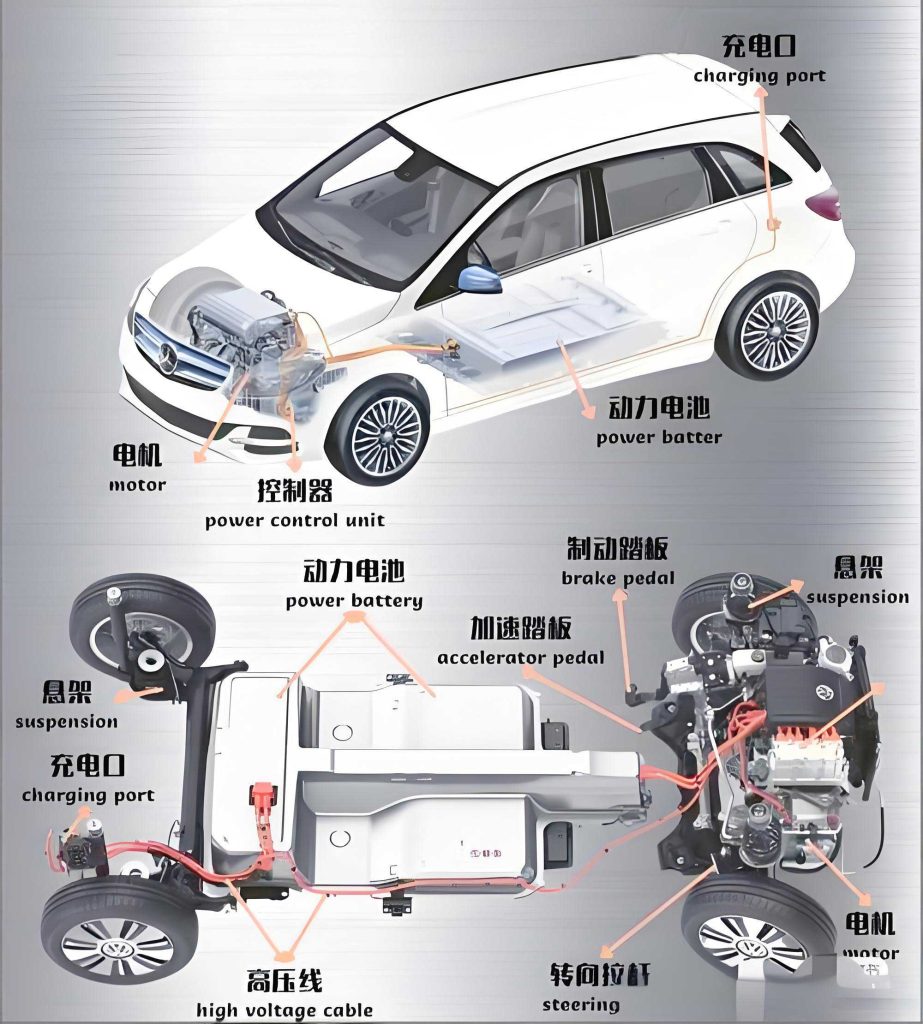
From our perspective, building a robust inspection and testing service capability requires a deep understanding and strict adherence to relevant standard requirements. The current standard system covers the entire process from design and construction to equipment manufacturing, acceptance testing, and operation and maintenance for facilities serving battery electric cars.
Interpretation of Core Standard Systems and Requirement Analysis
The foundation for any charging facility project lies in its design. GB/T 50966—2024, the latest national standard for charging station design, specifies comprehensive requirements for site selection, layout, charging systems, power supply and distribution systems, monitoring systems, civil engineering, fire protection, and energy conservation. For us, this means our inspection capability must include design compliance verification. We need to assess whether designs meet requirements for electrical safety clearances, fire-fighting facility configuration, lightning protection and grounding, and monitoring system setup. This standard also introduces new emphases on cybersecurity, plug-and-charge, Vehicle-to-Grid (V2G) interaction, dedicated charging parking spaces, and fire resistance ratings for canopies. Consequently, our detection capabilities must evolve to address these emerging areas critical for the ecosystem of battery electric cars.
The construction and final acceptance process is governed by NB/T 33004—2020. This standard outlines management and technical requirements from construction preparation through to final completion acceptance. Our role involves embedding quality control throughout the construction process. This includes incoming inspection of materials and equipment, testing of concealed works like grounding resistance and pipeline laying, and conducting staged verifications. The final acceptance, a crucial gateway to operation, requires us to perform a holistic assessment. We must verify not only that individual devices meet specifications but that the entire charging station operates seamlessly as a system. The acceptance checklist, derived from this standard, is extensive, covering documentation completeness, engineering entity quality, system functionality, electrical safety performance, and fire system linkage.
For the charging equipment itself, technical conditions and test specifications are paramount. For DC chargers (non-on-board chargers), NB/T 33001—2018 defines the basic performance, functions, safety, environmental adaptability, and Electromagnetic Compatibility (EMC) requirements. To test against this, we must establish laboratory capabilities for type tests and routine tests, covering electrical performance, protection functions, insulation performance, EMC, environmental tests, and communication protocol consistency. The companion test specification, NB/T 33008.1—2018, provides detailed test procedures, wiring methods, instrument requirements, and pass/fail criteria. This demands that we procure high-precision test equipment, establish rigorous test procedures, and train personnel proficient in these standards and equipment operation.
Similarly, for AC charging piles, NB/T 33002—2018 and NB/T 33008.2—2018 set the requirements and test methods. Key tests include verification of compatibility with AC 220V single-phase and AC 380V three-phase power supplies, rated output current, overload protection, leakage protection, metering accuracy, communication functions, and ingress protection (IP) ratings. The proliferation of battery electric cars necessitates that both AC and DC charging points are thoroughly vetted.
System-level requirements and interoperability are covered in standards like GB/T 18487.1—2023, which addresses general requirements for conductive charging systems, including architecture, safety principles, charging modes, control pilot circuits, and electrical safety. A core aspect of ensuring a smooth user experience for battery electric car owners is interoperability testing. We must verify that charging piles can communicate effectively with the Battery Management Systems (BMS) of various vehicle models. This involves charging sequence tests, abnormal condition tests, and in-depth protocol consistency verification for control guidance signals and alarm information. Specifically, protocol conformance testing against GB/T 27930—2023 (communication protocol for DC charging) and GB/T 34657.1—2017 requires specialized protocol analyzers and test suites.
For on-site testing post-commissioning or during operation, the group standard T/GAEPA 2022 serves as a practical guide. It focuses on field detection techniques, requiring us to equip portable, high-precision test gear and develop efficient on-site procedures to assess operational status and minimize risks during testing.
To summarize the key standards and their focus areas, we have constructed the following table:
| Standard Code | Primary Focus | Key Inspection/Test Aspects | Relevance to Battery Electric Car Charging |
|---|---|---|---|
| GB/T 50966—2024 | Charging Station Design | Site layout, electrical safety, fire protection, cybersecurity, V2G readiness. | Ensures the foundational infrastructure is safe and capable for future battery electric car technologies. |
| NB/T 33004—2020 | Construction & Final Acceptance | Process quality control, system-level functionality, documentation review, safety performance. | Guarantees that the installed station meets all operational and safety benchmarks for serving battery electric cars. |
| NB/T 33001—2018 & NB/T 33008.1—2018 | DC Charger Technical Conditions & Testing | Electrical performance, protection functions, EMC, environmental tests, protocol conformance. | Directly validates the performance and safety of fast-charging equipment for battery electric cars. |
| NB/T 33002—2018 & NB/T 33008.2—2018 | AC Charging Pile Technical Conditions & Testing | Input compatibility, output characteristics, protection features, metering, communication. | Ensures the reliability and safety of widespread AC charging points used by many battery electric cars. |
| GB/T 18487.1—2023 & GB/T 27930—2023 | Charging System & Communication Protocol | System architecture, electrical safety, control pilot, interoperability, protocol consistency. | Critical for achieving seamless and safe interaction between the charging pile and the battery electric car’s BMS. |
| T/GAEPA 2022 | On-site Testing Technology | Portable equipment use, operational assessment, risk-minimized testing procedures. | Enables periodic health checks and troubleshooting of charging facilities in the field, maintaining service for battery electric cars. |
Core Capability Construction for Charging Pile/Station Inspection and Testing Services
Building a comprehensive service capability is a multi-faceted endeavor. We focus on developing standardized laboratory detection, robust field inspection, deep-dive technical expertise, and digital intelligence.
Standardized Laboratory Detection Capability
Our laboratory infrastructure is divided into specialized areas. The Electrical Safety Lab is equipped with insulation resistance testers, ground continuity testers, dielectric strength (hipot) testers, and residual current device (RCD) testers. The Performance Test Lab features high-precision AC/DC power sources, programmable DC electronic loads, and power analyzers to measure key parameters like output voltage, current, power, and efficiency. The efficiency of a charger, crucial for energy conservation in serving battery electric cars, is calculated as:
$$\eta = \frac{P_{out}}{P_{in}} \times 100\%$$
where $P_{out}$ is the output power to the battery electric car and $P_{in}$ is the input power from the grid.
The EMC Laboratory contains facilities for conducted and radiated emissions testing, as well as immunity tests per relevant standards. The Environmental Reliability Lab has chambers for temperature cycling, damp heat, and salt spray tests, along with IP rating test equipment. The Communication Protocol Test Lab houses battery simulators and protocol conformance test platforms. Behind this hardware is a team of engineers with backgrounds in electrical engineering, power electronics, automation, communications, and EMC. They undergo rigorous training to master standards, equipment operation, and data analysis. Our entire operation is governed by a quality management system conforming to ISO/IEC 17025, ensuring impartiality, scientific validity, and accuracy.
On-site Inspection and Acceptance Evaluation Capability
Fieldwork demands portable and intelligent equipment. Our kits include clamp-on power meters/energy quality analyzers, multifunctional electrical safety testers, infrared thermal imagers, charging interface comprehensive testers, partial discharge detectors, and mobile DC loads. We have developed standardized field inspection workflows and detailed job guides to ensure consistency and safety. A critical aspect is system-level functional verification. We test the complete charging station’s operation, including start/stop control, multiple payment methods, fault alarm handling, data exchange with backend monitoring systems, and fire system linkage. Furthermore, we meticulously check electrical installation quality: cable selection and laying, terminal tightness, labeling, equipotential bonding, and the construction quality of the lightning protection and grounding system.
Deepening Specialized Technical Capabilities
Several technical areas require focused expertise. For charging safety, we are proficient in functional tests for insulation monitoring, discharge circuits, contactor adhesion detection, emergency stop, overtemperature protection, and over/under voltage/current protection. The mathematical model for detecting abnormal current can be represented as a check against thresholds:
$$I_{actual} > I_{set\_max} \quad \text{or} \quad I_{actual} < I_{set\_min} \quad \Rightarrow \quad \text{Fault}$$
where $I_{actual}$ is the measured current and $I_{set\_max/min}$ are the protection setpoints.
Communication protocol consistency testing is another cornerstone. We use protocol analyzers to decode and verify message sequences between the charger and the battery electric car’s BMS, ensuring compliance with GB/T 27930, GB/T 34657.1, and evolving standards like ISO 15118. With the growing number of battery electric cars, power quality impact is a concern. We analyze harmonics, voltage fluctuations, flicker, and three-phase unbalance generated during charging. The Total Harmonic Distortion (THD) for current is a key metric:
$$THD_I = \frac{\sqrt{\sum_{h=2}^{\infty} I_h^2}}{I_1} \times 100\%$$
where $I_1$ is the fundamental current and $I_h$ are the harmonic components.
Emerging areas include cybersecurity detection, where we perform vulnerability scans, penetration tests, and verify data encryption for charging station networks, and V2G/G2V function validation. For bidirectional charging, we test power control accuracy, grid interaction logic, and compliance with relevant standards, preparing for a future where battery electric cars become grid assets.
Digital and Intelligent Detection Platform
We are implementing a Laboratory Information Management System (LIMS) to digitalize workflow—managing task assignment, automatic data采集, report generation, and data analytics. Exploring IoT, we are developing capabilities for remote monitoring of operational parameters (with authorization and security) to support predictive maintenance. Furthermore, by aggregating vast amounts of test data, we aim to apply big data analytics to identify fault patterns, performance degradation trends, and risk points. This information can feedback to manufacturers for design improvement and help operators optimize maintenance schedules, ultimately enhancing the reliability of charging services for battery electric cars.
The following table summarizes our core capability matrix:
| Capability Domain | Key Components | Tools & Equipment | Output/Deliverable |
|---|---|---|---|
| Laboratory Testing | Electrical Safety, Performance, EMC, Environmental, Protocol Conformance | Hipot testers, Power analyzers, EMC chambers, Environmental chambers, Protocol testers | Type Test Reports, Routine Test Certificates |
| Field Inspection & Acceptance | Installation Quality Check, System Function Test, Safety Performance Verification | Portable safety testers, Thermal cameras, Interface testers, Load banks | On-site Test Reports, Acceptance Certificates, Compliance Checklists |
| Specialized Technical | Safety Protection Validation, Protocol Analysis, Power Quality Assessment, Cybersecurity, V2G Testing | Protocol analyzers, Power quality analyzers, Cybersecurity testing tools, Bidirectional charger test setups | Specialized Assessment Reports, Interoperability Certificates, Risk Analysis |
| Digital Platform | Data Management (LIMS), Remote Monitoring, Big Data Analytics | LIMS software, IoT sensors, Data analytics software | Digital Reports, Predictive Maintenance Alerts, Industry Benchmarking Data |
Optimization of Inspection and Acceptance Processes and Practical Essentials
We advocate for a holistic, full-process quality control philosophy integrated into the lifecycle of charging facilities for battery electric cars.
Full-Process Quality Control Concept
Our involvement starts at the design review stage, using GB/T 50966—2024 as a benchmark. We then extend to equipment witness testing at manufacturers’ sites and rigorous incoming inspection. During construction, we conduct surveillance and staged acceptance for critical and concealed works. Finally, the竣工验收 is executed per NB/T 33004—2020 and project contracts. This end-to-end approach ensures potential issues are identified and rectified early, preventing costly post-commissioning fixes and enhancing safety for the end-users of battery electric cars.
Standardized Final Acceptance Process
The final acceptance is a formal, structured event. It begins with confirming prerequisites: construction is complete as per drawings, equipment is installed and debugged, trial operation is successful, and documentation is ready. An acceptance team is formed, comprising the owner, designer, contractor, supervisor, supplier, our inspection agency, and the future operator. The process flows through several stages: document review, physical on-site inspection of civil works and installations, functional testing of all systems, on-site electrical safety performance testing (e.g., insulation resistance, ground continuity, RCD trip testing), issue identification and rectification, re-inspection if needed, and finally, the formulation of an acceptance conclusion and report. A typical electrical safety test sequence can be summarized as:
- Visual Inspection of wiring and connections.
- Insulation Resistance Test: Measure resistance between live parts and earth. Value must exceed a minimum threshold (e.g., >1 MΩ per standard).
- Ground Continuity Test: Verify resistance of protective earth circuit is low enough (e.g., <0.1 Ω).
- Dielectric Strength Test: Apply high voltage between circuits and earth to check for breakdown.
- Functional Test of Protections: Simulate faults to verify proper operation of RCDs, overcurrent devices, etc.
The pass criterion for insulation resistance, for instance, is often:
$$R_{insulation} \ge R_{min}$$
where $R_{min}$ is specified by the applicable standard.
Periodic Testing and Condition Assessment During Operation
Post-acceptance, charging stations require ongoing vigilance. We help operators establish periodic testing schedules based on equipment criticality, operating environment, and historical performance. Key periodic tests include re-verification of electrical safety, inspection and testing of charging interfaces (for wear and electrical properties), spot-checks of charging performance and communication functions, infrared thermography of electrical connections to detect hotspots, and power quality measurements. Based on the data, we perform condition assessments and issue early warnings or maintenance recommendations, ensuring the long-term reliability of the infrastructure supporting battery electric cars.
Challenges in Capability Building and Development Strategies
Despite the clear roadmap, we face several significant challenges in building and maintaining a state-of-the-art inspection capability for battery electric car charging facilities.
Challenges
- Rapid Standard Iteration: Technological evolution and emerging threats, especially in cybersecurity, drive frequent standard updates. We must continuously learn, research, and update our equipment and methods to stay aligned.
- High Technical Complexity: Charging equipment integrates power electronics, communications, software, and high-voltage insulation. This demands our personnel possess cross-disciplinary knowledge and substantial practical experience.
- Complex On-site Testing Environments: Testing operational charging piles involves managing safety risks, coordinating time windows, and mitigating environmental interference (e.g., electromagnetic noise), which adds layers of difficulty.
- Substantial Equipment Investment: Establishing a full-scope testing laboratory with high-precision instruments and acquiring advanced portable gear requires significant capital expenditure.
- Market Competition and Normative Issues: An increasing number of market entrants raises concerns about potential “race-to-the-bottom” competition on price and quality, which could undermine the credibility and authority of the inspection industry.
- Cybersecurity Detection Capability Gap: The new cybersecurity requirements in GB/T 50966—2024 represent a novel domain. Many traditional electrical testing institutions, including ours in the early stages, are building this competency, which takes time and resources.
Development Strategies
To overcome these challenges and lead the industry, we are adopting a multi-pronged strategy:
- Strengthen Standard Research and Conversion: We have formed a dedicated standards research group to track domestic and international standard developments closely and promptly incorporate new requirements into our internal procedures and capability builds.
- Increase Investment in Core Technology: We budget for regular equipment calibration, renewal, and acquisition for new test items. We invest heavily in personnel training, recruit multi-disciplinary talent, and collaborate with universities and research institutes on technical难题 projects.
- Promote Intelligent and Digital Detection: We are deepening the application of LIMS, researching AI-assisted data analysis for test results, developing smarter portable test terminals, and exploring digital twin technology for state assessment and predictive maintenance of charging facilities.
- Expand Service Chain and Deepen Cooperation: We are moving beyond pure testing services. We collaborate with certification bodies, grid companies, large charging operators, equipment manufacturers, and insurers to offer integrated solutions. We also engage with local regulators and industry associations to provide solutions tailored to regional standards and needs for deploying charging infrastructure for battery electric cars.
- Enhance Brand Credibility: We adhere unwaveringly to principles of objectivity, impartiality, and scientific rigor. We actively participate in proficiency testing and inter-laboratory comparisons, enhance transparency in our processes and results, and consciously fulfill our social responsibility as guardians of infrastructure safety for battery electric cars.
A strategic investment plan can be modeled as a function of required capabilities (C), technology evolution rate (r), and time (t). While simplified, the commitment can be seen as:
$$Investment(t) = I_0 \cdot e^{r \cdot t} + \sum C_i(t)$$
where $I_0$ is the initial investment and $C_i(t)$ are the costs for developing specific capabilities over time.
Conclusion
Constructing a powerful inspection, testing, and acceptance service capability for electric vehicle charging piles and stations is a cornerstone for ensuring the safe, reliable, and efficient operation of this critical infrastructure. This, in turn, underpins the sustainable development of the new energy vehicle industry, central to which is the battery electric car. The standard system, with GB/T 50966—2024, NB/T 33004—2020, NB/T 33008.1—2018, NB/T 33001—2018, and T/GAEPA 2022 at its core, provides the definitive technical basis and requirements for building this capability.
From our experience, successful capability building is a systematic engineering project that requires: 1) Deep rooting in standards—comprehensively understanding and precisely executing all regulatory requirements. 2) Building hardcore capabilities—creating comprehensive coverage from laboratory type tests and factory inspections to engineering completion acceptance and operational field testing, with emphasis on core items like electrical safety, performance, EMC, environmental adaptability, communication protocols, and cybersecurity, backed by advanced hardware and expert teams. 3) Optimizing acceptance processes—deeply integrating inspection into the full lifecycle quality management of charging facilities, from design and construction to acceptance and operation, particularly through standardized and strictly enforced final acceptance procedures. 4) Embracing technological innovation—increasing R&D investment to cope with technological obsolescence and standard upgrades, driving the transformation of testing technology towards intelligence, digitalization, and networking. 5) Strengthening collaboration—working synergistically with all segments of the industry to foster a more efficient ecosystem.
Only by establishing a scientific, standardized, efficient, and authoritative inspection and testing service system can we effectively identify and eliminate potential safety hazards in charging facilities. This safeguards the lives and property of users, ensures grid stability, improves the charging experience for drivers of battery electric cars, and ultimately lays a solid infrastructure foundation for the widespread adoption of new energy vehicles and the realization of “dual-carbon” goals. As an inspection body, we are committed to being the “gatekeeper” of quality, continuously improving our own capabilities to guarantee the high-quality development of the charging infrastructure industry that powers the future of battery electric cars.