
The relentless pursuit of advanced energy storage solutions is fundamentally driven by the dual imperatives of energy security and environmental sustainability. While renewable sources like solar and wind offer a clean supply, their intermittent nature places immense pressure on the development of efficient, reliable, and safe storage technologies. Among electrochemical storage systems, lithium-based batteries have dominated due to their high energy density. However, conventional lithium-ion batteries employing liquid organic electrolytes are plagued by intrinsic safety hazards, including flammability, leakage, and most critically, the uncontrolled growth of lithium dendrites which can lead to short circuits and thermal runaway. This has catalyzed a paradigm shift towards solid-state battery technology, where the volatile liquid electrolyte is replaced with a non-flammable solid-state electrolyte (SSE). The promise of the solid-state battery extends beyond safety, offering the potential for higher energy density through the direct use of lithium metal anodes and compatibility with high-voltage cathodes.
The core performance metrics of a solid-state battery—ionic conductivity, Li+ transference number, electrochemical stability, and interfacial compatibility—are predominantly dictated by the SSE. Inorganic ceramic electrolytes often suffer from brittle mechanical properties and high interfacial resistance, while polymer electrolytes typically exhibit low ionic conductivity at room temperature and poor cation selectivity. A compelling strategy to overcome these limitations lies in the hybridization of materials, combining the advantages of different phases. Metal-Organic Frameworks (MOFs), with their crystalline, nanoporous, and chemically tunable structures, present an ideal platform for designing such hybrid solid-state electrolytes. Their well-defined pores can act as nano-reactors and conduits for ion transport when infused with ionic carriers.
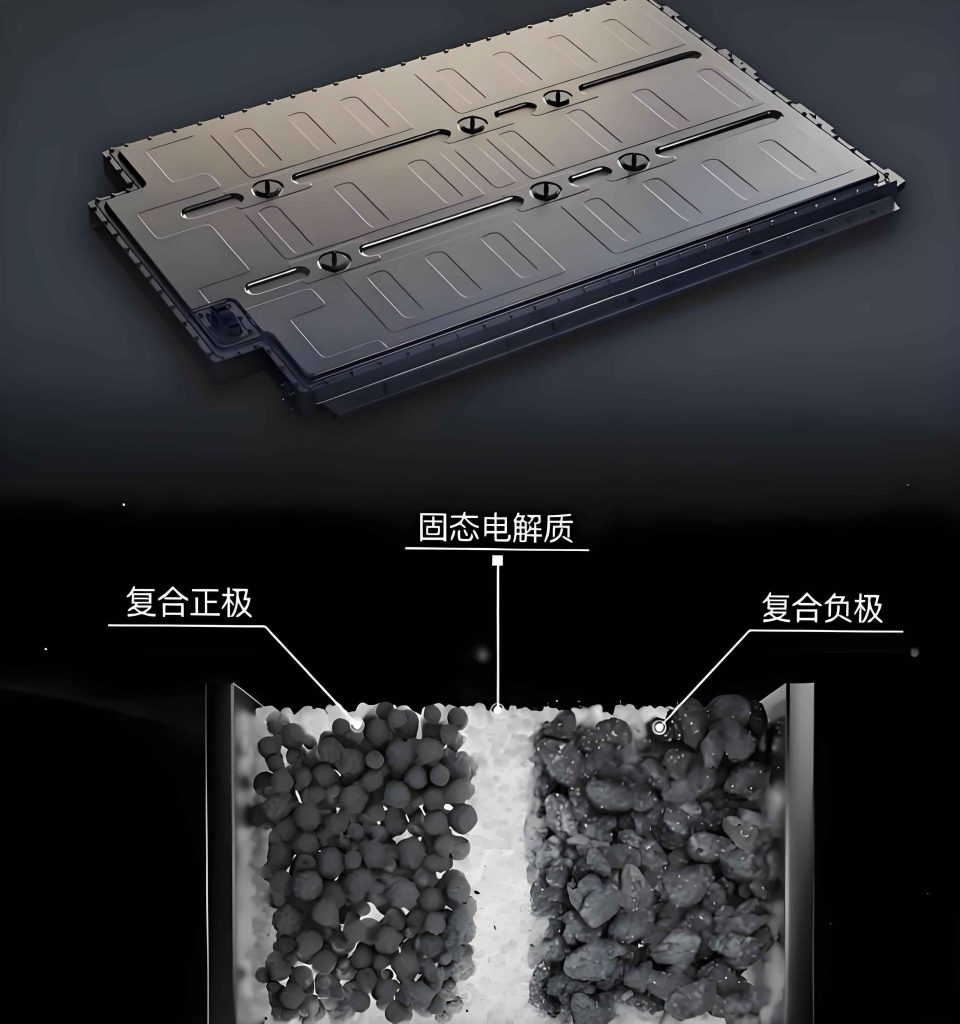
However, simply impregnating MOF pores with liquid electrolytes or ionic liquids often leads to compromises, such as anion-dominated transport (low transference number) or limited electrochemical stability. My research focuses on a precise engineering approach: the in-pore confined polymerization of functional ionic liquids within a tailored MOF matrix. This design aims to create a synergistic system where the MOF scaffold provides mechanical integrity and a confined nanospace, while the in-situ formed poly(ionic liquid) (PIL) network offers a continuous, amorphous pathway for Li+ motion. Crucially, the functional groups on the MOF linker are selected to interact with the anions, thus promoting selective Li+ conduction—a critical yet often overlooked parameter for high-rate, stable cycling in a solid-state battery.
Design and Synthesis Rationale
The cornerstone of my design is the UiO-66-NH2 MOF. This zirconium-based framework is renowned for its exceptional chemical and thermal stability, a vital attribute for battery components. The presence of pendant amino (-NH2) groups on its organic linkers is the key functional feature. These groups are not merely spectators; they are designed to engage in Lewis acid-base interactions with the anions of the incorporated lithium salt. For the ionic conductor, I selected a mixture of 1-allyl-3-methylimidazolium bis(trifluoromethanesulfonyl)imide ([AMIM][TFSI]) ionic liquid and lithium bis(trifluoromethanesulfonyl)imide (LiTFSI). The [AMIM]+ cation contains a polymerizable allyl group.
The synthesis is a sequential process:
1. Synthesis of UiO-66-NH2 crystals via a solvothermal method.
2. Pore Infiltration: The activated MOF powder is thoroughly mixed with the Li-IL precursor ([AMIM][TFSI] + LiTFSI) and a thermal initiator (AIBN).
3. In-Pore Confined Polymerization: The mixture is heated under an inert atmosphere. The polymerization of [AMIM][TFSI] is initiated exclusively within the nanoconfined environment of the MOF pores, forming a PIL network grafted and entangled within the UiO-66-NH2 framework. This yields the final composite material, which I denote as UiO-66-NH2@PIL.
4. Membrane Fabrication: The UiO-66-NH2@PIL composite powder is mixed with a minimal amount of PTFE binder (1 wt%) and processed into a flexible, self-standing membrane via roll-pressing.
The anticipated ion transport mechanism is dual-faceted. First, the confined PIL phase, rich in TFSI− anions and Li+ cations, provides a percolating pathway for ion conduction. Second, and more importantly, the amino functional groups on the MOF pore walls interact with the TFSI− anions via hydrogen bonding or dipole-dipole interactions, as conceptually modeled below. This interaction effectively reduces the mobility of the large anions relative to the smaller Li+ cations, thereby enhancing the lithium ion transference number ($t_{Li^+}$).
$$ \text{MOF-NH}_2 \cdots \text{TFSI}^- \quad \text{(Anion tethering)} $$
$$ \text{Li}^+ \quad \text{(Facilitated cation mobility)} $$
Structural and Morphological Characterization
Confirming the structural integrity of the MOF after composite formation is paramount. X-ray diffraction analysis confirms that the characteristic crystalline peaks of the UiO-66 framework are preserved in the UiO-66-NH2@PIL composite. This indicates that the in-pore polymerization process does not degrade the long-range order of the MOF scaffold, which is essential for mechanical stability.
The most dramatic evidence for successful pore-filling comes from nitrogen physisorption measurements. The pristine UiO-66-NH2 exhibits a high specific surface area, typical of its microporous structure. In stark contrast, the UiO-66-NH2@PIL composite shows a surface area that is negligible. This drastic reduction unambiguously proves that the originally empty pores are now completely occupied by the non-porous PIL phase, achieving the goal of creating a dense, ion-conducting network within the rigid MOF matrix.
Scanning electron microscopy reveals that the composite powder maintains a particulate morphology. The fabricated UiO-66-NH2@PIL SSE membrane is dense, flexible, and has a tunable thickness, often achieved around 40 μm. Elemental mapping of a membrane cross-section shows a homogeneous distribution of zirconium (from the MOF), sulfur and fluorine (from the PIL and LiTFSI), and nitrogen (from both the MOF’s amino group and the PIL’s imidazolium). This uniformity at the micron scale is critical for ensuring consistent electrochemical performance across the entire solid-state battery cell.
Electrochemical Performance Analysis
The ultimate test of any SSE lies in its electrochemical properties. I employ a suite of techniques to deconvolute the performance of the UiO-66-NH2@PIL.
Ionic Conductivity and Activation Energy
Ionic conductivity ($\sigma$) is measured by electrochemical impedance spectroscopy (EIS) on a symmetric cell (Stainless Steel | SSE | Stainless Steel). The bulk resistance ($R_b$) is extracted from the high-frequency intercept of the Nyquist plot. The conductivity is calculated using the formula:
$$ \sigma = \frac{L}{R_b \cdot A} $$
where $L$ is the membrane thickness and $A$ is the contact area. At 30°C, the UiO-66-NH2@PIL membrane demonstrates an impressive ionic conductivity of $3.9 \times 10^{-4}$ S cm-1. This high value is attributed to the interconnected ion-conducting PIL phase within the MOF channels.
Temperature-dependent conductivity studies reveal Arrhenius-type behavior. The activation energy ($E_a$) for ion conduction, derived from the slope of the Arrhenius plot $\ln(\sigma T)$ vs. $1/T$, provides insight into the conduction mechanism:
$$ \sigma T = \sigma_0 \exp\left(-\frac{E_a}{k_B T}\right) $$
where $\sigma_0$ is the pre-exponential factor and $k_B$ is the Boltzmann constant. The calculated $E_a$ for UiO-66-NH2@PIL is approximately 0.32 eV. This relatively low activation energy suggests a facile ion-hopping mechanism within the amorphous, confined PIL phase, favorable for operation at moderate temperatures.
Lithium Ion Transference Number ($t_{Li^+}$)
The Li+ transference number is a critical metric that defines the fraction of the total ionic current carried by Li+ ions. A low $t_{Li^+}$ leads to concentration polarization and poor rate capability. I determine $t_{Li^+}$ using the classic DC polarization method combined with EIS on a Li | SSE | Li symmetric cell.
The steady-state current ($I_{ss}$) and initial current ($I_0$) are measured under a small DC bias ($\Delta V = 10$ mV). The interfacial resistances before ($R_0$) and after ($R_{ss}$) polarization are obtained from EIS. $t_{Li^+}$ is calculated as:
$$ t_{Li^+} = \frac{I_{ss}(\Delta V – I_0 R_0)}{I_0(\Delta V – I_{ss} R_{ss})} $$
The UiO-66-NH2@PIL SSE exhibits a $t_{Li^+}$ of 0.50. This is a significant enhancement compared to a control sample of the same ionic liquid soaked into a glass fiber separator (Glass Fiber/PIL, $t_{Li^+}$ ~0.18). This twofold increase strongly validates the design hypothesis: the amino-functionalized MOF walls effectively hinder anion mobility, thereby promoting cation-selective transport. This property is foundational for achieving stable, high-power solid-state battery operation.
Electrochemical Stability Window
The operational voltage window of an SSE determines its compatibility with high-energy-density electrodes. Linear sweep voltammetry (LSV) is conducted on a Li | SSE | Stainless Steel cell. The UiO-66-NH2@PIL SSE shows anodic stability up to approximately 5.24 V vs. Li/Li+. This wide window, surpassing that of the liquid-like Glass Fiber/PIL control (4.42 V), indicates superior oxidative stability. It suggests the confined PIL environment and the MOF scaffold itself help suppress detrimental decomposition reactions at high potentials, enabling the future use of high-voltage cathodes like LiNixMnyCozO2 in a solid-state battery.
Interfacial Stability and Lithium Dendrite Suppression
The interface with lithium metal is the most critical and challenging in a solid-state battery. I evaluate this using long-term lithium plating/stripping cycling in a Li | SSE | Li symmetric cell at a constant current density.
The UiO-66-NH2@PIL SSE enables stable cycling for over 450 hours at 0.2 mA cm-2 without short circuit, demonstrating a low and stable overpotential. In contrast, a conventional polymer-ionic liquid composite (PVDF-HFP/IL) fails rapidly due to uneven Li deposition and dendrite penetration. The enhanced stability of UiO-66-NH2@PIL can be attributed to: 1) The high $t_{Li^+}$ which reduces space charge buildup at the interface, and 2) The robust, non-porous composite membrane physically resisting dendrite penetration. This result is a promising indicator for the long-term cyclability of a practical lithium metal solid-state battery.
Full Cell Performance
To assess practical viability, I assemble and test full cells with a LiFePO4 (LFP) cathode, the UiO-66-NH2@PIL SSE membrane, and a lithium metal anode (LFP | UiO-66-NH2@PIL | Li).
The cells exhibit excellent rate capability, delivering specific capacities of 166.7, 158.8, 146.2, and 120.3 mAh g-1 at rates of 0.1C, 0.2C, 0.5C, and 1.0C, respectively. This performance underscores the fast ionic transport kinetics afforded by the composite electrolyte.
Most importantly, the cells show outstanding cycling stability. At a 1.0C rate, the cell maintains 97.3% of its initial capacity after 250 cycles, with a nearly 100% Coulombic efficiency throughout. This exceptional capacity retention highlights the stability of both the bulk electrolyte and the electrode/electrolyte interfaces during prolonged cycling—a key requirement for durable solid-state battery technology.
Performance Summary and Comparative Analysis
The following table summarizes the key electrochemical properties of the UiO-66-NH2@PIL SSE and places it in context with other common SSE archetypes. The data illustrates the balanced and superior performance profile achieved through the in-pore engineering strategy.
| Electrolyte Type / Material | Ionic Conductivity @ 30°C (S cm-1) | Li+ Transference Number ($t_{Li^+}$) | Electrochemical Window (V vs. Li/Li+) | Key Challenge |
|---|---|---|---|---|
| Typical Oxide Ceramic (e.g., LLZO) | ~10-4 – 10-3 | ~1.0 | >5.0 | Brittle, high grain-boundary resistance |
| Typical Polymer (e.g., PEO-LiTFSI) | ~10-6 – 10-5 (@30°C) | 0.2 – 0.3 | ~3.8 – 4.0 | Low room-temp conductivity, low $t_{Li^+}$ |
| Liquid Electrolyte (1M LiPF6 in EC/DMC) | ~10-2 | 0.2 – 0.4 | ~4.3 | Flammability, dendrite growth |
| Ionic Liquid in Inert Matrix (Glass Fiber/PIL) | ~10-3 | ~0.18 | ~4.4 | Low $t_{Li^+}$, potential leakage |
| UiO-66-NH2@PIL (This Work) | 3.9 × 10⁻⁴ | 0.50 | 5.24 | Optimization of thickness & loading |
The composite successfully bridges the gaps between different SSE classes. It achieves a conductivity orders of magnitude higher than standard polymers at room temperature, a $t_{Li^+}$ significantly better than polymers and liquid electrolytes, and a stability window exceeding that of many liquid and polymer systems. This combination is uniquely enabled by the MOF’s nanostructured confinement and functional design.
Conclusion and Perspective
In this study, I have demonstrated a rational material design strategy to develop a high-performance hybrid solid-state electrolyte. By employing the amino-functionalized UiO-66-NH2 as a nano-scaffold and conducting the in-situ polymerization of an ionic liquid within its pores, I synthesized a UiO-66-NH2@PIL composite. This material synergistically combines the mechanical and structural properties of a stable MOF with the high ionic conductivity of a poly(ionic liquid). Crucially, the functional amino groups on the MOF framework induce anion-immobilizing effects, leading to a high lithium ion transference number of 0.50—a feature paramount for mitigating polarization and enabling stable, high-rate cycling.
The resulting SSE membrane exhibits a compelling set of properties: high ionic conductivity ($3.9 \times 10^{-4}$ S cm-1), a wide electrochemical stability window (5.24 V), and excellent interfacial stability against lithium metal. When integrated into a practical LFP || Li solid-state battery, it delivers remarkable rate capability and outstanding long-term cycling stability, retaining 97.3% capacity after 250 cycles at 1.0C.
This work underscores the immense potential of chemically functionalized MOFs as precision platforms for engineering next-generation solid-state electrolytes. The “confined polymerization within a functional pore” paradigm is a powerful tool that can be extended to other MOF hosts, polymerizable ionic liquid monomers, and functional groups. Future research will focus on further increasing the ionic conductivity, reducing the membrane thickness to enhance energy density, and testing the electrolyte with higher-voltage cathode materials to fully exploit the stability window. The continuous refinement of such MOF-based composite electrolytes represents a highly promising pathway toward realizing safe, durable, and high-energy-density solid-state battery technology for the future of energy storage.