
As researchers and industry analysts focused on energy storage technologies, we have observed that solid-state batteries are becoming a critical frontier in the global competition for next-generation battery solutions, particularly for electric vehicles and large-scale energy storage. The transition from liquid electrolytes to solid electrolytes promises enhanced safety, higher energy density, and longer lifespan, making solid-state batteries a pivotal innovation. In this article, we delve into the current landscape, challenges, and strategic pathways for the industrialization of solid-state batteries in China, leveraging first-hand insights and data analysis. We aim to provide a comprehensive overview that not only highlights the technological intricacies but also offers actionable recommendations for stakeholders.
The core of a solid-state battery lies in its all-solid composition, where both electrodes and electrolyte are solid materials, eliminating liquid components entirely. This fundamental shift addresses key limitations of conventional lithium-ion batteries, such as thermal runaway risks and energy density ceilings. We define a solid-state battery as an energy storage device where ionic conduction occurs through a solid electrolyte, replacing the liquid electrolyte and separator found in traditional batteries. The advantages are manifold: improved safety due to non-flammable solids, potential for higher energy densities through compatibility with advanced electrodes, and extended cycle life. However, the path to commercialization is fraught with technical hurdles, which we explore in depth.
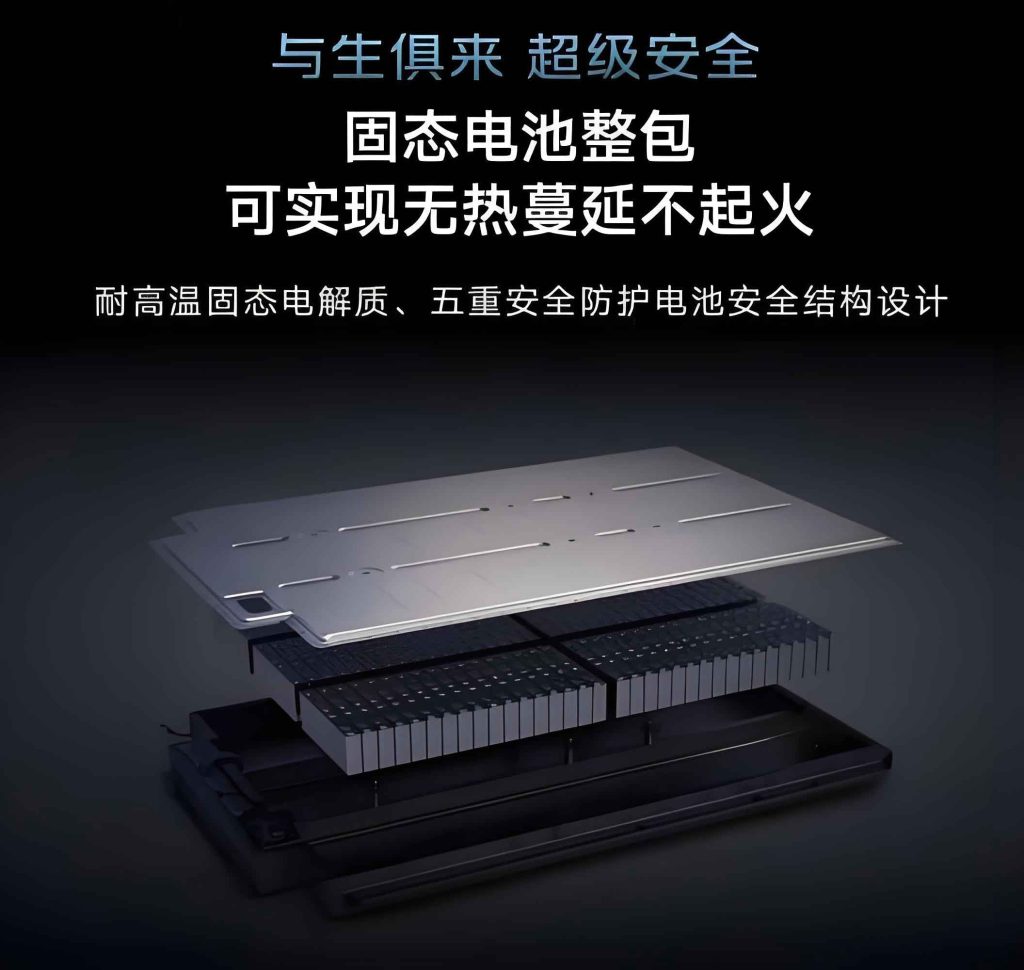
To understand the diversity in solid-state battery technologies, we categorize them based on the solid electrolyte material, which dictates performance and application feasibility. The primary technical routes include polymer, oxide, and sulfide (or halide) electrolytes, each with distinct characteristics. We summarize these in the table below, emphasizing their pros and cons in the context of industrialization.
| Category | Subtype | Main Components | Advantages | Disadvantages |
|---|---|---|---|---|
| Organic Electrolyte | Polymer | Polyethylene oxide (PEO), etc. | Relatively mature technology, small-scale production achieved | Low ionic conductivity at room temperature; limited thermal stability; poor high-voltage stability; difficult to enhance energy density |
| Inorganic Electrolyte | Oxide | Thin-film (LiPON), non-film types | Excellent rate performance, high stability, ionic conductivity higher than polymers | Low room-temperature conductivity; hard electrolyte materials, challenging fabrication processes, high cost; limited capacity and energy density compared to sulfides; low scalability |
| Inorganic Electrolyte | Sulfide | Lithium thiophosphates, etc. | High room-temperature ionic conductivity, compatible with lithium metal anodes and high-voltage cathodes | Greatest development difficulty; demanding production conditions and processes, high cost; risk of toxic hydrogen sulfide release |
The evolution of solid-state batteries can be segmented into generations based on electrode materials, which directly influence energy density. We present this progression in another table, comparing solid-state batteries with traditional lithium-ion batteries to underscore the performance milestones.
| Battery Type | Energy Density Range | Key Features |
|---|---|---|
| Traditional Lithium-Ion Battery | 200–300 Wh/kg | Composed of cathode (e.g., LiCoO₂, LiFePO₄), anode (graphite), liquid electrolyte, separator, and casing |
| First-Generation Solid-State Battery | >260 Wh/kg | Replaces liquid electrolyte and separator with solid electrolyte; electrodes remain unchanged |
| Second-Generation Solid-State Battery | >400 Wh/kg | Uses solid electrolyte and lithium metal anode (or anode-free designs) |
| Third-Generation Solid-State Battery | >500 Wh/kg | Incorporates solid electrolyte, lithium metal anode, and high-capacity cathodes (e.g., lithium-rich materials) |
The energy density of a solid-state battery is a critical metric, often expressed as: $$E = \frac{Q}{m}$$ where \(E\) is the energy density in Wh/kg, \(Q\) is the capacity in Wh, and \(m\) is the mass in kg. For solid-state batteries, theoretical values can exceed 500 Wh/kg, but practical achievements hinge on material innovations. Another key formula is the ionic conductivity of the solid electrolyte, given by: $$\sigma = n e \mu$$ where \(\sigma\) is conductivity, \(n\) is charge carrier density, \(e\) is electron charge, and \(\mu\) is mobility. Enhancing \(\sigma\) for solid electrolytes remains a central challenge, as values must approach \(10^{-2}\) S/cm at room temperature for viable applications, compared to liquid electrolytes that typically achieve \(10^{-1}\) S/cm.
Globally, the development of solid-state batteries is accelerating, with notable strides in regions like Europe, the United States, Japan, and South Korea. In Europe and the U.S., companies such as Solid Power and QuantumScape are collaborating with automakers like BMW and Volkswagen to advance sulfide-based solid-state batteries, targeting prototypes by 2025. Japan’s Toyota leads in patent holdings, focusing on sulfide electrolytes and aiming for commercialization around 2027, with claims of 1,200 km range and 10-minute fast charging. South Korea’s Samsung and LG Chem are also progressing, with Samsung demonstrating 427 Wh/kg cells and planning pilot lines by 2027. These efforts highlight the intense international rivalry, driven by the potential of solid-state batteries to revolutionize energy storage.
In China, the pursuit of solid-state battery technology has gained momentum, with research institutions and enterprises actively engaged. Universities like Tsinghua and Zhejiang University, along with companies such as CATL and BYD, are exploring various technical routes. CATL, for instance, is concentrating on second- and third-generation sulfide solid-state batteries, showcasing prototypes with 3C fast-charging and 6,000 cycles, though mass production remains elusive. Other firms, including Gotion High-tech and Eve Energy, are developing semi-solid batteries as interim solutions. Despite these advances, China faces significant hurdles in scaling up solid-state battery production, which we analyze in the following sections.
Our assessment identifies four major challenges hindering the industrialization of solid-state batteries in China. First, key technical problems persist, particularly regarding interfacial contact. The solid-solid interface between electrolyte and electrodes leads to high impedance, described by: $$R_{\text{interface}} = \frac{1}{A \sigma_{\text{eff}}}$$ where \(R_{\text{interface}}\) is the interfacial resistance, \(A\) is contact area, and \(\sigma_{\text{eff}}\) is effective conductivity. Poor contact exacerbates heat generation and reduces cycle life. Additionally, electrolyte stability issues, such as decomposition under high voltage, and lithium dendrite growth at anodes pose safety risks. Second, engineering and manufacturing bottlenecks are stark. Fabricating solid-state batteries requires specialized high-pressure and high-temperature equipment, often monopolized by Western countries, and stringent humidity control to prevent sulfide degradation. The cost per kilowatt-hour for solid-state batteries currently exceeds that of liquid lithium-ion batteries, with estimates around $150/kWh compared to $100/kWh for advanced lithium-ion cells, impeding scalability.
Third, intellectual property (IP)布局 is suboptimal. Japanese and Korean firms dominate patent landscapes, especially in sulfide materials, creating barriers to entry. For example, over 1,000 patents related to solid-state batteries are held by Toyota alone, forcing Chinese entities to navigate licensing fees or develop alternative technologies. Domestic IP generation, while growing, lacks strategic clustering, and technology transfer from academia to industry is inefficient. Fourth, the development pathway is unclear. Proliferation of terms like “semi-solid” and “quasi-solid” batteries has caused confusion, diverting resources from true solid-state innovations. Many Chinese companies prioritize short-term gains via liquid battery improvements, rather than investing in long-term solid-state battery research, leading to fragmented efforts.
To overcome these challenges, we propose a multifaceted strategy. Initially, bolstering policy support is crucial. The government should designate solid-state batteries as a national priority, integrating them into research initiatives like the National Key R&D Program. Fiscal incentives, such as tax breaks and dedicated funds, can spur innovation; for instance, establishing a “Solid-State Battery Innovation Fund” with an initial capitalization of $1 billion could accelerate R&D. Furthermore, we recommend clarifying development goals by focusing on second- and third-generation solid-state batteries, as first-generation variants offer negligible advantages over liquid batteries. A diversified approach should be maintained, supporting both liquid and solid-state technologies to mitigate risks.
Strengthening industry-academia-research collaboration is another vital step. We advocate forming a “Solid-State Battery Technology Alliance” involving universities, institutes, and enterprises to tackle interface and material issues jointly. Demonstration projects in electric vehicles and grid storage can facilitate commercialization, leveraging China’s existing battery manufacturing hubs in Fujian and Sichuan. Talent development is equally important; we suggest creating specialized training programs to cultivate experts in solid-state electrochemistry and engineering, addressing the skilled workforce gap.
Supporting leading enterprises is essential for scaling. Companies like CATL and BYD possess the engineering prowess to drive solid-state battery industrialization. Policies should encourage mergers and fair competition, while prioritizing solid-state battery development in national agendas. For example, setting a target of achieving 400 Wh/kg solid-state battery production by 2030 could align efforts. Lastly, enhancing international cooperation is key. While learning from advanced technologies abroad, China must pursue independent IP to avoid constraints. Participating in global standard-setting for solid-state batteries, such as through the International Electrotechnical Commission (IEC), can foster a collaborative ecosystem.
In conclusion, the journey toward solid-state battery industrialization in China is complex but imperative for future energy resilience. We have outlined the technical routes, global context, and specific challenges, emphasizing that solid-state batteries represent a transformative leap beyond liquid lithium-ion batteries. By implementing targeted policies, fostering innovation ecosystems, and aligning strategic priorities, China can build a robust solid-state battery industry. The formula for success hinges on sustained investment and collaboration, ultimately contributing to a safer and more efficient energy landscape worldwide.