
The evolution of microelectronics demands a parallel revolution in energy storage. The limitations of conventional electrochemical cells—their size, rigidity, environmental footprint, and safety profile—have become significant bottlenecks for next-generation devices, particularly in the medical and Internet of Things (IoT) sectors. This has catalyzed the emergence and maturation of a transformative technology: the solid-state battery. Unlike traditional batteries that use liquid or gel electrolytes, a solid-state battery employs a solid electrolyte and electrodes. This fundamental architectural shift unlocks a suite of properties that are uniquely suited for integration directly into electronic systems, enabling a new paradigm of “embedded energy.”
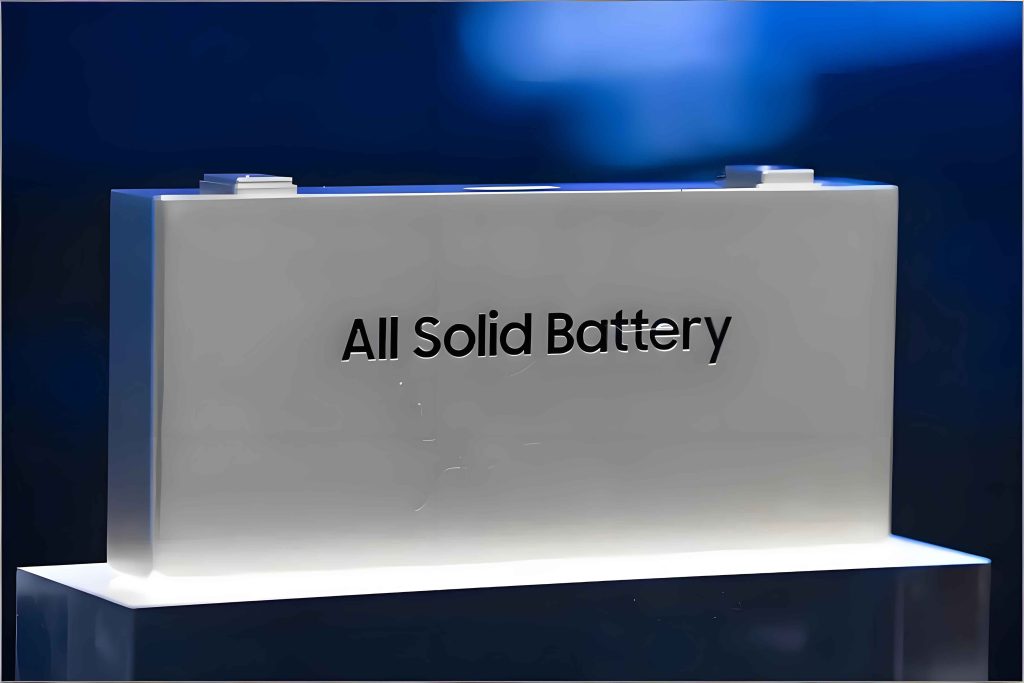
The core innovation lies in its construction. Advanced solid-state battery cells can be fabricated using processes compatible with standard semiconductor manufacturing. This allows them to be produced as bare die or in standard surface-mount technology (SMT)-compatible packages. The result is an energy storage device that can be placed on a printed circuit board (PCB) alongside other integrated circuits, undergoing the same reflow soldering processes. This seamless integration is the first critical advantage, dissolving the traditional boundary between the “board” and the “power source.”
Fundamental Advantages and Technical Specifications
The superiority of the solid-state battery architecture is quantified across multiple performance and safety vectors. The following table summarizes a direct comparison with conventional lithium coin cells and supercapacitors, which are common in backup and energy-harvesting applications.
| Parameter | Solid-State Battery | Lithium Coin Cell (LiMnO2, CR2032) | Supercapacitor (Double-Layer) |
|---|---|---|---|
| Electrolyte State | Solid | Liquid / Gel | Liquid |
| Energy Density (Typical) | Medium-High (100-250 Wh/L) | High (500-700 Wh/L) | Very Low (5-10 Wh/L) |
| Power Density | Medium | Low | Very High |
| Cycle Life (to 80% capacity) | >5,000 cycles | Non-rechargeable or ~500 cycles | >100,000 cycles |
| Self-Discharge Rate | Very Low (~1-2%/month) | Low (~1%/year for primary) | Very High (~10-40%/day) |
| Operating Temperature Range | Wide (-20°C to +70°C+) | Limited | Wide |
| Form Factor | Ultra-thin, flexible, embeddable | Fixed cylindrical/coin | Cylindrical, prismatic |
| SMT & Reflow Compatibility | Yes | No (requires holder) | Limited |
| Safety (Leakage, Combustion) | Inherently high (non-flammable) | Risk of leakage & thermal runaway | Risk of electrolyte leakage |
Key performance metrics for a solid-state battery can be expressed through fundamental equations. The theoretical capacity \( C \) of a battery cell (in mAh) is given by:
$$ C = \frac{n \cdot F}{3.6 \cdot M} $$
where \( n \) is the number of electrons transferred per formula unit, \( F \) is Faraday’s constant (96485 C/mol), and \( M \) is the molar mass of the active material (g/mol). The energy density \( E_d \) (Wh/L) is a product of its capacity and operating voltage \( V \), divided by volume \( Vol \):
$$ E_d = \frac{C \cdot V}{Vol} $$
For a solid-state battery designed for long-term, low-power backup, the critical figure is the total energy budget \( E_{total} \) it can provide to a system with a standby current \( I_{sb} \) over time \( t \):
$$ E_{total} = V \cdot I_{sb} \cdot t $$
This simple relationship dictates how a compact solid-state battery can maintain microcontroller memory, real-time clocks (RTC), and SRAM for periods ranging from hours to weeks during a main power interruption.
Revolutionizing Medical Devices and Healthcare
The application of solid-state battery technology finds one of its most impactful and natural homes in the medical device industry. The requirements here are exceptionally stringent: reliability, safety, longevity, miniaturization, and biocompatibility. A solid-state battery addresses these needs comprehensively.
Implantable and Wearable Sensors: The ultra-thin and flexible form factor of a solid-state battery enables its integration into minimally invasive implantable monitors (e.g., for glucose, pressure, cardiac rhythm) and advanced wearable patches. Its use of non-toxic, solid materials is paramount. Rigorous biocompatibility testing, including in-vivo and in-vitro cytocompatibility assessments per ISO 10993 standards, has demonstrated that certain solid-state battery formulations are 100% non-cytotoxic. This is a fundamental advantage over traditional batteries containing volatile or toxic electrolytes.
Smart Drug Delivery Systems: Next-generation injectors and infusion pumps require reliable, long-life power for precise micro-actuation, wireless communication for dosing updates, and data logging. A rechargeable solid-state battery, paired with an energy harvesting system, can ensure operation over the entire product lifecycle without the need for physical replacement, which is crucial for implanted delivery systems.
Disposable Diagnostic & Monitoring Tools: Single-use medical devices, such as smart connected syringes or diagnostic patches, benefit from the SMT-compatible nature of solid-state battery cells. They can be assembled onto the device’s PCB in a fully automated line, reducing cost and complexity compared to manually installing a button cell battery. Furthermore, the eco-friendly profile of a solid-state battery—free from heavy metals like cobalt, compliant with RoHS and REACH regulations, and featuring a long cycle life—aligns with the healthcare sector’s growing emphasis on sustainable product lifecycles.
The safety aspect cannot be overstated. The solid electrolyte is non-flammable and cannot leak, eliminating risks of internal corrosion or chemical exposure within a sealed medical device. This inherent safety makes the solid-state battery a cornerstone technology for mission-critical healthcare applications.
Powering the IoT and Wearable Ecosystem
The proliferation of the Internet of Things (IoT) and wearable technology is fundamentally constrained by power. The vision of billions of ubiquitous, wire-free sensors and devices necessitates a shift from primary batteries to energy-autonomous systems. Here, the solid-state battery emerges as the ideal storage element.
Energy harvesting systems—using light, thermal gradients, vibration, or RF waves—generate intermittent and low-power electricity. A storage buffer is essential. While supercapacitors offer high power density for quick bursts, their high self-discharge makes them poor for long-term energy retention. A solid-state battery provides the perfect complement: high energy density for storage, low self-discharge to preserve harvested energy, and high cycle endurance to last the device’s lifetime.
The system efficiency is managed by sophisticated power management integrated circuits (PMICs) or dedicated energy processors. These chips implement algorithms like Maximum Peak Power Tracking (MPPT) to optimize energy extraction from harvesters and manage the charge/discharge cycles of the solid-state battery. The relationship for power harvested \( P_{harv} \) is:
$$ P_{harv} = \eta_{mppt} \cdot \eta_{conv} \cdot P_{source} $$
where \( \eta_{mppt} \) is the MPPT efficiency, \( \eta_{conv} \) is the converter efficiency, and \( P_{source} \) is the raw power from the harvester. The energy stored in the solid-state battery \( E_{bat} \) over a period \( T \) is the integral of the net power flow:
$$ E_{bat}(T) = \int_0^T (P_{harv}(t) – P_{load}(t)) \, dt $$
where \( P_{load}(t) \) is the power consumed by the sensor and wireless transmitter. A well-designed system ensures \( E_{bat} \) remains positive, enabling perpetual operation.
Design Integration and Material Synergy
Adopting solid-state battery technology requires a holistic design approach. For medical and IoT devices, the power system is no longer an afterthought but a co-designed element. Design resources focus on selecting the appropriate solid-state battery capacity, integrating the PMIC, and modeling energy budgets based on device duty cycles.
This philosophy of integration extends to packaging. Just as the solid-state battery revolutionizes internal energy storage, advanced materials revolutionize external protective packaging. High-strength, sterile, breathable materials are essential for maintaining the integrity of disposable medical devices during sterilization, transport, and storage. The synergy is clear: an internally robust, long-lasting solid-state battery powered device, protected by an externally robust, sustainable package, creates a product that is reliable, user-safe, and environmentally considerate across its entire lifecycle. The sustainability metrics for such a system can be summarized as follows:
| Sustainability Goal | Contribution from Solid-State Battery | Contribution from Advanced Packaging | Combined System Impact |
|---|---|---|---|
| Resource Reduction | Long life eliminates replacement batteries; uses less critical raw material. | Lightweight, high strength allows less material per package. | Drastically reduced material consumption over product lifetime. |
| Waste Minimization | No toxic leakage; long cycle life prevents frequent disposal. | Superior barrier properties prevent device spoilage/waste. | Lower hazardous waste generation and product loss. |
| Carbon Footprint | Enables energy harvesting, reducing grid dependence. | Lighter packaging reduces transportation fuel consumption. | Lower overall emissions from manufacturing to end-of-life. |
| End-of-Life Processing | Simpler, safer disposal/recycling due to solid, benign materials. | Potential for recyclability based on material composition. | Easier and more complete product lifecycle management. |
Future Trajectory and Conclusion
The trajectory for solid-state battery technology is one of continuous improvement and expanding integration. Research is focused on increasing energy density further by exploring novel solid electrolyte chemistries (e.g., sulfide-based, oxide-based, polymer-based) and high-capacity electrode pairs. The fundamental equation guiding this research is the Nernst equation for the cell potential \( E \), which depends on the Gibbs free energy change \( \Delta G^\circ \) of the electrochemical reaction:
$$ E = -\frac{\Delta G^\circ}{nF} $$
Enhancing \( \Delta G^\circ \) through material innovation directly increases the voltage and, consequently, the energy density of the solid-state battery.
Furthermore, the development of flexible and stretchable solid-state battery formats will unlock applications in conformal biomedical patches and smart textiles. The integration will become even more profound with the advent of “battery-on-chip” concepts, where the energy storage is fabricated in layers directly atop the silicon IC, creating truly monolithic powered systems.
In conclusion, the solid-state battery is far more than an incremental improvement in energy storage. It is a foundational enabling technology that bridges the gap between electronic functionality and sustainable, reliable power. By offering unmatched safety, eco-compatibility, miniaturization, and lifecycle performance, the solid-state battery is powering the critical transition towards autonomous medical devices, pervasive IoT networks, and intelligent wearable ecosystems. Its compatibility with standard manufacturing and its synergy with advanced materials and power management silicon make it the keystone for the next generation of intelligent, connected, and self-sustaining electronic devices that will define our technological future.