
As we delve into the future of new energy vehicles, the emergence of solid-state batteries stands as a transformative force. I believe that solid-state battery technology holds the key to revolutionizing the automotive industry, offering unparalleled energy density, safety, and charging capabilities. In this analysis, I will explore the current landscape, challenges, and strategic pathways for Guangzhou to seize the initiative in solid-state battery development. Our focus is on understanding how this disruptive technology can propel Guangzhou to the forefront of the global new energy vehicle sector.
The core of a solid-state battery lies in its replacement of liquid electrolytes with solid electrolytes, which fundamentally alters battery performance. A solid-state battery typically consists of a cathode, anode, and solid electrolyte, eliminating risks such as leakage, lithium dendrite penetration, and poor air stability. This design allows for better lithium-ion transport and compatibility with higher-energy-density materials. The classification of solid-state batteries is often based on the mass ratio of liquid electrolyte in the cell mixture: liquid (25%), semi-solid (5%–10%), quasi-solid (0%–5%), and all-solid (0%). For simplicity, we categorize them into semi-solid and all-solid batteries. The solid electrolyte, which replaces both the separator and liquid electrolyte, is the defining component, and its performance dictates the overall quality of the solid-state battery. Currently, technical routes include polymer, oxide, and sulfide-based solid electrolytes, each with distinct advantages and limitations, as summarized in Table 1.
| Technical Route | Advantages | Disadvantages | Current Status |
|---|---|---|---|
| Polymer | Flexibility, ease of processing | Low ionic conductivity at room temperature | Under development, with recent breakthroughs in scalable preparation |
| Oxide | High stability, good safety | Brittle, high interfacial resistance | Progress in cathode interface materials |
| Sulfide | High ionic conductivity | Sensitivity to moisture, cost challenges | Leading in Japanese R&D, with pilot lines established |
The energy density of a solid-state battery can be modeled using the formula: $$E = \frac{C \times V}{m}$$, where \(E\) is the energy density (Wh/kg), \(C\) is the capacity (Ah), \(V\) is the voltage (V), and \(m\) is the mass (kg). For solid-state batteries, the use of solid electrolytes enables higher \(C\) and \(V\) values, potentially pushing \(E\) beyond 500 Wh/kg, compared to around 300 Wh/kg for conventional lithium-ion batteries. Additionally, the charging power \(P\) can be expressed as $$P = \frac{E}{t}$$, where \(t\) is the charging time, indicating faster charging capabilities due to reduced internal resistance.
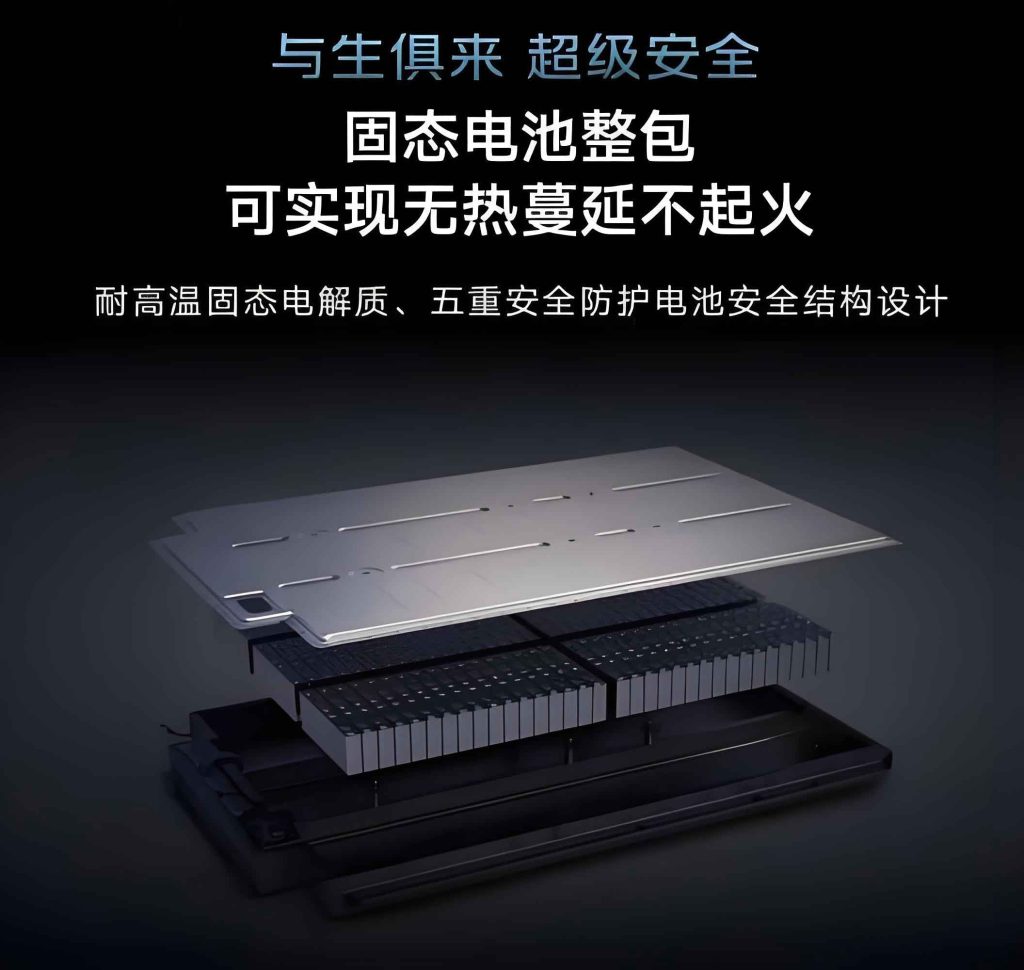
Globally, the race for solid-state battery supremacy is intensifying. I observe that countries like the United States, European Union, Japan, and South Korea are ramping up policy support and funding to capture early-mover advantages. For instance, Japan has established a “government-industry-academia alliance” and allocated over ¥200 billion (approximately ¥100 billion RMB) to accelerate all-solid-state battery commercialization. South Korea offers tax incentives and targets mass production by 2030. The United States has invested billions in advanced battery projects, while Germany has provided substantial grants for battery factory construction. These efforts underscore the strategic importance of solid-state battery technology. Table 2 highlights key global initiatives and corporate milestones in solid-state battery development.
| Country/Region | Policy Support | Leading Companies | Mass Production Targets |
|---|---|---|---|
| Japan | Government subsidies, national R&D alliance | Toyota, Panasonic, Murata | 2026-2030 (e.g., Toyota by 2026) |
| South Korea | Tax credits, government-industry collaboration | Samsung SDI, LG Energy Solution | 2027-2030 (e.g., Samsung by 2027) |
| United States | DOE funding, Air Force grants | Natrion, QuantumScape | Late 2020s, with pilot projects ongoing |
| European Union | Battery Strategy Agenda, direct grants | Mercedes, BMW, Volkswagen | 2030 for automotive applications |
| China | National industry plans, local incentives | CATL, BYD, Shanghai Qingtao | 2026-2027 for leading firms |
In China, solid-state battery innovation is advancing rapidly, with patent applications growing at an annual rate of 20.8% over the past five years. However, Japan still leads in global patent holdings, accounting for about 68% of all-solid-state battery patents. For example, Toyota alone holds over 1,300 patents, focusing on sulfide-based systems. This highlights the competitive gap that Chinese entities, including those in Guangzhou, must bridge. The solid-state battery market is poised for exponential growth, driven by the new energy vehicle sector. In 2024, China’s new energy vehicle sales reached 12.866 million units, representing 40.9% of total car sales, providing a vast testing ground for solid-state battery iterations.
Turning to Guangzhou, I see a robust foundation for solid-state battery development. As a major automotive hub, Guangzhou produced 2.5398 million vehicles in 2024, with new energy vehicles being a key growth driver. The city hosts several enterprises and research institutions actively engaged in solid-state battery R&D. According to data from the Guangdong-Hong Kong-Macao Intellectual Property Big Data Platform, Guangzhou holds 102 direct patents related to solid-state batteries, predominantly invention patents, indicating intensive research efforts. Table 3 breaks down the patent distribution among key entities in Guangzhou.
| Entity Type | Entity Name | Number of Patents | Focus Areas |
|---|---|---|---|
| Enterprise | Guangdong Mache Power | 25 | Solid electrolyte materials, cell design |
| Enterprise | GAC Group | 8 | All-solid-state battery integration, vehicle application |
| Enterprise | Penghui Energy | 6 | Semi-solid battery production, pilot lines |
| University | South China University of Technology | 14 | Cathode interface materials, polymer electrolytes |
| University | Sun Yat-sen University | 9 | Scalable solid polymer electrolytes |
| Research Institute | Guangdong University of Technology | 5 | Quasi-solid zinc-ion batteries |
Industrialization progress in Guangzhou is accelerating. GAC Group has announced plans to launch all-solid-state batteries in its Hyper models by 2026, having completed initial interface modification trials. Penghui Energy is constructing semi-solid battery projects and aims to establish an all-solid-state battery pilot line by 2025, with mass production by 2026. Furen Technology’s Guangzhou base, the city’s largest semi-solid battery production facility, is already piloting products for vehicles and eVTOLs. Tianci Materials, as a key supplier, is developing sulfide-based solid electrolytes, targeting pilot production by 2025. These efforts position Guangzhou competitively, with timelines aligning with global leaders. The application potential for solid-state batteries in Guangzhou is significant, given its strong new energy vehicle industry, which demands higher energy density and safety to overcome range limitations.
Despite these strengths, I identify several shortcomings in Guangzhou’s solid-state battery ecosystem. Compared to international and domestic peers, policy support, technological innovation, and leadership from flagship enterprises require enhancement. Table 4 contrasts Guangzhou with other Chinese cities in terms of patent counts and enterprise numbers, revealing gaps that need addressing.
| City | Total Solid-State Battery Patents | Number of Enterprises with Patents | Key Initiatives |
|---|---|---|---|
| Guangzhou | 102 | <30 | GAC’s 2026 target, Penghui’s pilot lines |
| Shenzhen | 375 | >80 | CATL’s R&D, BYD’s mass production plans |
| Beijing | 270 | ~90 | National projects, academic collaborations |
| Shanghai | 206 | ~60 | Shanghai Qingtao’s commercialization, vehicle integration |
Firstly, industrial policy support needs strengthening. While countries like Japan offer substantial subsidies, Guangzhou lacks dedicated funding programs for solid-state batteries, relying on broader new energy vehicle incentives. Secondly, core technological innovations are insufficient. Patent numbers in Guangzhou trail behind Japanese giants like Toyota, and even domestic leaders. The formula for innovation output can be expressed as $$I = R \times E$$, where \(I\) is innovation, \(R\) is R&D investment, and \(E\) is ecosystem efficiency. Guangzhou must boost \(R\) and optimize \(E\) to close the gap. Thirdly,领军企业带动作用尚未显现 (the leading role of flagship enterprises is not fully realized). GAC’s transition to new energy vehicles has been slower than some competitors, and its spillover effects on the solid-state battery supply chain are limited. The concentration of solid-state battery enterprises in Guangzhou remains low, hindering cluster formation.
To overcome these challenges, I propose the following strategies for Guangzhou to accelerate solid-state battery development. These recommendations are based on a first-person assessment of the local and global landscape.
1. Enhance Industry Monitoring Mechanisms: Establish a dynamic tracking system to analyze global solid-state battery advancements, including technological breakthroughs, pilot production, and validation tests. Regularly update on key players like Toyota, Samsung, CATL, and BYD to inform local strategy. Develop a detailed technology roadmap for solid-state battery industrialization in Guangzhou, aligning with international trends.
2. Strengthen Top-Level Design for Solid-State Battery Industry: Integrate solid-state batteries into Guangzhou’s automotive industry priorities, with tailored policies such as fiscal subsidies, tax breaks, and green incentives. Include solid-state battery R&D in the city’s “15th Five-Year” science and technology plan, allocating special funds for key technology攻克 (breakthroughs), equipment procurement, and process optimization. Launch a dedicated initiative类似璀璨工程 (similar to the “Brilliant Project”) focused on commercialization hurdles, accelerating the final steps to mass production. Encourage early adoption in consumer electronics, automotive, energy storage, and low-altitude economy sectors, with rewards for first-batch applications. Facilitate patent transfers from universities to industry.
3. Accelerate Core Technology Breakthroughs: Utilize competitive funding, “揭榜挂帅” (open bidding), and “军令状” (military-style commitments) to leverage strengths of firms like GAC and Penghui Energy. Foster industry-academia collaboration, pooling resources from provincial and municipal research institutions to tackle key areas like cathode/anode materials and solid electrolytes. The performance of a solid-state battery can be modeled by $$P = f(S, I, T)$$, where \(P\) is performance, \(S\) is solid electrolyte conductivity, \(I\) is interface stability, and \(T\) is thermal management. Guangzhou should focus on optimizing these parameters through targeted R&D. Mobilize industrial funds and explore a dedicated solid-state battery investment fund, attracting private capital and financial institutions to support industrialization.
4. Cultivate Leading Enterprises: Support traditional battery firms in upgrading to solid-state technologies, building resilient supply chains. Enhance the示范带动效应 (demonstration effect) of GAC and Penghui Energy to nurture更多专精特新企业 (more specialized and innovative SMEs) in the solid-state battery domain, such as Tianci Materials. Encourage collaborative innovation among equipment, cell, and material suppliers to cultivate a comprehensive all-solid-state battery产业链 (industrial chain). Develop standard frameworks for solid-state batteries, covering material particle size, equipment interfaces, safety protocols, and cycle life testing, using formulas like $$S = \sum_{i=1}^{n} C_i \times W_i$$ for safety assessment, where \(S\) is safety score, \(C_i\) is component compliance, and \(W_i\) is weightage.
5. Promote Cluster-Based Development: Strengthen partnerships with cell manufacturers in Shenzhen and Huizhou to attract配套企业 (supporting enterprises) focused on solid-state battery细分市场 (niche markets). Leverage GAC’s ties with Japanese automakers like Honda and Toyota to attract Japanese solid-state battery R&D centers or production bases to Guangzhou. Establish an industrial cluster integrating materials, equipment, cells, and management systems, creating a full-chain ecosystem for solid-state batteries. The growth of such a cluster can be described by $$G = \alpha \ln(K) + \beta \ln(L)$$, where \(G\) is growth rate, \(K\) is capital investment, \(L\) is labor expertise, and \(\alpha, \beta\) are coefficients; Guangzhou should maximize \(K\) and \(L\) through targeted investments and talent recruitment.
In conclusion, the solid-state battery represents a pivotal opportunity for Guangzhou to reinforce its position in the new energy vehicle industry. By addressing policy, innovation, and enterprise gaps through these strategies, Guangzhou can not only catch up but also lead in the global solid-state battery race. The journey requires sustained effort, but the rewards—a safer, more efficient, and dominant automotive future—are within reach. As we move forward, continuous emphasis on solid-state battery advancements will be essential for transforming Guangzhou into a global hub for next-generation battery technology.