
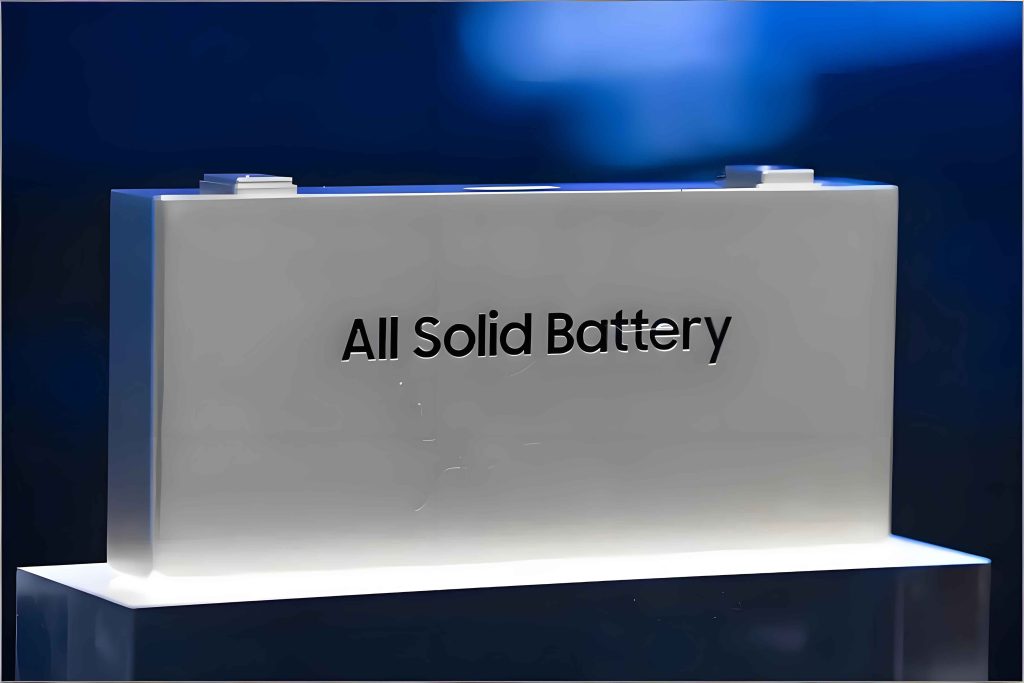
The global transition towards sustainable energy systems has placed unprecedented demands on electrochemical energy storage. Among the contenders, the solid-state battery represents a paradigm shift, promising to overcome the fundamental limitations of conventional lithium-ion technology. By replacing flammable liquid electrolytes with solid-state electrolytes, these systems inherently mitigate thermal runaway risks while unlocking the potential for high-voltage cathodes and high-capacity lithium metal anodes, targeting energy densities exceeding 500 Wh/kg.
However, the journey towards commercialization of the solid-state battery is fraught with persistent scientific hurdles. The transition from liquid-solid to solid-solid interfaces introduces critical challenges, primarily: (1) the degradation of physical contact at electrode-electrolyte interfaces leading to rising impedance, (2) the risk of short circuits from lithium dendrite propagation through grain boundaries or structural defects, and (3) mechanical failure induced by gaseous by-products from interfacial side reactions during cycling. These degradation modes are often interlinked and evolve dynamically within the sealed, rigid architecture of a solid-state battery, making them exceptionally difficult to probe with conventional, ex-situ characterization techniques.
This context has catalyzed the development of advanced in-situ and operando diagnostic tools. Ultrasound and optical fiber sensing technologies have emerged as particularly powerful candidates. Their unique capabilities—non-destructive probing, sensitivity to mechanical and physicochemical changes, and compatibility with sealed cell formats—provide an “invisible eye” into the internal state of a solid-state battery. This article reviews the fundamental principles, recent application advances, and future challenges of these two sensing paradigms in propelling the development of reliable and high-performance solid-state batteries.
1. Fundamentals of Sensing Technologies
1.1 Ultrasonic Sensing: Principles and Imaging Modes
Ultrasonic testing is a cornerstone of non-destructive evaluation. It utilizes high-frequency mechanical waves (typically >20 kHz) that propagate through materials, interacting with their internal structure. The interaction is governed by the material’s intrinsic properties, primarily its density (ρ) and elastic modulus (E), which determine the speed of sound (V). The key parameters extracted from ultrasonic signals provide a direct window into material state.
Core Ultrasonic Parameters:
- Acoustic Impedance (Z): This characterizes the resistance a medium presents to acoustic wave propagation and dictates the reflection and transmission coefficients at interfaces. A large impedance mismatch, such as between a solid and a gas, causes strong reflection.
$$Z = \rho \times V$$ - Pressure Amplitude & Attenuation (α): The signal amplitude relates to the acoustic pressure. As the wave travels, its amplitude decays due to absorption, scattering, and beam spreading. The attenuation coefficient α is highly sensitive to microstructural features like porosity, grain boundaries, and cracks.
$$P_x = P_0 e^{-\alpha x}$$ - Time-of-Flight (ToF): The travel time of an ultrasonic pulse between two points depends on the path length (L) and the sound velocity. Changes in ToF for a fixed geometry directly reflect changes in the material’s elastic properties.
$$\text{ToF} = \frac{L}{V} = L \sqrt{\frac{\rho}{E}}$$
By analyzing shifts in these parameters, ultrasound can dynamically map the evolution of interfaces, detect the formation of pores or gas pockets, and monitor crack initiation within a solid-state battery.
Imaging Modalities: Ultrasonic systems can operate in different modes, offering varying levels of spatial information.
| Mode | Description | Output | Application in SSB |
|---|---|---|---|
| A-Scan | Amplitude vs. Time at a single point. | 1D waveform | Tracking interface reflections, measuring layer thickness. |
| B-Scan | Multiple A-Scans compiled along a line. | 2D cross-sectional image (X-Z or Y-Z plane) | Visualizing internal layer structure and defects along a slice. |
| C-Scan | Amplitude or ToF data mapped over an area at a specific depth. | 2D planar image (X-Y plane) | Mapping in-plane uniformity, locating delamination or gas bubbles. |
1.2 Optical Fiber Sensing: The Fiber Bragg Grating (FBG)
Optical fiber sensing, particularly using Fiber Bragg Gratings, offers a complementary approach focused on localized, high-precision measurement of parameters like strain and temperature. An FBG is a periodic modulation of the refractive index in the core of an optical fiber. It acts as a wavelength-specific reflector. The central reflected wavelength, the Bragg wavelength (λB), is given by:
$$λ_B = 2n_{\text{eff}}Λ$$
where \(n_{\text{eff}}\) is the effective refractive index and \(Λ\) is the grating period.
External stimuli such as mechanical strain (ε) or temperature change (ΔT) alter \(n_{\text{eff}}\) and \(Λ\), causing a shift in λB. The total shift is described by:
$$\frac{\Delta \lambda_B}{\lambda_B} = (1 – p_e)\Delta \varepsilon + (\alpha + \xi)\Delta T$$
where \(p_e\) is the effective strain-optic constant, \(\alpha\) is the thermal expansion coefficient, and \(\xi\) is the thermo-optic coefficient.
For a solid-state battery application, temperature effects can be isolated using a reference sensor or controlled environment. The strain-induced shift can then be directly related to stress (σ) via Hooke’s Law (σ = Eε), where E is the Young’s modulus of the fiber (≈69.9 GPa for silica). A powerful phenomenon in FBG sensing for solid-state batteries is birefringence. Under asymmetric transverse stress, the fiber’s circular symmetry breaks, creating two distinct refractive indices for orthogonal light polarizations. This splits the single Bragg peak into two (λx, λy), allowing simultaneous measurement of axial and transverse stress components at an interface, providing unparalleled insight into the complex stress state within a solid-state battery.
2. Application in Solid-State Battery Diagnostics
The integration of ultrasound and optical fiber sensing into solid-state battery research is addressing core challenges across three critical domains: interfacial properties, mechanical behavior, and physicochemical evolution.
2.1 Interfacial Characteristics: Contact, Degradation, and Gas Evolution
The solid-solid interface is the Achilles’ heel of the solid-state battery. Ultrasound excels here due to its high sensitivity to gaps, pores, and gas—all of which have a dramatically different acoustic impedance than the solid materials.
- Contact Loss vs. Passivation: Distinguishing between physical contact loss and electrochemical passivation layer formation is difficult with electrical methods alone. Ultrasound imaging has been used to monitor PEO-based polymer electrolyte/Li metal interfaces, showing that initial cycling often improves contact (“activation”), while long-term failure is dominated by passivation layer growth rather than simple physical detachment.
- Visualizing Gas Generation: Side reactions at interfaces, especially with lithium metal, often produce gaseous products (e.g., H2, CO2). Ultrasound C-scans can spatially map and quantify gas bubble formation in operando. This has become a vital tool for screening electrolyte modifications. Studies on polymers modified with dynamic disulfide bonds, single-ion conductors, or ceramic fillers use ultrasound to visually confirm the suppression of gas evolution, directly correlating improved interfacial stability with longer cycle life in the solid-state battery.
- In-Situ Polymerization Quality Control: For in-situ formed polymer electrolytes, ultrasound can assess the uniformity of curing. Homogeneous polymerization results in consistent acoustic transmission, while poorly cured regions with voids or poor interfacial contact appear as high-contrast, high-reflection areas in the scan, enabling non-destructive process optimization.
2.2 Mechanical Characteristics: Stress, Strain, and Fracture
The rigid nature of solid-state electrolytes makes them susceptible to stress-induced cracking, while electrode materials undergo volume changes during cycling. Both ultrasound and FBG sensors provide critical mechanical insights.
Ultrasound for Modulus and Crack Detection:
| Application Target | Ultrasonic Metric | Information Gained | Example |
|---|---|---|---|
| Electrode Phase Change | ToF, Sound Velocity (V) | Elastic modulus evolution during lithiation/delithiation. | Mapping the softening of Si upon amorphization during cycling in a solid-state battery. |
| Electrolyte Fracture | ToF, Signal Attenuation | Detection of micro-crack formation and propagation. | Observing a subtle decrease in sound velocity in LLZO garnet electrolyte minutes before a hard short circuit, signaling dendrite-induced crack growth. |
| Porosity Evolution | Signal Amplitude | Monitoring pore filling and creation within composite electrodes. | Tracking the initial filling of electrode pores by active material expansion, followed by crack-induced pore generation in later cycles. |
FBG for Direct Stress/Strain Mapping: Embedded FBG sensors provide a direct, quantitative measure of internal stress.
- Stress Evolution in Electrodes: FBGs embedded in or attached to electrodes (e.g., Si, InLix, S-based cathodes) record the dynamic stress profiles during cycling. This data reveals the magnitude and reversibility of chemomechanical stress, helping to evaluate different reaction mechanisms (e.g., solid-solid vs. solid-liquid-solid in Li-S).
- Interface-Specific Stress: By placing an FBG at the critical anode/solid-state electrolyte interface and leveraging the birefringence effect, researchers have decoupled axial and transverse interfacial stresses. This reveals complex, non-linear stress buildup during plating that far exceeds the externally applied stack pressure, highlighting the intense local stresses that drive degradation in solid-state batteries.
- Miniaturization for Compatibility: Standard FBGs (~250 µm diameter) can disrupt cell components. Recent work has developed Micro-FBGs (µFBGs) with diameters as small as 30 µm via chemical etching. These µFBGs minimize invasiveness, reducing the increase in charge-transfer resistance and enabling more reliable long-term integration for internal sensing in solid-state batteries.
2.3 Physicochemical Characteristics: Temperature and State Estimation
Beyond mechanics, understanding internal thermal and compositional states is crucial for safety and performance management.
- Distributed Temperature Sensing: FBGs are excellent point temperature sensors. By multiplexing multiple FBGs or using distributed sensing fibers, a temperature profile across a cell can be obtained. This is vital for detecting local hot spots that precede thermal runaway, especially in high-energy-density solid-state battery formats.
- State-of-Charge (SoC) Estimation: The elastic properties of many electrode materials change with lithiation degree. High-frequency ultrasonic phase analysis has been shown to track these subtle modulus changes in solid-state cells (e.g., LiCoO2|LiPON|Li), providing a non-invasive, electrical-noise-immune method for real-time SoC monitoring.
- Future Lab-on-Fiber Concepts: The “Lab-on-Fiber” paradigm envisions multifunctional optical fiber tips. Future applications in solid-state batteries could integrate micro-spectrometers (Raman, NIR) on fiber tips to perform localized in-situ spectroscopy, identifying chemical species, phase transitions, or decomposition products at buried interfaces.
3. Future Perspectives and Challenges
The convergence of ultrasound, optical fiber sensing, and solid-state battery technology is fertile ground for innovation. However, transitioning from laboratory demonstrations to robust, widely adopted diagnostic tools requires overcoming several key challenges.
Technical Challenges:
- Signal Decoupling and Interpretation: The internal environment of an operating solid-state battery is a complex multiphysics field. An ultrasonic signal change could be due to gas formation, crack propagation, contact loss, or a phase change. Similarly, an FBG wavelength shift couples temperature and strain. Advanced signal processing, multi-sensor data fusion, and coupled electro-chemo-mechanical models are needed to deconvolve these overlapping signals and extract definitive physical meaning.
- Sensor Integration and Durability: Permanently integrating sensors—especially invasive FBGs—without compromising the cell’s electrochemical performance, sealing, or longevity is non-trivial. Development of ultra-thin, chemically inert, and mechanically robust sensor packaging and integration protocols is essential for practical adoption.
- Spatial Resolution vs. Field of View: Ultrasound offers a wide field of view but limited spatial resolution (typically >100 µm). FBGs offer superb localized sensitivity but are point sensors. Combining high-resolution ultrasonic imaging with dense FBG sensor networks could bridge this gap, enabling both macro-scale mapping and micro-scale probing.
Future Opportunities:
- Multi-Modal Hybrid Sensing Platforms: The future lies in integrated systems. A single instrument combining ultrasound imaging, embedded FBG arrays for stress/temperature, and perhaps micro-sampled DEMS (Differential Electrochemical Mass Spectrometry) could provide a synchronized, multi-dimensional dataset, offering an unprecedented holistic view of solid-state battery operation and degradation.
- In-Situ, Cross-Scale Diagnostics: Coupling high-frequency ultrasound for microstructure evolution with FBG-based mesoscale stress mapping can link phenomena across scales. Understanding how a micro-crack at a grain boundary leads to macroscopic cell impedance rise is critical for material and cell design.
- Intelligent Diagnostics and Prognostics: The rich, real-time data streams from these sensors are ideal for machine learning algorithms. AI can be trained to recognize early acoustic or optical signatures of specific failure modes (e.g., dendrite initiation, severe delamination) and predict remaining useful life, paving the way for smart, self-diagnosing solid-state battery systems.
In conclusion, ultrasound and optical fiber sensing technologies are rapidly evolving from mere characterization tools into essential components for the development and intelligent management of solid-state batteries. By providing a real-time, non-destructive window into the hidden internal world of these devices—revealing the dynamics of interfaces, mechanics, and chemistry—they are accelerating the path toward solving the fundamental challenges that hinder the solid-state battery. The continued fusion of sensing innovation with battery science promises to unlock safer, more reliable, and higher-performance energy storage systems for the future.