
In recent years, the global automotive industry has shifted towards sustainable transportation, with electric vehicles (EVs) playing a pivotal role due to their zero emissions and high energy efficiency. As a leading market for electric vehicle adoption, China has witnessed rapid growth in EV production and innovation, driven by government policies and environmental awareness. However, the widespread adoption of electric vehicles in China and beyond faces challenges such as limited driving range and long charging times, primarily due to battery technology constraints. One promising solution to enhance the economic performance of electric vehicles is regenerative braking, which recovers kinetic energy during deceleration and stores it in the battery or other energy storage systems. Studies indicate that only 10% to 30% of braking energy can be effectively recovered, highlighting the need for optimized control strategies to maximize energy efficiency and extend the range of electric vehicles.
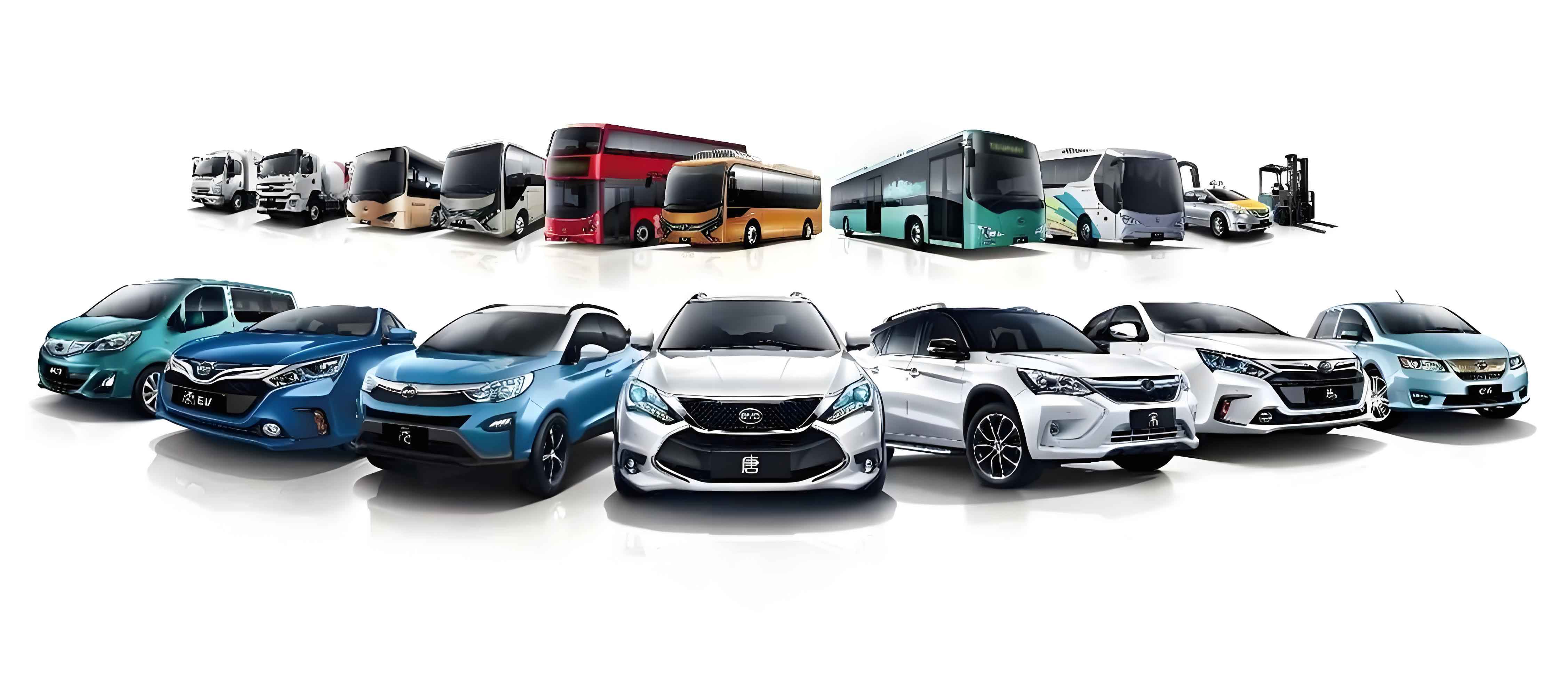
This research focuses on developing an advanced braking energy recovery control strategy for pure electric vehicles, with a particular emphasis on applications in the China EV market. The strategy aims to improve energy recovery efficiency while ensuring braking safety and stability. We propose a method based on the ECE-R13 regulations for front and rear axle braking force distribution, combined with a fuzzy logic controller that considers multiple inputs, including braking intensity, vehicle speed, and battery state of charge (SOC). By integrating this approach with co-simulation using MATLAB/Simulink and AVL Cruise, we validate the effectiveness of the strategy under standard driving cycles like NEDC and FTP75. The results demonstrate significant reductions in energy consumption per 100 kilometers, contributing to the advancement of electric vehicle technology in China and globally.
The braking process in electric vehicles involves both mechanical braking and regenerative braking provided by the electric motor. During deceleration, the motor operates in generator mode, converting kinetic energy into electrical energy stored in the battery. However, improper distribution of braking forces can compromise vehicle stability and reduce energy recovery efficiency. Therefore, a well-designed control strategy must balance safety and energy recovery. In this study, we address this by dividing braking into mild, moderate, and emergency phases, with the fuzzy controller dynamically adjusting the regenerative braking force based on real-time conditions. This approach not only enhances the economic performance of electric vehicles but also supports the growth of the China EV industry by addressing key limitations.
Braking Force Distribution Strategy
The distribution of braking forces between the front and rear axles is critical for vehicle stability and energy recovery. Based on the ECE-R13 regulations, we define a braking force distribution strategy that ensures safety while maximizing regenerative braking. The ideal braking force distribution follows the I-curve, which represents the optimal proportion of front and rear axle forces to prevent wheel lock-up and maintain stability. Additionally, the ECE-R13 curve (M-curve) and the f-curve are used to define safe braking regions. For a front-wheel-drive electric vehicle, we prioritize front axle braking to enhance energy recovery, as the motor is connected to the front wheels.
The braking force distribution is divided into four phases based on braking intensity z, where z is defined as the ratio of deceleration to gravitational acceleration (z = a/g). The vehicle parameters used in this study are summarized in Table 1.
| Parameter | Value | Parameter | Value |
|---|---|---|---|
| Full load mass m (kg) | 1580 | Rolling resistance coefficient f | 0.09 |
| Distance from CG to front axle a (m) | 1.2 | Tire radius r (m) | 0.287 |
| Distance from CG to rear axle b (m) | 1.267 | Final drive ratio i | 6.14 |
| CG height h_g (m) | 0.5 | Gravitational acceleration g (m/s²) | 9.8 |
| Wheelbase L (m) | 2.467 | Braking intensity z | – |
| Frontal area A (m²) | 1.97 | Front axle braking force F_uf (N) | – |
| Drag coefficient C_D | 0.284 | Rear axle braking force F_ur (N) | – |
For mild braking (0 < z < 0.120), the braking force is entirely allocated to the front axle to maximize regenerative energy recovery. The front and rear axle forces are calculated as:
$$F_{uf} = m g z$$
$$F_{ur} = 0$$
For moderate braking (0.120 < z < 0.525), the vehicle enters a composite braking phase where both mechanical and regenerative braking are active. The forces are distributed according to the ECE-R13 curve with a 95% redundancy factor:
$$F_{uf} = \frac{0.95 G (z + 0.07) (b + z h_g)}{0.85 L}$$
$$F_{ur} = z G – F_{uf}$$
where G is the vehicle weight (G = m g). As braking intensity increases (0.525 < z < 0.665), the mechanical braking contribution rises, and the regenerative braking gradually phases out. The forces are adjusted based on the intersection points of the curves:
$$F_{uf} = \frac{0.665 G (b + z h_g)}{L}$$
$$F_{ur} = \frac{(L – 0.665 h_g) F_{uf}}{0.665 h_g} – \frac{G b}{h_g}$$
For emergency braking (z > 0.665), only mechanical braking is used to ensure safety, and no energy recovery occurs. The forces follow the I-curve:
$$F_{uf} = \frac{z G (b + z h_g)}{L}$$
$$F_{ur} = \frac{z G (a – z h_g)}{L}$$
This distribution ensures that the braking force remains within the safe region defined by the O-A-B-C-D curve, preventing instability such as rear-wheel lock-up. The strategy is particularly beneficial for electric vehicles in China, where urban driving conditions involve frequent braking, offering substantial energy recovery potential.
Fuzzy Logic Controller for Regenerative Braking
To dynamically control the regenerative braking force, we designed a Mamdani-type fuzzy logic controller with three inputs and one output. The inputs are braking intensity z, vehicle speed v, and battery state of charge (SOC), while the output is the regenerative braking force proportion coefficient k. This controller allows for real-time adjustment based on driving conditions, enhancing the adaptability of electric vehicles in diverse scenarios, such as those common in China’s EV market.
The input and output variables are defined with specific universes of discourse and membership functions. Braking intensity z has a universe of [0, 1] with fuzzy subsets {Low (L), Medium (M), High (H)}. Vehicle speed v ranges from [0, 100] km/h with subsets {Low (L), Medium (M), High (H)}. SOC is in [0, 1] with subsets {Low (L), Medium (M), High (H)}. The output k has a universe of [0, 1] with subsets {Very Low (VL), Low (L), Medium (M), High (H), Very High (VH)}. The membership functions use triangular and trapezoidal shapes to represent these subsets, as illustrated in the following equations and descriptions.
For example, the membership function for braking intensity z can be represented as:
$$\mu_L(z) = \begin{cases}
1 – \frac{z}{0.2} & \text{if } 0 \leq z \leq 0.2 \\
0 & \text{otherwise}
\end{cases}$$
$$\mu_M(z) = \begin{cases}
\frac{z – 0.1}{0.2} & \text{if } 0.1 \leq z \leq 0.3 \\
1 – \frac{z – 0.3}{0.2} & \text{if } 0.3 \leq z \leq 0.5 \\
0 & \text{otherwise}
\end{cases}$$
$$\mu_H(z) = \begin{cases}
\frac{z – 0.4}{0.2} & \text{if } 0.4 \leq z \leq 0.6 \\
1 & \text{if } z > 0.6
\end{cases}$$
Similar functions are defined for v and SOC, ensuring that the controller responds smoothly to changes. The fuzzy rules are based on expert knowledge and extensive testing, as summarized in Table 2.
| Rule No. | v | SOC | z | k | Rule No. | v | SOC | z | k |
|---|---|---|---|---|---|---|---|---|---|
| 1 | L | H | L | VL | 15 | M | M | H | VL |
| 2 | L | H | M | VL | 16 | H | M | L | VH |
| 3 | L | H | H | VL | 17 | H | M | M | H |
| 4 | M | H | L | VL | 18 | H | M | H | VL |
| 5 | M | H | M | VL | 19 | L | L | L | M |
| 6 | M | H | H | VL | 20 | L | L | M | L |
| 7 | H | H | L | VL | 21 | L | L | H | VL |
| 8 | H | H | M | VL | 22 | M | L | L | VH |
| 9 | H | H | H | VL | 23 | M | L | M | H |
| 10 | L | M | L | L | 24 | M | L | H | VL |
| 11 | L | M | M | M | 25 | H | L | L | VH |
| 12 | L | M | H | L | 26 | H | L | M | H |
| 13 | M | M | L | VH | 27 | H | L | H | VL |
| 14 | M | M | M | H |
The fuzzy inference system uses the max-min composition method, and defuzzification is performed using the centroid method to obtain a crisp value for k. For instance, if the vehicle speed is high, SOC is low, and braking intensity is medium, the output k is high, indicating a significant regenerative braking contribution. This flexibility is crucial for electric vehicles operating in variable conditions, such as in China’s mixed traffic environments.
Simulation Model and Implementation
We implemented the proposed control strategy using co-simulation between MATLAB/Simulink and AVL Cruise to model the electric vehicle dynamics and control logic. The vehicle model in Cruise includes components such as the battery, electric motor, transmission, and braking system, parameterized according to Table 1. The control strategy is developed in Simulink, where the fuzzy logic controller and braking force distribution algorithms are coded and compiled into a DLL file for integration with Cruise.
The simulation tests two control strategies: Strategy A (the proposed fuzzy-based approach) and Strategy B (a conventional method without optimized force distribution or fuzzy control, similar to Cruise’s default strategy). The simulations are conducted under standard driving cycles, including the New European Driving Cycle (NEDC) and the Federal Test Procedure (FTP75), to evaluate energy consumption and recovery performance. These cycles represent typical urban and suburban driving conditions, relevant for assessing electric vehicle efficiency in regions like China.
In Strategy A, the regenerative braking force is calculated as:
$$F_{reg} = k \cdot F_{uf}$$
where k is the output from the fuzzy controller, and F_uf is the front axle braking force. The mechanical braking force is then:
$$F_{mec} = F_{total} – F_{reg}$$
with F_total being the total braking force demanded by the driver. Constraints such as motor torque limits and battery charging capabilities are incorporated to ensure realism. For example, the maximum regenerative torque T_reg_max of the motor is given by:
$$T_{reg\_max} = \frac{P_{max} \cdot \eta}{\omega}$$
where P_max is the maximum power, η is efficiency, and ω is the motor angular speed. Similarly, the battery SOC dynamics are modeled as:
$$\frac{dSOC}{dt} = -\frac{I_{batt}}{Q_{batt}}$$
where I_batt is the battery current and Q_batt is the battery capacity. These equations ensure that the simulation accurately captures the energy flow in the electric vehicle.
Results and Discussion
The simulation results demonstrate the superiority of Strategy A in reducing energy consumption and enhancing recovery efficiency. Under the NEDC cycle, Strategy A achieves a significant reduction in energy use per 100 kilometers compared to Strategy B. Similarly, in the FTP75 cycle, the improvement is even more pronounced, highlighting the effectiveness of the fuzzy-based control approach for electric vehicles in stop-and-go traffic common in China.
| Parameter | NEDC Energy Consumption (kWh/100km) | FTP75 Energy Consumption (kWh/100km) |
|---|---|---|
| Strategy A | 11.71 | 9.95 |
| Strategy B | 13.62 | 12.99 |
| Efficiency Improvement | 14.00% | 23.40% |
The energy consumption values are derived from the simulation outputs, considering the total energy used from the battery and the energy recovered during braking. The efficiency improvement is calculated as:
$$\text{Efficiency Improvement} = \frac{E_B – E_A}{E_B} \times 100\%$$
where E_A and E_B are the energy consumption values for Strategies A and B, respectively. The results show that Strategy A reduces energy consumption by 14% in NEDC and 23.4% in FTP75, indicating better performance in real-world driving conditions. This aligns with the goals of the China EV industry to enhance vehicle range and reduce operational costs.
Further analysis of the braking force distribution reveals that Strategy A maintains stability by adhering to the ECE-R13 curves, while Strategy B may deviate, leading to potential safety issues. For instance, the front axle force in Strategy A closely follows the I-curve during moderate braking, whereas Strategy B shows inconsistencies. The fuzzy controller’s ability to adapt to changing SOC and speed conditions ensures optimal energy recovery without compromising braking performance. This is particularly important for electric vehicles in China, where diverse driving patterns require robust control systems.
Conclusion
In this study, we have developed and validated an optimized braking energy recovery control strategy for pure electric vehicles, leveraging fuzzy logic and ECE-R13-based force distribution. The proposed approach significantly improves energy efficiency and extends driving range, addressing key challenges in the electric vehicle sector, especially in the context of China’s growing EV market. Through co-simulation with MATLAB/Simulink and AVL Cruise, we demonstrated that Strategy A outperforms conventional methods, with up to 23.4% reduction in energy consumption under the FTP75 cycle.
The integration of multiple inputs—braking intensity, vehicle speed, and SOC—into the fuzzy controller enables dynamic and adaptive control, enhancing both safety and energy recovery. This research contributes to the advancement of electric vehicle technology and supports sustainable transportation initiatives. Future work could explore the application of this strategy in hybrid energy storage systems, such as combining batteries with supercapacitors, to further improve the performance of electric vehicles in China and globally. As the demand for efficient electric vehicles continues to rise, such innovations will play a crucial role in shaping the future of mobility.