
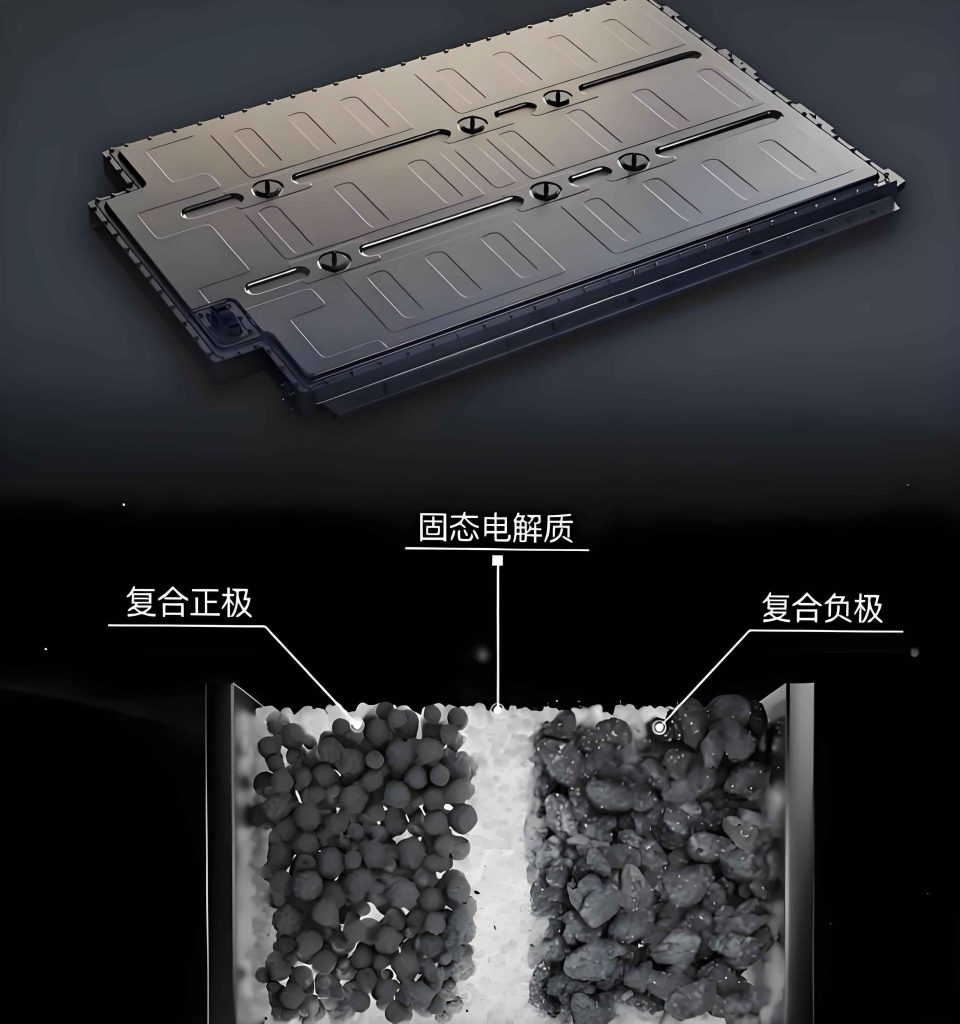
The pursuit of higher energy density and absolute safety has positioned solid-state batteries (SSBs) at the forefront of next-generation energy storage technologies. Replacing flammable liquid electrolytes with non-flammable solid-state electrolytes (SSEs) offers a fundamental solution to thermal runaway risks. Furthermore, the high mechanical strength of SSEs could potentially enable the use of lithium metal anodes, dramatically increasing the theoretical energy density. While the ionic conductivity of several SSEs now rivals that of liquid electrolytes, the commercialization of high-performance solid-state batteries is critically hindered by complex and resistive interfaces, particularly at the cathode side. The cathode/electrolyte interface is a nexus of multiphysics and multiscale phenomena, involving poor physical contact, chemical/electrochemical side reactions, elemental interdiffusion, and space-charge layer effects. A profound understanding of these interfacial challenges is paramount for the rational design of practical solid-state batteries. This article delves into the fundamental nature of cathode/SSE interfaces, summarizing their unique characteristics, failure mechanisms, and the latest strategies for interface stabilization.
1. The Volume Effect: A Mechanochemical Challenge
Unlike liquid electrolytes that can permeate porous electrodes, the rigid solid-solid contact in a solid-state battery makes it acutely sensitive to the volume changes of active materials during (de)lithiation. Most cathode materials undergo lattice expansion/contraction, leading to repeated mechanical stress at the interfaces. This strain, if not accommodated, can lead to contact loss, particle cracking, and even fracture of the brittle solid-state electrolyte itself, resulting in rapid performance degradation.
The stress evolution is not merely an interfacial issue but extends throughout the composite cathode, where the SSE constitutes a significant fraction (often up to 50 wt%). The stress concentration can be severe, as illustrated by operando pressure measurements showing clear pressure increases during charge (cathode contraction) and decreases during discharge. The mechanical properties of the components dictate the system’s resilience. For instance, while sulfide SSEs like Li2S-P2S5 have a relatively low Young’s modulus (~15-25 GPa) which aids in accommodating strain, their low fracture toughness (KIC ≈ 0.23 MPa·m1/2) makes them prone to brittle fracture. An electrochemical-mechanical model suggests that to avoid fracture for a typical SSE with E=15 GPa, the electrode’s total volume change ΔV must be ≤ 7.5%, and the fracture energy Gc must be ≥ 4.0 J·m-2. Many high-capacity cathodes exceed this volume change limit, as summarized below:
| Material | Volume Change, ΔV (%) | Young’s Modulus, E (GPa) |
|---|---|---|
| LiCoO2 (LCO) | ~5.6 | ~178 |
| LiFePO4 (LFP) | ~6.8 | ~126 |
| LiMn2O4 (LMO) | ~6.8 | ~87 |
| LiNixCoyMn1-x-yO2 (NCM) | ~6.0 (x=0.8) | N/A |
| Metallic Li (vs. Li+/Li) | Infinite (stripping/plating) | ~4.8 |
Therefore, mitigating the volume effect requires either applying external stack pressure to maintain contact, developing more ductile or compliant solid-state electrolytes, or engineering cathode architectures that minimize strain.
2. Chemical (In)Stability: The Silent Degradation
Chemical stability refers to the spontaneous reactions between the cathode and the solid-state electrolyte at open-circuit voltage (OCV), without any applied electrical bias. These reactions, driven by thermodynamic instability, can form interfacial layers that are ionically/electronically blocking, consuming active lithium and increasing interfacial resistance before cycling even begins.
For sulfide-based solid-state batteries, even simple mixing of NCM cathode particles with Li6PS5Cl electrolyte leads to a continuous increase in interfacial resistance over time. Cells subjected to a 48-hour rest before cycling show higher initial polarization and lower capacity compared to freshly assembled cells, directly evidencing this chemical degradation. Coating the cathode with a thin LiNbO3 layer effectively suppresses this impedance growth, confirming the reactive nature of the bare interface.
In oxide-based solid-state batteries, the problem is often exacerbated by the high-temperature sintering processes required to achieve good contact. For instance, annealing LiCoO2 with garnet Li7La3Zr2O12 (LLZO) at temperatures above 500°C leads to interdiffusion of La and Co, forming resistive phases like La2CoO4 and Li2ZrO3 at the interface, with a thickness reaching ~100 nm.
A related phenomenon is the space-charge layer effect, particularly severe at the interface between an oxide cathode and a sulfide solid-state electrolyte. Due to the higher electronegativity of sulfur compared to oxygen, electrons can transfer from the sulfide SSE to the oxide cathode upon contact. To maintain charge neutrality, Li+ ions migrate away from the interface into the cathode, creating a Li+-depleted zone in the electrolyte near the interface. This region exhibits high resistance for Li+ transport. The space-charge potential $\Delta \phi$ can be described by the Poisson-Boltzmann distribution, and the width of the depletion layer $W$ is related to the Debye length $\lambda_D$:
$$
\lambda_D = \sqrt{\frac{\epsilon_r \epsilon_0 k_B T}{2e^2 c_0}}
$$
where $\epsilon_r$ is the dielectric constant, $\epsilon_0$ the vacuum permittivity, $k_B$ Boltzmann’s constant, $T$ temperature, $e$ elementary charge, and $c_0$ the bulk Li+ concentration. This effect inherently increases the initial interfacial resistance.
3. Electrochemical (In)Stability: The Voltage-Driven Decomposition
The electrochemical stability window of a solid-state battery component defines the voltage range within which it is thermodynamically stable against reduction or oxidation. Most solid-state electrolytes, especially sulfides, have a narrower intrinsic window than the operating voltage of high-energy cathodes (often > 4.2 V vs. Li+/Li). When the cathode potential exceeds the oxidation limit of the SSE, the electrolyte decomposes at the interface, forming a solid electrolyte interphase (SEI). The nature of this SEI—whether it is a ion-conducting passivation layer or a mixed conducting layer that allows continuous decomposition—is critical for long-term cycling.
3.1 Sulfide SSE / Cathode Interface
Sulfide solid-state electrolytes are particularly susceptible to electrochemical oxidation. At the LiCoO2/Li2S-P2S5 interface, Co and S interdiffusion has been observed upon charging. Decomposition products include oxidized sulfur species (Sn-, S-S bonds), Li2S, and even Co3O4. The presence of conductive carbon in the composite cathode significantly exacerbates this decomposition by providing electronic pathways, leading to a thick, resistive interface. For LiFePO4, which operates at a lower voltage (~3.4 V), the reaction is less severe but can still lead to the formation of a lithium-depleted zone in the sulfide SSE due to charge compensation mechanisms.
The electrochemical oxidation process of thiophosphate anions can be simplistically represented as:
$$
\text{PS}_4^{3-} \rightarrow \text{P}_2\text{S}_x^{n-} + \text{S} + \text{Li}_2\text{S} + \text{Li}^+ + e^-
$$
The continuous growth of this interphase is a major cause of capacity fade and increasing polarization in sulfide-based solid-state batteries.
3.2 Oxide SSE / Cathode Interface
Oxide solid-state electrolytes like LLZO generally exhibit a wider electrochemical stability window than sulfides. However, experimental data from cells using SSE-carbon composite working electrodes reveal that oxidation can begin at voltages as low as 3.7-4.0 V vs. Li+/Li, which is within the operating range of common cathodes. DFT calculations often predict even narrower thermodynamic windows. The actual stability during cycling is complex. While some LiCoO2/LLZO cells show significant irreversible capacity, others with doped LLZO exhibit excellent coulombic efficiency, suggesting that kinetic barriers or the formation of a self-passivating layer may play a role. The reaction energy $\Delta E_r$ for interfacial mixing between a cathode and an oxide SSE can be estimated from first principles:
$$
\Delta E_r = E_{\text{(Cathode+SSE mix)}} – E_{\text{(Cathode)}} – E_{\text{(SSE)}}
$$
A positive $\Delta E_r$ indicates thermodynamic instability.
3.3 Polymer & Composite Electrolyte / Cathode Interface
Classic polymer electrolytes like PEO-LiTFSI have a practical anodic stability limit below 3.8 V, limiting their use with high-voltage cathodes. The oxidation mechanism involves the degradation of the ether oxygen in PEO. Composite electrolytes, which incorporate inorganic fillers (oxides, sulfides) into a polymer matrix, can improve oxidative stability. The filler can scavenge impurities, reduce polymer crystallinity, and sometimes participate in forming a more stable interface. The overall stability of an inorganic-polymer composite (IPC) electrolyte is a synergistic result of its components:
| Property | Governing Factors in IPC | Improvement Strategy |
|---|---|---|
| Mechanical Stability | Polymer matrix flexibility, filler modulus, adhesion | Use elastic polymer (e.g., PEO), nanosized fillers |
| Thermal Stability | Decomposition temperature of polymer & salt | Use thermally stable polymers (e.g., PAN, PVDF) |
| Electrochemical Stability | HOMO/LUMO of polymer, redox window of filler | Use high-voltage fillers (e.g., LLZO), nitrile-based polymers |
3.4 Halide SSE / Cathode Interface
Halide solid-state batteries (e.g., Li3YCl6, Li3InCl6) have emerged as promising candidates due to their high ionic conductivity and, importantly, excellent compatibility with oxide cathodes. They demonstrate a wide electrochemical window (> 4.3 V) and show remarkably low interfacial resistance without the need for coating. X-ray absorption near-edge structure (XANES) spectroscopy confirms that the local structure of Li3InCl6 remains unchanged even when in contact with charged LiCoO2. The enhanced stability can be attributed to the high ionic character of the metal-halide bond and the high redox potential of the Cl–/Cl2 couple compared to S2-/S. The calculated reaction enthalpy between LiCoO2 and various SSEs clearly shows halides are among the most stable:
$$
\Delta H_{\text{rxn}} (\text{LiCoO}_2 + \text{SSE}) = H_{\text{products}} – H_{\text{LiCoO}_2} – H_{\text{SSE}}
$$
This intrinsic stability makes halide SSEs particularly attractive for simplifying the manufacturing of solid-state batteries by potentially eliminating the need for cathode coatings.
4. Strategies for Interface Stabilization
To overcome the multifaceted challenges at the cathode/SSE interface, a variety of interface engineering strategies have been developed. The core principles are to: (1) Improve physical contact, (2) Block chemical/electrochemical reactions, and (3) Mitigate space-charge layer effects. The choice of strategy depends heavily on the SSE system.
| SSE Type | Primary Interface Issue | Common Coating/Interlayer Materials | Function |
|---|---|---|---|
| Sulfide | Electrochemical oxidation, Element interdiffusion | LiNbO3, Li3PO4, Li4Ti5O12, Li2SiO3 | Electronic insulator; Kinetic barrier against reaction; Reduces space-charge layer. |
| Oxide (Garnet) | Poor sintered contact, High T reaction | Li3BO3 (sintering aid), Nb metal, Gel polymer electrolyte | Improves wettability/sintering; Forms conductive interphase; Blocks Li2CO3. |
| Polymer/Composite | Low oxidative stability | Li1.5Al0.5Ti1.5(PO4)3 (LATP), Ceramic particles | Enhances mechanical/thermal stability; Broadens voltage window. |
| Halide | Relatively stable | Often not required | Intrinsic stability simplifies design. |
Advanced Coating Strategies:
- Conformal Coatings: Techniques like Atomic Layer Deposition (ALD) and pulsed laser deposition (PLD) enable ultra-thin (nanoscale), pinhole-free coatings (e.g., LiNbO3, Al2O3) that uniformly protect cathode particles.
- In-situ Growth: A novel approach involves the in-situ formation of an SSE layer on the cathode surface. For example, Li3InCl6 can be directly grown on LiCoO2 from an aqueous solution, creating an intimate interface with minimal resistance.
- Soft Polymer Buffers: Coating cathode particles with a soft polymer (e.g., polyacrylonitrile-butadiene) can accommodate volume changes and maintain intimate contact with the surrounding SSE in the composite electrode during cycling.
- Functional Dipole Layers: To combat the space-charge layer, materials like BaTiO3 with permanent dipoles can be introduced at the interface. The dipole field helps to rearrange Li+ ion distribution, reducing the Li+ depletion and facilitating transport.
The effectiveness of a coating can be evaluated by the reduction in charge-transfer resistance $R_{ct}$ at the interface, which directly impacts cell polarization and rate capability:
$$
\eta_{\text{pol}} = I \cdot R_{ct}
$$
where $\eta_{\text{pol}}$ is the polarization overpotential and $I$ is the current.
5. Conclusion and Outlook
The development of high-energy-density solid-state batteries is intrinsically linked to solving the complex puzzle of the cathode/solid-state electrolyte interface. This interface is not a simple two-dimensional boundary but a dynamic, three-dimensional interphase whose properties evolve during fabrication, storage, and cycling. Key challenges include:
- Volume Effect: Stress from cathode expansion/contraction leads to contact loss and mechanical failure.
- Chemical Instability: Spontaneous reactions form resistive layers before cycling, while space-charge effects create ion-depleted zones.
- Electrochemical Instability: Decomposition of the solid-state electrolyte at high voltages forms interphases that may not passivate, leading to continuous degradation.
Addressing these requires a holistic, materials-by-design approach. Coating technology is currently the most potent tool, with halide solid-state electrolytes offering a promising path forward due to their intrinsic stability. Looking ahead, efforts must focus on:
- Advanced Characterization: Employing in-situ/operando techniques (TEM, XAS, TOF-SIMS) to directly observe interfacial evolution under realistic conditions.
- Multiscale Modeling: Integrating DFT, molecular dynamics, and continuum models to predict stability and guide material selection.
- Scalable Engineering: Developing cost-effective, scalable coating and fabrication processes that can translate laboratory success to commercial manufacturing.
Ultimately, mastering the cathode/electrolyte interface through deliberate interface engineering is the critical step towards unlocking the full potential of safe, long-lasting, and high-energy solid-state batteries. The journey involves a deep understanding of solid-state ionics, electrochemistry, and mechanics, demanding continuous innovation from the scientific and engineering communities.