
The relentless pursuit of sustainable transportation has catapulted new energy vehicles (NEVs) to the forefront of the automotive industry. As a researcher deeply invested in this transformative field, I have witnessed firsthand the pivotal role of battery technology. While traditional lithium-ion batteries have been the workhorse, powering the initial wave of adoption, their inherent limitations concerning energy density, safety, longevity, and charging speed are becoming increasingly apparent. These bottlenecks directly constrain vehicle range, raise safety concerns, and impact consumer confidence. It is within this context that I see solid-state battery technology emerging not merely as an incremental improvement, but as a foundational revolution poised to redefine the capabilities and safety profile of electric mobility.
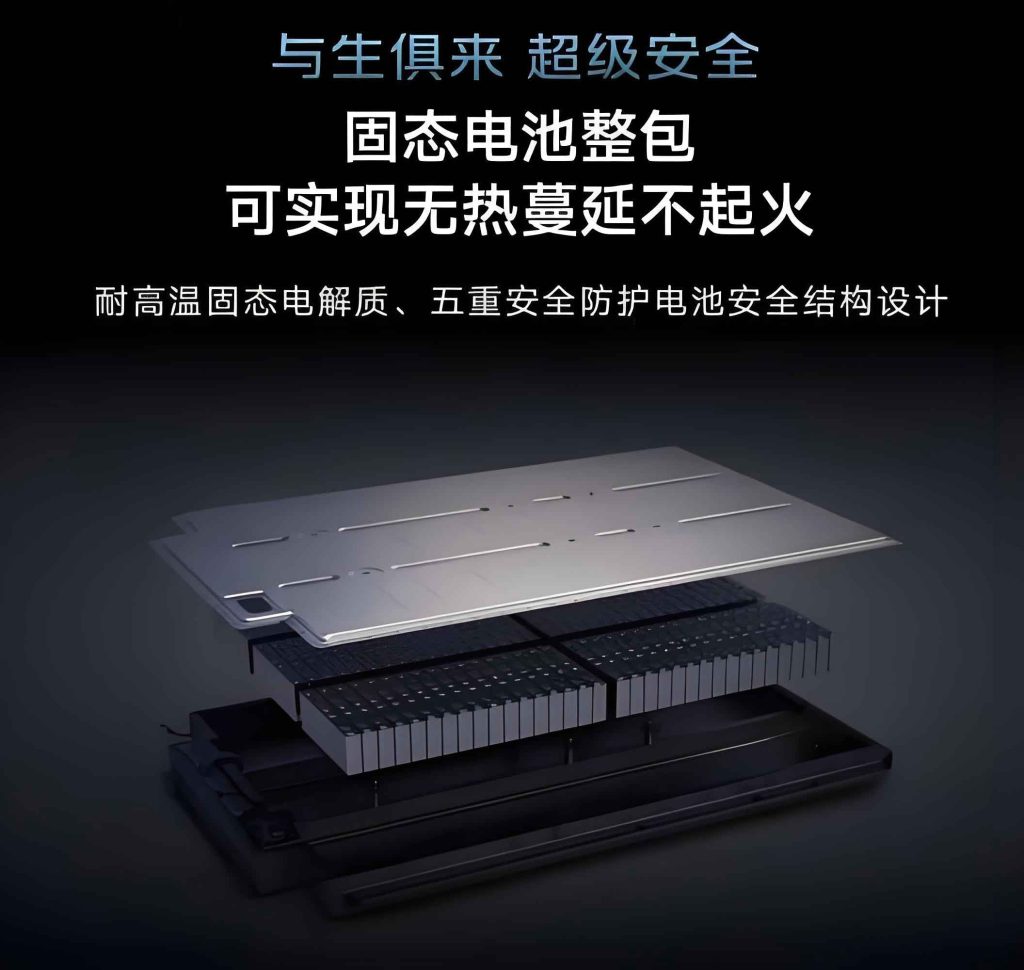
The fundamental promise of a solid-state battery lies in its core architecture: the replacement of the flammable liquid or gel electrolyte with a solid ion-conducting material. This singular change cascades into a multitude of performance enhancements. The quest for a superior solid-state battery is fundamentally a materials science challenge, encompassing the solid electrolyte itself and the compatible electrode materials. This article will delve into the operational principles, material advancements, current application landscape, and future trajectory of solid-state battery technology within the NEV sector.
1. Decoding Solid-State Battery Technology: Principles and Material Pathways
At its heart, a battery operates on the shuttling of ions between a cathode and an anode during charge and discharge cycles. In a conventional lithium-ion battery, this shuttle runs through a liquid electrolyte medium. A solid-state battery re-engineers this pathway. Here, lithium ions migrate through a rigid or semi-rigid solid electrolyte lattice. During charging, lithium ions de-intercalate from the cathode material, traverse the solid electrolyte’s crystalline or amorphous structure by hopping between interstitial sites, and are then incorporated into the anode matrix. The process reverses during discharge.
The performance of a solid-state battery is overwhelmingly dictated by the properties of its solid electrolyte. The research community has explored several distinct material families, each with its own advantages and trade-offs, summarized in the table below.
| Material Family | Examples | Ionic Conductivity (Room Temp.) | Key Advantages | Primary Challenges |
|---|---|---|---|---|
| Oxide-Based | Garnet (e.g., LLZO: Li7La3Zr2O12), NASICON-type, Perovskite | ~10-4 to 10-3 S/cm | Excellent chemical/thermal stability, wide electrochemical window, good air stability. | High interfacial resistance, brittle nature, often requiring high-temperature sintering. |
| Sulfide-Based | LGPS-type (Li10GeP2S12), Argyrodite (Li6PS5Cl), Thio-LISICON | ~10-3 to 10-2 S/cm | Highest ionic conductivity, soft mechanical properties enabling good interfacial contact. | Poor stability in air (release of H2S), narrow electrochemical window, expensive elements (Ge). |
| Polymer-Based | PEO-LiTFSI, PAN-based composites | ~10-6 to 10-4 S/cm | Excellent flexibility, ease of processing, good electrode compatibility. | Low ionic conductivity at room temperature, poor mechanical strength, limited thermal stability. |
| Halide-Based | Li3YCl6, Li2ZrCl6 | ~10-4 to 10-3 S/cm | Good ionic conductivity, high voltage stability against oxidation, decent deformability. | Moisture sensitivity, high cost of raw materials (e.g., Y, Zr), reactivity with Li metal. |
The evolution of the solid-state battery has been a journey of persistent material innovation. From early conceptual work in the 1970s and 80s to the modern era of intensive R&D, the progress has been marked by key milestones: the development of thin-film solid-state batteries, breakthroughs in sulfide electrolyte conductivity rivaling liquids, and the recent demonstrations of pouch-cell prototypes capable of powering electric vehicles. The current landscape is one of fierce competition and collaboration, with entities from academia, dedicated start-ups, and automotive giants all vying to solve the remaining puzzles.
2. The Core of Innovation: Advances in Key Materials
The realization of a high-performance solid-state battery extends beyond the electrolyte to encompass revolutionary electrode materials. The shift to a solid-state system unlocks the potential to use high-capacity electrodes that are incompatible or dangerous in liquid systems.
2.1 Solid Electrolyte: The Quest for the Perfect Conductor
The ideal solid electrolyte must satisfy a stringent set of criteria: high ionic conductivity ($\sigma_{Li+}$), negligible electronic conductivity, wide electrochemical stability window ($\Delta E_{window}$), excellent mechanical properties for processability and interfacial contact, and exceptional chemical stability. The ionic conductivity, often the primary benchmark, is governed by the number of charge carriers and their mobility, described by the Nernst-Einstein relation:
$$
\sigma = n \cdot q \cdot \mu
$$
where $n$ is the charge carrier concentration, $q$ is the charge, and $\mu$ is the mobility. Research focuses on designing crystal structures with favorable conduction pathways and low activation energies for ion hopping.
For oxide electrolytes like LLZO, doping with elements like Al or Ta is crucial to stabilize the high-conductivity cubic phase and enhance $\sigma_{Li+}$. The challenge lies in reducing grain boundary resistance, often addressed by sophisticated sintering aids or composite strategies. Sulfide electrolytes, while boasting superior bulk conductivity, require intricate engineering to form stable, low-resistance interfaces with electrodes and to be processed in inert atmospheres due to their hygroscopic nature. Hybrid or composite electrolytes, which combine different material classes (e.g., polymer-in-ceramic, ceramic-in-polymer), are a promising avenue to balance conductivity, stability, and processability.
2.2 Electrode Materials: Unlocking Higher Energy Density
The solid-state battery architecture is particularly synergistic with advanced electrode chemistries.
Cathode Innovations: The move to solid electrolytes allows the use of high-voltage or high-capacity cathodes that would degrade liquid electrolytes. Key strategies include:
- High-Nickel Layered Oxides (NMC, NCA): While used in liquid batteries, they can be paired with more stable solid electrolytes to push voltage limits and improve longevity.
- Lithium-Rich Manganese-Based Oxides (LRMO): These offer capacities exceeding 250 mAh/g but suffer from voltage fade and side reactions with liquids. A stable solid electrolyte could mitigate these issues.
- Sulfur and Conversion Cathodes: Materials like sulfur offer tremendous theoretical capacity (~1675 mAh/g). The solid electrolyte can physically suppress polysulfide shuttling, a major failure mode in liquid Li-S batteries.
Anode Innovations: This is where the solid-state battery can make its most dramatic leap: the enabling of a lithium metal anode. Lithium metal has an ultra-high theoretical capacity (3860 mAh/g) and the lowest electrochemical potential. The solid electrolyte’s mechanical strength is theorized to suppress the growth of lithium dendrites, which cause short circuits in liquid cells. The success hinges on achieving perfect interfacial stability and contact. Alternative high-capacity anodes like silicon (Si) are also more viable in solid-state systems, as the solid electrolyte may better accommodate the large volume expansion of Si during lithiation.
| Electrode | Material Target | Theoretical Advantage | Key Challenge for Solid-State Integration | Mitigation Strategy |
|---|---|---|---|---|
| Cathode | High-Voltage NMC (≥4.5V) | Higher Energy Density | Oxidative decomposition of electrolyte at interface. | Developing ultra-wide window electrolytes (e.g., halides) or applying stable cathode coating layers. |
| Lithium-Rich Oxides | Very High Capacity (>250 mAh/g) | Oxygen release and structural degradation. | Surface doping/coating, using mechanically confining solid electrolyte. | |
| Sulfur (S) | Extremely High Capacity (~1675 mAh/g) | Volume change, electronic insulation, polysulfide shuttling. | Designing S-C composites; solid electrolyte physically blocks shuttle effect. | |
| Anode | Lithium Metal (Li) | Ultra-High Capacity (3860 mAh/g) | Dendrite growth, interfacial instability, void formation. | Engineering ductile/adaptive interlayers, applying stack pressure, using 3D host structures. |
| Silicon (Si) | High Capacity (4200 mAh/g) | Massive volume expansion (>300%). | Nanostructuring Si; using compliant polymer-ceramic composite electrolytes. |
The performance gains from these material advancements can be quantified. The gravimetric energy density ($E_g$) of a cell is a function of the capacities and voltages of its electrodes:
$$
E_g \approx \frac{V_{cell} \times Q_{cell}}{m_{cell}}
$$
where $V_{cell}$ is the average cell voltage, $Q_{cell}$ is the cell capacity, and $m_{cell}$ is the cell mass. By enabling lithium metal anodes and high-capacity cathodes while removing heavy inert components, a solid-state battery can significantly increase $Q_{cell}$ and reduce $m_{cell}$, pushing $E_g$ well beyond 400 Wh/kg and eventually towards 500+ Wh/kg.
3. Application in New Energy Vehicles: Current Status and Strategic Moves
The transition of solid-state battery technology from the lab to the road is now actively underway. Its value proposition for NEVs is multi-faceted and compelling.
1. Enhanced Safety: The elimination of flammable liquid electrolytes fundamentally alters the safety paradigm. Thermal runaway, a chain reaction leading to fire or explosion in liquid cells, is far less likely. The solid electrolyte has higher thermal stability, and the onset temperature for exothermic reactions is significantly elevated. This directly addresses a major consumer concern and simplifies thermal management systems in vehicles.
2. Superior Energy Density: As calculated above, the potential for higher energy density translates directly to longer driving range. This is the most direct answer to “range anxiety.” Vehicles powered by advanced solid-state battery packs are targeting ranges of 1000 km or more on a single charge, matching or exceeding internal combustion engine vehicles.
3. Rapid Charging Capability: The kinetics of ion transport in certain solid electrolytes, combined with better thermal management, can support extreme fast charging (XFC) rates. The goal of charging to 80% capacity in under 10-15 minutes becomes feasible, making EV refueling times comparable to gasoline refueling.
4. Longevity and Wider Operating Window: The stable solid-solid interface can reduce parasitic side reactions that degrade liquid cells over time. Furthermore, solid-state battery performance is less degraded at both low and high temperatures, improving vehicle usability in diverse climates.
| Parameter | Liquid Lithium-ion Battery | Solid-State Battery (Projected) | Impact on NEV |
|---|---|---|---|
| Energy Density | 250-300 Wh/kg (cell level) | 350-500+ Wh/kg (cell level) | ~40-100% increase in range for same pack size/weight. |
| Safety | Risk of leakage, thermal runaway. | Inherently safer; no flammable liquid. | Reduced risk of fire, simpler & lighter safety housing. |
| Fast Charge Rate | Typically 1-3C (e.g., 20-45 min to 80%) | Potential for 4-6C+ (e.g., <12 min to 80%) | Dramatically improved convenience, akin to refueling. |
| Cycle Life | 1000-2000 cycles (to 80% capacity) | Targeting >2000 cycles (to 80% capacity) | Longer vehicle and battery pack lifespan. |
| Operating Temperature | Performance degrades significantly below 0°C and above 45°C. | More stable performance across wider range (e.g., -30°C to 100°C). | Better performance in extreme weather, reduced need for battery conditioning. |
| System Cost | Maturing, ~$100/kWh (pack, at scale) | Currently very high, target <$100/kWh (long-term) | Initial premium, but total cost of ownership may improve with longevity. |
The global automotive industry is engaging in a strategic race to commercialize this technology. The approaches vary, reflecting different assessments of the material pathways and timelines.
| Company/Alliance | Technology Focus | Key Announcements / Milestones | Targeted Vehicle Integration |
|---|---|---|---|
| Toyota | Sulfide-based electrolyte | Prototype vehicles demonstrated; partnership with Idemitsu Kosan for mass production of sulfide electrolyte. Aiming for commercial application. | Planned for mid-2020s to early 2030s. |
| Nissan | Proprietary sulfide-type material | Piloting all-solid-state battery production at Yokohama plant; aims to launch EV with proprietary ASSB by 2028. | Own EV models from FY2028. |
| CATL | Condensed Matter Battery (semi-solid/ hybrid) | Announced condensed battery with ~500 Wh/kg energy density; focus on high safety and readiness for mass production. | Claimed to be available for civilian aerial vehicles and possibly high-end EVs. |
| Solid Power (Partnering with BMW, Ford) | Sulfide-based all-solid-state | Delivering A-sample cells to automotive partners for testing; building pilot production line. | BMW plans demonstration vehicle by 2025. |
| QuantumScape (Partnering with VW) | Ceramic separator (oxide-based) | Delivered 24-layer prototype A-samples to VW; reporting promising performance data on energy density and cycle life. | VW targets production vehicle in second half of decade. |
| SAIC / IM Motors | Hybrid (semi-solid) “Lightyear” battery | Equipped in IM L6 model; claims >1000 km range, 12-minute fast charge for 400 km. | Already in series production vehicle (2024). |
It is critical to note the distinction between “all-solid-state” and “semi-solid” batteries. Many current announced applications, like the one in the IM L6, use a semi-solid or hybrid design, which may still contain a small amount of liquid or gel electrolyte to improve interfacial contact. This is a pragmatic stepping stone, offering some benefits while mitigating the extreme manufacturing challenges of a pure all-solid-state solid-state battery.
4. Challenges and the Path Forward
Despite the exhilarating progress, the path to ubiquitous solid-state battery-powered NEVs is fraught with significant hurdles that must be overcome.
1. Material and Interface Science Hurdles: The quest for a solid electrolyte with simultaneously high ionic conductivity, exceptional stability against both Li metal and high-voltage cathodes, and mechanical toughness continues. Even with a good bulk material, the interfaces between the solid electrolyte and the solid electrodes are problematic. They can have high resistance, degrade over time, or develop voids as lithium is plated and stripped. The Butler-Volmer equation, which describes electrochemical reaction kinetics, is heavily influenced by this interfacial resistance ($R_{int}$):
$$
j = j_0 \left[ \exp\left(\frac{\alpha n F \eta}{RT}\right) – \exp\left(-\frac{(1-\alpha) n F \eta}{RT}\right) \right]
$$
where $j$ is current density, $j_0$ is exchange current density, and $\eta$ is overpotential. A high $R_{int}$ leads to a large $\eta$, reducing power performance and efficiency. Solving this requires nanoscale engineering of interlayers and precise control of interfacial chemistry.
2. Manufacturing and Scalability: Producing thin, defect-free, and uniform layers of brittle ceramic electrolytes at high speed and yield is a monumental engineering challenge. Processes like thin-film deposition (used for small devices) are too expensive for automotive-scale cells. New, scalable processes for powder handling (especially for air-sensitive sulfides), sheet casting, stacking, and integration need to be invented and perfected. The capital expenditure for gigawatt-hour-scale production lines will be enormous.
3. Cost: Currently, the raw materials for many promising solid electrolytes (e.g., Ge in LGPS, rare earths in some oxides) are expensive. Complex manufacturing processes will add further cost. The long-term goal is to bring the pack-level cost to parity with, or below, advanced liquid lithium-ion batteries, but this will require years of scaling, process optimization, and potentially shifting to more earth-abundant elements.
4. Supply Chain and Infrastructure: A new solid-state battery industry will require entirely new supply chains for raw material purification, precursor synthesis, and cell component production. Furthermore, the extreme fast-charging capability of future solid-state battery vehicles will place unprecedented demands on the grid and charging infrastructure, requiring ultra-high-power charging stations (potentially exceeding 1 MW) and smart grid management.
5. Conclusion: An Inevitable Evolution
From my perspective, the evolution towards the solid-state battery in new energy vehicles is not a question of “if” but “when and in what form.” The fundamental advantages in safety and energy density are too compelling to ignore. While the challenges in materials science, interfacial engineering, and manufacturing are daunting, the intensity of global investment and innovation is unprecedented. We are likely to see a phased adoption: hybrid or semi-solid batteries providing incremental gains in the near term, followed by genuine all-solid-state batteries in premium segments, before finally achieving the cost structure necessary for mass-market vehicles.
The successful deployment of the solid-state battery will be a collaborative triumph, requiring deep synergy between electrochemists, materials scientists, mechanical engineers, and manufacturing experts. It will also necessitate proactive support in terms of R&D funding, standards development, and infrastructure planning. When fully realized, the solid-state battery will be the cornerstone of a new era for electric vehicles—offering range without anxiety, refueling without delay, and safety without compromise, ultimately accelerating the global transition to sustainable transportation.