
In the context of vocational and technical education, selecting the right teaching apparatus is crucial for bridging theoretical knowledge and practical skill. Based on my experience, I have found that a specific type of industrial electric drive system, namely the valve electric drive system, serves as an exceptionally effective and multifaceted teaching tool. This system, while conceptually straightforward, encapsulates a wealth of fundamental principles in electromechanics, control logic, and system integration. Its inherent structural clarity and functional transparency make it superior to more complex, integrated machinery for foundational training. The purpose of this extensive discussion is to articulate why this particular electric drive system is uniquely suited for educational purposes, to dissect its components and principles using formulas and structured analysis, and to provide a comprehensive framework for its implementation in a curriculum.
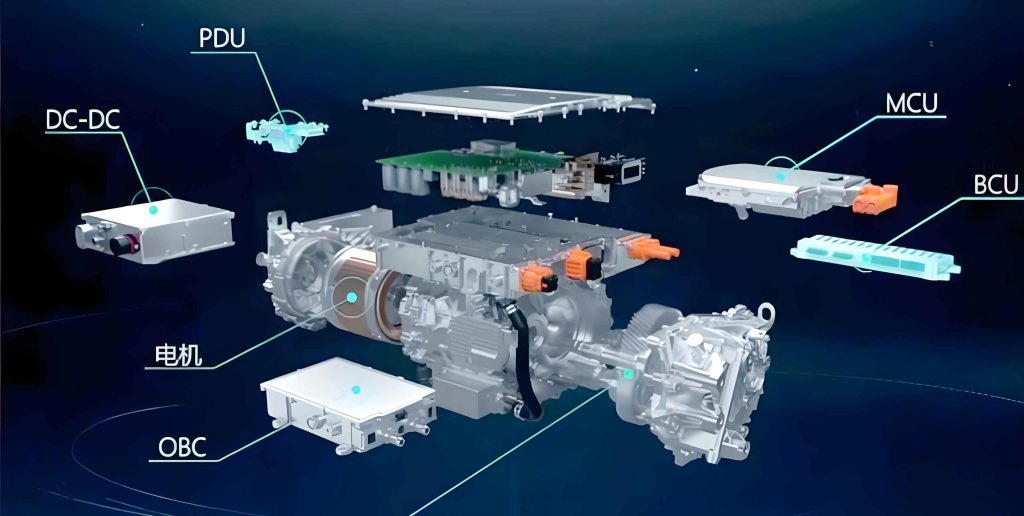
The core of the system consists of two distinct yet interconnected units: the valve electric actuator (the mechanical drive) and the matching electric valve controller (the electrical command center). Their combination forms a complete, self-contained electric drive system for opening and closing pipeline valves. This separation of mechanical and electrical domains is its first pedagogical advantage. Unlike a highly integrated CNC machine where functions are buried within a black box, this system lays its components bare. The actuator is visibly comprised of a specialized motor, a reduction gearbox, limit switches for travel control, a torque-sensing mechanism, a position indicator, and a manual handwheel. The controller houses a familiar yet enriched circuit panel. This physical dichotomy allows students to trace cause and effect directly, building a solid foundation of visual thinking upon which abstract logical reasoning can later be constructed. The image below perfectly illustrates this clear separation and integration.
From a circuit theory perspective, the controller’s primary power circuit is essentially a classic AC motor reversible control circuit. The governing equations for the motor’s basic operation are fundamental. The synchronous speed $n_s$ of the induction motor is given by:
$$n_s = \frac{120 f}{P}$$
where $f$ is the supply frequency and $P$ is the number of poles. The actual rotor speed $n_r$ is slightly less due to slip $s$:
$$n_r = n_s (1 – s)$$
The output torque $T$ is related to power $P$ and speed:
$$T = \frac{9.55 \times P}{n_r}$$
While these formulas are elementary, observing the physical motor’s behavior under the controller’s command—starting, reversing, braking—gives them tangible meaning. The controller expands on this base with several auxiliary circuits, each a valuable teaching module in itself. The following table summarizes these subsystems and their educational value:
| Controller Subsystem | Key Components & Function | Core Teaching Points |
|---|---|---|
| Power Supply & Regulation | Step-down transformer, Rectifier bridge, Voltage regulator IC. | AC to DC conversion, concept of regulation, importance of stable low-voltage supply for logic circuits. |
| Motor Control & Protection | Contactors, Overload relays, Fuses. | Reversing contactor interlocking, overload protection coordination, short-circuit protection. |
| Position Detection & Display | Potentiometer (linked to actuator output shaft), Signal conditioning, Meter or LED display. | Analog feedback principle, voltage divider rule $V_{out} = V_{in} \times \frac{R_{2}}{R_{1}+R_{2}}$, mechanical-to-electrical signal conversion. |
| Limit & Interlock Logic | Cam-operated limit switches (Open/Close limits), Interposing relays. | Sequential control logic, fail-safe design, the concept of “feedback” from mechanism to controller. |
| Local/Remote Switching | Selector switch, Additional control terminals. | Control hierarchy, interface design, understanding remote signal inputs (e.g., DC 4-20mA or dry contacts). |
The position feedback loop is a prime example of a simple yet complete control cycle. The actuator’s output shaft rotates the potentiometer. If the potentiometer has a total resistance $R_{total}$ and a rotation of $\theta_{total}$ (e.g., 90° or 180°), then at any valve position $\theta_{valve}$, the wiper resistance $R_{wiper}$ is proportional:
$$R_{wiper} = \frac{\theta_{valve}}{\theta_{total}} \times R_{total}$$
This variable resistance creates a proportional voltage signal $V_{pos}$:
$$V_{pos} = V_{ref} \times \frac{R_{wiper}}{R_{total} + R_{fixed}}$$
where $V_{ref}$ is a reference voltage. This $V_{pos}$ is then displayed and, in more advanced systems, compared to a setpoint. This tangible “shaft turn -> resistance change -> voltage change -> display change” chain is an invaluable lesson in transduction and closed-loop concepts, all within a comprehensible mechanical electric drive system.
The mechanical actuator itself is a treasure trove of principles. The gear reduction stage is a direct application of gear ratios. If the motor pinion has $N_m$ teeth and the final driven gear has $N_o$ teeth, the speed reduction ratio $i$ is:
$$i = \frac{N_o}{N_m}$$
And the corresponding increase in output torque $T_o$ relative to motor torque $T_m$ (ignoring losses) is:
$$T_o \approx T_m \times i$$
The inclusion of both travel limit switches (activated by cams) and a torque-sensing mechanism (often a spring-loaded clutch) introduces the critical concepts of end-point safety and overload protection. Students can physically adjust the cam positions to set open and close limits and can observe the clutch disengage when the valve is seated or jammed, protecting the electric drive system from damage. These are fundamental lessons in machine design and safety interlocks.
When evaluating its suitability as a teaching instrument, the advantages of this electric drive system become overwhelming when compared to traditional alternatives like basic motor control panels or complex machine tool simulators. The following comparative analysis highlights its balanced profile:
| Feature / Aspect | Traditional Motor Control Panel | Valve Electric Drive System | Complex Machine Tool (e.g., Lathe) |
|---|---|---|---|
| Theoretical Scope | Narrow (Basic circuits only) | Broad & Integrated (Mechatronics) | Very Broad but Often Opaque |
| Structural Visibility | Good (Electrical only) | Excellent (Clear Mech/Elect separation) | Poor (Highly integrated, panels closed) |
| Functional Completeness | Low (No real-world load/feedback) | High (Real load, closed-loop feedback) | High but Abstract |
| Student Accessibility | High | Very High (Intuitive cause-effect) | Low (Intimidating, complex) |
| Skill Development Range | Wiring, basic troubleshooting | Comprehensive: Wiring, assembly, alignment, calibration, system debugging | Operation, parameter setting, diagnostics |
| Cost & Safety | Low cost, Safe | Moderate cost, Inherently Safe (Low speed, high torque, enclosed) | Very High cost, Higher safety risks |
Beyond theory, the practical skills cultivated are vast. Electrically, students practice wiring both high-power components (contactors, motors) and low-power, sensitive electronics (potentiometers, indicator circuits). They learn crucial practices: color-coding of wires (e.g., AC power, DC control, grounding), proper bundling and routing to separate high-current and signal lines, maintaining creepage and clearance distances, and implementing shielding where necessary. Mechanically, they engage in the alignment of couplings, adjustment of limit cams, calibration of the position potentiometer’s zero and span, and the assembly sequence of gearboxes. Debugging this electric drive system requires a methodical, systems-thinking approach: Is the problem in the command signal, the control logic, the power circuit, the motor, the mechanical transmission, or the feedback device? This diagnostic logic is a cornerstone of technical proficiency.
Implementing this system into a curriculum requires a structured, phased approach. A possible syllabus breakdown, rich with practical activities, could span several weeks:
| Phase | Duration | Focus & Learning Objectives | Key Activities & Exercises |
|---|---|---|---|
| 1. Theory & Disassembly | 1 Week | Understand system architecture, function of each component. Learn technical documentation (schematics, manuals). | Study system diagrams. Physically disassemble actuator to identify all parts. Trace controller circuit on schematic. |
| 2. Mechanical Reassembly & Calibration | 1.5 Weeks | Learn mechanical assembly techniques, precision adjustment, and functional testing of mechanical safeties. | Reassemble gearbox and actuator. Adjust limit cam positions for simulated open/close points. Set and test torque clutch mechanism. Manually operate via handwheel. |
| 3. Electrical Fabrication & Wiring | 2 Weeks | Develop practical wiring skills per electrical codes. Understand layout planning and component selection. | Mount components on DIN rail in controller enclosure. Wire main power circuit. Wire control circuit with proper interlocking. Wire position feedback and display circuit. |
| 4. System Integration & Debugging | 1.5 Weeks | Develop system-level thinking and diagnostic methodology. Learn calibration procedures. | Connect controller to actuator. Perform insulation and continuity tests. Power up in stages. Debug issues (e.g., wrong limit switch logic, noisy position signal). Calibrate position indicator to match physical valve position. |
| 5. Performance Analysis & Project Extension | 1 Week | Deepen analytical skills. Encourage innovation and application of knowledge to new scenarios. | Measure and record motor start-up current, running current, actuation time. Calculate approximate efficiency. Propose and model a modification (e.g., adding PLC interface, implementing networked control for multiple valves). |
The system also serves as a perfect platform for introducing industry standards and design constraints, moving education closer to real engineering practice. For instance, the color codes on push buttons and indicator lights follow specific industry standards (e.g., green for “open,” red for “closed,” amber for “intermediate” or “fault”), which differ from generic machine tool conventions. This teaches the importance of domain-specific standards. Environmental sealing of the actuator (IP rating) for use in wet or dusty conditions can be discussed, linking design to application. The choice of motor type (e.g., high-torque, low-speed, often with an integral brake) sparks discussions on specialized component selection tailored for the electric drive system‘s specific duty cycle—starting under load and holding position.
Furthermore, this apparatus naturally leads to discussions on system optimization and innovation. Students can be challenged to think about design variations: How would the system change for a quarter-turn ball valve versus a multi-turn gate valve? What if we replaced the analog potentiometer with an absolute encoder for digital feedback? How do we design the controller to accept a 4-20mA input from a process control system? These questions open the door to research and development thinking, fostering confidence and technical creativity. They transform the learner from a passive recipient of knowledge into an active participant in the technological dialogue surrounding the electric drive system.
From a logistical and pedagogical outcome perspective, the benefits are clear. The components are relatively low-cost, durable, and readily available. Assessment is straightforward and competency-based; students can be evaluated on wiring correctness, mechanical adjustment accuracy, calibration precision, systematic troubleshooting ability, and finally, the successful operation of the complete, functional electric drive system. The project’s tangible outcome—a working industrial control system—provides an immense sense of accomplishment and a concrete portfolio piece for students.
In conclusion, the valve electric drive system stands out as a paradigmatic teaching instrument for electromechanical education. Its genius lies in its didactic transparency. It takes foundational principles—from Ohm’s Law and gear ratios to feedback control and interlocking logic—and embeds them in a physical, operational, and relevant piece of industrial equipment. It supports a progressive learning journey from component identification to system synthesis and critical analysis. By demystifying the connection between electrical command and mechanical action, it builds not just skill, but deep intuition and professional confidence. For any educator aiming to cultivate competent, adaptive, and insightful technicians or engineers, integrating this comprehensive and revealing electric drive system into the core of practical curriculum is not just an option; it is a highly strategic and effective choice.