
In my years of working with modern vehicles, I have witnessed the rapid evolution of automotive electronics, particularly in engine control systems. The electronic engine control system, often centered around the motor control unit, has become the heart of contemporary automobiles, driving advancements in performance, efficiency, and emissions control. As a technician, I find that mastering the diagnosis and maintenance of these systems is crucial for ensuring vehicle reliability and customer satisfaction. This article delves into the intricacies of automotive electronic engine control systems, exploring their common faults, diagnostic methodologies, and repair techniques. I will share insights based on practical experience, emphasizing the role of the motor control unit and incorporating tables and formulas to summarize key concepts.
The automotive electronic engine control system is a sophisticated network of components that manage engine operations with precision. At its core lies the motor control unit (MCU), which processes inputs from various sensors to regulate outputs like fuel injection, ignition timing, and airflow. This system comprises several subsystems: the engine management system, ignition system, fuel delivery system, and emission control system. Each subsystem interacts seamlessly through sensors, actuators, and the motor control unit, enabling real-time adjustments for optimal engine performance. The motor control unit executes complex algorithms to maintain efficiency, often represented by control equations. For instance, the fuel injection duration can be modeled as: $$ t_{inj} = f(\alpha, \beta, \gamma) $$ where \( t_{inj} \) is the injection time, \( \alpha \) is the engine load, \( \beta \) is the engine speed, and \( \gamma \) is the correction factor from sensors like the oxygen sensor. The advantages of such systems over traditional mechanical ones are profound, including improved fuel economy, reduced emissions, and enhanced diagnostics. Looking ahead, trends point toward greater integration with vehicle networking and artificial intelligence, making the motor control unit even more pivotal.
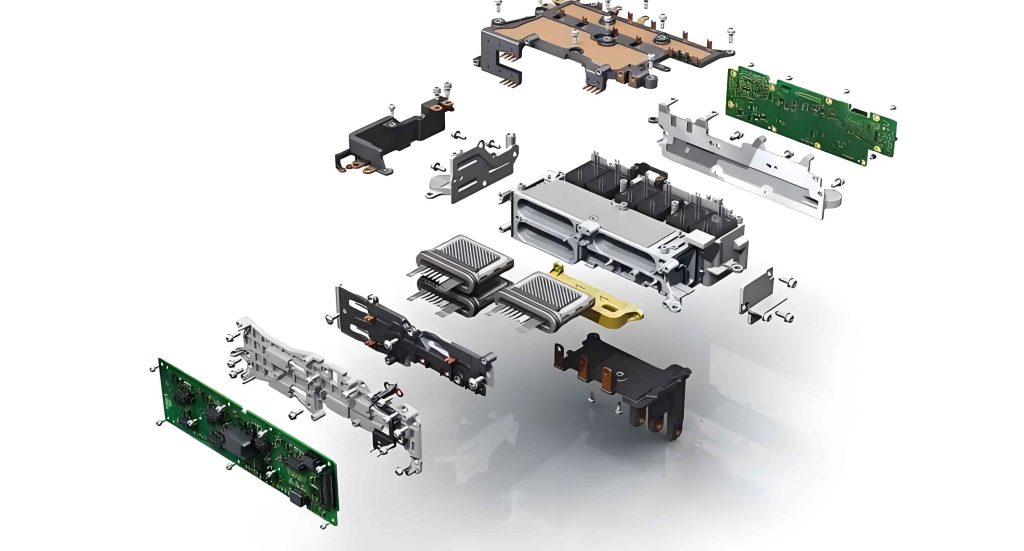
From my observations, faults in electronic engine control systems can be categorized into four main types: sensor failures, actuator malfunctions, motor control unit issues, and wiring system problems. Each category presents distinct symptoms and requires specific diagnostic approaches. To provide a clear overview, I have summarized common faults in Table 1 below. This table highlights how failures in the motor control unit or its peripherals can disrupt engine function, underscoring the need for systematic analysis.
| Fault Category | Examples | Typical Symptoms | Potential Causes |
|---|---|---|---|
| Sensor Faults | Oxygen sensor, intake pressure sensor, coolant temperature sensor | Erratic signals, slow response, no output | Manufacturing defects, circuit issues, environmental damage |
| Actuator Faults | Throttle actuator, fuel injector, ignition coil | Lagging response, mechanical sticking, failure to actuate | Mechanical wear, drive circuit faults, carbon buildup |
| Motor Control Unit Faults | Hardware failures, software glitches | Engine no-start, power loss, high fuel consumption, warning lights | Component degradation, programming errors, overheating |
| Wiring System Faults | Short circuits, open circuits, poor connections | Intermittent operation, signal loss, electrical noise | Wire aging, corrosion, vibration, moisture ingress |
Diagnosing these faults requires a blend of tools, techniques, and expertise. I rely on specialized equipment such as scan tools, oscilloscopes, and multimeters to interrogate the system. The scan tool, when connected to the onboard diagnostic port, communicates with the motor control unit to retrieve trouble codes and live data. This is often the first step in my diagnostic routine. For deeper analysis, I use an oscilloscope to visualize signal waveforms, which can reveal issues like sensor drift or actuator timing errors. A multimeter helps check electrical parameters, ensuring the wiring integrity. The diagnostic process follows a structured sequence: symptom analysis, code retrieval, data verification, root cause identification, and repair validation. This methodical approach minimizes guesswork and enhances accuracy. For example, when dealing with a fault code indicating a lean fuel mixture, I might use an oscilloscope to examine the oxygen sensor waveform. The sensor output voltage \( V_{O2} \) in response to exhaust oxygen concentration can be expressed as: $$ V_{O2} = k \cdot \ln\left(\frac{P_{O2}}{P_{ref}}\right) $$ where \( k \) is a constant, \( P_{O2} \) is the oxygen partial pressure, and \( P_{ref} \) is a reference pressure. Deviations from the expected waveform suggest sensor degradation, often linked to the motor control unit’s inability to adjust fuel trim properly.
To elaborate on diagnostic tools, I have compiled Table 2, which outlines their applications and relevance to the motor control unit. This table serves as a quick reference for technicians aiming to optimize their diagnostic workflows.
| Tool | Primary Function | Application Example | Connection to Motor Control Unit |
|---|---|---|---|
| Scan Tool | Read trouble codes, view live data, perform actuations | Retrieving code P0171 (system too lean) and monitoring fuel trim values | Direct communication via OBD-II port to access MCU memory |
| Oscilloscope | Display electrical signals in real-time | Analyzing crankshaft sensor waveform for timing discrepancies | Probing MCU input/output pins to verify signal integrity |
| Multimeter | Measure voltage, current, resistance | Checking power supply to the motor control unit or sensor circuits | Testing MCU power and ground circuits for stability |
| Fuel Pressure Gauge | Measure fuel system pressure | Diagnosing low pressure that may cause MCU to enrich mixture | Indirectly assessing MCU fuel control responses |
Fault code analysis is a cornerstone of diagnosis. The motor control unit stores codes that pinpoint anomalies, but interpreting them requires context. Codes like P0201 (cylinder 1 injector circuit open) or P0300 (random misfire) often stem from issues beyond the immediate component. For instance, a misfire might originate from a faulty ignition coil, but the motor control unit could also be implicated if its drive circuit fails. I always cross-reference codes with live data streams, using formulas to assess sensor plausibility. Consider the mass airflow (MAF) sensor, whose output frequency \( f_{MAF} \) relates to air mass flow rate \( \dot{m}_{air} \) by: $$ \dot{m}_{air} = C \cdot f_{MAF} $$ where \( C \) is a calibration constant. If the motor control unit calculates an implausible air mass based on this, it may set a fault code, prompting further investigation into the sensor or MCU processing.
Once faults are identified, repair techniques come into play. For sensor faults, replacement and calibration are common. When installing a new oxygen sensor, I ensure compatibility with the motor control unit and perform a calibration routine, often through the scan tool, to align its output with engine parameters. Actuator repairs involve mechanical inspection and electrical testing. For example, a stuck throttle actuator might require cleaning or replacement, followed by relearning procedures so the motor control unit can recalibrate its position. The relationship between throttle position \( \theta \) and actuator command voltage \( V_{cmd} \) can be described as: $$ \theta = g(V_{cmd}, T) $$ where \( T \) is temperature compensation factor, managed by the motor control unit. Debugging ensures the actuator responds accurately to MCU signals.
Motor control unit repairs are more complex. Hardware issues, such as damaged capacitors or corrupted memory, may necessitate board-level repair or replacement. In my practice, I often use specialized equipment to reprogram the motor control unit, especially after software updates or corruption. The programming process involves flashing new firmware, which requires precise voltage levels and communication protocols. A key formula in MCU operation is the control law for fuel injection, which the motor control unit computes as: $$ Q_{fuel} = \frac{\dot{m}_{air} \cdot AFR_{target}}{LHV \cdot \eta} $$ where \( Q_{fuel} \) is the fuel quantity, \( AFR_{target} \) is the target air-fuel ratio set by the MCU, \( LHV \) is the fuel’s lower heating value, and \( \eta \) is the combustion efficiency. Any error in this calculation due to MCU fault can lead to performance issues. Therefore, verifying MCU functionality post-repair is critical.
Wiring system repairs focus on continuity and insulation. I use multimeters to measure resistance across circuits, ensuring values match specifications. For example, the resistance \( R_{wire} \) of a sensor circuit should be low, typically less than 1 ohm, to prevent signal attenuation. If a wire is damaged, I replace it, paying attention to routing and shielding to avoid interference with the motor control unit. Table 3 summarizes repair techniques for each fault category, emphasizing the integration with the motor control unit.
| Fault Category | Repair Action | Tools Required | Role of Motor Control Unit |
|---|---|---|---|
| Sensor Faults | Replace sensor, calibrate output, check wiring | Scan tool, multimeter, oscilloscope | MCU stores calibration data; verifies sensor signals post-repair |
| Actuator Faults | Clean, repair, or replace actuator; relearn position | Mechanical tools, scan tool, oscilloscope | MCU controls actuator via drive circuits; requires recalibration |
| Motor Control Unit Faults | Repair hardware, reprogram software, replace unit | Programming tool, soldering station, scan tool | MCU is the core; repair ensures proper algorithm execution |
| Wiring System Faults | Repair shorts/opens, replace harness, secure connections | Multimeter, wire strippers, heat gun | MCU depends on intact wiring for signal integrity and power |
In addition to these techniques, I often employ mathematical models to simulate system behavior during diagnostics. For instance, the motor control unit uses PID (Proportional-Integral-Derivative) control for various functions, such as idle speed regulation. The PID algorithm can be expressed as: $$ u(t) = K_p e(t) + K_i \int_0^t e(\tau) d\tau + K_d \frac{de(t)}{dt} $$ where \( u(t) \) is the control output from the motor control unit, \( e(t) \) is the error signal, and \( K_p \), \( K_i \), \( K_d \) are tuning constants. If idle speed fluctuates, analyzing these parameters via diagnostic software can reveal if the motor control unit is misadjusted. This highlights how deeply the motor control unit is embedded in system dynamics.
Preventive maintenance is another area where understanding the motor control unit pays dividends. Regularly updating the motor control unit software, checking for corrosion in connectors, and monitoring system parameters can preempt failures. I recommend using scan tools to log data over time, creating a baseline for comparison. For example, tracking the oxygen sensor response time \( \tau_{O2} \) can indicate aging before a fault occurs, allowing proactive replacement. The motor control unit often calculates this metric internally, accessible through diagnostic routines.
Looking forward, the evolution of electronic engine control systems will bring new challenges and opportunities. With the rise of electric and hybrid vehicles, the motor control unit’s role may expand to manage multiple power sources. Advanced diagnostics using machine learning could predict faults by analyzing patterns in motor control unit data. As a technician, I anticipate deeper integration of telematics, where the motor control unit communicates with cloud servers for real-time monitoring. This will necessitate updated skills and tools, but the fundamentals of diagnosis and repair will remain anchored in understanding the motor control unit and its interactions.
In conclusion, the automotive electronic engine control system is a marvel of engineering that demands meticulous attention for fault diagnosis and maintenance. Through my experience, I have learned that the motor control unit is the linchpin, orchestrating sensors and actuators to achieve optimal performance. By leveraging diagnostic tools, following methodical steps, and applying targeted repair techniques, technicians can effectively address common faults. Tables and formulas, as presented here, serve as valuable aids in this process. As technology advances, continuous learning will be essential to keep pace with innovations in motor control unit design and functionality. Ultimately, mastering these systems not only enhances vehicle reliability but also contributes to safer and more efficient transportation.
To further illustrate the interplay between components, I often refer to control loop diagrams. For example, a simplified feedback loop for engine speed control involves the motor control unit processing the speed error and adjusting the throttle. The transfer function \( G(s) \) of such a system might be: $$ G(s) = \frac{K}{s^2 + 2\zeta\omega_n s + \omega_n^2} $$ where \( K \) is gain, \( \zeta \) is damping ratio, and \( \omega_n \) is natural frequency, all tuned by the motor control unit. Understanding these concepts helps in diagnosing oscillations or instabilities that may arise from faults. Moreover, the motor control unit constantly adapts parameters based on operating conditions, using algorithms that can be modeled with stochastic equations. For instance, the adaptation of fuel injection timing \( \Delta t \) might follow: $$ \Delta t = \mu \cdot \sum (e_i \cdot x_i) $$ where \( \mu \) is a learning rate, \( e_i \) are error terms, and \( x_i \) are input variables from sensors. This adaptive capability underscores the sophistication of the motor control unit, making its health critical for overall system performance.
In practice, I encounter cases where multiple faults coexist, complicating diagnosis. For example, a faulty coolant sensor might cause the motor control unit to enrich the mixture, while a leaky injector exacerbates the issue. Using a systematic approach, I isolate each fault, starting with the motor control unit’s trouble codes and then verifying each subsystem. Table 4 provides a decision matrix for such scenarios, focusing on how the motor control unit integrates diagnostic data.
| Symptom | Possible Faults | Diagnostic Action | Motor Control Unit Involvement |
|---|---|---|---|
| Engine misfire with high fuel consumption | Faulty ignition coil, clogged injector, oxygen sensor drift | Check ignition waveforms, measure injector flow, monitor fuel trims | MCU reports misfire codes; adjusts fuel based on oxygen sensor input |
| Hard start and rough idle | Crankshaft sensor failure, fuel pressure low, MCU software glitch | Inspect sensor signal, test fuel pump, reprogram MCU | MCU uses crankshaft signal for timing; software corruption affects startup |
| Loss of power and emission warning | Throttle actuator stuck, MAF sensor dirty, exhaust leak | Clean throttle body, test MAF output, check exhaust system | MCU limits power due to actuator fault; uses MAF for load calculation |
Finally, I emphasize the importance of documentation and continuous education. Each repair case offers lessons that refine my understanding of the motor control unit. By sharing knowledge through articles like this, I hope to contribute to the collective expertise of automotive technicians worldwide. The journey of mastering electronic engine control systems is ongoing, but with a solid foundation in diagnosis and repair, we can navigate the complexities and ensure vehicles run smoothly for years to come.