
In my extensive experience with automotive technology, I have observed that modern vehicles rely heavily on electronic control systems to ensure optimal performance, efficiency, and safety. These systems, centered around the motor control unit, integrate various sensors and actuators to manage engine operations, emissions, and other critical functions. However, as complexity increases, so does the frequency of faults, leading to challenges in diagnosis and repair. This article aims to delve into the common faults in automotive electronic control systems, analyze their root causes, and propose systematic maintenance strategies. By leveraging first-hand insights and technical data, I will provide a comprehensive guide for technicians, emphasizing the role of the motor control unit in fault management and repair processes.
The automotive electronic control system is essentially a network where sensors continuously monitor vehicle parameters—such as engine speed, temperature, and airflow—and relay this data to the motor control unit. Upon receiving inputs, the motor control unit processes the information using pre-programmed algorithms and sends commands to actuators like fuel injectors or ignition coils to execute desired actions. With the advent of electric and hybrid vehicles, these systems have expanded to include battery management and motor control, further integrating the motor control unit into a broader framework. This evolution, while enhancing functionality, introduces new vulnerabilities, making fault diagnosis more intricate. In this context, I will explore key components prone to failures, using tables and formulas to summarize patterns and solutions, all while highlighting the centrality of the motor control unit in maintaining system integrity.
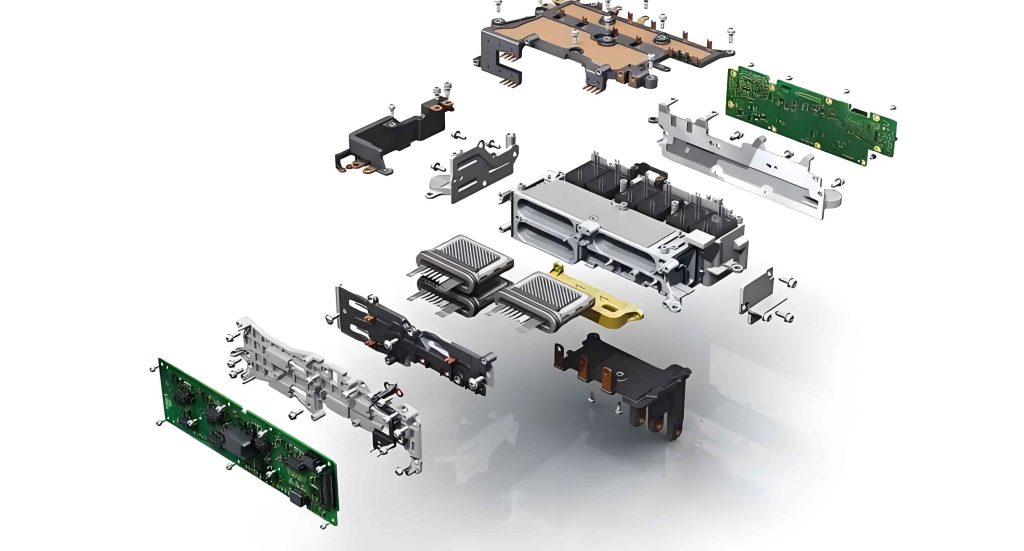
To set the stage, let me outline the core components of a typical automotive electronic control system. These include sensors (e.g., oxygen sensors, throttle position sensors), the motor control unit (often referred to as the ECU or engine control unit), and actuators (e.g., ignition coils, fuel pumps). The motor control unit serves as the brain, coordinating all operations based on sensor feedback. Its performance degradation can lead to cascading faults across the system. Common issues arise from environmental factors like high temperatures, contamination, and aging, which I will dissect in detail. For instance, the response of sensors often deteriorates over time, a phenomenon that can be modeled mathematically. Consider the degradation of an oxygen sensor, where its response speed \( R_t \) after time \( t \) is given by:
$$ R_t = R_0 e^{-ktT} $$
Here, \( R_0 \) is the initial response speed, \( k \) is a degradation coefficient linked to environmental pollution, \( t \) is operating time in hours, and \( T \) is a temperature coefficient. Such formulas help quantify fault progression, aiding in predictive maintenance. In the following sections, I will break down specific faults, their impacts on engine performance, and repair methodologies, with a constant focus on the motor control unit‘s role in diagnostics and control.
Oxygen Sensor Faults
Oxygen sensors are critical for monitoring exhaust gas composition and ensuring efficient fuel-air mixture control. Faults in these sensors frequently stem from prolonged exposure to high temperatures, carbon buildup from tailpipe emissions, coolant or oil leaks, connector corrosion, or internal heater element failure. From my observations, these issues manifest as unstable idling, poor acceleration, increased fuel consumption, emission failures, and illumination of the engine warning light, with OBD systems logging codes like P0130 to P0167. The motor control unit relies on accurate oxygen sensor signals for closed-loop fuel control; thus, any deviation disrupts the entire feedback loop, leading to suboptimal engine performance.
To diagnose and repair oxygen sensor faults, I recommend a structured approach. First, connect an OBD-II scanner to retrieve fault codes and data streams, focusing on sensor voltage fluctuations—normally between 0.1 V and 0.9 V in a sinusoidal pattern. Use an oscilloscope to capture signal waveforms, assessing response speed and amplitude. Next, inspect for physical contaminants like oil or coolant leaks around the sensor, and check wiring harnesses for damage or corrosion. Cleaning with specialized solvents can sometimes restore functionality for mildly contaminated sensors, but severe cases require replacement. When installing a new sensor, ensure proper threading and apply anti-seize compound sparingly to avoid probe contamination. After replacement, reset the motor control unit‘s adaptive values and conduct a road test to verify that fuel trim values return to within ±10%. The table below summarizes common symptoms and repair steps for oxygen sensor faults:
| Symptom | Possible Cause | Diagnostic Tool | Repair Action |
|---|---|---|---|
| Rough idling | Carbon contamination | OBD scanner, oscilloscope | Clean or replace sensor |
| High fuel consumption | Heater circuit failure | Multimeter | Replace sensor |
| Emission warning light | Signal voltage stuck | Data stream analysis | Check wiring and replace if needed |
Mathematically, the impact of a faulty oxygen sensor on fuel correction can be expressed as:
$$ \Delta F = \alpha (V_{actual} – V_{expected}) $$
where \( \Delta F \) is the fuel adjustment factor, \( \alpha \) is a calibration constant from the motor control unit, \( V_{actual} \) is the measured sensor voltage, and \( V_{expected} \) is the ideal voltage. Deviations beyond thresholds trigger fault codes, emphasizing the sensor’s reliance on the motor control unit for accurate processing.
Throttle Position Sensor (TPS) Faults
The throttle position sensor provides feedback on throttle valve angle, enabling the motor control unit to adjust airflow and fuel injection. Common faults include internal potentiometer wear, carbon accumulation on contacts, loose wiring, intake leaks, or unstable power supply. In my practice, these lead to symptoms such as erratic idle speeds, acceleration lag, speed fluctuations during cruising, abnormal idle learning values, and OBD codes like P0120 to P0124. The motor control unit uses TPS signals to compute engine load; hence, inaccuracies can force the system into limp mode, restricting performance.
For TPS fault repair, I start by scanning for codes and reviewing data streams to see if the signal varies linearly with throttle opening—typically from 0.5 V at closed position to 4.5 V at wide-open throttle. Use a multimeter to verify a stable 5 V supply and ground continuity. Inspect the throttle body for carbon deposits, and clean it with appropriate solvents if necessary. Check wiring harnesses for wear or poor connections. If issues persist, replace the TPS or the entire throttle assembly for integrated units. After repair, recalibrate the motor control unit through idle relearn procedures. The relationship between TPS voltage \( V_{TPS} \) and throttle angle \( \theta \) can be modeled as:
$$ V_{TPS} = V_{min} + \frac{V_{max} – V_{min}}{90} \cdot \theta $$
where \( V_{min} \) and \( V_{max} \) are minimum and maximum voltages, and \( \theta \) is in degrees. This linearity is crucial for the motor control unit to maintain precise control.
| Fault Indicator | Root Cause | Diagnostic Method | Maintenance Step |
|---|---|---|---|
| Idle surge | Potentiometer wear | Oscilloscope waveform analysis | Replace TPS sensor |
| Acceleration hesitation | Carbon buildup | Visual inspection, data logging | Clean throttle body |
| Limp mode activation | Signal discontinuity | Wiring continuity test | Repair or replace harness |
Ignition Coil Faults
Ignition coils generate high voltage for spark plugs, and their failure often results from thermal stress, mechanical vibration, moisture ingress, internal short circuits, or drive circuit issues from the motor control unit. Symptoms I commonly encounter include engine misfires, rough idling, black smoke from exhaust, OBD codes like P0300 series, reduced fuel economy, and audible arcing in damp conditions. The motor control unit controls ignition timing by triggering coils; thus, coil faults can cause misfires that damage catalytic converters and degrade overall engine efficiency.
To address ignition coil faults, I use an OBD scanner to identify specific misfire codes and an engine oscilloscope to measure primary and secondary voltage waveforms—normal secondary voltages range from 25 kV to 35 kV. Swap suspected coils with known good ones to isolate the fault. Check coil resistance: primary coils should measure 0.4 Ω to 2.0 Ω, and secondary coils 5,000 Ω to 15,000 Ω. Inspect for physical cracks or oil contamination. Ensure stable power supply and control signals from the motor control unit. Replace faulty coils in sets to maintain balanced ignition performance. Apply thermal paste for better heat dissipation. The output voltage \( V_s \) of an ignition coil can be calculated as:
$$ V_s = V_p \frac{N_s}{N_p} \eta $$
where \( V_p \) is the primary voltage at interruption, \( N_s \) and \( N_p \) are secondary and primary coil turns, and \( \eta \) is efficiency, which degrades with coil aging. This formula underscores the coil’s dependence on signals from the motor control unit for proper operation.
| Misfire Pattern | Likely Cause | Testing Equipment | Corrective Measure |
|---|---|---|---|
| Single-cylinder misfire | Coil internal breakdown | Oscilloscope, resistance meter | Replace affected coil |
| Multiple misfires | Drive circuit fault | Multimeter, scanner | Check motor control unit output |
| Intermittent misfire in rain | Moisture-induced short | Visual inspection | Seal connections, replace if damaged |
Crankshaft Position Sensor (CKP) Faults
The crankshaft position sensor is vital for engine timing, providing speed and position data to the motor control unit. Faults arise from heat and vibration damage, coil or Hall element deterioration, abnormal air gaps, signal wheel wear, or oil contamination. In my diagnostics, these issues cause no-start conditions, sudden stalling, erratic tachometer readings, OBD codes like P0335 to P0339, idle instability, and power loss during acceleration. The motor control unit depends on CKP signals to synchronize fuel injection and ignition; without accurate input, the engine may enter emergency mode.
Repairing CKP faults involves scanning for codes and analyzing data streams for missing or unstable RPM signals. Use an oscilloscope to check waveform integrity—sine waves for inductive sensors and square waves for Hall-effect types. Measure sensor resistance (200 Ω to 1,500 Ω for inductive) and verify power and ground circuits. Inspect the signal wheel for damage or debris, and ensure proper air gap (typically 0.5 mm to 2.0 mm). Clean or replace the sensor as needed. The output voltage \( V_{out} \) for an inductive CKP sensor is given by:
$$ V_{out} = k N B A \sin(2\pi f t) $$
where \( k \) is a sensor constant, \( N \) is engine speed in rpm, \( B \) is magnetic field strength inversely related to air gap, \( A \) is effective tooth area, \( f \) is signal frequency, and \( t \) is time. This equation highlights how sensor performance influences the motor control unit‘s timing calculations.
| Engine Behavior | Primary Issue | Diagnostic Approach | Repair Strategy |
|---|---|---|---|
| Failure to start | Sensor circuit open | Resistance measurement, oscilloscope | Replace sensor or repair wiring |
| Intermittent stalling | Signal wheel damage | Visual inspection, gap measurement | Clean or replace signal wheel |
| RPM fluctuation | Contaminated sensor head | Data stream monitoring | Clean sensor probe |
Mass Airflow Sensor (MAF) Faults
The mass airflow sensor measures intake air volume, enabling the motor control unit to calculate fuel injection duration. Faults commonly result from dirt accumulation on hot-wire or hot-film elements, clogged air filters, intake leaks, internal circuit aging, or unstable power supply. I often observe symptoms like rough idle, poor acceleration, high fuel consumption, black smoke, OBD codes P0100 to P0104, and abnormal fuel trim values exceeding ±15%. The motor control unit uses MAF data for air-fuel ratio control; inaccuracies lead to rich or lean mixtures, affecting emissions and performance.
For MAF fault repair, start with an OBD scanner to check data streams—idle airflow should be 5 g/s to 15 g/s. Inspect and replace dirty air filters. Use a smoke machine or vacuum gauge to detect intake leaks. Measure MAF sensor voltages (12 V supply and 5 V reference) and signal output. Clean the sensor with MAF-specific cleaner if lightly contaminated, but avoid touching sensitive elements. Replace if damaged. After installation, reset the motor control unit and perform an idle relearn. The MAF sensor’s output can be correlated with air density \( \rho \) and velocity \( v \) as:
$$ \dot{m} = C \rho v A $$
where \( \dot{m} \) is mass flow rate, \( C \) is a calibration constant stored in the motor control unit, \( \rho \) is air density, \( v \) is airflow velocity, and \( A \) is cross-sectional area. This relationship is critical for the motor control unit to optimize combustion.
| Symptom Set | Underlying Cause | Diagnostic Tool | Maintenance Action |
|---|---|---|---|
| High fuel trim values | Dirty sensor element | Data stream analysis, visual check | Clean with MAF cleaner |
| Black exhaust smoke | Intake system leak | Smoke test, vacuum gauge | Seal leaks, replace hoses |
| Poor cold start | Integrated temperature sensor failure | Multimeter voltage test | Replace MAF sensor assembly |
Motor Control Unit (ECU) Faults
The motor control unit, as the central processing unit of the vehicle’s electronic system, is prone to various hardware and software failures. In my experience, these include internal circuit damage, chip burnout, power module failure, signal processing errors, memory corruption, or logic flaws. Symptoms range from engine no-start conditions and erratic idling to reduced power output, increased emissions, and intermittent warning lights. Notably, some deep-seated motor control unit faults may not trigger OBD codes, complicating diagnosis. Environmental factors like humidity, temperature extremes, and electromagnetic interference can also cause sporadic issues, emphasizing the need for robust diagnostic protocols.
Repairing motor control unit faults requires a methodical approach. I begin with advanced diagnostic tools to read fault codes and analyze live data streams, looking for anomalies in sensor inputs and actuator outputs. Use a multimeter or oscilloscope to verify power supply voltages at ECU pins—typically 12 V and 5 V—and check ground connections for integrity. For software-related problems, such as calibration errors, reprogramming or updating the motor control unit firmware may resolve issues. In cases of hardware failure, specialized repair may involve replacing damaged components like capacitors or resistors, or in severe instances, swapping the entire motor control unit module. It’s crucial to ensure compatibility and perform necessary adaptations post-repair. The functionality of the motor control unit can be modeled as a control system:
$$ U(s) = G(s) E(s) $$
where \( U(s) \) is the output control signal, \( G(s) \) is the transfer function representing the motor control unit‘s processing algorithms, and \( E(s) \) is the error signal from sensor feedback. Disruptions in this loop lead to system-wide faults.
| Fault Type | Common Manifestations | Diagnostic Techniques | Repair Solutions |
|---|---|---|---|
| Hardware failure | Engine won’t crank, no communication | Power supply testing, board inspection | Component replacement or ECU swap |
| Software corruption | Intermittent performance issues | Flash memory scanning, code verification | Re-flashing or firmware update |
| Environmental damage | Faults in high humidity or heat | Environmental simulation, signal analysis | Sealing, cooling improvements, or replacement |
Integrated Maintenance Strategies
Based on my comprehensive analysis, effective maintenance of automotive electronic control systems hinges on a holistic strategy that prioritizes the motor control unit. I advocate for proactive diagnostics using OBD scanners, oscilloscopes, and multimeters to monitor system health regularly. Technicians should focus on data stream analysis to detect subtle deviations before they escalate into failures. For instance, tracking fuel trim values and sensor response times can reveal early signs of degradation. Additionally, environmental protection measures—such as shielding components from heat and moisture—can prolong lifespan. The interplay between components and the motor control unit is key; thus, repair procedures must include recalibration and adaptation routines to restore system harmony.
To summarize fault patterns, I have compiled a comparative table below, highlighting the role of the motor control unit in each scenario:
| Component | Key Fault Symptoms | Impact on Motor Control Unit | Recommended Maintenance Frequency |
|---|---|---|---|
| Oxygen Sensor | High fuel trim, emission warnings | Disrupts closed-loop fuel control | Every 60,000 miles or as needed |
| Throttle Position Sensor | Idle instability, acceleration lag | Causes erroneous load calculations | Inspect during routine service |
| Ignition Coil | Misfires, rough running | Leads to timing errors and misfire detection | Replace at signs of wear or every 100,000 miles |
| Crankshaft Position Sensor | No-start, stalling | Prevents accurate synchronization | Check every 50,000 miles |
| Mass Airflow Sensor | Poor fuel economy, black smoke | Results in incorrect air-fuel mixture | Clean annually, replace if faulty |
| Motor Control Unit | System-wide malfunctions | Core processing unit failure | Diagnose as issues arise, update software periodically |
Furthermore, mathematical models can enhance predictive maintenance. For example, the overall system reliability \( R_{system} \) considering the motor control unit and sensors can be approximated as:
$$ R_{system} = R_{MCU} \times \prod_{i=1}^{n} R_{sensor,i} $$
where \( R_{MCU} \) is the reliability of the motor control unit, and \( R_{sensor,i} \) is the reliability of each sensor. This formula underscores the cascading effect of individual faults on the entire system.
Conclusion and Future Perspectives
In conclusion, my in-depth exploration of common faults in modern automotive electronic control systems reveals that issues like sensor degradation, wiring problems, and motor control unit failures are predominantly driven by environmental stressors such as high temperatures, contamination, and aging. Through systematic diagnosis—leveraging tools like OBD scanners and oscilloscopes—and targeted repairs, technicians can restore functionality efficiently. I emphasize that the motor control unit is the linchpin in this process; its ability to process data and coordinate responses dictates overall system performance. By adopting the strategies outlined here, including regular data monitoring and preventive maintenance, repair quality can be significantly improved.
Looking ahead, as automotive technology evolves with electric and autonomous vehicles, the role of the motor control unit will expand further, integrating with advanced driver-assistance systems (ADAS) and battery management. This will introduce new fault paradigms, necessitating continuous learning and adaptation for technicians. I recommend ongoing training in software diagnostics and network communication protocols to stay abreast of these changes. Ultimately, a proactive approach centered on the motor control unit will be essential for sustaining vehicle reliability and performance in the rapidly advancing automotive landscape.