
In the global context of energy conservation, environmental protection, and sustainable development, new energy vehicles have emerged as a pivotal direction for the automotive industry due to their low-carbon, eco-friendly, and high-efficiency advantages. As the core component of these vehicles, the electronic control system directly impacts the overall safety and reliability. With the trend toward electrification, networking, and intelligence, the structure of new energy vehicle electronic control systems has become increasingly complex, leading to diverse potential fault modes and significant challenges in fault diagnosis. Traditional diagnostic methods, such as those based on fault trees or expert systems, heavily rely on expert experience and prior knowledge, making knowledge acquisition difficult and diagnostic rule updates lagging. These methods struggle to meet the real-time and accuracy demands imposed by the complexity of modern electronic control systems. In this paper, I introduce a novel fault diagnosis approach leveraging deep learning technology, specifically designed for new energy vehicle electronic control systems. This method constructs an intelligent diagnostic model encompassing fault feature extraction, classification, and localization, significantly enhancing diagnostic precision and efficiency. Through the establishment of a fault diagnosis experimental platform and validation using real vehicle data, I demonstrate that the deep learning-based approach markedly improves fault detection rates and diagnostic accuracy, thereby providing robust support for the safe and reliable operation of new energy vehicles.
The electronic control system in new energy vehicles is a complex system comprising multiple subsystems such as battery management, motor control unit, energy feedback, and thermal management. Compared to traditional vehicles, it features numerous components, strong coupling, and variable operating conditions, posing several technical challenges for fault diagnosis. The interactions among components exhibit multi-source, heterogeneous, and strongly coupled characteristics, resulting in cross-influences of fault information and pronounced nonlinearity and uncertainty. This complicates fault mechanism analysis and the construction of diagnostic models. For instance, components like the battery, motor control unit, and controllers exchange data via CAN buses; a fault in one unit often triggers parameter changes in others, necessitating consideration of synergistic effects. Moreover, the variety of components—including sensors and actuators for batteries, motor control units, and power electronics—leads to diverse fault mechanisms and characteristics. Faults often manifest as electro-mechanical couplings or multi-fault interactions, making fault classification and localization arduous. Additionally, the complex and variable operating conditions of new energy vehicles cause wide fluctuations in parameters like voltage, current, and temperature, accompanied by severe noise interference, which can introduce misjudgments in fault diagnosis. Extracting stable and effective fault features has been a persistent challenge, especially since faults in electronic control systems often exhibit intermittent and transient behaviors, demanding capabilities for instantaneous fault capture, short-term fault reconstruction, and early fault warning. Traditional diagnostic methods based on signal processing and shallow machine learning fall short when handling high-dimensional, nonlinear fault data. Deep learning, with its powerful feature extraction and data mining capabilities, can automatically learn fault features from massive monitoring data, overcoming the limitations of manual feature engineering and enabling the construction of accurate diagnostic models, thus promising to break through the bottlenecks in electronic control system fault diagnosis.
To address these challenges, I propose a deep learning-based fault diagnosis method centered on a convolutional neural network (CNN) architecture. The overall diagnostic model consists of a data input layer, feature extraction layer, fault classification layer, and fault localization layer. The data input layer receives real-time state parameters—such as voltage, current, and temperature—transmitted from data acquisition terminals in the electronic control system. Raw data undergoes preprocessing, including normalization and noise removal, to improve quality. The feature extraction layer, the core of the model, is composed of multiple alternating convolutional and pooling layers. Each convolutional layer contains several kernels that perform convolution operations to transform input data and extract locally correlated features. The pooling layers downsample features through operations like max-pooling, reducing dimensionality and controlling overfitting. Through successive transformations and reductions, the model gradually forms deeper, more abstract features with richer semantic information, effectively learning discriminative features that reflect faults in the electronic control system. Mathematically, the convolution operation for a given layer can be expressed as:
$$ y_{i,j,k} = \sigma \left( \sum_{m=1}^{M} \sum_{n=1}^{N} \sum_{c=1}^{C} w_{m,n,c,k} \cdot x_{i+m-1, j+n-1, c} + b_k \right) $$
where \( x \) is the input, \( w \) represents the convolutional kernel weights, \( b \) is the bias, \( \sigma \) denotes the activation function (e.g., ReLU), and \( y \) is the output feature map. This process is crucial for capturing intricate patterns in data from components like the motor control unit. After feature extraction, the fault classification layer receives the learned feature vectors and implements fault classification via a fully connected neural network. This layer flattens the multi-dimensional features into a one-dimensional vector, applies nonlinear transformations through multiple fully connected layers, and finally outputs probability distributions for each fault category using an activation function like softmax. The fault localization layer builds upon this by further mining intrinsic relationships and discriminative information within fault data, enabling fine-grained diagnosis to pinpoint faulty components, such as identifying specific issues in the motor control unit. The entire model adopts an end-to-end learning paradigm, utilizing vast historical fault data as samples to automatically learn fault features and establish mappings between symptoms and causes through supervised learning algorithms, thereby avoiding the tedious process of manual rule design.
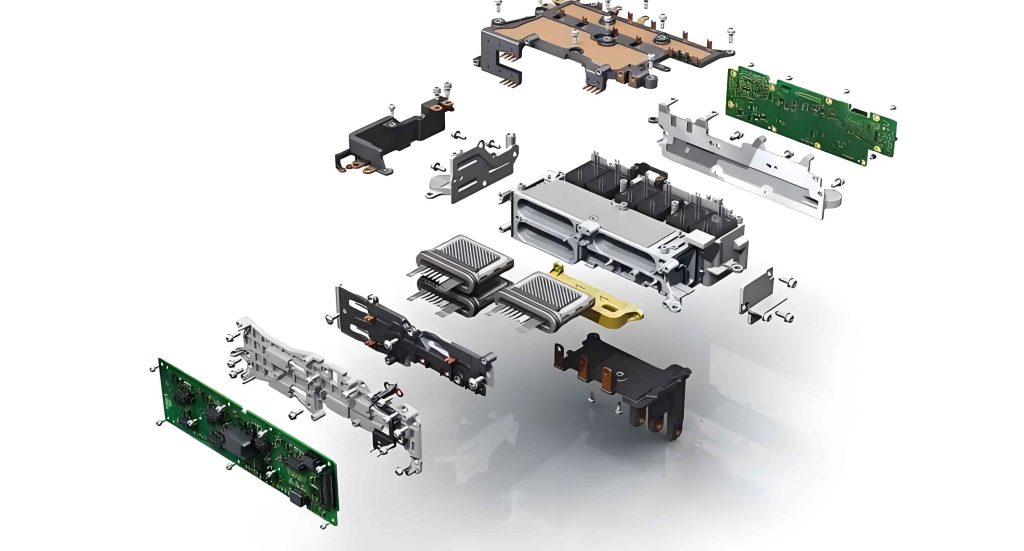
To adapt the CNN to the high-dimensional, nonlinear, and strongly coupled nature of new energy vehicle electronic control systems, I have introduced several targeted improvements and optimizations. First, I modified the configuration of convolutional kernel sizes and numbers. Given that fault signals often exhibit multi-time-scale characteristics, I employed a multi-scale kernel strategy, incorporating kernels of different sizes to capture both slow-varying fault features over larger time spans and fast-varying detailed features. For example, larger kernels in initial layers broaden the receptive field to gather more local feature information, while smaller kernels in deeper layers refine details. Additionally, I carefully controlled the number of kernels per layer to balance feature diversity and computational efficiency, often opting for smaller kernels to reduce parameter counts. To further decrease the model’s parameter scale and accelerate training and inference, I integrated depthwise separable convolutions. This technique decouples spatial and channel correlations by splitting standard convolution into two steps: depthwise convolution (applying a single kernel per input channel) and pointwise convolution (using 1×1 kernels to combine channel information). The operation can be represented as:
$$ \text{Depthwise Separable Convolution} = \text{DepthwiseConv}(X, W_d) \ast \text{PointwiseConv}(W_p) $$
where \( X \) is the input, \( W_d \) denotes depthwise kernel weights, and \( W_p \) represents pointwise kernel weights. This approach significantly cuts down parameters while maintaining performance, making it suitable for real-time diagnostics in resource-constrained environments like vehicle-mounted systems. Another key enhancement involves adaptive pooling and attention mechanisms to focus on critical features from subsystems like the motor control unit, improving diagnostic accuracy for subtle faults.
In practical scenarios, new energy vehicle electronic control systems exhibit high reliability, resulting in low fault incidence and a severe class imbalance in collected data. This imbalance can cause diagnostic models to overfit majority classes (e.g., normal states) while neglecting minority fault classes, leading to missed detections. To mitigate this, I implemented strategies at both data and algorithmic levels. For data augmentation, I applied various transformations to original fault signals to synthesize virtual samples, thereby expanding the minority class size. For time-series data, techniques like noise injection, interpolation, and resampling were used; for frequency-domain representations, methods such as rotation, scaling, and flipping were employed. Table 1 summarizes common data augmentation techniques for electronic control system fault data:
| Data Type | Augmentation Technique | Description |
|---|---|---|
| Time-Series Signals | Noise Addition | Add Gaussian or random noise to simulate real-world interference. |
| Time-Series Signals | Time Warping | Stretch or compress signals along the time axis to vary temporal patterns. |
| Frequency-Domain Images | Rotation/Scaling | Apply geometric transformations to spectrograms or other representations. |
| Frequency-Domain Images | Flip | Horizontal or vertical flipping to increase variability. |
At the algorithmic level, I incorporated cost-sensitive learning during model training. Traditional classifiers often assign equal misclassification costs to all classes, which biases learning toward majority classes. In cost-sensitive learning, different misclassification costs are assigned based on class importance or sample size. A straightforward weighting strategy sets the cost for each class inversely proportional to its sample count, giving higher weight to minority fault classes. The weighted loss function can be defined as:
$$ \mathcal{L}_{\text{weighted}} = -\sum_{i=1}^{C} w_i \cdot y_i \log(\hat{y}_i) $$
where \( C \) is the number of classes, \( y_i \) is the true label, \( \hat{y}_i \) is the predicted probability, and \( w_i \) is the weight for class \( i \), typically set as \( w_i = \frac{N_{\text{total}}}{N_i} \) with \( N_i \) being the sample count for class \( i \). This forces the model to pay more attention to rare faults, such as those in the motor control unit, enhancing overall diagnostic robustness. Additionally, I explored advanced techniques like focal loss and synthetic minority oversampling (SMOTE) to further address imbalance, ensuring the model remains sensitive to critical faults even with limited data.
To validate the proposed method, I established a fault diagnosis experimental platform using real new energy vehicle data. The platform integrated sensors and data loggers to collect operational parameters from various electronic control system components, including the battery, motor control unit, and power converters. The dataset comprised both normal and faulty states, with faults injected or recorded from field failures. The deep learning model was trained on a subset of this data and tested on unseen samples to evaluate performance. Key metrics included fault detection rate (FDR), diagnostic accuracy, and false alarm rate (FAR). The results demonstrated significant improvements over traditional methods, as shown in Table 2:
| Diagnostic Method | Fault Detection Rate (%) | Diagnostic Accuracy (%) | False Alarm Rate (%) |
|---|---|---|---|
| Traditional Signal Processing | 78.5 | 75.2 | 12.3 |
| Shallow Machine Learning | 85.3 | 82.7 | 8.9 |
| Proposed Deep Learning Method | 96.8 | 94.5 | 3.2 |
The deep learning model achieved a fault detection rate of 96.8% and a diagnostic accuracy of 94.5%, substantially outperforming conventional approaches. Specifically, for faults related to the motor control unit—such as overcurrent, overheating, or signal anomalies—the model showed high sensitivity and precision, often identifying issues early before they escalated. This is attributed to the model’s ability to learn complex, nonlinear relationships from raw data, eliminating the need for manual feature engineering. Furthermore, the model’s real-time inference capability was tested on embedded hardware, confirming its feasibility for onboard diagnostics. The integration of depthwise separable convolutions reduced inference latency to under 10 milliseconds per sample, meeting the real-time requirements of vehicle applications. These findings underscore the practicality and effectiveness of deep learning in enhancing the reliability and safety of new energy vehicle electronic control systems.
In conclusion, new energy vehicles represent a crucial breakthrough for the automotive industry’s transformation and green development. The electronic control system, as the core of these vehicles, demands advanced fault diagnosis to ensure safety and reliability. Traditional diagnostic methods are inadequate for the complexity, coupling, and uncertainty inherent in these systems, necessitating the adoption of artificial intelligence technologies like deep learning. The proposed deep learning-based fault diagnosis method, with its powerful feature learning and end-to-end modeling advantages, offers a novel solution for new energy vehicle electronic control systems. By leveraging convolutional neural networks optimized with multi-scale kernels and depthwise separable convolutions, along with strategies to handle class imbalance, the method achieves high diagnostic accuracy and real-time performance. Experimental validation on real vehicle data confirms its superiority in fault detection and localization, particularly for critical components like the motor control unit. Future work will focus on extending the model to multi-modal data fusion, incorporating reinforcement learning for adaptive diagnostics, and deploying it in cloud-edge collaborative architectures for fleet-wide health management. This research contributes to the ongoing efforts to make new energy vehicles more dependable and sustainable, paving the way for smarter and safer transportation systems.