
The rapid evolution of the new energy vehicle (NEV) industry has precipitated a significant increase in the complexity of its electronic control systems. Traditional fault diagnosis methodologies are increasingly inadequate in addressing the multifaceted diagnostic demands of contemporary motor control units, battery management systems, and integrated vehicle controllers. The On-Board Diagnostics (OBD) protocol, serving as the cornerstone of vehicular self-diagnosis, presents an efficacious solution for the real-time monitoring and fault detection within these intricate systems. This research constructs a comprehensive fault detection framework predicated on the OBD protocol. By integrating a nuanced analysis of characteristic parameters from the electronic control system, a multi-dimensional fault diagnosis model is established. Experimental validation demonstrates that this methodology achieves a fault detection accuracy exceeding 95% for critical units including the Battery Management System (BMS), the motor control unit, and the High-Voltage Power Distribution Unit (PDU). Furthermore, fault localization time is substantially reduced to a range of 2-5 seconds, markedly enhancing both the efficiency and precision of fault diagnosis for NEV electronic control systems. This approach provides substantial technical support for the intelligent maintenance and reliability assurance of next-generation vehicles.
The electronic control architecture of a new energy vehicle is fundamentally distinct from that of traditional internal combustion engine vehicles. It employs a hierarchical and distributed topology, with the Battery Management System (BMS), the motor control unit (MCU), the On-Board Charger (OBC), the Power Distribution Unit (PDU), and the Vehicle Control Unit (VCU) constituting the core control network. These electronic control units (ECUs) communicate and coordinate via Controller Area Network (CAN) buses, forming a sophisticated electrical and logical topology. Fault mechanisms within this system are highly diverse, primarily stemming from four root causes: hardware failure, software anomalies, communication faults, and environmental interference. Hardware failures often originate from physical degradation such as power device overheating, insulation aging, or contactor welding. Software anomalies manifest as control algorithm deviations, parameter drift, or logical errors. Communication faults arise from bus interruptions, data frame loss, or signal corruption. Environmental stresses include thermal shocks, electromagnetic interference, and vibrational impacts. These faults are frequently interrelated, leading to cascading effects that present significant challenges for diagnosis due to multivariable coupling and nonlinear characteristics. A fault propagation model can be conceptually represented as:
$$F(t) = F_0 \times e^{(\lambda t)} \times \prod (1 + \alpha_i \times S_i(t))$$
Here, $F(t)$ denotes the fault probability at time $t$, $F_0$ is the initial fault rate, $\lambda$ is the fault growth rate, $\alpha_i$ is the weight of the $i$-th influencing factor, and $S_i(t)$ is the environmental stress function for the $i$-th factor.
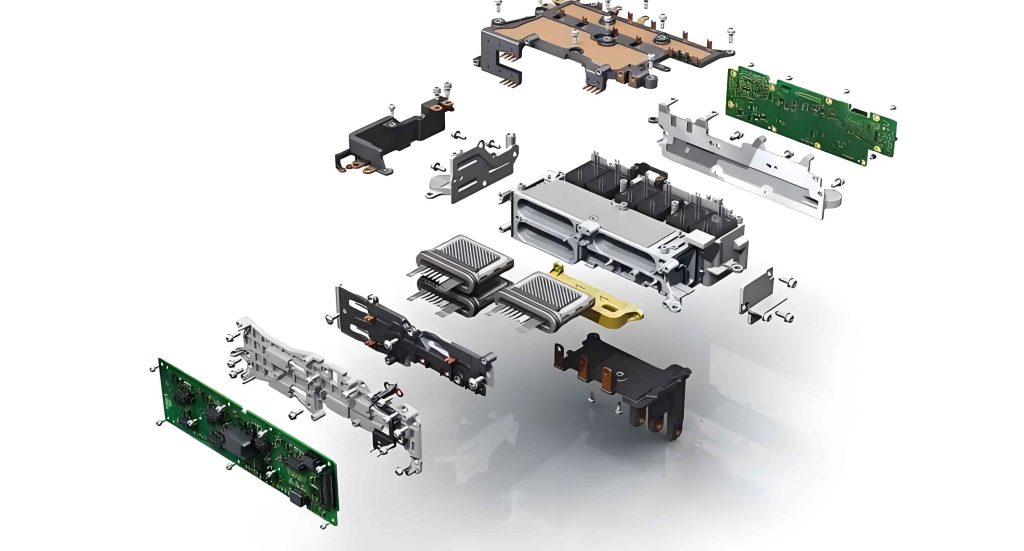
The OBD protocol, particularly based on the ISO 14229-1 (Unified Diagnostic Services – UDS) standard, provides a standardized communication interface for these ECUs. It establishes diagnostic sessions via Service Identifiers (SIDs), accesses specific parameters using Data Identifiers (DIDs), and records anomalous states via Diagnostic Trouble Codes (DTCs). For NEV systems, the OBD protocol is extended to include specialized services for high-voltage systems, such as insulation resistance monitoring, individual battery cell voltage reading, and motor control unit torque feedback verification. The diagnostic process follows a “request-response” mechanism, where a diagnostic tool sends a request frame to a target ECU, which then executes the corresponding diagnostic service and returns response data. Advanced fault detection algorithms analyze real-time data streams, historical fault logs, and trends in environmental parameters to construct multi-dimensional feature vectors for fault pattern recognition.
Construction of the OBD-Based Fault Detection Methodology
1. Identification and Extraction of Fault Characteristic Parameters
The precise identification and extraction of fault-sensitive parameters are foundational to building an effective diagnostic model. Raw data acquired via the OBD protocol encompasses diverse information types: voltage, current, temperature, rotational speed, power, and communication signal integrity. Under normal operating conditions, these parameters exhibit stable numerical ranges and predictable variation patterns. During fault conditions, they display characteristic modes such as abnormal fluctuations, limit violations, and anomalous rates of change. Our extraction algorithm employs a hybrid approach. Statistical methods are used to compute time-domain features including mean, standard deviation, peak values, kurtosis, and trend slopes. Simultaneously, signal processing techniques like Fast Fourier Transform (FFT) are applied to extract frequency-domain features such as power spectral density, dominant frequency components, and harmonic distortion indices. For instance, a failing current sensor in the motor control unit’s inverter stage may produce specific harmonic distortions detectable in the frequency spectrum. A database of these feature parameters is established with dynamically adaptable threshold ranges, enabling real-time monitoring of parameter deviations and triggering the fault detection workflow.
2. Design and Optimization of the Fault Diagnosis Algorithm
The diagnosis algorithm utilizes a multi-layer fusion architecture, integrating rule-based expert system logic with data-driven machine learning models. The framework consists of four core modules: Data Preprocessing, Feature Fusion, Pattern Recognition, and Decision Output. The data preprocessing module handles filtering, noise reduction, outlier rejection, and normalization to ensure data quality. The feature fusion module employs dimensionality reduction techniques like Principal Component Analysis (PCA) to distill the most informative feature vectors, reducing computational load while preserving diagnostic fidelity.
The pattern recognition module is the core of the intelligent diagnosis. We implement a hybrid classifier combining Support Vector Machines (SVM) for clear margin separation and Random Forest (RF) ensembles for handling non-linear, high-dimensional data, particularly effective for complex faults within the motor control unit. These models are trained on extensive datasets containing both normal and various fault state samples. The decision output module calculates the probability distribution over possible fault modes using Bayesian inference, generating a confidence score and a precise fault localization result. The probability of a specific fault $F_i$ given the observed feature vector $X$ is calculated as:
$$P(F_i | X) = \frac{P(X | F_i) \times P(F_i)}{P(X)}$$
Where $P(X | F_i)$ is the likelihood, $P(F_i)$ is the prior probability of fault $F_i$, and $P(X)$ is the evidence. Algorithm optimization strategies include dynamic threshold adaptation based on operating context and online learning mechanisms to update the model with new, verified fault data, enhancing the system’s adaptability.
3. Strategies for Enhancing Fault Detection Precision
Enhancing detection precision requires a multi-faceted strategy targeting algorithm robustness, data integrity, and system-level integration. Data quality is improved through sensor data fusion and high-frequency sampling. At the algorithm level, ensemble learning methods like gradient boosting are used to combine weak learners into a strong, robust classifier. Hyperparameters are tuned adaptively using optimization algorithms based on real-time diagnostic performance feedback. A critical strategy is multi-model fusion decision-making, where outputs from the SVM, RF, and a deep learning-based anomaly detector are aggregated via a weighted voting mechanism, significantly reducing the false positive rate from any single model.
A hierarchical diagnostic architecture is implemented, distinguishing between component-level faults (e.g., a single IGBT failure in the motor control unit) and system-level faults (e.g., a cooling system failure affecting multiple ECUs). This layered approach, combined with fault propagation graph analysis, greatly improves localization accuracy. Computational efficiency is optimized through algorithm parallelization and selective model simplification for time-critical parameters, ensuring the diagnosis meets real-time vehicular control requirements. The comparative effectiveness of these strategies is summarized below:
| Optimization Strategy | Technical Method | Precision Improvement (%) | Time Cost Impact (s) |
|---|---|---|---|
| Data Fusion | Multi-sensor Information Fusion | 8.5 | +0.3 |
| Algorithm Ensemble | Random Forest + SVM Hybrid | 12.2 | +0.8 |
| Parameter Optimization | Genetic Algorithm Tuning | 6.7 | +0.1 |
| Hierarchical Diagnosis | Component-to-System Layering | 9.3 | +0.5 |
| Online Learning | Incremental Model Update | 4.8 | -0.2 |
Verification and Performance Evaluation of the Fault Detection Method
1. Construction of the Experimental Test Platform
The experimental validation platform was constructed using Hardware-in-the-Loop (HIL) simulation technology, integrating actual ECU hardware with simulated vehicle and environmental models. The platform core consists of the target vehicle’s ECUs (BMS, motor control unit, VCU, etc.), a programmable fault injection unit, a high-speed OBD diagnostic interface, a multi-channel data acquisition system, and an upper-computer analysis suite, all interconnected via CAN and Ethernet. The fault injection unit can precisely emulate a wide range of fault modes, including sensor bias, bus communication errors, and actuator failures within the motor control unit. The data acquisition system records all relevant parameters with high fidelity. The software suite hosts the developed fault detection algorithms and provides a real-time visualization interface for monitoring system status and diagnostic outputs. The platform supports tests under diverse driving cycles: startup, constant-speed cruising, acceleration, hill climbing, and regenerative braking, ensuring comprehensive method validation.
2. Analysis of Typical Electronic Control Fault Detection Experiments
Experiments were conducted on several critical fault modes. For the motor control unit, a power device overheating fault was simulated by injecting a temperature signal exceeding the 95°C threshold. The detection algorithm, analyzing the temperature gradient and correlating it with torque command and phase current, successfully localized the fault within 1.8 seconds. A voltage sensor bias fault in the BMS was simulated with a ±5V offset; the system identified the anomaly in 2.3 seconds by cross-validating cell voltage readings. An insulation fault in the OBC, simulated by dropping insulation resistance below 100 kΩ, was detected in 3.1 seconds through dedicated insulation monitoring service responses. The results demonstrated detection accuracy rates consistently above 95% with a false positive rate kept below 2%. In complex scenarios involving simultaneous faults, such as a communication error coinciding with a temperature warning in the motor control unit, the system correctly identified the primary fault source and prioritized alerts accordingly.
3. Performance Assessment and Comparative Analysis
The performance of the proposed OBD-based method was evaluated using standard metrics: Accuracy, Recall (Sensitivity), F1-Score, and Mean Time to Detect (MTTD). A comparative analysis was performed against two baseline methods: a traditional static threshold-based method and a rule-based expert system. The performance is quantitatively summarized below:
| Performance Metric | Proposed OBD Method | Threshold-Based Method | Expert System Method |
|---|---|---|---|
| Accuracy | 96.3% | 82.6% | 89.5% |
| Recall | 95.8% | 78.9% | 91.2% |
| F1-Score | 0.960 | 0.807 | 0.902 |
| Avg. Detection Time (s) | 2.4 | 5.8 | 4.1 |
The formulas for key metrics are:
$$ \text{Accuracy} = \frac{TP + TN}{TP + TN + FP + FN} $$
$$ \text{Recall} = \frac{TP}{TP + FN} $$
$$ F1\text{-}Score = 2 \times \frac{\text{Precision} \times \text{Recall}}{\text{Precision} + \text{Recall}} $$
Where $TP$ = True Positives, $TN$ = True Negatives, $FP$ = False Positives, $FN$ = False Negatives.
Robustness testing under environmental stress showed that the method maintained a detection accuracy fluctuation of less than 3% across an ambient temperature range of -20°C to 60°C. Its anti-interference capability was validated under noisy conditions, maintaining over 90% accuracy even at a signal-to-noise ratio (SNR) as low as 15 dB. Real-world road testing over 15,000 km across urban, highway, and mountainous terrains confirmed the practical reliability of the system, with an overall fault detection success rate of 96.3%.
Conclusion and Future Perspectives
This research presents a robust and intelligent fault detection framework for new energy vehicle electronic control systems, fundamentally centered on the extensive capabilities of the OBD protocol. By meticulously designing feature extraction processes and hybrid diagnostic algorithms, the method achieves high-precision, rapid localization of faults, particularly within critical components like the motor control unit. The experimental results conclusively demonstrate significant improvements in both accuracy and diagnostic speed compared to conventional approaches, laying a solid technical foundation for predictive maintenance and enhanced vehicular reliability. Future research directions will focus on the development of advanced prognostic algorithms for remaining useful life estimation of power electronics in the motor control unit, the integration of multi-source data from vehicle-to-everything (V2X) networks, and the construction of cloud-based diagnostic platforms for fleet-wide health management. These advancements will further propel the safety, efficiency, and intelligence of new energy vehicles, supporting the sustainable evolution of the automotive industry.